



A celiac diagnosis lands differently for different people. Some feel relief, finally an answer after years of feeling off. Others feel overwhelmed before they even leave the doctor's office. Either way, the first month is the steepest part of the learning curve, and there is a lot of noise out there about what you should and should not eat. Some of it is solid. Some of it is well-meaning but wrong. This piece is about what the evidence actually says, organized around what your body is doing right now and how real food fits into that process.
What Is Actually Happening Inside Your Gut Right Now
Celiac disease is a chronic autoimmune condition. When someone with celiac eats gluten, the immune system mounts an attack that damages the villi, the small finger-like projections lining the small intestine that absorb nutrients. Over time, this damage flattens those villi and reduces the absorptive surface area of the gut significantly.
According to the National Institute of Diabetes and Digestive and Kidney Diseases, this immune response can cause a wide range of symptoms, including diarrhea, bloating, abdominal pain, fatigue, and unintended weight loss, though some people have no obvious digestive symptoms at all and present with things like anemia or bone density loss instead.
Here is what matters for how you eat right now: the gut does not heal the moment you remove gluten. The Mayo Clinic notes that intestinal healing can take months to years for adults, though some improvement in symptoms often begins within weeks of going gluten-free. That means your first month is less about arriving at healed and more about creating the conditions for healing to begin. Food is a meaningful part of that, but it is support alongside your medical care, not a replacement for it.
The One Non-Negotiable: A Strict Gluten-Free Diet
There is no medication, supplement, or superfood that substitutes for removing gluten entirely. A strict, lifelong gluten-free diet is currently the only evidence-supported management approach for celiac disease, according to Celiac.org.
Gluten is found in wheat, barley, and rye. That part most people know. What catches people in month one is the hidden stuff. Soy sauce, malt vinegar, most conventional oats, many broths and bouillon cubes, deli meats with added fillers, some medications, and even shared cooking surfaces can all be sources of gluten exposure. The Celiac Disease Foundation maintains a thorough list of less obvious gluten sources worth bookmarking.
Cross-contact is real and it matters. Even a small amount of gluten can trigger an immune response in someone with celiac, which is why the FDA's threshold for a "gluten-free" label is less than 20 parts per million, and why a dedicated toaster and separate cutting boards are not excessive, they are practical.
In your first month, simplicity is your friend. Meals built around naturally gluten-free whole foods, meat, fish, eggs, vegetables, fruit, legumes, and naturally gluten-free grains like rice and certified-gluten-free oats (once your doctor gives the go-ahead on oats), are easier to navigate than trying to replicate every processed food you used to eat with a gluten-free packaged version.
Where Real Food Fits: What the Evidence Supports
Once gluten is removed, the question becomes: what can you eat that may support the gut as it recovers?
Nutrient-dense protein. Villous atrophy impairs nutrient absorption, and protein supports tissue repair. Pork is a great example here: a serving of pork tenderloin provides complete protein, B vitamins including B1 and B6, zinc, and selenium, all nutrients that research links to immune function and tissue maintenance. Keeping protein quality high matters when absorption is compromised.
Vegetables and fiber from whole food sources. The gut microbiome is increasingly linked to immune regulation, and research published in Frontiers in Nutrition has found that people with celiac disease often have altered gut microbiota compared to healthy controls, even after going gluten-free. Eating a variety of vegetables and fiber-rich plant foods may support microbiome diversity, though this is an area where the science is still building and there are no specific dietary prescriptions yet.
Bone broth and collagen-rich foods. A common recommendation in real-food and functional nutrition circles is bone broth for gut lining support. The honest answer is that the direct evidence for bone broth specifically healing intestinal villi in celiac is not strong. What we do know is that glycine and collagen, found in connective tissue and bone broth, have shown some gut-supportive properties in preliminary research, but this is not a substitute for medical care or a replacement for removing gluten. It is a nourishing addition to a whole-food diet, not a treatment.
Iron, calcium, and B12 from food. Nutrient deficiencies are common at diagnosis. The NIDDK reports that people with celiac are frequently low in iron, calcium, vitamin D, B12, folate, and zinc due to malabsorption. Your doctor should test your levels and guide any supplementation. From a food standpoint, prioritizing nutrient-dense whole foods rather than primarily relying on gluten-free processed replacements gives your gut more to work with.
The Gluten-Free Processed Food Trap
This one trips people up constantly in month one. The grocery store gluten-free aisle has expanded enormously, and it feels like a lifeline when everything familiar is suddenly off the table. Gluten-free bread, gluten-free pasta, gluten-free cookies, gluten-free crackers.
Here is what the label "gluten-free" does and does not tell you: it tells you the product meets the FDA's threshold for gluten content. It does not tell you anything about the nutritional quality of that product.
Many gluten-free packaged foods are made with refined starches like tapioca starch, white rice flour, and potato starch, with added sugars, seed oils, and not much else. They are celiac-friendly in that they do not contain gluten. They are not automatically nourishing. A 2017 review in the journal Nutrients noted that the gluten-free diet can actually reduce dietary fiber and micronutrient intake when people rely heavily on gluten-free processed alternatives rather than whole foods.
This is not a reason to feel guilty if gluten-free bread is what gets you through the first week. It is just a reason to treat the packaged stuff as a bridge, not a destination. Building your meals around naturally gluten-free whole foods is a more sustainable path for your gut and your overall health.
What Is Still Unproven (And What to Watch Out For)
The functional nutrition world has a lot of opinions about celiac and gut healing. Some of them are grounded in decent early research. Some of them are running ahead of the evidence. Here is a quick read on what is still contested.
Leaky gut and intestinal permeability. The concept of increased intestinal permeability is real and is associated with celiac disease in research contexts. The National Institutes of Health has published on the role of zonulin (a protein that regulates intestinal tight junctions) in celiac-associated permeability. However, specific dietary protocols marketed to "seal" a leaky gut have not been validated in clinical trials for celiac patients specifically. Some people find elimination approaches helpful; others do not. Talk to a registered dietitian who specializes in celiac before cutting major food groups beyond gluten.
Oats. Pure, uncontaminated oats are technically gluten-free, but oats contain avenin, a protein that some research suggests may trigger a response in a subset of people with celiac. Most celiac organizations recommend waiting until your gut has had time to stabilize before introducing even certified gluten-free oats, and always with your doctor's input.
Dairy in the first month. Secondary lactase deficiency is common in people with active celiac disease because lactase is produced in the intestinal villi that have been damaged. This can resolve as the gut heals. Many people find dairy easier to tolerate several months after going strictly gluten-free. If dairy is bothering you right now, that may be why, and it is worth mentioning to your doctor.
Supplements marketed for celiac. There are enzymes marketed to help break down gluten, and probiotic formulations promoted specifically for celiac patients. The current research does not support using these as a substitute for a strict gluten-free diet. Some may be useful as adjuncts for specific situations; that conversation belongs with your doctor or dietitian.
A Simple Real-Food Framework for Month One
With all of that in mind, here is a practical way to think about eating in your first month.
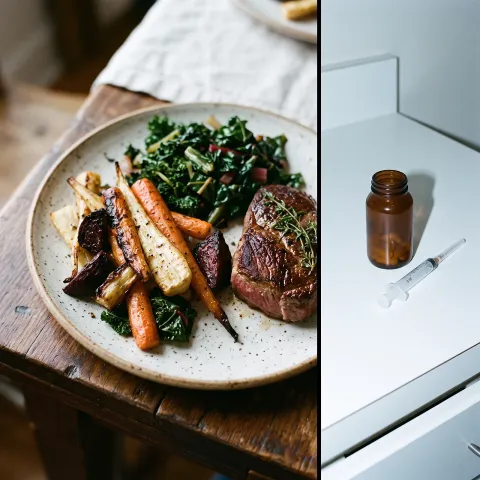
Build every meal around a naturally gluten-free protein. Pork shoulder braised with vegetables, pork chops with roasted root vegetables, eggs any way you like them, fish, chicken thighs. These foods are whole, they are nutrient-dense, and they do not require label-reading gymnastics.
Fill half your plate with vegetables you enjoy. Roasted, steamed, raw, whatever you will actually eat. Variety matters more than perfection.
Add a starchy carb if you need it. White rice, sweet potato, winter squash, and plantains are all naturally gluten-free and easy on a gut that is still recovering.
Get your levels checked. Ask your doctor to test for iron, vitamin D, B12, folate, zinc, and calcium. The results tell you where your gaps actually are, so you are not guessing.
Give yourself grace. Learning to eat gluten-free is a skill, and it takes time. Cross-contact happens. Labels get misread. That is not failure; that is the learning curve. Work with a registered dietitian who specializes in celiac if you can; the Academy of Nutrition and Dietetics has a find-a-dietitian tool that lets you search by specialty.
And remember: this diagnosis is information. It is not a life sentence of deprivation. It is a reason to build a way of eating that is actually designed for the body you have. That is something you can work with.
Key Takeaways
- A strict, lifelong gluten-free diet is currently the only evidence-supported management approach for celiac disease.
- Hidden gluten in sauces, broths, deli meats, and shared cooking surfaces is a common source of ongoing exposure in month one.
- Intestinal healing takes time, often months to years for adults; food supports the process but does not replace medical care.
- Gluten-free processed foods are celiac-friendly but are not automatically nutritious; whole foods are a stronger foundation.
- Nutrient deficiencies in iron, vitamin D, B12, folate, zinc, and calcium are common at diagnosis; ask your doctor to test your levels.
- Secondary lactase deficiency and oat sensitivity are real considerations in the first month; both are worth discussing with your doctor.
- A registered dietitian who specializes in celiac disease is a valuable part of your care team.
Frequently Asked Questions
How long does it take to feel better after going gluten-free with celiac disease?
Many people notice some improvement in symptoms within a few weeks of strictly removing gluten, but intestinal healing at the tissue level takes considerably longer. Research suggests it can take months to years for adults to fully heal intestinal villi, and some people continue to experience symptoms during that time even on a strict gluten-free diet. If your symptoms are not improving, talk to your gastroenterologist, as ongoing exposure (even from hidden sources) is a common reason.
What nutrients are commonly low after a celiac diagnosis?
Because villous atrophy impairs nutrient absorption, iron, vitamin D, B12, folate, zinc, and calcium are frequently low at the time of diagnosis. Your doctor should run labs to identify your specific deficiencies and guide any supplementation. Eating nutrient-dense whole foods rather than relying primarily on gluten-free processed products can help support nutritional status as the gut heals.
Can someone with celiac disease eat oats?
This one is nuanced. Pure, uncontaminated oats are technically gluten-free, but they contain a protein called avenin that may trigger a response in a subset of people with celiac. Many celiac organizations recommend waiting until your gut has had time to stabilize before introducing even certified gluten-free oats, and doing so only with your doctor's guidance. Conventional oats are also at high risk of cross-contact with gluten-containing grains in processing.
Why does dairy bother me since my celiac diagnosis?
Secondary lactase deficiency is common in people with active celiac disease. Lactase (the enzyme that breaks down lactose in dairy) is produced in the intestinal villi, which are damaged in celiac. As a result, many people cannot tolerate dairy well until their gut heals. This often improves as the intestine recovers on a strict gluten-free diet. If dairy is bothering you now, let your doctor know; it is worth tracking and revisiting after a few months of strict gluten-free eating.
Sources
- National Institute of Diabetes and Digestive and Kidney Diseases: Celiac Disease: Symptoms and Causes
- Mayo Clinic: Celiac Disease: Symptoms and Causes
- Celiac Disease Foundation: Sources of Gluten
- Celiac.org: Treatment of Celiac Disease
- U.S. Food and Drug Administration: Gluten-Free Labeling of Foods
- National Institutes of Health / NCBI: Micronutrients and the Immune System
- Frontiers in Nutrition: The Gut Microbiota and Celiac Disease
- National Institute of Diabetes and Digestive and Kidney Diseases: Celiac Disease: Eating, Diet, and Nutrition
- Nutrients (MDPI): Nutritional Deficiencies in Patients Following a Gluten-Free Diet
- National Institutes of Health / NCBI: Intestinal Permeability and Zonulin in Celiac Disease
- National Institutes of Health / NCBI: Oats and Celiac Disease: Avenin Sensitivity
- Academy of Nutrition and Dietetics: Find a Nutrition Expert
Cook for it
Start with one of these Celiac-Friendly recipes:
- Blueberry Basil Shrub Sparkling Drink
- Greek Honey Almond No-Bake Bites with Pistachios and Orange
- Paleo Mac and Cheese with Zucchini Pasta and Roasted Red Pepper Cashew Sauce
Browse every Celiac-Friendly recipe
This article is for general informational purposes only and is not medical advice. Always consult a qualified healthcare professional before making changes to your diet or health routine. Nothing here diagnoses, treats or cures any condition, and food is support alongside medical care, not a replacement for it. If you have, or think you may have, the condition discussed here, work with your doctor or a registered dietitian, and do not start, stop or change any medication without talking to them first.

Join the conversation
What do you think?
Free members can comment, reply and like. It takes ten seconds.