

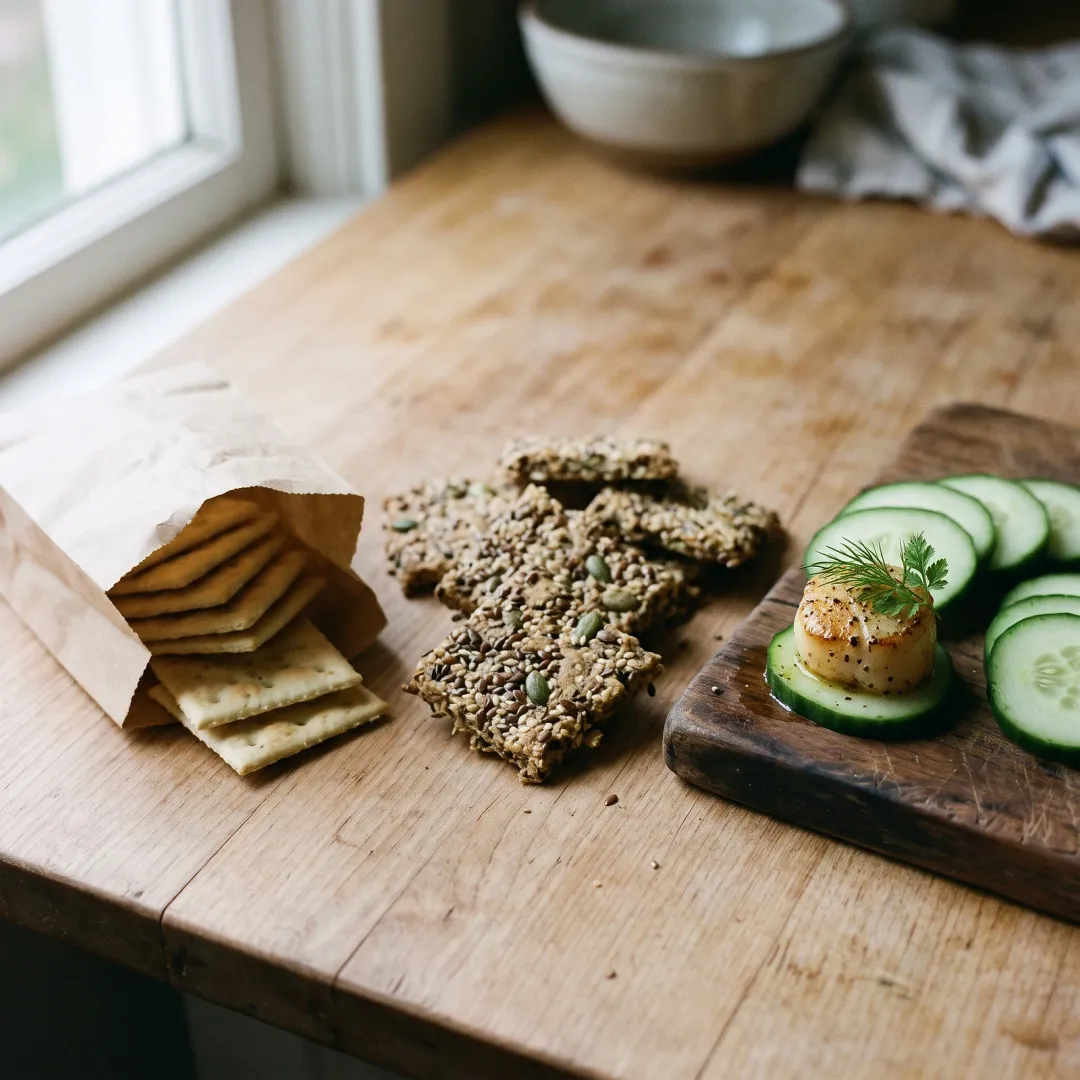

Most crackers are three things in a box: refined flour, seed oils, and enough sodium to make you think you're tasting something. The cracker itself is a vehicle, and the vehicle has a pretty rough ingredient list. The good news is that the vehicle is also the easiest thing to swap in your whole snack routine, and you don't have to do it all at once.
What's Actually in a Conventional Cracker
Flip over a box of the crackers most of us grew up eating and you'll find enriched white flour, soybean or canola oil, and a list of stabilizers that reads like a chemistry midterm. The flour is stripped of fiber and most of its nutrients before the "enrichment" step adds a few synthetic ones back. The oils are almost certainly high in omega-6 fatty acids, and research published in Nutrients suggests that chronically elevated omega-6 to omega-3 ratios in the Western diet are linked to increased markers of inflammation. This isn't a lecture. It's just useful to know what you're actually trading your snack calories for.
Good: Swap the Brand, Keep the Cracker
If ripping the cracker out of your life entirely sounds exhausting, don't. Start here: find a cracker made with real ingredients. Seed-based crackers made with flax, sesame, sunflower, or pumpkin seeds, bound with egg or water and maybe a little olive oil, are showing up in most grocery stores and all the natural-food aisles now. Read the label: the first ingredient should be a whole food, the oil should be olive or avocado, and the list should be short enough to read in one breath.
Taste and texture honestly: seed crackers are denser and earthier than a Ritz. They are not trying to be a Ritz. Some brands are genuinely crispy and satisfying; others are a little dusty. Try a couple before you commit to a big bag. Cost is usually higher than conventional crackers, around $6-9 for a decent package, but you tend to eat fewer because they're more filling. That's the fiber doing its job. The FDA notes that dietary fiber contributes to feelings of fullness, which makes sense if you've ever eaten six seed crackers and felt actually done.
Better: Make Seed Crackers at Home
Four ingredients. Seriously. Flax seeds, sesame seeds, water, and salt. Mix, spread thin on parchment, bake at 325°F for about 35 minutes, cool completely, and break apart. That's the whole process. The batch makes enough to last a week in an airtight container.
The cost drops dramatically compared to store-bought seed crackers, and you control every single ingredient. There is no mystery oil, no "natural flavor" (a phrase that can legally cover a lot of ground, per the FDA's own flavor-labeling rules). The honest downside: 35 minutes in the oven, plus the time to let them cool before they crisp up. If you batch them on a Sunday, you're set. If you're hungry right now, go buy the good store brand.
These hold up beautifully under toppings. Try a smear of avocado and a couple of seared scallops on top for a genuinely impressive five-minute snack plate. Scallops cook fast, they're sweet and mild, and they make a seedy cracker feel like something you'd order at a restaurant rather than something you ate standing over the counter.
Best: Cucumber Rounds (And Why They Actually Work)
Before you roll your eyes, stay with me. A thick-cut cucumber round is not a sad diet food. It is crunchy, neutral, and cool, and it holds almost any topping a cracker would. The key word is thick. Slice them at least a quarter inch and they don't flop. English cucumbers have the fewest seeds and a thinner skin, which makes them easier to eat without peeling.
What changes: the texture is obviously not the same as a baked cracker. It's crisp and wet rather than dry and snappy. Some toppings (anything very wet or warm) will slide around. But for cold toppings, cream cheese, smoked fish, a little grain-mustard-and-herb situation, they are genuinely good and require zero prep beyond slicing.
What you gain: cucumbers are mostly water, which contributes to hydration, and they provide a small amount of vitamin K and potassium, per USDA FoodData Central. No seed oils. No flour. No ingredient list at all. Cost is almost nothing compared to any cracker, store-bought or homemade. This is the swap worth reaching for when you just need something now and you don't want to think about it.
The one honest downside: cucumber rounds don't travel as well. They weep a little after an hour in a container. For a party platter or a snack at home, they're great. For a road trip, grab your homemade seed crackers.
How to Make the Switch Stick
Pick one rung of the ladder and stay there for two weeks before you move up. If you've been eating a sleeve of crackers a week, buying a box of good seed crackers is already a meaningful change. You don't have to go straight to cucumber rounds to have done something real.
Keep whichever option you're on stocked and visible. An empty fridge and no crackers in the house is how you end up eating whatever's in the vending machine at 3pm. The point is to make the better option the easy option, and all three levels of this swap can do that if you set them up ahead of time.
And if you have a week where you just eat the regular crackers? That's fine. You're not undoing anything. You're just a person figuring out how to eat better in real life, which is exactly what this column is for.
--- This article is for general informational purposes only and is not medical advice. Always consult a qualified healthcare professional before making changes to your diet or health routine.
Key Takeaways
- Most conventional crackers are made with refined flour and high omega-6 seed oils. That's the main thing worth replacing.
- Good swap: buy a store-bought seed cracker with a short, real-food ingredient list.
- Better swap: make your own seed crackers at home with four ingredients and a Sunday afternoon.
- Best swap: thick-cut cucumber rounds, zero prep, zero questionable ingredients, works for most toppings.
- Pick one level and stay there until it feels normal, then move up if you want to. A small step still counts.
Frequently Asked Questions
Are seed crackers actually better for you than regular crackers?
Seed crackers made with whole seeds, olive or avocado oil, and no refined flour have a meaningfully different ingredient profile than conventional crackers made with enriched white flour and soybean oil. They tend to provide more fiber and healthy fats per serving. That said, "better" always depends on what's in the specific product you're buying, so reading the ingredient list matters more than trusting the front-of-package label.
Can I use cucumber rounds instead of crackers for a party platter?
Yes, and they work really well for most cold toppings: cream cheese, smoked fish, herb spreads, guacamole. The one thing to know is they will release a little water if they sit out for more than an hour, so assemble them close to serving time rather than the night before.
What seeds work best for homemade seed crackers?
Flax and sesame are the most common base because they bind well when mixed with water (flax especially forms a gel that holds everything together). Sunflower, pumpkin, and chia seeds can all be added for variety. Keep the ratio mostly flax or chia for structure, and add the others for flavor and crunch.
Are homemade seed crackers gluten-free?
A recipe made with only seeds, water, and salt contains no gluten-containing ingredients. However, if you have celiac disease or a serious gluten sensitivity, verify that your seeds are processed in a gluten-free facility, since cross-contact can occur depending on where and how they're packaged.
Sources
- Nutrients (MDPI): The importance of the ratio of omega-6/omega-3 essential fatty acids
- U.S. Food and Drug Administration: Dietary Fiber and Added Sugars on the Nutrition Facts Label
- U.S. Electronic Code of Federal Regulations: 21 CFR 101.22: Foods; labeling of spices, flavorings, colorings and chemical preservatives
- USDA FoodData Central: Cucumber, with peel, raw
This article is for general informational purposes only and is not medical advice. Always consult a qualified healthcare professional before making changes to your diet or health routine.

Join the conversation
What do you think?
Free members can comment, reply and like. It takes ten seconds.