

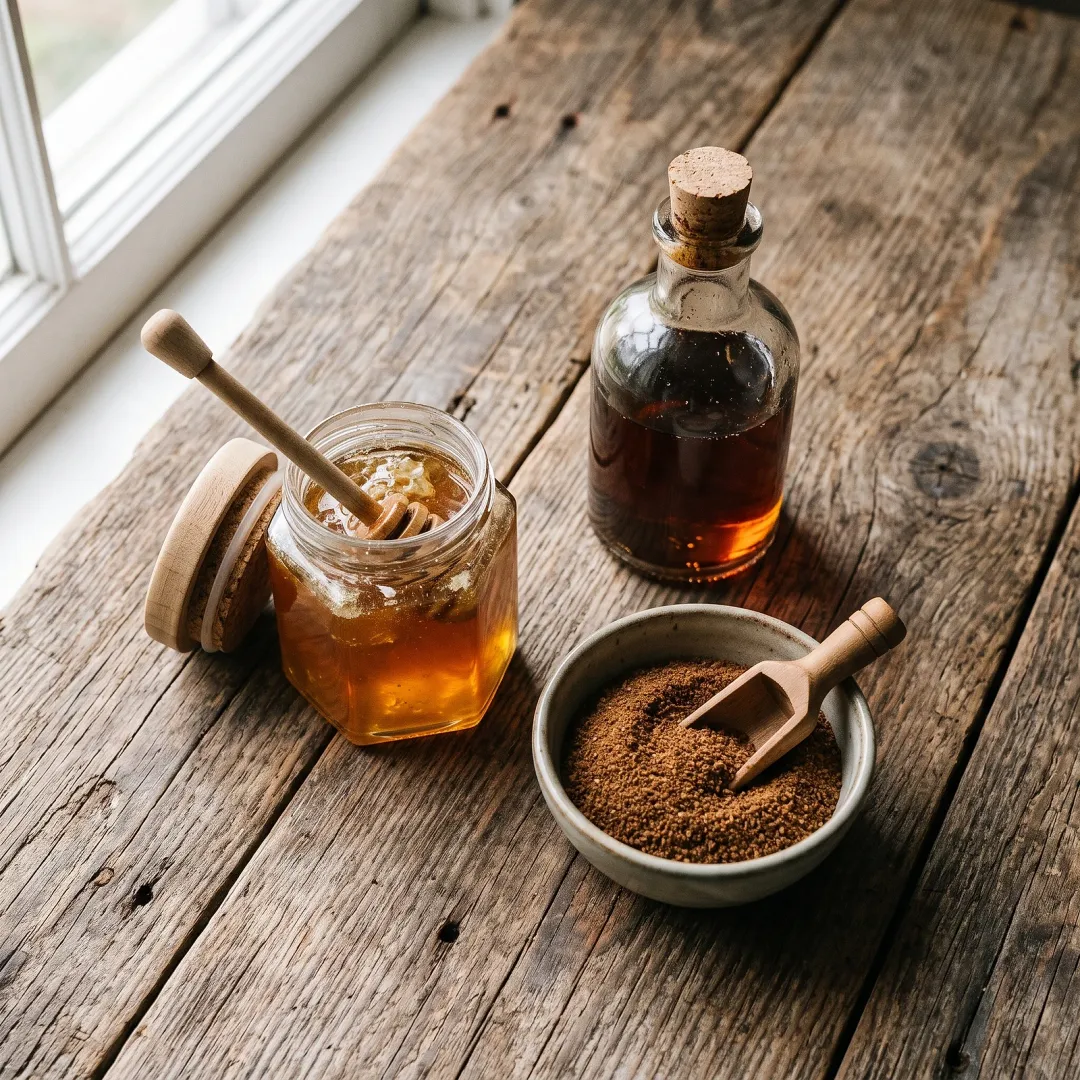

Every one of these sweeteners is sold with a halo. Raw honey from a local farm. Fancy maple syrup in the glass bottle. Coconut sugar in a kraft paper bag with a leaf on it. And honestly, I bought into all three at different points. The "natural" label does real work on people who are trying to do right by their bodies. But natural does not automatically mean neutral, and it definitely does not mean your body is indifferent to it. So let's slow down and walk through what actually happens, step by step, after you eat each one.
First, Why Sugar Source Even Matters
Sugar is sugar at the molecular level, right? Sort of. Table sugar (sucrose) is a fifty-fifty split of glucose and fructose. That ratio, plus everything that travels with the sugar (minerals, enzymes, antioxidants, water content), is what makes different sweeteners behave differently in the body. The delivery matrix matters. So does the glycemic index, which measures how fast a food raises blood glucose compared to pure glucose. These numbers are not the whole story, but they give us a useful starting point for comparison.
According to the Harvard T.H. Chan School of Public Health, added sugars of any kind contribute empty calories and can affect metabolic health when consumed in excess. That applies to the kraft paper bag and the glass bottle, too. No sweetener gets a free pass just because it came from a bee or a tree.
What Happens After You Eat Honey
Raw honey is roughly 38% fructose and 31% glucose, with the rest being water, trace minerals, enzymes, pollen, and small amounts of antioxidant compounds called polyphenols. That composition is what separates it from plain sucrose.
Step one, your saliva begins breaking it down almost immediately. Because honey is already a liquid and contains its own digestive enzymes (amylase and invertase from the bee), it starts absorbing faster than many solid carbohydrates.
Step two, the glucose portion enters your bloodstream relatively quickly. Raw honey has a glycemic index roughly in the 50 to 65 range depending on floral source and processing, compared to white sugar at around 65, according to Atkinson et al. in the American Journal of Clinical Nutrition (2008). So it is not dramatically lower than table sugar on the GI scale, though some varieties land a bit better.
Step three, the fructose component gets routed to the liver for processing. This is where overconsumption of any high-fructose sweetener gets complicated. The liver converts excess fructose to fat (a process called de novo lipogenesis), and research published in the Journal of the American College of Cardiology (2020) has linked excess added fructose consumption, over time, to metabolic changes that may affect liver health. A drizzle of honey on your morning yogurt is not the concern. Daily tablespoons adding up quietly, is.
What raw honey does bring to the table, that plain sugar does not, is a small but real antioxidant profile. A 2012 study in the Journal of Agricultural and Food Chemistry found that daily consumption of raw honey raised blood antioxidant levels in healthy adults. Those are real compounds doing real things. But they do not cancel out the sugar load, so context matters.
If you are going to use honey, raw and unfiltered is worth the extra cost. Heavy commercial processing destroys most of those beneficial compounds. Local and raw is the way.
What Happens After You Eat Maple Syrup
Pure maple syrup is primarily sucrose (about 66% by weight), which your digestive enzymes split into glucose and fructose in the small intestine. This means the absorption pattern looks more similar to table sugar than honey does.
Step one, sucrase (an enzyme in your small intestine) cleaves the sucrose into its two component sugars. This takes a little more time than absorbing free glucose or fructose directly, which is part of why maple syrup tends to have a slightly lower glycemic impact than you might expect from its sucrose content. Its glycemic index sits around 54, according to Diabetes Canada's glycemic index resource.
Step two, the glucose hits your bloodstream and triggers insulin release from the pancreas. The fructose goes to the liver. Same downstream story as honey, same caution about total quantity.
What makes pure maple syrup interesting from a nutrition standpoint is its mineral content. It contains meaningful amounts of manganese and zinc, and smaller amounts of potassium and calcium. A 2011 University of Rhode Island study identified more than 60 plant compounds in pure maple syrup, including some with antioxidant properties. Some of those compounds are unique to maple and have not been found in other sweeteners.
The catch is grade and purity. "Maple-flavored syrup" or "pancake syrup" is often high-fructose corn syrup with artificial flavoring. Read the label. It should say one ingredient: pure maple syrup. Grade B (now labeled Grade A Dark Robust) tends to have a stronger mineral profile because it comes from later in the season when the sap is more concentrated.
For baking and cooking, maple syrup is my personal go-to. The flavor is complex, the mineral content is a bonus, and a little goes a long way.
What Happens After You Eat Coconut Sugar
Coconut sugar is made from the sap of coconut palm flower buds. It is roughly 70 to 80% sucrose, with small amounts of free glucose and fructose making up the rest. Structurally, it is very close to cane sugar, which is a fact worth sitting with when you are paying three times the price.
Step one, the sucrose in coconut sugar is broken down in the small intestine just like maple syrup's sucrose. No magic here.
Step two, its glycemic index is frequently cited at around 35, which is significantly lower than table sugar's 65. But it is worth noting that the original study behind that number was small and conducted in the Philippines by the Philippine Coconut Authority, as referenced by the Glycemic Index Foundation. Independent replications are limited, so the low GI number may be somewhat overstated in popular media. Take it with a grain of salt.
Coconut sugar does contain inulin, a type of prebiotic fiber. This is likely part of what slows its absorption and contributes to its lower glycemic response. Inulin feeds beneficial gut bacteria, according to research published in Nutrients (2018). That is a genuine, small benefit that plain cane sugar does not offer. But the inulin content in a typical teaspoon of coconut sugar is modest, so it is not a major fiber source by any stretch.
One real advantage coconut sugar has over refined white sugar is that it retains more naturally occurring minerals from the palm sap: potassium, iron, zinc, and calcium in small amounts. These are trace quantities, though. You would need to eat far more coconut sugar than is wise to get meaningful mineral intake from it.
Coconut sugar is my choice when a recipe calls for a dry granulated sweetener and I want something with a caramel-brown flavor. It swaps 1:1 for cane sugar in most baking. But I am not under any illusions that it is a health food.
Side-by-Side: The Honest Comparison
Here is what the comparison actually looks like when you strip away the marketing.
Glycemic Index (approximate):
- Honey: 50-65 (varies by type)
- Maple syrup: ~54
- Coconut sugar: ~35 (limited independent data)
- Table sugar: ~65
Fructose content:
- Honey is highest in free fructose (~38%), which means faster liver processing.
- Maple syrup and coconut sugar deliver most of their fructose as sucrose, which breaks down more slowly.
Nutrient extras:
- Honey: enzymes, polyphenols, trace antioxidants
- Maple syrup: manganese, zinc, 60+ plant compounds
- Coconut sugar: trace minerals, small amounts of inulin
None of them is a superfood. They are all concentrated sources of sugar. The differences in nutrient extras are real but modest. The body still processes all three as sugar, still triggers insulin, and still converts excess fructose in the liver.
The main practical question is: what are you using it for? Honey works beautifully as a glaze, in dressings, and in anything where you want that floral sweetness and do not need a dry texture. Maple syrup is a workhorse in paleo baking and savory sauces (maple-glazed salmon is basically perfect). Coconut sugar is the most versatile swap for conventional sugar in baking because it behaves like a dry granulated sugar.
The Quantity Question Nobody Wants to Hear
All three of these sweeteners are better than refined white sugar in one meaningful way: they are less processed and they bring at least something extra to the table. But "better than white sugar" is a low bar, and that framing can trip people up.
The American Heart Association recommends no more than 25 grams of added sugar per day for women and 36 grams for men. One tablespoon of honey is about 17 grams of sugar. One tablespoon of maple syrup is about 12 grams. One tablespoon of coconut sugar is about 12 grams. Those numbers add up fast when we are using "natural" sweeteners like they get a free pass.
I have seen people go paleo, switch all their sweeteners to honey and maple syrup, and then wonder why nothing changes. It is because they are still pouring sugar into their bodies, just with a cleaner label on the jar. The switch to real sweeteners matters, but the quantity matters just as much.
Steward the body you were given. That means being honest about how much of anything we are consuming, even the stuff that comes from a bee or a tree.
A Quick Word on Salmon and Sweeteners (Yes, Really)
If you are using any of these sweeteners in cooking and want a practical example of how they behave, glazed salmon is probably the best test case. Honey creates a stickier, more caramelized crust because of its free glucose and fructose content. Maple syrup gives a thinner glaze with a deeper smoky-sweet flavor. Coconut sugar, dissolved into a sauce, gives a rich brown caramel note.
All three work. All three taste different. And a salmon fillet with a tablespoon of any of them is a totally reasonable real-food meal. The sugar load from a glaze distributed across a filet is minimal. This is where context matters: a drizzle on your protein is not the same as three tablespoons in your morning smoothie.
The Bottom Line
Raw honey, pure maple syrup, and coconut sugar are all genuinely better choices than refined white sugar or high-fructose corn syrup. They are less processed, they carry trace nutrients, and two of the three have a real antioxidant or prebiotic bonus. Those differences are worth acknowledging.
But your body still reads them as sugar. The cascade still happens: enzyme breakdown, glucose into the blood, insulin response, fructose to the liver. How much you eat, and how often, matters more than which of the three is in the jar.
Use the one that fits your recipe. Keep the quantity reasonable. And do not let a craft label convince you that more is fine.
This article is for general informational purposes only and is not medical advice. Always consult a qualified healthcare professional before making changes to your diet or health routine.
Key Takeaways
- All three natural sweeteners are still sugar. Your body processes them through the same basic pathway: enzyme breakdown, glucose into the bloodstream, insulin release, fructose routed to the liver.
- Honey has the highest free fructose content (~38%) and the most variable glycemic index depending on type and processing. Raw and unfiltered honey carries the most antioxidant benefit.
- Maple syrup is primarily sucrose (~66%), has a glycemic index around 54, and offers a genuinely meaningful mineral profile including manganese and zinc plus 60+ plant compounds.
- Coconut sugar is also mostly sucrose but contains a small amount of inulin (prebiotic fiber) that may slow absorption slightly. Its low GI claim (~35) is based on limited independent data, so approach it with realistic expectations.
- Total quantity consumed matters more than which sweetener you pick. All three count toward your daily added sugar intake.
- For cooking, match the sweetener to the recipe: honey for glazes and dressings, maple syrup for baking and sauces, coconut sugar as a 1:1 dry sugar swap.
Frequently Asked Questions
Is honey better for you than sugar?
Raw honey is less processed than refined white sugar and carries trace antioxidants and enzymes that plain sugar does not. However, its glycemic index is close to white sugar (50 to 65 depending on variety), and it is still a concentrated source of sugar. It is a better choice, but the quantity you use still matters.
Does coconut sugar have a lower glycemic index than regular sugar?
The commonly cited GI of around 35 for coconut sugar is based on limited independent research. It is likely lower than white sugar's GI of 65 partly due to its small inulin content, but it is still roughly 70 to 80% sucrose. Treat the low GI claim as plausible but not firmly established, and do not let it justify using more of it.
Can I use maple syrup instead of honey in paleo recipes?
In most cases, yes. Maple syrup and honey are both liquid sweeteners and can often be swapped 1:1 by volume in recipes, though maple syrup is thinner and honey is stickier, so you may need to adjust slightly for texture. Maple syrup tends to work especially well in baking and savory glazes.
Which natural sweetener is best for baking paleo?
It depends on the recipe. Coconut sugar is the most versatile for dry baking recipes because it behaves like granulated sugar and swaps 1:1. Maple syrup works well in muffins, breads, and sauces. Honey is best in glazes, dressings, and recipes where you want a stickier texture and floral sweetness.
Sources
- Harvard T.H. Chan School of Public Health: Added Sugar in the Diet
- American Journal of Clinical Nutrition: International tables of glycemic index and glycemic load values: 2008 (Atkinson et al.)
- Journal of the American College of Cardiology: Dietary Sugars and Cardiometabolic Risk (2020)
- Journal of Agricultural and Food Chemistry: Honey with High Levels of Antioxidants Can Provide Protection to Healthy Human Subjects (2012)
- Diabetes Canada: The Glycemic Index
- Glycemic Index Foundation: About Glycemic Index
- Nutrients (MDPI): Inulin-Type Fructans: Functional Food Ingredients (2018)
- American Heart Association: Added Sugars
This article is for general informational purposes only and is not medical advice. Always consult a qualified healthcare professional before making changes to your diet or health routine.


Join the conversation
What do you think?
Free members can comment, reply and like. It takes ten seconds.