


Most of the conversation around PCOS lands on hormones, elevated androgens, irregular cycles, the estrogen-progesterone seesaw. And yes, that's real. But there's a piece of the picture that gets glossed over in a standard doctor visit, and the research has been pointing at it for decades: insulin. Specifically, insulin resistance. If you've been chasing the hormone piece without addressing blood sugar, you may be working half the puzzle.
What the Research Actually Shows About PCOS and Insulin
PCOS is the most common endocrine disorder in people with ovaries of reproductive age, affecting an estimated 8 to 13 percent of this population globally. That's not a small number. And yet the mechanistic piece, the why underneath the symptoms, is still underexplained in most clinical settings.
Here's what the evidence shows: insulin resistance is present in approximately 65 to 70 percent of people with PCOS, regardless of body weight. That last part matters. This isn't only a "weight issue." Lean individuals with PCOS show measurable insulin resistance too.
When cells stop responding normally to insulin, the pancreas produces more of it to compensate. That elevated insulin, called hyperinsulinemia, appears to directly stimulate the ovaries to produce more androgens (testosterone and its relatives). A 2019 review published in Therapeutic Advances in Endocrinology and Metabolism describes this as one of the primary mechanisms linking insulin dysregulation to the androgen excess that drives so many PCOS symptoms: acne, hair thinning, irregular cycles, and difficulty with ovulation.
So when people ask why their PCOS symptoms persist even when they're "eating healthy," one place worth looking is whether blood sugar and insulin patterns have actually shifted, or whether the foods labeled healthy are still spiking glucose more than the body can handle right now.
The Blood Sugar Pattern Most People Miss
Blood sugar dysregulation doesn't always announce itself dramatically. You don't have to be diabetic to have insulin resistance. The pattern often looks like: energy crashes after meals, strong carbohydrate cravings (especially in the afternoon), difficulty losing weight despite reasonable effort, disrupted sleep, and brain fog that lifts when you eat.
Fasting glucose on a standard lab panel can look perfectly normal while insulin resistance is already in play. Research from the American Diabetes Association has long noted that standard glucose testing misses insulin resistance in many PCOS cases because the body compensates by pumping out more insulin, the glucose number looks fine, but the demand behind it is elevated.
This is part of why fasting insulin and a two-hour postprandial insulin test can be more informative than glucose alone. Talk to your doctor about whether those labs make sense for your situation. I'm not here to tell you what tests to order, that's between you and your provider, but knowing these tests exist and asking about them is the kind of advocacy the system won't do for you automatically.
What This Means for a Real-Food Approach
If elevated insulin is a key driver of androgen excess in PCOS, then supporting healthy blood sugar regulation isn't just a weight-loss strategy. It's addressing a root piece of the pattern.
This is where a lower-glycemic, whole-foods way of eating has solid research backing. A 2017 systematic review in Obesity Reviews found that low-glycemic-index dietary patterns were associated with improvements in insulin sensitivity and hormonal markers in women with PCOS. Not a cure. Not a guarantee. But a meaningful, evidence-supported shift.
So what does that look like on a plate? Less reliance on refined carbohydrates and ultra-processed foods that spike glucose rapidly, and more emphasis on:
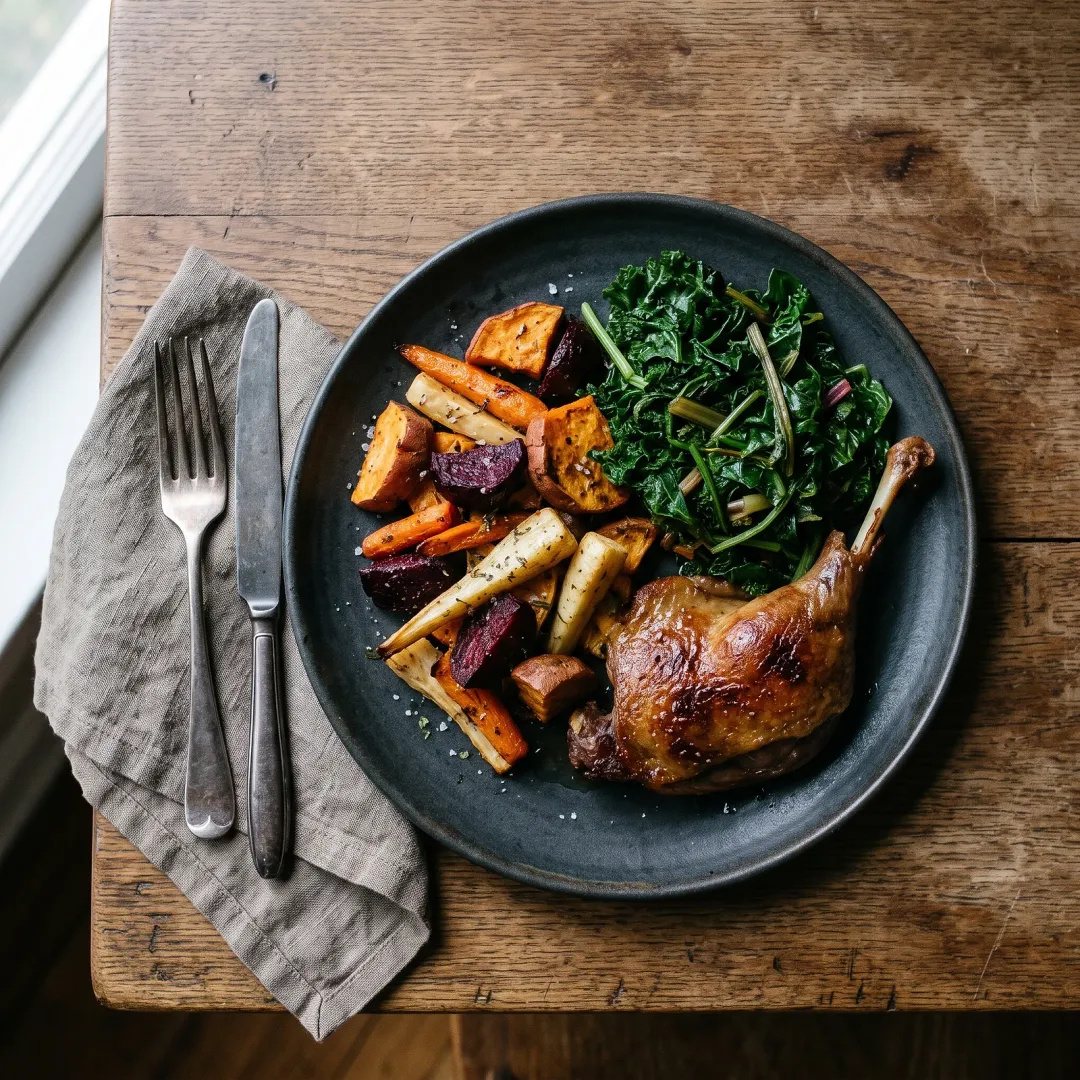
Protein at every meal. Protein slows gastric emptying and blunts the glucose response. Something like a plate of braised duck leg with roasted root vegetables and leafy greens keeps blood sugar far more stable than a grain bowl or a "healthy" granola bar. Duck is rich in protein, provides zinc (which plays a role in insulin signaling, per NIH Office of Dietary Supplements data), and delivers a satisfying fat profile that keeps hunger genuinely at bay.
Non-starchy vegetables as the volume anchor. Fiber slows glucose absorption. Research consistently links higher dietary fiber intake to improved insulin sensitivity.
Starchy carbohydrates in context, not eliminated. Sweet potatoes, squash, and root vegetables aren't the enemy. It's about pairing them with fat and protein so the glucose load hits gradually. Total elimination often backfires, the body is not designed for zero carbohydrate long-term, and stress on the HPA axis from extreme restriction can create its own hormonal mess.
Consistent meal timing. Skipping meals, especially breakfast, tends to worsen blood sugar variability across the day. Research published in Clinical Science suggests that eating in alignment with circadian rhythms, prioritizing intake earlier in the day, may support better insulin response.
Lifestyle Factors the Research Also Flags
Food is not the only lever here. A few other factors have solid evidence for supporting insulin sensitivity:
Movement after meals. A short walk (even ten to fifteen minutes) after eating has been shown in multiple studies to meaningfully reduce postprandial blood glucose. You don't need a gym. You need to not sit still for two hours after dinner.
Sleep quality. Even partial sleep deprivation impairs insulin sensitivity. A 2010 study in the Annals of Internal Medicine found that just four nights of reduced sleep decreased insulin sensitivity in healthy adults by about 25 percent. For someone with PCOS, where insulin sensitivity may already be compromised, sleep is not optional self-care. It's physiology.
Stress regulation. Cortisol and insulin talk to each other. Chronic stress elevates cortisol, which raises blood glucose, which demands more insulin. It's a loop. Managing stress, through whatever real, sustainable practice works for you, is part of the blood sugar conversation. That's not woo. That's biochemistry.
None of these fixes anything overnight, and none of them replace a conversation with your healthcare provider about your specific labs, symptoms, and options. What they do is address root inputs rather than chase symptoms.
A Word on the Mindset Shift
Here's what I find gets missed in the PCOS coaching conversation: a lot of people are exhausted from trying to fix a hormone problem when they haven't been given accurate information about the metabolic piece underneath it.
If you've been told to "just lose weight" or "go on birth control and come back if you want to get pregnant," I understand why that feels incomplete. Because it is incomplete. The research has been pointing at insulin resistance as a central driver for a long time, and many people with PCOS are still not being told this in a way that leads to actionable guidance.
That's not to say medication has no place. For some people, it absolutely does. But the foundational habits, eating real food that doesn't spike blood sugar, moving your body, sleeping, managing stress, those work alongside any medical plan, not instead of it.
This body was designed to run on real food. When we give it what it was designed for, the systems that regulate blood sugar, inflammation, and hormones have a much better environment to work in. That's not wishful thinking. That's what the research keeps showing.
This article is for general informational purposes only and is not medical advice. Always consult a qualified healthcare professional before making changes to your diet or health routine.
Key Takeaways
- Insulin resistance is present in an estimated 65-70% of people with PCOS, including those at a lean body weight.
- Elevated insulin (hyperinsulinemia) may directly stimulate androgen overproduction in the ovaries, driving many common PCOS symptoms.
- Standard fasting glucose labs can miss insulin resistance, fasting insulin and postprandial insulin testing may give a fuller picture (ask your doctor).
- A lower-glycemic, whole-foods dietary pattern is linked in research to improvements in insulin sensitivity and hormonal markers in PCOS.
- Post-meal movement, quality sleep, and stress regulation are evidence-backed lifestyle factors that support insulin sensitivity alongside food choices.
- These habits support the medical plan your provider has for you, they do not replace it.
Frequently Asked Questions
Does everyone with PCOS have insulin resistance?
Not everyone, but research suggests approximately 65 to 70 percent of people with PCOS show some degree of insulin resistance, including those at a lean body weight. It's worth discussing with your doctor, especially if you haven't had fasting insulin tested.
What labs should I ask for if I suspect insulin resistance with PCOS?
Standard fasting glucose can miss insulin resistance because the body compensates by producing more insulin. Asking your doctor about fasting insulin levels and a two-hour postprandial insulin test may give a fuller picture. This is a conversation to have with your healthcare provider based on your individual history.
Can a real-food diet help with PCOS symptoms?
Research suggests that a lower-glycemic, whole-foods dietary pattern may support improvements in insulin sensitivity and some hormonal markers in PCOS. It's not a cure or a guarantee, but it addresses root metabolic inputs rather than symptoms alone. Any dietary changes should be made alongside, not instead of, your medical care.
How does sleep affect PCOS and insulin resistance?
Sleep deprivation impairs insulin sensitivity even in healthy individuals. For people with PCOS, where insulin sensitivity may already be compromised, poor sleep can compound the issue. Research published in the Annals of Internal Medicine found that just four nights of reduced sleep decreased insulin sensitivity by roughly 25 percent in healthy adults.
Sources
- World Health Organization: Polycystic Ovary Syndrome Fact Sheet
- NCBI / Therapeutic Advances in Endocrinology and Metabolism: Insulin Resistance in Polycystic Ovary Syndrome: A Review of Mechanisms and Implications
- American Diabetes Association / Diabetes Care: Insulin Resistance and the Polycystic Ovary Syndrome
- Obesity Reviews: Low-glycaemic index diets as an intervention for PCOS: a systematic review and meta-analysis
- NIH Office of Dietary Supplements: Zinc: Health Professional Fact Sheet
- NCBI / Journal of Nutritional Biochemistry: Dietary fiber and insulin resistance: mechanistic insights
- NCBI / Clinical Science: Circadian rhythm and metabolic health: alignment of eating timing with the biological clock
- NCBI / Sports Medicine: Post-meal walking and postprandial glycemic response: a systematic review
- Annals of Internal Medicine: Sleep restriction decreases insulin sensitivity in healthy adults
This article is for general informational purposes only and is not medical advice. Always consult a qualified healthcare professional before making changes to your diet or health routine.


Join the conversation
What do you think?
Free members can comment, reply and like. It takes ten seconds.