


Salt is not your enemy. That statement alone would have gotten me laughed out of a doctor's office ten years ago. The official line, repeated for decades, drilled into every checkup and every heart-health pamphlet, has been simple: eat less salt, lower your blood pressure, save your heart. And if you pushed back? You got the look. The 'we're the experts' look.
Except scientists are now publicly saying that guidance has been missing half the equation this entire time. A new report, covered by researchers calling for a major rethink of blood pressure management, says that eating MORE potassium may matter just as much as eating less sodium, and that combining the two may work better than sodium restriction alone. I want you to really sit with that. Because if that's true, and the evidence says it is, then the advice millions of Americans have been following for forty-plus years has been incomplete. At best.
So let's run the receipts.
What They Said: 'Just Cut the Salt'
The sodium narrative has been ironclad in mainstream medicine since at least the 1970s. High blood pressure? The standard response has been to reduce sodium intake. The American Heart Association set a limit of 2,300 mg of sodium per day, with an ideal target of 1,500 mg for most adults with elevated blood pressure. That message got hammered into public health campaigns, hospital nutrition handouts, and low-sodium processed food marketing for decades.
Nobody in the official lane was talking about potassium with anywhere near the same urgency. And that matters, because blood pressure regulation is not a single-variable equation.
What the Data Shows: Potassium Is the Other Half
A new report published in late 2026, flagged by researchers calling for a full rethink of blood pressure guidelines, makes the case plainly: increasing potassium intake may be just as important as reducing sodium, and combining the two may offer greater benefits for blood pressure control than sodium reduction alone.
This is not a fringe theory. The relationship between potassium and blood pressure has real mechanistic backing. Potassium helps the kidneys excrete sodium, and it relaxes blood vessel walls. What actually drives blood pressure in the body is not just the total amount of sodium floating around, but the ratio of sodium to potassium. The National Institutes of Health has acknowledged the importance of dietary potassium in blood pressure management, and research published in the British Medical Journal as far back as 2013 showed that higher potassium intake was associated with a 24% lower risk of stroke and significantly lower blood pressure.
So why has the conversation stayed so relentlessly fixated on sodium? That is a fair question to ask. And the answer has at least something to do with how easy sodium restriction is to put on a food label, to market, and to build a processed-food product category around. 'Low sodium' sells. 'Eat more whole foods rich in potassium' doesn't move shelf space.
That's not a conspiracy. That's just how the food industry works.
The Receipt: Decades of Narrow Guidance vs. the Whole Picture
Here's how I'd lay this out side by side:
What they said: Reduce sodium. Keep it under 2,300 mg. Ideally 1,500 mg. That is the path to healthy blood pressure.
What the evidence shows: The sodium-to-potassium ratio matters significantly. The 2026 expert report explicitly states that standard guidelines are 'missing half the equation.' The World Health Organization's potassium intake guidelines recommend adults consume at least 3,510 mg of potassium per day, noting it may reduce blood pressure and the risk of cardiovascular disease. The average American gets roughly half that.
What they said: Low-sodium processed products are a heart-healthy swap.
What the evidence shows: Stripping sodium from a processed food and calling it heart-healthy completely ignores whether that food contains any potassium at all. A low-sodium chip is still a chip. It is still not a sweet potato or a lamb chop or a bundle of Swiss chard.
This is the gap that real food has always filled, quietly, without a press release.
Why This Pattern Is So Familiar
If you've been reading my stuff for a while, you already know this story. We saw it with dietary fat, where forty years of 'fat makes you fat and clogs your heart' guidance quietly ignored what replaced the fat in processed foods (sugar, seed oils, refined carbs). We saw it with cholesterol numbers being used to sell statins while metabolic health markers that predict actual cardiovascular risk got far less attention. The pattern is the same: take a complex physiological system, flatten it to one variable, build a product category around that variable, and let the food and pharmaceutical industries profit from the simplification.
I am not saying every cardiologist who ever told someone to eat less salt was corrupt or lying. Most were following the consensus. But that consensus was built in an environment where food industry funding shaped research priorities and where a single, marketable message was easier to push than a nuanced, whole-food one.
And the people who paid the price are the ones eating 'heart-healthy' low-sodium frozen meals with no real nutrition in them while their potassium levels stay in the gutter.
What Real Food Has Always Known
Here's the thing that gets me fired up and also gives me real peace at the same time: a whole-food, real-food way of eating naturally addresses BOTH sides of this equation. It has this whole time.
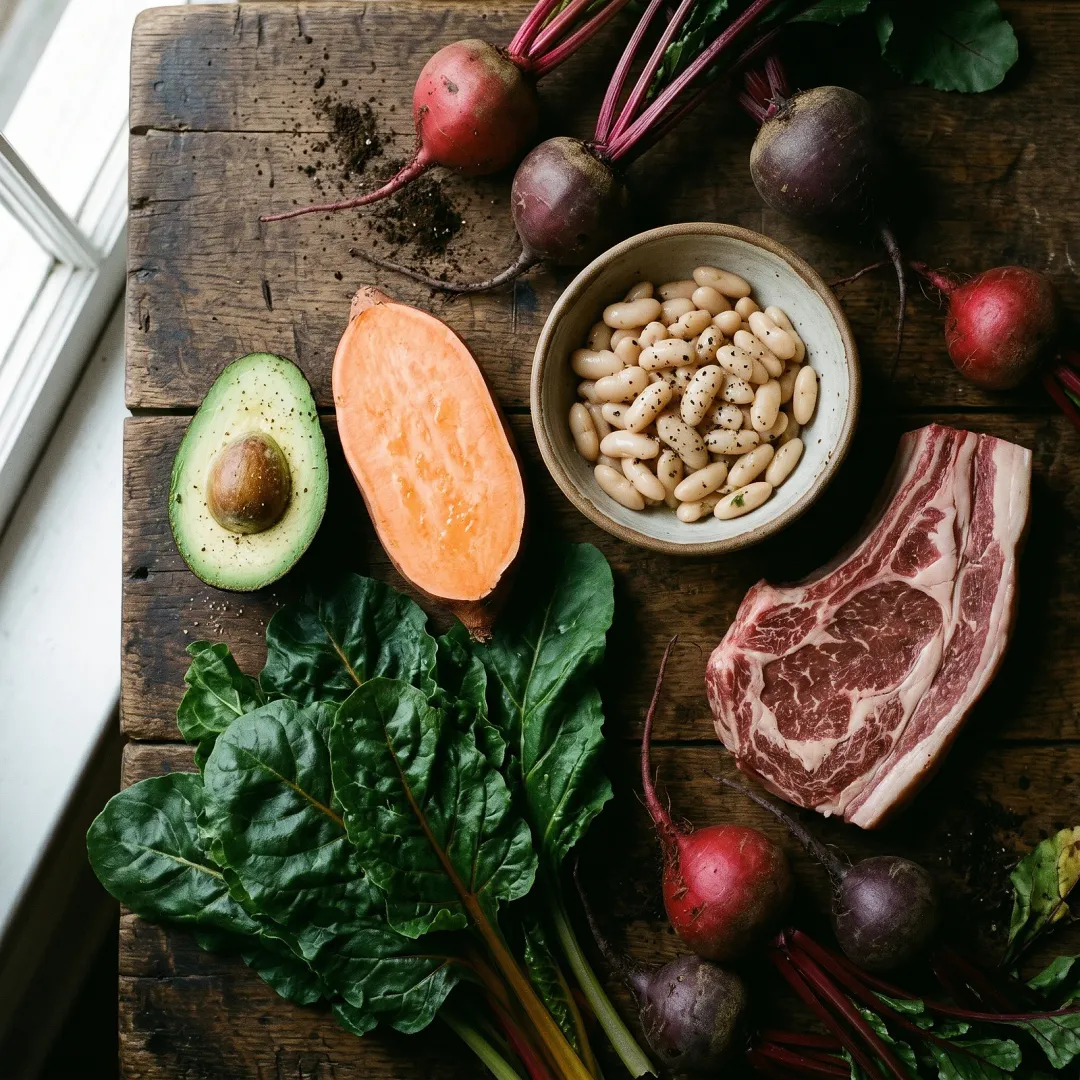
Foods that are genuinely high in potassium include sweet potatoes, avocados, spinach, beets, bananas, white beans, lentils, salmon, and grass-fed lamb. A bone-in lamb shoulder braised low and slow with root vegetables is not just soul food, it is the kind of meal that packs meaningful minerals without anyone having to count a milligram. Real food is naturally low in the kind of processed, stripped-out sodium that dominates the Standard American Diet, and naturally rich in the potassium that our bodies are designed to need.
The NIH's dietary guidelines research on the DASH diet, which was designed specifically to address blood pressure, is built almost entirely on whole foods rich in potassium, magnesium, and calcium. It works not because it is a prescription, but because it looks a lot like the way humans were designed to eat before we started processing everything into dust and reformulating it with 'heart-healthy' stickers.
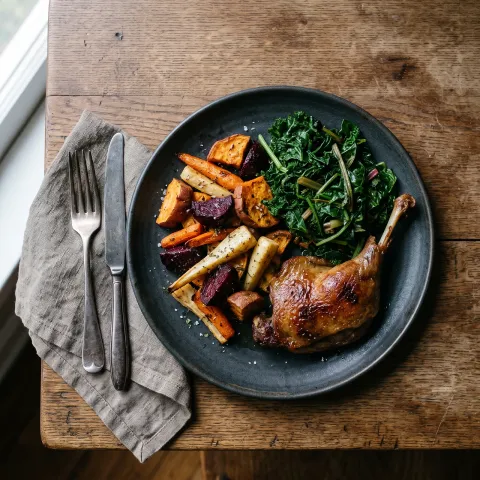
If you want a practical starting point, a plate that includes a good cut of lamb, a pile of greens, and some roasted root vegetables is already doing more for your sodium-to-potassium ratio than a week of low-sodium Lean Cuisines.
Talk to your doctor before making changes if you are on blood pressure medication. That is not a throwaway disclaimer, it is real. Some medications interact with potassium intake directly, and your doctor needs to know what you are doing. What I'm offering here is the education that the pamphlet left out.
What You Can Actually Do This Week
You do not need a supplement. You do not need a prescription potassium pill (and frankly, most over-the-counter potassium supplements are low-dose for a reason: too much at once can be dangerous, which is why food sources are always the smarter path). What you need is more real food.
Practical starting points:
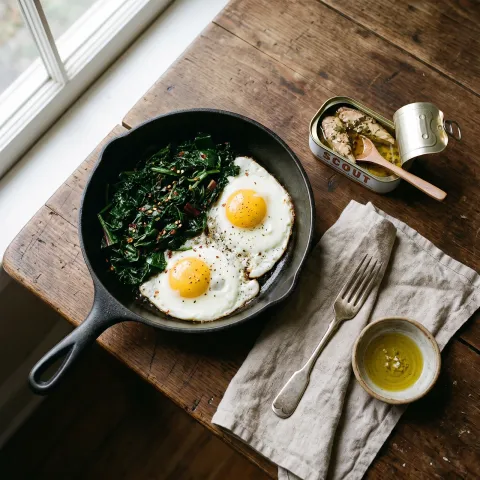
Swap one processed meal for a real one. A lamb shoulder steak cooked in a cast iron with garlic and wilted spinach on the side gives you protein, iron, and potassium in a single uncomplicated pan.
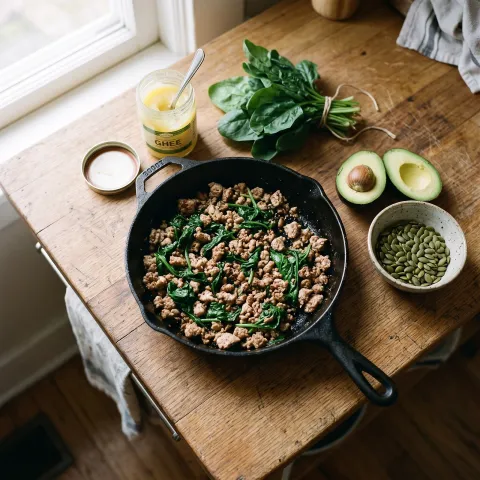
Add a potassium-rich vegetable to every plate. Sweet potato, beet, avocado, cooked spinach, white beans. Not complicated. Not expensive if you buy seasonal or frozen.
Read labels differently. Instead of only hunting for the sodium number, start looking at whether a food has ANY potassium in it at all. Most highly processed foods list zero. Most real foods do not need a label.
Stop fearing salt on real food. A pinch of good sea salt on a plate of real, mineral-rich food is not the same as the sodium load in a frozen dinner. Context matters. The delivery vehicle matters. If your salt is riding in on a bag of crackers, that's different from finishing a lamb and root-vegetable bowl with a small pinch of flaky salt.
This is not complicated nutrition. This is what grandmothers knew before nutrition science got turned into a marketing department.
This article is for general informational purposes only and is not medical advice. Always consult a qualified healthcare professional before making changes to your diet or health routine.
Key Takeaways
- New research says decades of blood pressure guidance has been 'missing half the equation' by focusing only on sodium reduction and ignoring potassium intake.
- The sodium-to-potassium ratio in the diet may matter more for blood pressure than sodium alone, according to multiple lines of evidence.
- The average American gets roughly half the potassium the WHO recommends daily.
- Real, whole food naturally balances both sides: lower in processed sodium, higher in potassium-rich vegetables, legumes, and quality proteins like lamb.
- If you are on blood pressure medication, talk to your doctor before significantly changing your diet. Some medications directly interact with potassium levels.
- Low-sodium processed food marketing solved for the wrong variable and left the other half of the picture completely off the label.
Frequently Asked Questions
Does potassium actually lower blood pressure?
Research suggests it may. Potassium helps the kidneys excrete sodium and helps relax blood vessel walls, and multiple studies, including a large 2013 BMJ review, found that higher potassium intake was associated with significantly lower blood pressure and reduced cardiovascular risk. A 2026 expert report specifically called for blood pressure guidelines to address potassium alongside sodium. That said, individual responses vary, and if you are managing high blood pressure with medication, talk to your doctor before making major dietary changes.
How much potassium do I need per day?
The World Health Organization recommends at least 3,510 mg of potassium per day for adults. The average American gets roughly half that amount. Food sources like sweet potatoes, avocado, spinach, white beans, beets, and quality proteins like lamb are among the most practical ways to close that gap through diet rather than supplements.
What foods are highest in potassium for a paleo or real-food diet?
Some of the best real-food sources of potassium include sweet potatoes, avocado, spinach and other leafy greens, beets, white beans (if you do legumes), salmon, and grass-fed lamb. These are all whole foods that also tend to be naturally low in the kind of processed sodium that dominates packaged products, so they help balance both sides of the sodium-to-potassium ratio at the same time.
Is low-sodium food actually heart-healthy?
Reducing sodium can be a reasonable part of blood pressure management, but new research suggests it is not sufficient on its own. If a low-sodium product is also low in potassium and high in refined carbohydrates, seed oils, or additives, the net benefit for cardiovascular health is questionable. Real, minimally processed whole foods naturally address both the sodium and the potassium side of the equation without requiring a specially formulated product.
Sources
- ScienceDaily Nutrition: Experts say high blood pressure guidelines are missing half the equation
- American Heart Association: How Much Sodium Should I Eat Per Day?
- World Health Organization: Potassium Intake for Adults and Children (WHO Guideline)
- BMJ: Effect of increased potassium intake on cardiovascular risk factors and disease (2013)
- National Institutes of Health / NHLBI: DASH Eating Plan
- National Institute of Diabetes and Digestive and Kidney Diseases: High Blood Pressure and Kidney Disease
This article is for general informational purposes only and is not medical advice. Always consult a qualified healthcare professional before making changes to your diet or health routine.

Join the conversation
What do you think?
Free members can comment, reply and like. It takes ten seconds.