


Your body is not just stressed. It is filing that stress away as a permanent record. Yale researchers just showed us exactly how cortisol reshapes the brain's communication between emotion and memory networks, locking in experiences so they are harder to let go of. So that thing you can't stop replaying? Your stress hormones may have literally carved it deeper. And the food you're eating every single day is either making that worse or giving your brain a fighting chance.
What the Yale Research Actually Found
Scientists at Yale published findings showing that cortisol, the stress hormone your body releases during tense, frightening, or emotionally loaded moments, actively changes how the brain's emotion and memory networks talk to each other. The result is that stressful experiences get stamped into memory more deeply and last longer than neutral ones.
That is not a small thing. It means chronic, daily, background-level stress, the kind most of us carry from the moment the alarm goes off to the moment we finally put the phone down, is not just making us tired or anxious. It is reshaping our brains in real time. The memories being reinforced are not the good ones. They are the overwhelm, the argument, the worry spiral at 2 a.m.
Now think about how many people are running elevated cortisol around the clock. Not from one dramatic life event. From traffic, from financial pressure, from inflammatory food, from skipping meals, from a body that never gets a real break. That is the part nobody in the institutional health space wants to connect to your daily food choices, because the food industry profits from the very habits that keep your stress response stuck in the on position.
Why Your Food Is Part of This Story
The food-cortisol connection is not subtle. Blood sugar swings from ultra-processed food and refined carbohydrates directly trigger cortisol release. Research published in the American Journal of Clinical Nutrition has shown that high-glycemic eating patterns are associated with elevated stress-hormone activity. Every spike, every crash, every time your body scrambles to stabilize blood sugar, it is pulling on that same stress-response system.
Seed oils, the refined vegetable and industrial oils hiding in almost everything on the center grocery store shelves, are rich in omega-6 fatty acids. The modern diet has pushed the omega-6 to omega-3 ratio wildly out of balance, and research consistently links that imbalance to increased markers of systemic stress on the body. Your brain runs on fat. What fat you eat matters.
Ultra-processed food in particular is the cortisol accelerant nobody is talking about loudly enough. It is engineered to keep you eating past the point of fullness, it is loaded with additives your body has to work to process, and it delivers almost nothing your brain needs to regulate mood and stress response. The machine is running hot on bad fuel and wondering why it won't cool down.
What This Means for You, Practically
Before I get to the specific kitchen moves, I want to be clear about something. This is general education. I am not your doctor, I am not diagnosing your cortisol levels, and I am not telling you to stop any medication or skip any appointment. If you are dealing with serious anxiety, PTSD, or mental health challenges, please work with a qualified provider. What I am doing is connecting real research to real food choices you make every single day.
With that said, here is what I want you to actually think about. Chronic stress is not just a mindset problem. It is a body problem. And the body is fed. What you put on your plate three times a day is either adding load to a system that is already running hot, or it is giving that system the raw materials to work with. That part is in your hands.
Faith has a lot to say about anxiety. About not being consumed by it. About casting those things somewhere other than your own chest. But I also think God gave us a body that was designed to eat real food, and when we fill it with garbage and then wonder why we can't think straight or let go of hard things, we may be ignoring the most practical part of the answer.
The First Thing to Change: Stabilize Your Blood Sugar Before It Destabilizes You
This week, the move is to stop letting your blood sugar run the show. When you skip breakfast or grab something sugary and call it a meal, your cortisol spikes to compensate for the blood sugar drop. That is not a theory. Research published in Psychosomatic Medicine has linked hypoglycemia, low blood sugar, to activation of the cortisol stress response.
The fix is boring and it works. Eat a real breakfast with protein, fat, and fiber-rich vegetables within an hour of waking. Not a protein bar. Not a "health" muffin. Real food.
Turkey is one of the most underused, budget-friendly proteins in a real-food kitchen, and it is genuinely good for this purpose. Ground turkey takes twelve minutes in a skillet. Slice leftover roasted turkey breast cold and eat it with avocado and some greens. Turkey is high in protein and contains tryptophan, a precursor to serotonin, and research suggests adequate protein intake supports healthy neurotransmitter production. It is not a cure for stress. But protein at breakfast versus a sugary coffee drink is not a small difference for your stress hormones over the course of a day.
The Second Change: Pull Seed Oils Out of Your Weekday Cooking
You do not have to overhaul your entire pantry this week. But if you are still cooking with canola oil, vegetable oil, or soybean oil, swap them out. This week. Use tallow, coconut oil, butter, ghee, or avocado oil instead.
The omega-6 overload from industrial seed oils creates a physiological environment that makes the stress response harder to regulate. Your brain is roughly 60% fat. Myelin, the insulation around your nerve fibers, is made from fat. The kinds of fat you eat directly influence how your nervous system functions. Research published in Nutrients has linked omega-3 fatty acid status to cortisol reactivity and stress resilience, and the ratio of omega-6 to omega-3 in the standard American diet has shifted dramatically in the wrong direction over the last century.
Swapping the oil you cook in is one of the simplest, cheapest, most immediate changes you can make. Tallow is stable at high heat and tastes incredible. Ghee keeps forever in the pantry. This is not complicated.
The Third Change: Add One Magnesium-Rich Vegetable Every Day
Magnesium is involved in hundreds of enzymatic processes in the body, and one of its most well-documented roles is in regulating the stress response. Studies have shown that chronic psychological stress is associated with magnesium depletion, and that lower magnesium status is linked to heightened cortisol reactivity. The two feed each other in the wrong direction: stress depletes magnesium, and low magnesium makes the stress response worse.
The food-first answer here is leafy greens, specifically dark ones. Spinach, swiss chard, beet greens, and pumpkin seeds are among the highest food sources. This is not about taking a supplement (though a good magnesium glycinate can support what food provides). It is about actually eating the vegetables.
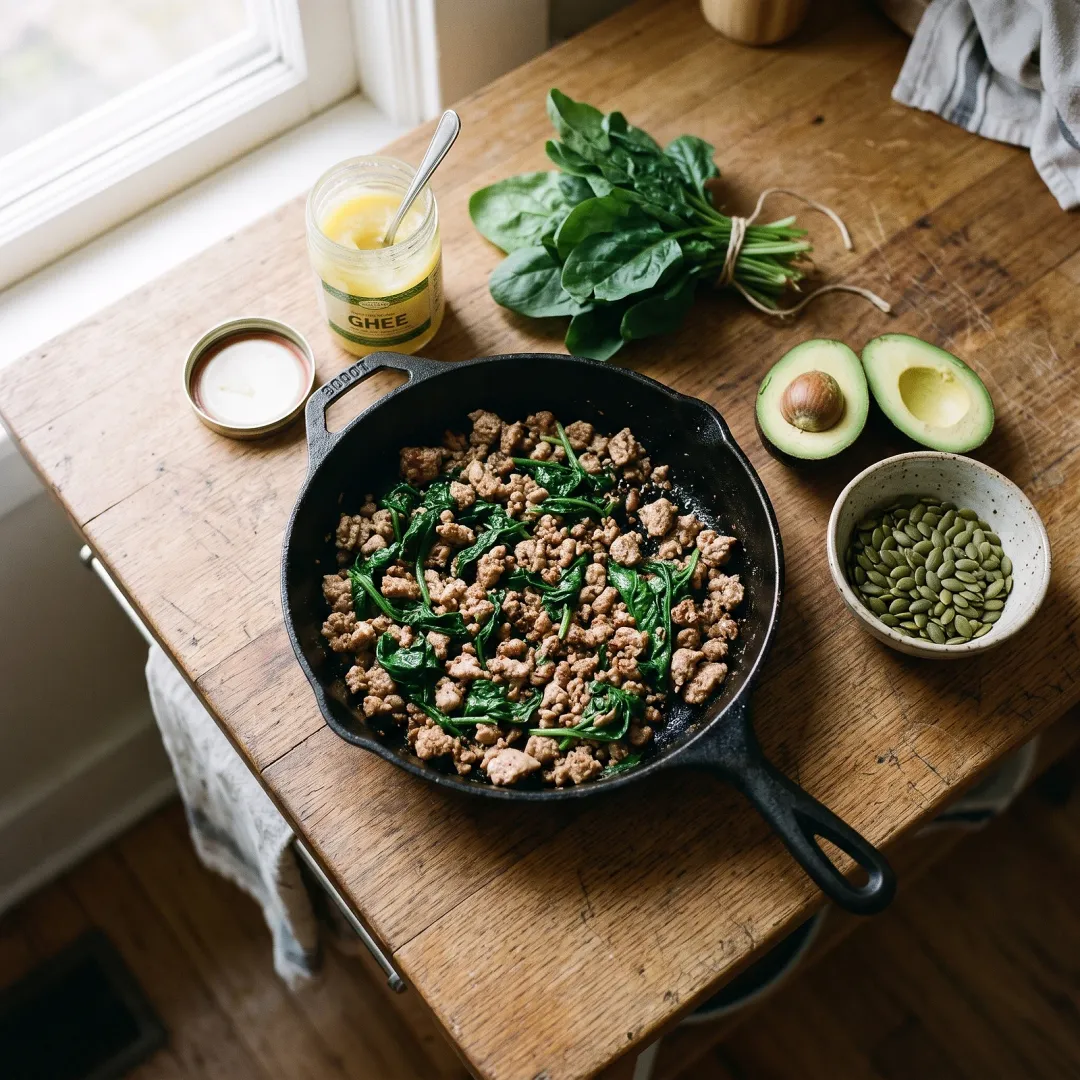
Practically: wilt a handful of spinach into whatever protein you are cooking. Add it to eggs. Stir it into ground turkey in the skillet. It takes thirty seconds and costs almost nothing. This is the kind of unglamorous, consistent move that actually matters.
The Fourth Change: Audit Your Ultra-Processed Snack Habit
Most people do not think of snacking as a stress habit. But the dopamine-spike-and-crash cycle from processed snack foods runs on the same rails as the cortisol cycle. Grabbing something crunchy and salty out of a bag when you are tense is not just a comfort behavior. It is often adding blood sugar instability that keeps the cortisol loop going longer.
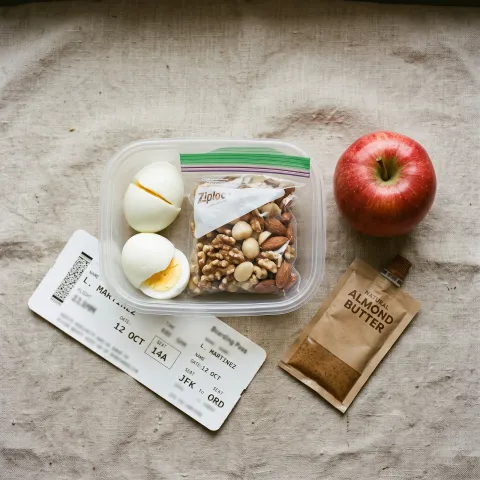
This week, replace one packaged snack with something real. Hard-boiled eggs. A handful of macadamia nuts. Sliced turkey with some raw vegetables. Leftover roasted sweet potato. Full-fat yogurt if you tolerate dairy. Real food that has actual fat and protein in it, so your blood sugar does not spike and your body does not have to scramble.
This is not about being perfect. Eat the birthday cake. Live your life. But the everyday autopilot snack, the one you grab without thinking at 3 p.m. because you are tired and wired and need a break, that one is worth looking at.
The Bigger Picture: This Is Stewardship
Yale scientists confirmed what functional medicine has pointed to for a long time: your stress response is biological, it is physical, and it is affected by what you eat. The chronic, grinding, never-quite-turns-off cortisol load that most of us carry does not just feel bad. According to this research, it is actively reshaping how the brain stores emotional memory.
The food industry did not design the modern food environment to support your stress response. It designed it to maximize purchase frequency and palatability. Blood sugar spikes sell more food. Crash and crave is a business model. I say that not to make you feel helpless but to make you feel clear-eyed. Once you see it, you can choose something different.
Real food is not a trend. It is not a diet. It is what we were built to eat. And when the research comes out showing what chronic stress does to the brain, the question I always come back to is: what are you feeding that brain? Because you have more control over that answer than anyone in a lab coat or a corporate boardroom wants you to know.
This article is for general informational purposes only and is not medical advice. Always consult a qualified healthcare professional before making changes to your diet or health routine.
Key Takeaways
- Yale research shows cortisol actively reshapes how the brain's emotion and memory networks communicate, making stressful experiences harder to forget.
- Chronic low-grade stress from blood sugar swings, inflammatory food, and ultra-processed diets keeps the cortisol response stuck in overdrive.
- Stabilizing blood sugar with a real-protein breakfast (like ground or sliced turkey) is the most immediate lever you can pull this week.
- Swapping seed oils for tallow, ghee, butter, or avocado oil reduces omega-6 overload and gives your nervous system better raw materials.
- Dark leafy greens eaten daily support magnesium levels, and magnesium is directly linked to cortisol regulation.
- Auditing the 3 p.m. packaged snack habit is not cosmetic. It is part of breaking the cortisol-blood sugar loop.
Frequently Asked Questions
Does food really affect cortisol levels?
Yes, and the connection is more direct than most people realize. Blood sugar swings from high-glycemic eating and refined carbohydrates are associated with cortisol release, because the body uses cortisol partly to regulate blood sugar. Research also links omega-6 heavy diets (think seed oils) to heightened systemic stress on the body, and magnesium depletion, common in people eating mostly processed food, is associated with stronger cortisol reactivity. Eating real, whole food with adequate protein, healthy fats, and magnesium-rich vegetables may help support a healthier stress response. This is general information, not medical advice. Talk to your doctor if you have concerns about your cortisol levels.
What did the Yale cortisol and memory study find?
Yale scientists discovered that cortisol, the hormone released during stress, changes how the brain's emotion and memory networks communicate with each other. The result is that stressful or emotionally charged experiences get stored as stronger, longer-lasting memories. This helps explain why certain difficult moments are so hard to stop replaying, and it underscores why chronic, everyday stress is not just a feeling but a physical process happening in the brain.
What is the best food for cortisol support?
No single food fixes cortisol, but a few consistent real-food habits may support a healthier stress response. Adequate protein at meals (turkey, eggs, and other whole-food sources) helps stabilize blood sugar and provides amino acids for neurotransmitter production. Dark leafy greens like spinach and swiss chard are among the best food sources of magnesium, a mineral linked to cortisol regulation. Replacing industrial seed oils (canola, vegetable, soybean) with stable fats like ghee, tallow, or butter improves your omega-6 to omega-3 ratio. These are general diet principles, not a prescription.
Why does blood sugar affect stress hormones?
When blood sugar drops, your body treats it as a physical stressor and releases cortisol (along with adrenaline) to bring glucose levels back up. Research published in Psychosomatic Medicine has shown this cortisol response to low blood sugar is measurable and significant. If your eating pattern involves skipping meals, relying on sugary snacks, or eating lots of refined carbohydrates, you may be triggering repeated cortisol spikes throughout the day simply through blood sugar instability, independent of any emotional or situational stress.
Sources
- ScienceDaily: Yale scientists discover how stress changes the brain to make memories stronger
- American Journal of Clinical Nutrition: Dietary glycemic index, glycemic load, and the risk of type 2 diabetes
- NCBI / PMC: The importance of the ratio of omega-6/omega-3 essential fatty acids
- Psychosomatic Medicine: Hypoglycemia and the sympathoadrenal response in type 1 diabetes
- NCBI / PMC: Diet, nutrients and neurotransmitter function
- Nutrients (MDPI): Omega-3 Fatty Acids and Stress: The Role of Cortisol Reactivity
- NCBI / PMC: The effects of magnesium supplementation on subjective anxiety and stress
This article is for general informational purposes only and is not medical advice. Always consult a qualified healthcare professional before making changes to your diet or health routine.


Join the conversation
What do you think?
Free members can comment, reply and like. It takes ten seconds.