

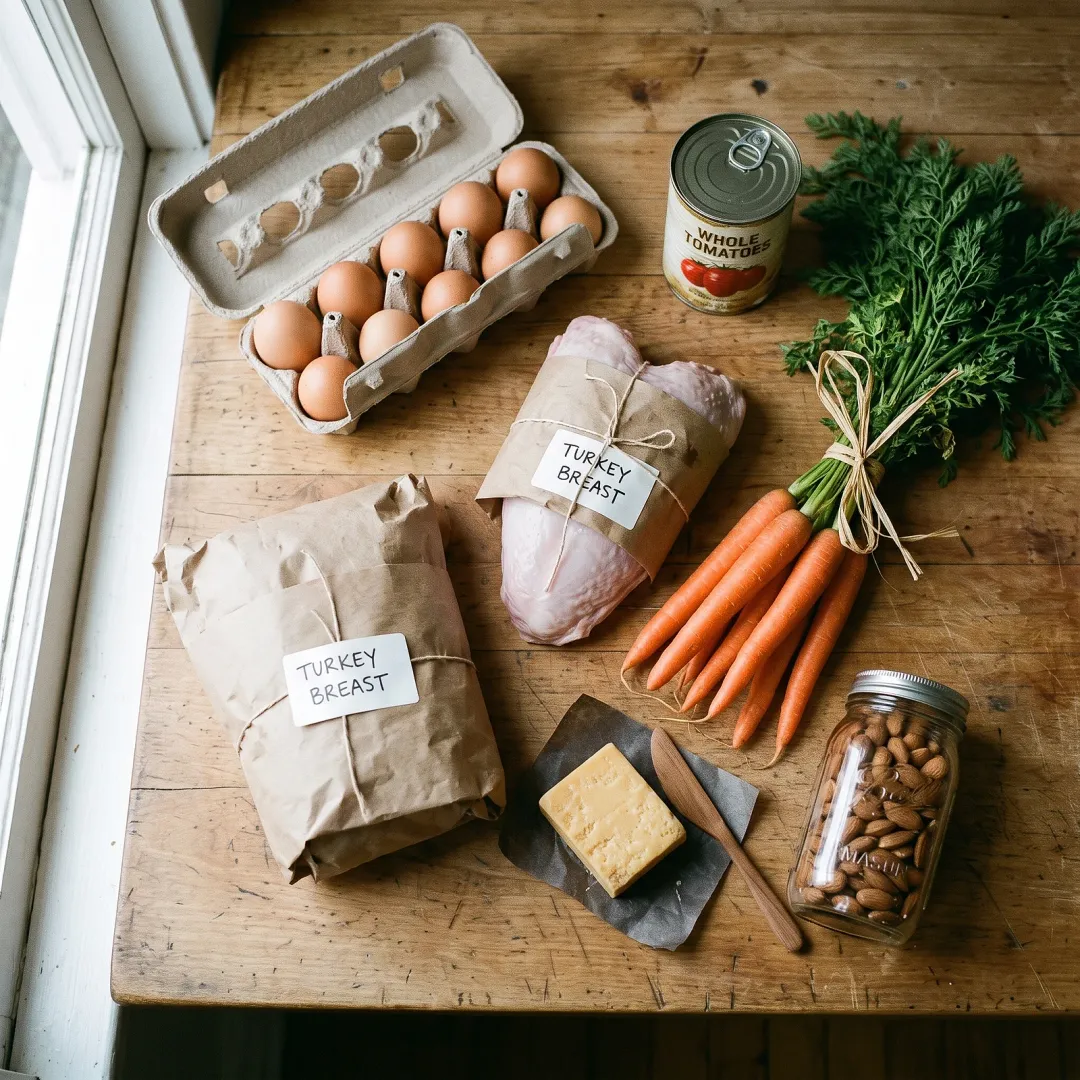

Every single day, perfectly good food gets thrown into the trash because of a date printed on the package. Not because it's bad. Not because anyone got sick. Because the number said so, and we've been conditioned to believe the number is law. It is not. Almost none of those dates are federally regulated safety deadlines. They are, mostly, manufacturers telling you when the product tastes best to them. That's it. And the food waste that follows is staggering: the USDA estimates that food loss and waste account for between 30 and 40 percent of the U.S. food supply. Some of what's being trashed is processed junk that probably should go. But a lot of it is real food, good meat, whole eggs, honest produce, that people are pitching because a printed number spooked them.
This article is for general informational purposes only and is not medical advice. Always consult a qualified healthcare professional before making changes to your diet or health routine.
The Labels Themselves: What They Legally Mean
Here's the thing most people don't know: in the United States, only infant formula is federally required to carry a "use by" date, as confirmed by the USDA's Food Safety and Inspection Service. Everything else, every label you see on your ground beef, your almond butter, your carton of eggs, is put there voluntarily by the manufacturer, with no standardized legal definition across states.
That's the gap nobody talks about. Here's what each term generally means in practice:
"Best By" or "Best If Used By": This is a quality date, full stop. It tells you when the manufacturer believes the product will be at peak flavor, texture, or aroma. It says nothing about safety. Your canned tomatoes past their "best by" date are not dangerous. They may have softened slightly or lost a bit of brightness, but they are almost certainly fine to eat.
"Sell By": This one is aimed at the retailer, not you. It tells the store how long to keep a product on the shelf to allow time for the customer to use it at home. The USDA notes that food is still safe to consume after the sell-by date if it has been stored properly.
"Use By": This is the closest thing to a safety date, but it's still manufacturer-defined, not government-mandated (except on infant formula). It's their estimated endpoint for peak quality and, in some cases, safety. It deserves more weight than "best by," but it still isn't an absolute deadline for most foods.
"Freeze By": A newer label type that the USDA now encourages manufacturers to use. It tells you when to freeze the product to maintain best quality, not when it becomes dangerous.
The patchwork of labeling has real consequences. A 2019 report from the Harvard Food Law and Policy Clinic and ReFED found that date label confusion is one of the leading drivers of household food waste in this country. We toss food that's fine because the labels are inconsistent, unregulated, and poorly understood.
What Actually Goes Off: Real Food, Ranked by How Fast It Spoils
Real, whole food doesn't all spoil at the same rate. This is worth knowing because it changes how you shop, store, and prioritize what to eat first.
Fresh meat and poultry: genuinely time-sensitive. Raw ground meat, raw ground turkey, raw chicken, raw seafood, these go off fast. The USDA recommends using or freezing raw ground meat and poultry within one to two days of purchase, and whole cuts of beef, pork, lamb, and veal within three to five days. This isn't date-label theater; this is actual microbial reality. Bacteria multiply rapidly in raw meat between 40°F and 140°F, which is what food scientists call the "danger zone". Your nose is a decent early warning system here, but it isn't perfect. When in doubt with raw meat, err on the side of cooking it soon or freezing it.
Turkey is a great example because people overbuy it, especially around the holidays. A whole raw turkey keeps in the fridge one to two days. But a cooked turkey? Cooked turkey meat, sliced or carved, keeps safely in the refrigerator for three to four days per USDA guidelines. Freeze what you won't eat. Turkey holds up beautifully in the freezer for two to six months.
Leafy greens and berries: fastest among produce. Pre-washed bagged spinach, arugula, and mixed greens often go slimy within days of opening, well before their printed date, especially if moisture builds up inside the bag. Fresh berries are similar. Buy them, wash them gently, use them within two to three days, or freeze them the day you bring them home.
Root vegetables, winter squash, and whole citrus: longer than you think. Whole carrots can last two to four weeks in a cold, humid part of your fridge. Sweet potatoes and winter squash kept in a cool, dry, dark spot can hold for weeks or months. These are the foods that date labels matter the least for. Treat them like the pantry staples they actually are.
Eggs: probably fine well past the sell-by date. The sell-by date on eggs is not a safety cutoff. The FDA's Shell Eggs from Farm to Table fact sheet notes that eggs can be used safely three to five weeks after you bring them home, even if that date has passed, as long as they've been refrigerated. The simple float test, a fresh egg sinks, an old one floats because the air cell grows as moisture evaporates, can help you gauge freshness when you're unsure.
Hard cheeses: surprisingly resilient. A block of aged cheddar or parmesan develops surface mold? Cut an inch around and below the mold and the rest is likely fine, per USDA guidance on moldy foods. Soft cheeses like ricotta or cottage cheese are a different story; mold there means the whole container goes.
Nuts and nut butters: the rancidity problem. This is one place where date labels carry actual information. The fats in nuts and nut butters oxidize over time, turning them rancid. Rancid fat tastes bitter and unpleasant, and research suggests that consuming oxidized fats may be linked to inflammatory processes in the body. Smell your almonds and walnuts. They should smell nutty and mild, not like crayon or old paint. Store them in an airtight container in the fridge or freezer to extend their life significantly.
Canned and shelf-stable foods: longer than the label suggests, with caveats. The USDA distinguishes between high-acid canned goods (tomatoes, citrus, pickles) and low-acid canned goods (vegetables, meat, beans). High-acid canned foods typically maintain best quality for 12 to 18 months. Low-acid canned foods can remain safe and nutritious for two to five years. The date on the can is about quality, not a countdown to danger. The exception is any can that's bulging, deeply dented at a seam, or spurting liquid when opened: those are signs of potential bacterial contamination and should be discarded.
The Sensory Test: Your Built-In Detection System
Before refrigerators, before printed dates, humans kept themselves alive by using their senses. Your nose, your eyes, and your tongue evolved specifically to detect spoilage. That system is not obsolete.
Smell is your first line of defense. Sour, ammonia-like, sulfurous, or putrid odors from meat and dairy are real signals of bacterial breakdown. Trust them. At the same time, recognize that some dangerous bacteria, particularly Salmonella and Listeria, are odorless and tasteless. This is why proper refrigeration temperatures matter independent of how something smells.
Visual cues matter too. Slime on meat, unusual discoloration (gray-green in cooked poultry, for example), and mold on soft foods are legitimate discard signals. Browning on beef, though, is not. Myoglobin in beef turns brown when it's exposed to air; that is an oxidation reaction, not spoilage. Plenty of perfectly safe beef looks brown before you cook it.
Texture tells a story with produce. Mushrooms that are slimy, greens that have gone liquid, berries that have collapsed, those are real signs of breakdown. Slightly wilted kale? Throw it in a soup. The cell walls broke down, the flavor is fine.
The honest truth is that date labels and sensory evaluation work best together. Use the date as a rough planning guide. Use your senses as the actual check.
What This Means for a Real-Food Kitchen
Eating real, whole food already puts you ahead of this problem in some ways. Processed food with long ingredient lists is often engineered to have a long shelf life, but it also contains ingredients that can degrade in ways you can't easily detect. When your food is a chicken thigh, a bunch of carrots, and a jar of olive oil, you have a much clearer picture of what you're dealing with.
A few practical habits that help:
Shop with a plan, not a stockpile. Buying more than you can realistically use is the fastest route to waste. Fresh meat, especially raw ground turkey or chicken, should come home with a plan already attached: cook it tonight, or freeze it tomorrow.
Label your freezer. The freezer is your best tool for extending real food. But only if you know what's in there and when it went in. Write the contents and the date on a piece of tape. It takes ten seconds and it saves you from mystery meat three months later.
Store smart. Ethylene gas, released by apples, bananas, and some other fruits, speeds the ripening and spoilage of nearby produce. Keep your ethylene producers separate from your leafy greens and herbs. Herbs stay fresh much longer wrapped loosely in a damp paper towel inside an airtight container in the fridge, or standing upright in a glass of water like cut flowers.
Prioritize by perishability. Build your meals around what needs to be eaten first. That's just good kitchen stewardship. It's not complicated; it's just intentional.
I think about this through the lens of stewardship. The food in my kitchen cost money, used land and water and someone's labor to produce, and landed on my counter as a gift I should take seriously. Pitching it because a printed number told me to, when my nose and eyes say it's fine, doesn't sit right. Neither does holding onto something genuinely questionable because I hate to waste. Good judgment is the actual skill here.
What Federal Changes Are (Slowly) Coming
The labeling inconsistency is not news to regulators, though change moves slowly. The FDA and USDA have been pushing voluntary adoption of two standardized phrases: "Best If Used By" for quality and "Use By" for safety, in an effort to reduce consumer confusion. A 2023 FDA report on food loss and waste outlines the agency's ongoing work on date label standardization as part of a broader food waste reduction strategy.
Some states have moved faster than the federal government. Virginia, for instance, passed legislation standardizing food date labels. These are encouraging steps, but until federal standardization is mandatory and consistent, reading a package date still requires knowing what category of label you're looking at.
For now, knowing the vocabulary, "best by" means quality, "use by" means the manufacturer's safety estimate, "sell by" is for the store, is the most practical thing you can do with that information.
Key Takeaways
- Only infant formula carries a federally required "use by" date in the U.S. Almost every other date label is voluntary and unregulated.
- "Best by" and "sell by" dates are quality indicators, not safety deadlines. Food is often fine to eat after these dates if it has been stored properly.
- Raw meat and poultry (especially ground turkey and chicken) are genuinely time-sensitive: use or freeze within one to two days of purchase.
- Eggs, hard cheeses, root vegetables, and low-acid canned goods stay safe and usable well past their printed dates.
- Your senses (smell, sight, texture) are real spoilage detectors, though some dangerous bacteria produce no odor. Refrigerate properly regardless.
- The FDA and USDA are working toward standardized labeling, but until that's mandatory, understanding the label types is your best defense against unnecessary waste.
Frequently Asked Questions
Is it safe to eat food after the best by date?
In most cases, yes. "Best by" is a manufacturer's quality estimate, not a federally mandated safety deadline. Foods like canned goods, eggs, and hard cheeses are often safe and nutritious well past this date if they've been stored correctly. Use your senses and check the USDA's storage guidelines for specific foods. When in doubt, consult a food safety resource or your healthcare provider.
What is the difference between sell by and use by dates?
"Sell by" is a retailer-facing inventory date. It tells the store how long to display the product, leaving time for the consumer to use it at home after purchase. "Use by" is a manufacturer's estimate of when the product will be at peak quality or, in some cases, safety. Neither is a universal federal safety standard except on infant formula.
How long is raw ground turkey good in the fridge?
The USDA recommends using or freezing raw ground turkey within one to two days of purchase. This is a genuine food safety guideline tied to bacterial growth, not just a quality estimate. If you won't use it that soon, freeze it the day you buy it and label the bag with the date.
How can you tell if food has actually gone bad?
Smell, visual cues, and texture are your primary tools. Sour, ammonia-like, or putrid odors from meat and dairy, slime, significant discoloration, and mold on soft foods are real spoilage signals. Keep in mind that some dangerous bacteria are odorless and tasteless, which is why proper refrigeration matters regardless of how food smells. When in doubt, the USDA's food safety resources are a solid reference.
Sources
- USDA Food Safety and Inspection Service: Food Product Dating
- USDA Food Safety and Inspection Service: The Danger Zone: 40°F, 140°F
- USDA Food Safety and Inspection Service: Fresh Turkey
- USDA Food Safety and Inspection Service: Molds on Food: Are They Dangerous?
- FDA: Shell Eggs from Farm to Table
- FDA: Food Loss and Waste
- ReFED: The Problem: Food Waste in America
- National Institutes of Health / PMC: Lipid Oxidation in Food and Health Implications
This article is for general informational purposes only and is not medical advice. Always consult a qualified healthcare professional before making changes to your diet or health routine.

Join the conversation
What do you think?
Free members can comment, reply and like. It takes ten seconds.