
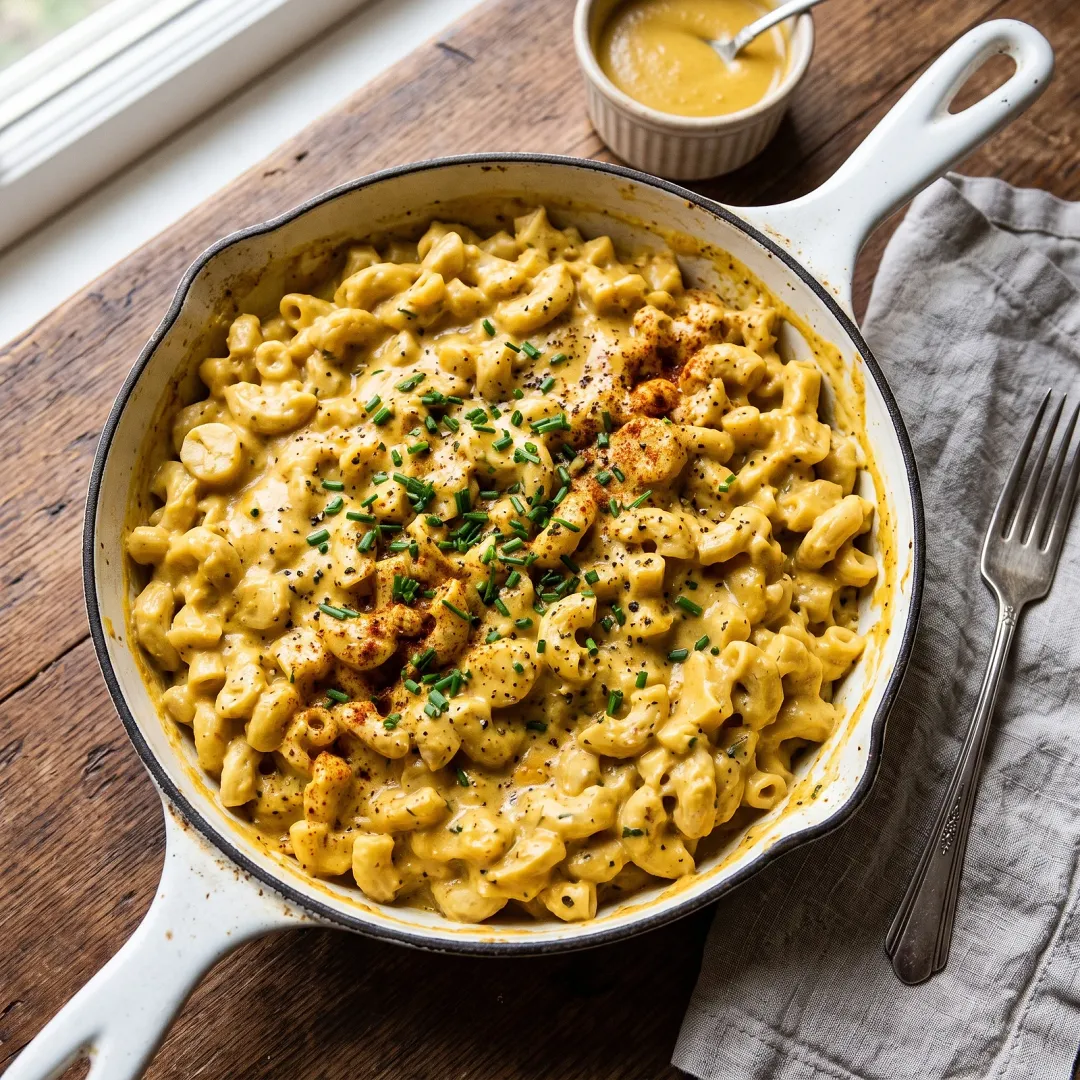

Hearts of palm pasta changed my life a little. I know that sounds dramatic, but after years of subbing zoodles and spaghetti squash under everything and pretending it was the same, I was tired. Mac and cheese was the dish I missed most. Not just the flavor but the feeling of it, that warm, scoopable, creamy comfort that has nothing to do with being fancy and everything to do with feeling taken care of. So I got serious about solving it properly, two problems at once. The noodle and the sauce. Hearts of palm pasta is the swap that actually works for the noodle. It comes in elbow and penne cuts, it holds its shape when you cook it right, and when you toast it in a hot pan with ghee before adding any sauce, it firms up and gets just enough chew that your brain stops noticing what it is. For the sauce, I roasted butternut squash and a whole head of garlic until they were caramelized and sweet, then blended them with full-fat coconut milk, smoked paprika, dry mustard, and turmeric for that golden color. What comes out is velvety, rich, and savory in a way that reads as cheesy even without a single drop of dairy. The nutritional yeast adds a subtle umami depth that pushes it further into cheese territory, and I include a strict-paleo swap right on the ingredient line if that is not your thing. This is not a dish that apologizes for what it is not. It tastes like the real thing.
Nutritional Benefits
Hearts of Palm: A Low-Carb, Gut-Friendly Noodle
- Hearts of palm are harvested from the inner core of certain palm trees and are naturally low in carbohydrates and calories, making them one of the most practical grain-free pasta alternatives available.
- They provide a source of dietary fiber, which supports digestive health and helps you feel satisfied without the blood sugar spike that comes from conventional pasta.
- Hearts of palm also contain potassium, a mineral many people run low on, which plays a role in heart function, muscle contractions, and fluid balance.
Butternut Squash: More Than Just Color
- Butternut squash is rich in beta-carotene, the plant-based precursor to vitamin A, which your body needs for immune function, healthy vision, and skin integrity.
- It provides a meaningful dose of vitamin C and potassium, and its natural sweetness deepens significantly when roasted, which is exactly what makes it work so well as the base of this sauce.
- Despite tasting rich and starchy, butternut squash has a lower glycemic impact than white potato and far fewer carbohydrates than conventional pasta.
Roasted Garlic: Flavor and Function
- Roasting garlic mellows its sharp bite and concentrates its natural sugars, but it retains allicin and other sulfur compounds that have been studied for their antimicrobial and anti-inflammatory properties.
- Garlic is a natural prebiotic, meaning it feeds the beneficial bacteria in your gut. For anyone working on gut health through real food, garlic is a simple and delicious tool.
- Using a whole roasted head instead of powder means you get genuine depth of flavor, not an approximation of it.
Full-Fat Coconut Milk: The Dairy-Free Cream
- Full-fat coconut milk provides the richness and mouthfeel that makes a cream sauce actually work. The fat in coconut milk is primarily medium-chain triglycerides, or MCTs, which are metabolized differently than long-chain fats and used by the body more readily for energy.
- Choosing full-fat from a can rather than the diluted carton version makes a meaningful difference in both flavor and sauce consistency.
- Coconut milk is naturally free of dairy, soy, and gluten, making it one of the most broadly compatible real-food ingredients in a grain-free kitchen.
FAQs
What brand of hearts of palm pasta works best for this recipe?
Palmini is the most widely available and what I reach for most often. Trader Joe's also carries their own version. Look for the elbow or penne cut specifically for the mac and cheese feel. Just make sure you drain, rinse, and dry it thoroughly before toasting it in the pan.
Can I make the butternut cream sauce ahead of time?
Yes, and it actually works really well as a make-ahead component. Blend the sauce, let it cool, and store it in an airtight jar in the refrigerator for up to four days. When you are ready to serve, warm the sauce gently in the skillet, toast your hearts of palm pasta, then combine. The sauce thickens as it sits, so add a splash of coconut milk when reheating to bring it back to the right consistency.
My hearts of palm pasta is mushy. What went wrong?
Two likely culprits: not drying it well enough before it hit the pan, or skipping the toasting step. Hearts of palm holds a lot of moisture right out of the can. Press it with a paper towel after rinsing, then let it sit in a dry hot pan with ghee without stirring for a couple minutes so it can get some color. That step changes the texture completely.
Is this recipe Whole30 compliant?
It is, with one swap: leave out the nutritional yeast, which is technically a gray area on Whole30 since some programs flag it. The sauce is still deeply flavorful and creamy without it. I include that note right on the ingredient line so you do not have to go digging.
Can I add protein to make this a full meal?
Absolutely. Crispy bacon crumbled on top is the obvious move and it is a good one. Shredded rotisserie chicken stirred into the skillet right before serving works great. Ground beef or turkey browned with a little onion and garlic would turn this into a paleo hamburger helper situation that nobody at your table would complain about.
If you made this, I want to hear about it. Drop a comment below and tell me what you thought, especially if you have been burned by paleo mac and cheese attempts before. And if you shared it with someone who had no idea it was grain-free and they loved it anyway, that story is absolutely worth telling. Save this one, share it with a friend who is just getting started with real food, and pin it so you can find it when that craving hits.
 That Paleo Chick
Real food that heals
That Paleo Chick
Real food that heals
RecipePaleoSide DishLow-Carb

Fits these needs
Checked ingredient by ingredient. Tap one to see every recipe that fits.
Always check labels on packaged ingredients (gluten-free certification, hidden additives) and follow your clinician's advice.
Ingredients
Instructions
Nutrition Facts Amount per serving
Estimated from the ingredients. Values vary with brands and portions.

Join the conversation
Made it? Tell us how it went.
Free members can comment, reply and like. It takes ten seconds.