

On this page
I used to walk into the grocery store with good intentions and walk out with a cart full of things I didn't plan on buying, half of which I thought were healthy. The packaging said things like "wholesome," "natural," "heart smart." My body told a different story. It took me a while to figure out that the grocery store layout itself was working against me, and that nobody designed it by accident.
The Store Was Built to Sell You Processed Food. Full Stop.
This is not a conspiracy theory. It is just retail science. Grocery stores have used a discipline called "consumer behavior engineering" for decades. The most profitable, most processed products get the best real estate: end caps, eye-level shelves, checkout lanes, and the entire sprawling center of the store. Produce, meat, eggs, and dairy are almost always pushed to the outer walls, which forces you to walk through the interior aisles to get to them.
Research published in journals on retail food environments consistently shows that store layout directly influences what people buy, often without them realizing it. The American Journal of Preventive Medicine has documented how store design affects purchasing patterns, particularly for less nutritious foods. This is not a nudge. It is a full-court press.
Knowing that changes everything. Once you see it, you cannot unsee it. And once you cannot unsee it, you can shop with a strategy instead of just vibes and a vague list.
The Perimeter Is Your Home Base. Treat It That Way.
Here is the general rule that has served me well for years: build your cart from the outside in, and make sure the outside accounts for the majority of what goes home with you.
Here is what you typically find on the perimeter and how to work each section:
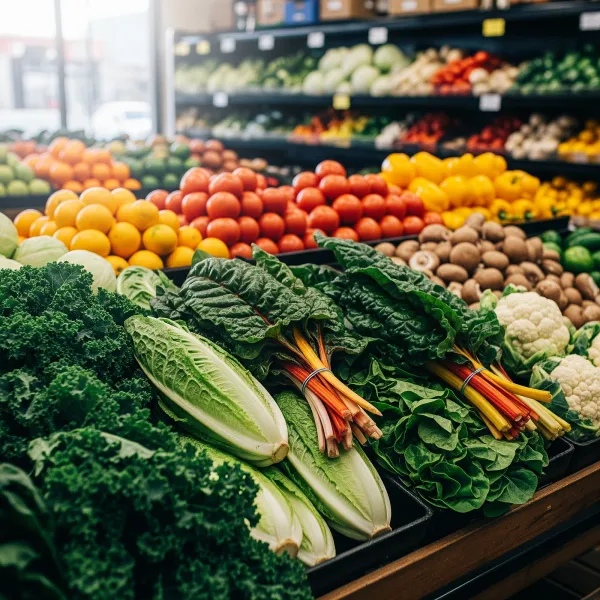
Produce section (usually the first thing you hit): This is intentional. Stores put produce up front because it makes you feel like you are being healthy, which makes you more relaxed and likely to spend. Fine. Use that. Load up here. Prioritize organic for the Dirty Dozen (strawberries, spinach, peppers, apples, and the rest of the high-pesticide list published annually by the Environmental Working Group). Go conventional on the Clean Fifteen. You do not need to buy organic everything to eat well.
Meat and seafood counter: Ideally, this is where you are looking for grass-fed beef, pastured pork, free-range poultry, and wild-caught fish. I know that is not always in the budget, and I will talk about that. But this counter is the foundation of a real-food week. Do not skip it.
Dairy and eggs: Pasture-raised eggs are worth every extra cent. The nutrient profile is genuinely different, with higher omega-3s and more fat-soluble vitamins compared to conventional eggs, according to research cited by Penn State. For dairy, if you tolerate it, go full-fat. We have talked at length about why low-fat dairy was a mistake. Grab full-fat plain yogurt, good butter, and real cheese with ingredients you recognize.
Frozen section (often on the perimeter or near it): Frozen vegetables and fruit are one of the most underrated real-food wins. They are picked at peak ripeness and flash-frozen, which locks in nutrients. A bag of frozen wild blueberries or organic broccoli is genuinely good food, often cheaper than fresh, and it does not go bad on a Tuesday. Stock your freezer.
Surviving the Middle Aisles Without Getting Wrecked
I am not going to tell you to never walk down the center aisles. That is unrealistic and also unnecessary. There are real-food staples in those aisles. The goal is to go in with a list and a filter, not with an open mind.
Here is what I actually look for and buy in the middle of the store:
Canned and jarred goods: Wild-caught canned salmon and sardines, canned coconut milk, diced tomatoes with no added sugar or citric acid overload, olives, artichoke hearts, full-fat coconut cream. These are pantry workhorses. Check the ingredients, keep it short.
Cooking fats: Good olive oil (look for a harvest date on the bottle, not just an expiration date, and buy it in dark glass), coconut oil, avocado oil. These live in the middle aisles and they are absolutely worth buying.
Nuts, seeds, and nut butters: Raw or dry-roasted with no seed oils added. Almond butter should have one ingredient: almonds. Same with cashew butter, same with tahini. Flip the jar over before it goes in the cart.
Dried herbs and spices: This is one of the most overlooked real-food tools in the kitchen. Good spices make simple whole food taste incredible, which makes it way easier to stay on track.
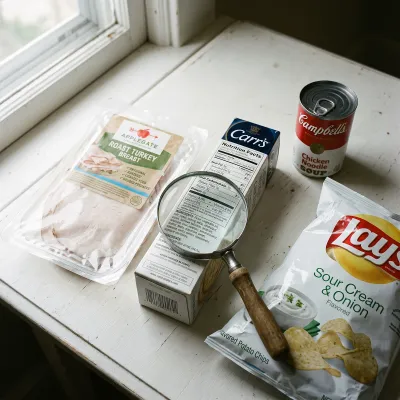
What to skip: Anything in a box that makes a health claim on the front. The FDA does regulate health claims, but "made with whole grains" or "a good source of fiber" on a box of crackers does not make it real food. If it needs to tell you it is healthy, it probably is not.
7 Practical Tips for a Better Grocery Run Every Time
These are not theoretical. These are the things I actually do.
1. Eat before you go. I know you have heard this a hundred times. It is a hundred times true. Shopping hungry is how you end up with a bag of plantain chips and four things of almond-flour cookies at checkout. Real talk.
2. Write your list by store section, not by recipe. List proteins together, produce together, pantry staples together. You move through the store efficiently and you are far less likely to wander into a processed-food trap because you are "just looking."
3. Set a realistic protein anchor for the week. Decide on two or three proteins before you shop. Maybe it is ground beef, a whole chicken, and a bag of frozen shrimp. Everything else builds around those. This keeps you from buying a bunch of random ingredients that don't actually make meals.
4. Give yourself a "wild card" budget for trying one new thing. A new canned fish, a different kind of olive, some grain-free crackers you have not tried. Keeping it interesting is how you stay out of the drive-through on a Wednesday night when you are tired of your usual rotation.
5. Check unit prices, not package prices. The big store brand bag of organic frozen broccoli is often cheaper per ounce than the smaller name-brand bag. Stores count on you looking at the sticker price and not doing the math.
6. Use the butcher counter. Ask what is on sale. Ask what is about to be marked down. Ask if they have any pastured or grass-fed options that are not in the case. Butchers are usually happy to talk, and that conversation has saved me real money.
7. The checkout lane is its own aisle. It is engineered to get one more thing into your cart. Gum, candy, snack bars with "protein" on the label. Just look at your phone. You do not need it.
Real-Food Grocery Shopping on a Real Budget
I hear this concern constantly and I take it seriously, because real food does cost more in a lot of cases, and that is a legitimate structural problem with our food system, not a personal failing.
But there are ways to make it work:
Prioritize quality on what matters most. The Environmental Working Group's Dirty Dozen list is a great guide for where to spend on organic. The Clean Fifteen is where you save. You do not have to go organic on everything to reduce your pesticide exposure meaningfully.
Buy cheaper cuts of quality meat. Grass-fed ground beef costs significantly less than grass-fed ribeye and it is just as nutritious. Bone-in chicken thighs from a good source are cheap and incredibly flavorful. Organ meats, if you can work up to them, are the most nutrient-dense and least expensive cuts available.
Frozen is your friend. I said it already and I will say it again. A big bag of frozen wild blueberries from a warehouse store is real food at a real price.
Cook a lot at once. The per-meal cost of a big pot of slow-cooked beef and vegetable stew is dramatically lower than buying individually prepared anything. Batch cooking is the single most effective budget strategy for real-food eating.
Reduce food waste ruthlessly. The USDA estimates that American households waste between 30 and 40 percent of their food. That is money in the trash. Buying less, using more, and actually eating what you bought is its own form of grocery savings.
A Word on Farmer's Markets and Co-ops
If you have access to a farmer's market, I want to encourage you to try it even once before you decide it is out of your budget. A lot of small farms cannot afford organic certification but grow using clean practices. You can just ask the farmer. That conversation is not awkward. They love having it.
Farmer's markets often have the best prices on seasonal produce, especially at the end of the market day when vendors would rather sell than haul things back. And buying directly from a local farm keeps money in your actual community instead of a multinational grocery conglomerate.
Food co-ops are another option worth looking into if you have one nearby. Many allow work-trade memberships or offer discounts for members that make organic and whole food genuinely more affordable.
The body God gave you is worth feeding well. That does not have to mean spending a fortune. It means being strategic, being informed, and refusing to let a store layout make your decisions for you.
Key Takeaways
- Grocery store layouts are deliberately designed to maximize sales of profitable processed products. Understanding this lets you shop with intention instead of reacting to the environment.
- Build your cart from the perimeter first: produce, meat, eggs, dairy, and frozen vegetables cover the foundation of real-food eating.
- Middle aisles are not off-limits. Cooking fats, canned fish, coconut milk, nuts, and spices are legitimate pantry staples worth grabbing there.
- Front-of-package health claims are marketing, not nutrition guidance. Flip the product over and read the ingredients.
- Real-food grocery shopping on a budget is possible: prioritize quality on high-pesticide produce, buy cheaper cuts of quality meat, rely on frozen, batch cook, and cut food waste.
- Farmer's markets and co-ops can be more affordable than expected, especially for seasonal produce and direct-from-farm meats.
Frequently Asked Questions
Is it really cheaper to shop the perimeter of the grocery store?
Not always, but it can be with the right strategy. Meat and produce can be pricier, especially for quality options. The key is prioritizing organic where it matters most (use EWG's Dirty Dozen list), buying cheaper cuts of good meat like ground beef or bone-in thighs, leaning on frozen produce, and batch cooking to stretch what you buy. The perimeter is where your food foundation comes from; the strategy is what keeps it affordable.
What real-food staples are actually worth buying in the middle aisles?
Plenty. Good olive oil in dark glass, coconut oil, avocado oil, canned wild-caught fish (salmon, sardines, tuna), full-fat coconut milk and cream, canned tomatoes with no added sugar, olives, nuts and nut butters with clean ingredients, dried herbs and spices, and raw apple cider vinegar. The middle aisles are not the enemy. The enemy is walking in without a list.
How do I shop for real food on a tight budget?
A few moves that genuinely help: buy organic only on the Dirty Dozen (the highest-pesticide produce), go conventional on the Clean Fifteen, choose frozen vegetables and fruit over fresh when fresh is expensive or out of season, buy cheaper cuts of quality meat like ground beef or chicken thighs, batch cook large amounts at once to lower per-meal cost, and cut food waste aggressively. The USDA estimates American households waste 30 to 40 percent of their food, which means a big chunk of your grocery budget is probably going in the trash right now.
Is frozen produce as nutritious as fresh?
In most cases, yes, and sometimes more so. Frozen vegetables and fruits are typically picked at peak ripeness and flash-frozen quickly, which locks in their nutrient content. Fresh produce, especially if it has traveled long distances, can lose some nutrients during transit and storage. Frozen is a genuinely good option and one of the most practical tools for real-food eating on a budget.
Sources
- Environmental Working Group: EWG's Shopper's Guide to Pesticides in Produce (Dirty Dozen / Clean Fifteen)
- USDA Economic Research Service: Food Loss and Waste
- American Journal of Preventive Medicine: Influence of Supermarket Design on Food Purchasing
This article is for general informational purposes only and is not medical advice. Always consult a qualified healthcare professional before making changes to your diet or health routine.