


That feeling when the alarm goes off and your hands won't close, your knuckles look puffy, and it takes half the morning before your body decides to cooperate. If you've just been diagnosed with rheumatoid arthritis, you probably already know exactly what I'm describing. Morning stiffness is one of the most disruptive parts of living with RA, and it's also one of the first things people ask about when they want to understand what food has to do with any of this. The short answer is: potentially quite a bit. The honest answer is: food is support, not a substitution for your medical care. Those two things can both be true at the same time.
What Morning Stiffness Actually Is (So You Know What You're Working With)
Rheumatoid arthritis is an autoimmune condition. That means the immune system mistakenly attacks the lining of the joints, called the synovium, triggering inflammation, swelling, and over time, joint damage. It is not wear-and-tear arthritis. It is the immune system misfiring.
Morning stiffness that lasts longer than 30 to 60 minutes is considered a hallmark symptom and is actually used as part of the diagnostic criteria. The American College of Rheumatology notes that in active RA, this stiffness often lasts an hour or more. Some people describe it lasting most of the morning. What is happening, as far as researchers understand it, is that overnight the inflammatory chemicals in the synovial fluid build up without the mechanical activity of movement to disperse them. By morning, the joint is stiff, swollen, and resistant.
This matters for how we think about food, because the driver of that stiffness is systemic inflammation. And systemic inflammation is something diet has a real, documented relationship with.
The Diet-Inflammation Link in RA: What the Research Actually Says
Research into diet and rheumatoid arthritis has expanded significantly over the last decade, and the picture that keeps emerging is that certain eating patterns are linked to lower levels of the same inflammatory markers that drive RA symptoms.
A 2021 review published in Frontiers in Nutrition found that dietary patterns rich in vegetables, fruits, whole grains, fish, and legumes were associated with lower levels of C-reactive protein (CRP) and other inflammatory markers in people with rheumatic diseases. CRP is one of the biomarkers your rheumatologist is likely already tracking.
There's also a growing body of work on the gut microbiome and RA. The National Institutes of Health has published research showing that gut microbiome composition differs in people with RA compared to healthy controls, and that the balance of bacteria in the gut may influence systemic immune activity. What we eat shapes the gut microbiome. That's the connection worth understanding.
None of this means your fork replaces your rheumatologist. What it means is that the food choices you make every single day are either adding fuel to the fire or helping to quiet it. That is worth taking seriously, especially in the first weeks after a diagnosis when you are figuring out what you can actually control.
What to Pull Back On First
In the first week, you do not need to overhaul everything at once. That approach burns people out fast. Start with what the research points to most consistently as problematic.
Ultra-processed foods and added sugar. A 2018 survey-based study published through the National Institutes of Health found that among RA patients who reported dietary changes, those who reduced sugar and processed food intake reported the most perceived improvement in symptoms. The Arthritis Foundation also specifically flags added sugars, refined carbohydrates, and ultra-processed snack foods as dietary patterns associated with increased inflammation.
Refined seed oils high in omega-6 fatty acids. There is a well-documented imbalance between omega-6 and omega-3 fatty acids in the modern diet. Corn oil, soybean oil, and other refined vegetable oils dominate processed food and fast food, and research published via the NIH suggests that high omega-6 intake relative to omega-3 may promote a pro-inflammatory environment in the body. You do not need to track ratios obsessively. You just need to start reading labels and swapping where you can.
Gluten and dairy for some people. This one is more individual. There is no universal evidence that everyone with RA benefits from removing gluten or dairy. But a subset of people with autoimmune conditions do report symptom changes when they remove one or both. If you want to explore it, do it properly: remove one at a time for at least four weeks and track how you feel. Talk to your doctor or a registered dietitian before making significant dietary shifts, especially if you are on medication.
What to Add In (This Is the Part That's Actually Enjoyable)
This is not a deprivation story. Real food is genuinely good, and eating more of what supports your immune system means eating things that actually taste like something.
Fatty fish and omega-3 rich foods. Omega-3 fatty acids, particularly EPA and DHA, have been studied extensively in RA. A meta-analysis published in the journal Seminars in Arthritis and Rheumatism found that omega-3 supplementation was associated with reduced joint pain intensity, duration of morning stiffness, and number of painful joints in RA patients. Food sources include sardines, mackerel, anchovies, and walnuts.
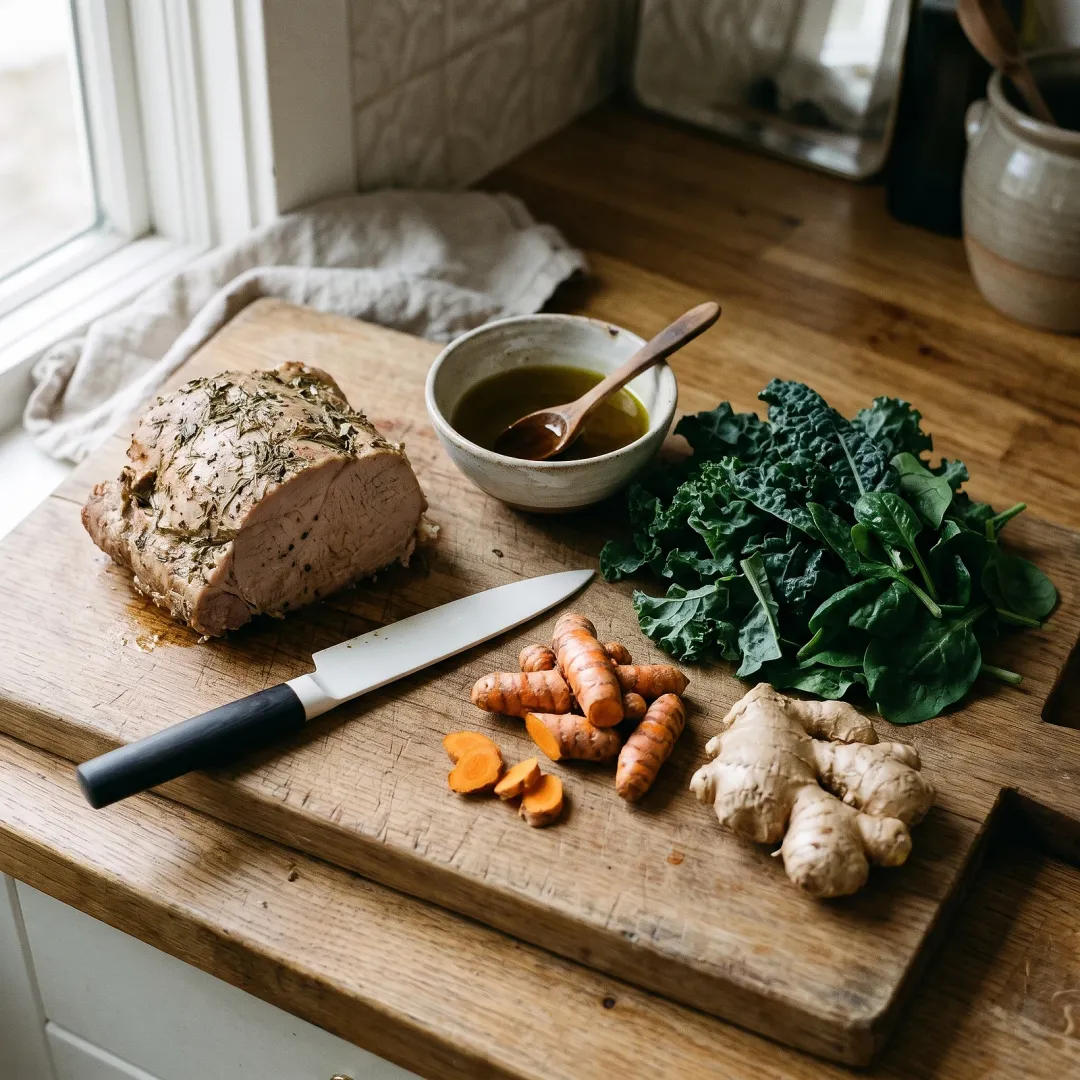
Pork, done right. Pork often gets overlooked in the nutrition conversation, but quality pork (pasture-raised when you can find it) is a solid source of complete protein and B vitamins, including B6 and B12. Protein supports tissue repair and immune function. The USDA confirms pork tenderloin is one of the leaner cuts with a solid micronutrient profile. A slow cooker pork shoulder with turmeric, ginger, and root vegetables is one of the most practical things you can make on a Sunday to carry you through a week of anti-inflammatory eating. Prep it once, eat from it for days.
Colorful vegetables, especially the dark leafy ones. Leafy greens like spinach, kale, and arugula are rich in folate, vitamin K, and antioxidants. The Arthritis Foundation highlights vegetables high in antioxidants as part of an eating pattern associated with lower inflammatory markers. Variety matters here. The more colors on the plate, the broader the range of phytonutrients you're getting.
Olive oil as your primary cooking fat. Extra-virgin olive oil is one of the most studied fats in the context of inflammation. It contains oleocanthal, a compound that research published in the NIH database suggests may have similar properties to non-steroidal anti-inflammatory compounds. That's not a reason to pour it by the bottle, but it is a very good reason to make it your default cooking fat.
Ginger and turmeric. Both have been studied in inflammatory conditions. A review published in the NIH database found evidence that curcumin (the active compound in turmeric) may help modulate inflammatory pathways. Ginger has similar studied properties. These are not supplements you're taking in controlled doses, they are spices you're adding to real food, which is exactly where they belong.
Your First Week: A Practical Kitchen Reset
You were just diagnosed. Your head is probably spinning, and the last thing you need is a list of 47 things to change. Here is what to actually do in week one.
Day 1-2: Clear the most obvious landmines. Go through your pantry and refrigerator. If a product lists sugar in the first three ingredients, or contains refined seed oils (soybean, corn, canola, cottonseed) as a primary ingredient, set it aside. You don't have to throw it all away today, but you want to know what you're working with.
Day 3-4: Stock the basics. Extra-virgin olive oil. A bag of frozen wild-caught sardines or anchovies if fresh fish feels like too much right now. A whole pork shoulder or pork tenderloin for a slow cooker batch. A big bag of spinach. Sweet potatoes. Canned diced tomatoes with no added salt. Turmeric and ginger, fresh or dried.
Day 5-6: Cook one big batch. This matters more than any single meal decision. A slow cooker pork and vegetable stew with turmeric and ginger gives you protein, anti-inflammatory spices, and something warm and easy to reach for all week when morning stiffness makes you not want to stand at the stove for 45 minutes.
Day 7: Track how you feel in the morning. Not with a complicated app. Just a note in your phone or a journal. How long did stiffness last? What did you eat the day before? You are building your own data set, because RA is individual and what you observe in your own body over time is real information worth having. Share it with your doctor and your registered dietitian.
One more thing. Sleep quality and stress load also influence inflammatory markers, according to research from the NIH. Diet is not operating in a vacuum. What you eat matters, and so does how you sleep and how you manage stress. Those are part of the same picture.
What Food Cannot Do (And Why That's Okay)
Food is not a substitute for the medical treatment your rheumatologist has recommended. Disease-modifying antirheumatic drugs (DMARDs) and biologics are prescribed because RA can cause permanent joint damage if left uncontrolled, and food cannot do what those medications do. If your doctor has recommended medication, please take it seriously and have that conversation openly with your care team.
What food can do is work alongside your treatment. It can help reduce the systemic inflammatory load your body is carrying. It can support your gut microbiome, which research is increasingly linking to immune regulation. It can give you better energy, better sleep, and a sense of agency in a situation that can feel overwhelming.
That last part is not small. When you've just been handed a chronic-condition diagnosis, being able to do something concrete, something that actually nourishes your body, matters. The body is worth stewarding well. That is not about being perfect at every meal. It is about making real food the default, one week at a time.
This article is for general informational purposes only and is not medical advice. Always consult a qualified healthcare professional before making changes to your diet or health routine.
Key Takeaways
- Morning stiffness lasting more than 30-60 minutes is a hallmark RA symptom driven by synovial inflammation, not just mechanical stiffness.
- Research links dietary patterns rich in vegetables, omega-3 fats, and whole foods to lower inflammatory markers like CRP.
- Pulling back on added sugar, ultra-processed foods, and refined seed oils is the most evidence-consistent first food step.
- Omega-3 rich foods, quality pork, colorful vegetables, olive oil, and anti-inflammatory spices like turmeric and ginger are practical additions.
- A single batch-cook session early in the week makes real-food eating far more sustainable when morning stiffness limits your time at the stove.
- Food works alongside your prescribed medical care, not instead of it. Keep your rheumatologist and registered dietitian in the loop on dietary changes.
Sources
- American College of Rheumatology: Rheumatoid Arthritis
- Frontiers in Nutrition (via doi.org): Dietary Patterns and Inflammatory Markers in Rheumatic Diseases
- NIH / NCBI: Gut Microbiota and Rheumatoid Arthritis
- Arthritis Foundation: The Arthritis Diet
- NIH / NCBI: Omega-6/Omega-3 Fatty Acid Ratio and Inflammation
- NIH / NCBI: Omega-3 Fatty Acids and RA: Meta-analysis (Seminars in Arthritis and Rheumatism)
- USDA FoodData Central: Pork Tenderloin Nutritional Profile
- NIH / NCBI: Oleocanthal and Anti-Inflammatory Properties of Olive Oil
- NIH / NCBI: Curcumin and Inflammatory Pathway Modulation
- NIH / NCBI: Sleep, Stress, and Inflammatory Markers
Cook for it
Start with one of these AIP-Friendly recipes:
- Herb-Baked Mackerel Stuffed Avocados with Cucumber-Dill Tzatziki-Style Coconut Yogurt
- Slow-Cooked Ginger Garlic Shrimp on Braised Leeks
- Adobo-Roasted Pork Loin on Herbed Summer Squash
Browse every AIP-Friendly recipe
This article is for general informational purposes only and is not medical advice. Always consult a qualified healthcare professional before making changes to your diet or health routine. Nothing here diagnoses, treats or cures any condition, and food is support alongside medical care, not a replacement for it. If you have, or think you may have, the condition discussed here, work with your doctor or a registered dietitian, and do not start, stop or change any medication without talking to them first.



Join the conversation
What do you think?
Free members can comment, reply and like. It takes ten seconds.