


Cutting seed oils sounds straightforward right up until you flip over every bottle in your pantry and realize they are in everything. The mayo. The salad dressing. The "natural" protein bar. The frozen stir-fry sauce you thought was fine. It is a lot. And most people who try to do this all at once end up either paralyzed by labels or quietly putting everything back and ordering pizza. The order you do this in matters more than you think. Start in the right place and momentum builds. Start in the wrong place and you are overwhelmed before you even get to the good part.
First: Understand What You're Actually Dealing With
Seed oils are industrial vegetable oils extracted from seeds, usually with high heat and chemical solvents. The list includes canola, soybean, corn, sunflower, safflower, cottonseed, grapeseed, and rice bran oil. These are the oils that dominate processed food because they are cheap, shelf-stable, and flavorless enough to disappear into anything.
The concern from a functional-medicine perspective centers on their fatty acid profile. Seed oils are extremely high in omega-6 polyunsaturated fatty acids (PUFAs), particularly linoleic acid. Research published in Open Heart has noted that the dramatic rise in linoleic acid consumption over the 20th century, driven largely by seed oil intake, shifted the dietary omega-6 to omega-3 ratio far beyond what most traditional diets contained. The National Institutes of Health notes that this ratio in Western diets is now estimated at anywhere from 15:1 to 20:1, compared to the 1:1 to 4:1 ratio seen in many pre-industrial populations. That imbalance is something worth paying attention to, even if the research is still sorting out the exact mechanisms.
Beyond the fatty acid ratio, the high heat and chemical processing involved in producing seed oils generates oxidation byproducts. A 2020 review in Nutrients examined how heating polyunsaturated oils produces aldehydes and other oxidation compounds. These are not nutrients your body was designed to work with.
You do not need a biochemistry degree to understand why that matters. What you need is a practical plan to get them out of your kitchen without losing your mind.
Step 1: Replace Your Cooking Fats First (This Is the Highest-Leverage Move)
Before you touch a single pantry label, swap the oils you are cooking with every single day. This is the highest-volume exposure point in a home kitchen, and it is also the easiest win because you are replacing one bottle with another.
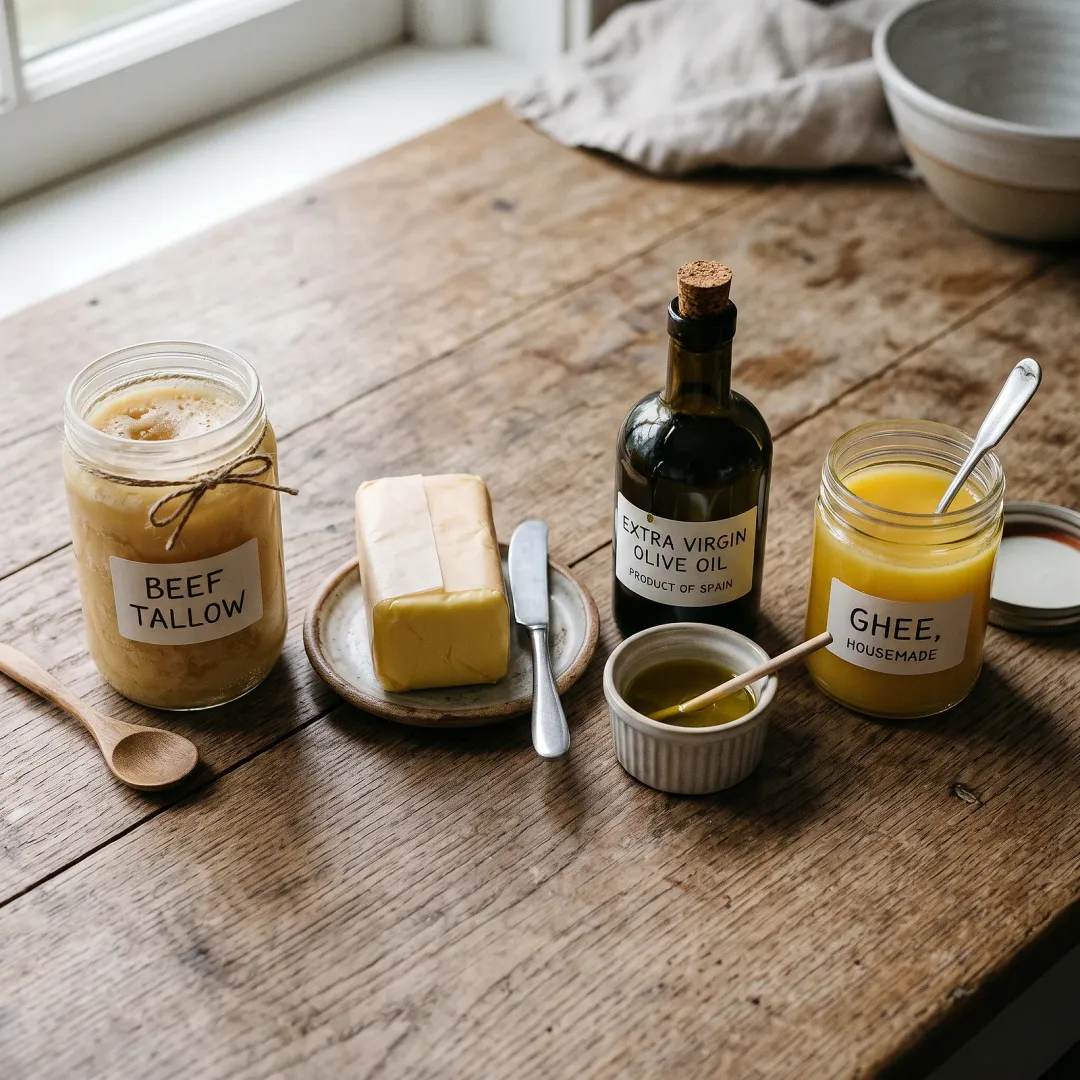
Toss (or finish and do not restock) whatever canola, vegetable, or blended "cooking oil" is next to your stove. Replace it with:
- Tallow or beef tallow for high-heat roasting and searing. Rendered beef fat is what your great-grandmother cooked in before Crisco arrived. It has a high smoke point and it makes roasted vegetables taste extraordinary. You can render it yourself from suet, or buy it pre-rendered from a quality butcher or online.
- Butter or ghee for medium-heat sautéing, scrambled eggs, and finishing sauces. Ghee is clarified butter with the milk solids removed, making it higher in smoke point and easier to tolerate if dairy is a sensitivity.
- Extra virgin olive oil for low-heat cooking and dressings. The Journal of Nutritional Science has documented the polyphenol content in quality olive oil extensively. Use it at temperatures under about 375°F to preserve those compounds.
- Coconut oil for specific applications where the flavor works, like curries, baked goods, and certain stir-fries.
This one swap alone significantly reduces your daily seed oil exposure because home-cooked food is where you have the most control. Lock this in for two full weeks before you do anything else.
Step 2: Clear the Obvious Offenders From Your Pantry
Once your cooking fats are sorted, go through the pantry and pull out anything where the oil is the main ingredient or a primary vehicle. These are the bottles and jars where seed oil is not hiding, it is the point.
The usual suspects:
- Mayonnaise. Conventional mayo is essentially a soybean or canola oil delivery system. Swap it for an avocado oil mayo (Primal Kitchen is widely available and uses no seed oils) or make your own with a hand blender, egg, avocado oil, lemon juice, and salt in about 90 seconds.
- Bottled salad dressings. Nearly all of them use soybean or canola oil as the base. Making your own takes three minutes: olive oil, an acid (lemon juice, apple cider vinegar, or balsamic), salt, and whatever herbs you like. Scale up and store in a mason jar for the week.
- Cooking sprays. "Zero calorie" sprays are almost always canola or soybean oil in an aerosol. Swap for a reusable oil mister filled with olive oil, or just use a small spoon of tallow or butter directly on the pan.
Do not try to audit every label in the pantry in one sitting. It is a fast path to burnout. Hit the ones where oil is the star, then move on.
Step 3: Tackle the Sneaky Label Hiders in Packaged Foods
This is where it gets tedious, and it is the step people try to do first, which is exactly why they quit. You need the first two steps under your belt before this one or it just feels impossible.
Seed oils hide under a lot of names in ingredient lists. Soybean oil is sometimes listed as "vegetable oil." Canola shows up as "rapeseed oil" on some imported products. Cottonseed oil hides in crackers and snack foods. Here is what to scan for on the ingredient label:
Scan for: canola oil, vegetable oil, soybean oil, corn oil, sunflower oil, safflower oil, cottonseed oil, grapeseed oil, rice bran oil, hydrogenated vegetable oil, partially hydrogenated oil.
Categories worth auditing at this stage:
- Crackers and chips (most are fried in or contain seed oils)
- Nut butters (many commercial brands add soybean or sunflower oil)
- Protein bars and energy bars
- Canned fish packed in oil (look for olive oil or water-packed instead)
- Hummus and dips
- Frozen meals and sauces
You do not have to replace everything at once. Work through your pantry as things run out and choose better options at the next shop. That is a sustainable pace. Throwing away a full pantry in one weekend is satisfying for about 48 hours and then expensive and demoralizing.
A note on reading labels: the FDA requires that oils be listed by their specific common name, which means "vegetable oil" should technically name the source. In practice, blended oils sometimes still sneak through with vague labeling on products made outside of strict FDA jurisdiction. When in doubt, if the label says "vegetable oil" and nothing else, treat it as a seed oil.
Step 4: Build Your Restaurant Strategy
Restaurants are where people feel most stuck, and the anxiety around this is real. Almost every commercial kitchen uses soybean, canola, or a vegetable oil blend because it is the cheapest fry and sauté fat at scale. You are not going to fix this by grilling the server.
What you can do:
- Prioritize restaurants where you can control the variables. Steakhouses, burger spots that cook over an open flame, sushi restaurants (where much of the protein is raw), and farm-to-table spots with simple preparations give you the most control.
- Order preparations where oil is least involved. Grilled, roasted, or baked proteins and simple sides are safer than anything fried, sautéed in a pan sauce, or topped with a prepared dressing.
- Ask about the cooking fat at higher-end or chef-driven spots. Some restaurants actually do use butter or duck fat. It is worth asking politely, without making it a whole thing.
- Bring your own dressing. This sounds extra, but a small jar of olive oil and lemon in your bag is genuinely a simple move if you eat out regularly.
- Stop making restaurant meals a reason to abandon everything. One meal cooked in canola at a birthday dinner is not undoing weeks of work at home. Context matters. Your consistent daily habits matter far more than the occasional outlier.
The goal is not perfection at every table. The goal is a home kitchen that is fully in your control and a strategy for eating out that keeps you sane.
Step 5: Zoom Out and Play the Long Game
This last step is not really a step, it is a posture. The reason sequence matters so much in cutting seed oils is that most of the harm reduction happens in steps one and two. Your cooking fats and your most-used condiments account for a massive portion of daily exposure. Getting those right, and keeping them right consistently, moves the needle.
Steps three and four are refinement. They matter, and over time they add up, but they are not where you need to be perfect on day one.
If you approach this whole project through the lens of food as a gift worth stewarding well, it changes the energy around it. This is not a punishing label-reading exercise. It is you deciding to feed yourself and your family something closer to what your body was actually designed to run on. That is worth doing, and it is worth doing in a way you can actually sustain.
Keep beef tallow or butter on the stove, make your own dressing, and read the label on whatever you buy regularly. The rest follows naturally.
This article is for general informational purposes only and is not medical advice. Always consult a qualified healthcare professional before making changes to your diet or health routine.
Key Takeaways
- Start with your cooking fats, not your pantry labels. That swap alone covers your highest daily exposure.
- Beef tallow, butter, ghee, and extra virgin olive oil are the practical replacements for seed oil cooking fats.
- Mayonnaise and bottled salad dressings are the two pantry items to swap immediately after your cooking fats.
- Seed oils hide in crackers, protein bars, nut butters, and canned goods. Tackle packaged foods after the obvious swaps are locked in.
- Restaurants use seed oils almost universally. Order simple, grilled, or roasted preparations and stop letting one meal derail your overall habits.
- Consistency in your home kitchen matters far more than perfection at every restaurant meal.
Frequently Asked Questions
What oils should I replace seed oils with for cooking?
The most practical replacements are beef tallow or lard for high-heat cooking like roasting and searing, butter or ghee for medium-heat sautéing and eggs, and extra virgin olive oil for low-heat applications and dressings. Coconut oil works well in specific recipes where the flavor fits. All of these are whole or minimally processed fats with a long history of use in traditional diets.
How do I find seed oils on a food label?
Look at the ingredient list, not the nutrition facts panel. Seed oils appear as: canola oil, vegetable oil, soybean oil, corn oil, sunflower oil, safflower oil, cottonseed oil, grapeseed oil, rice bran oil, and any variation of 'hydrogenated' or 'partially hydrogenated' vegetable oil. If a label just says 'vegetable oil' with no further detail, treat it as a seed oil until confirmed otherwise.
Is it realistic to cut seed oils if you eat out a lot?
Fully eliminating them at restaurants is very difficult because most commercial kitchens use seed oils for cost reasons. A realistic approach is to focus on simple, grilled, or roasted preparations rather than fried or sauced dishes, bring your own dressing when possible, and prioritize getting your home kitchen right. Consistency at home covers far more ground than stressing over every restaurant meal.
Do I need to throw out everything in my pantry right away?
No, and doing so is one of the fastest ways to burn out on this. A sustainable pace is to work through your pantry as things run out and choose better options at the next shop. Start with your cooking fats and your highest-use condiments like mayo and salad dressing, and let the rest follow over time.
Sources
- Open Heart (BMJ): Increase in linoleic acid consumption and its relationship to cardiovascular disease
- National Institutes of Health, Office of Dietary Supplements: Omega-3 Fatty Acids: Fact Sheet for Health Professionals
- Nutrients (MDPI): Aldehydes and Related Compounds Formed During Heating of Polyunsaturated Oils
- U.S. Food and Drug Administration: Food Labeling Guide: Ingredient Labeling
This article is for general informational purposes only and is not medical advice. Always consult a qualified healthcare professional before making changes to your diet or health routine.

Join the conversation
What do you think?
Free members can comment, reply and like. It takes ten seconds.