
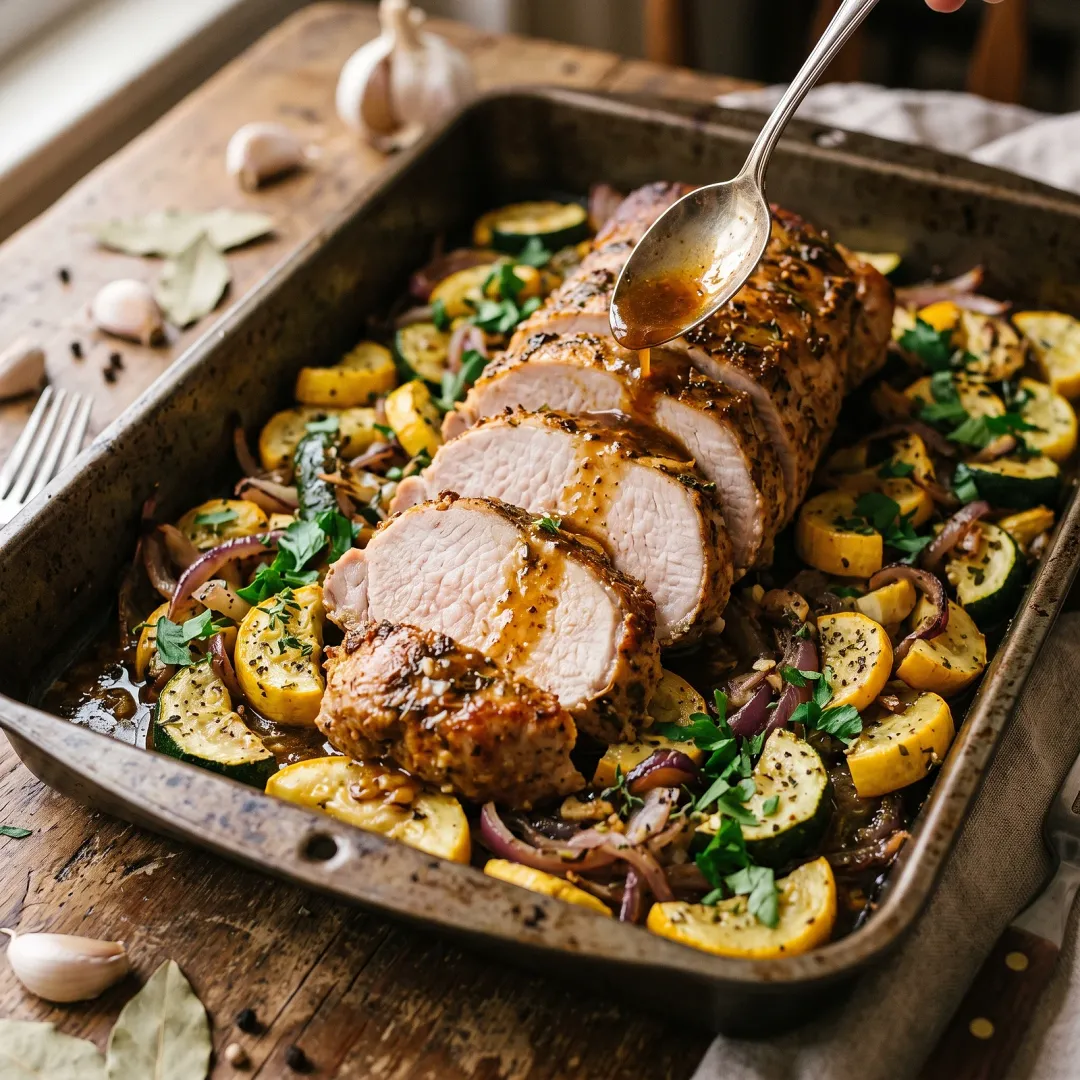

Filipino adobo was doing slow-braised, vinegar-forward, deeply savory long before it was trendy anywhere outside the Philippines, and honestly the fact that it translates so beautifully to AIP is almost unfair in the best possible way. No nightshades, no grains, no dairy. Just pork, garlic, bay leaf, coconut aminos, and vinegar doing what they have done for generations. The squash underneath is the move here. It soaks up every drop of those pan drippings while the pork roasts above it, going soft and slightly caramelized at the edges, and it makes the whole dish feel like one cohesive thing rather than a protein with a side. I want you to set this on the table whole and slice it in front of whoever you are feeding. It deserves that moment.
Nutritional Benefits
Pasture-Raised Pork Loin
- A high-quality source of complete protein, delivering all essential amino acids needed for tissue repair and immune function, both critical for anyone managing an autoimmune condition.
- Rich in B vitamins, especially B1 (thiamine) and B6, which support nerve function and energy metabolism.
- Provides zinc and selenium, two minerals often depleted in people with chronic inflammation. Both play direct roles in immune regulation.
Summer Squash and Zucchini
- Low in carbohydrates and easy on the digestive system, making it a reliable choice for gut-healing protocols like AIP.
- Contains vitamin C and manganese, both of which support connective tissue health and antioxidant defense.
- High water content helps with hydration and gives the vegetable its ability to absorb and concentrate the savory pan drippings without getting soggy.
Coconut Aminos
- Made from the fermented sap of coconut blossoms, coconut aminos delivers a deep, umami-rich flavor without soy, gluten, or any AIP-offending ingredients.
- Contains trace amounts of potassium and naturally occurring amino acids.
- Lower in sodium than conventional soy sauce, making it easier to control salt levels in the final dish.
Cane Vinegar and Apple Cider Vinegar
- Traditional Filipino adobo relies on vinegar as both a flavor component and a natural preservative. Cane vinegar brings a slightly milder, cleaner tartness than ACV.
- Vinegar-based marinades help break down protein fibers slightly, contributing to a more tender finished roast.
- Apple cider vinegar, the easy swap here, has been associated with supporting healthy digestion and blood sugar balance, which matters for the inflammation picture.
Garlic and Fresh Herbs
- Garlic is one of the most studied whole foods for immune support. Its organosulfur compounds, particularly allicin, have documented antimicrobial and anti-inflammatory properties.
- Fresh parsley, thyme, and oregano are not just garnish. They contribute antioxidant flavonoids and volatile oils that carry genuine anti-inflammatory activity.
- Herbs are also a rich source of vitamin K, which plays a role in bone density, something worth paying attention to in long-term autoimmune management.
FAQs
Is cane vinegar AIP-compliant?
Yes, plain cane vinegar is generally considered AIP-compliant. It is made from fermented sugarcane juice and contains no nightshades, grains, or other AIP-excluded ingredients. If you cannot find it, apple cider vinegar is the easiest swap and works beautifully in this recipe.
Can I use pork tenderloin instead of pork loin?
You can, but reduce the roasting time significantly. Pork tenderloin is much thinner and will reach 145°F in about 20 to 25 minutes at 400°F. Watch it closely so it does not dry out. Pork loin gives you those thick, satisfying slices that make this feel like a proper centerpiece roast, so I recommend it when you can find it.
How long should I marinate the pork?
Two hours minimum, overnight ideally. The vinegar and coconut aminos need time to work into the meat. I have done it with just a 30-minute marinade in a pinch and it is still good, but overnight is where the flavor really lives.
What if my squash gets too soft before the pork is done?
Slice your squash a bit thicker, closer to 1/2 inch instead of 1/4 inch, or add it to the pan halfway through the roasting time after the pork has already had a head start. Every oven runs a little differently, so keep an eye on it the first time you make this.
Is this recipe safe for the AIP elimination phase?
Yes, every ingredient here is compliant with the AIP elimination phase. No nightshades, no grains, no legumes, no dairy, no eggs, no nuts, no seeds, and no seed-based spices. That said, AIP is a clinical elimination protocol and works best when guided by a functional medicine practitioner or registered dietitian who can oversee your reintroduction phase.
Can I make this ahead of time?
The pork can be marinated up to 24 hours in advance. The roasted squash and sliced pork reheat well together in a covered dish at 325°F for about 15 minutes. The pan sauce can also be made ahead and stored separately in the fridge for up to three days.
If you made this, I want to hear about it. Drop a comment below and tell me how it went, or tag me on Instagram so I can see your roast. If you are navigating an autoimmune condition and trying to figure out how to eat in a way that actually supports your body, you are in the right place. There are more AIP-friendly recipes coming, and I am not going to make them taste like deprivation. Bookmark this one, share it with someone who needs it, and I will see you at the next one.
 That Paleo Chick
Real food that heals
That Paleo Chick
Real food that heals
RecipePaleoDinnerGluten-Free

Fits these needs
Checked ingredient by ingredient. Tap one to see every recipe that fits.
Diet
Always check labels on packaged ingredients (gluten-free certification, hidden additives) and follow your clinician's advice.
Ingredients
Instructions
Nutrition Facts Amount per serving
Estimated from the ingredients. Values vary with brands and portions.

Join the conversation
Made it? Tell us how it went.
Free members can comment, reply and like. It takes ten seconds.