
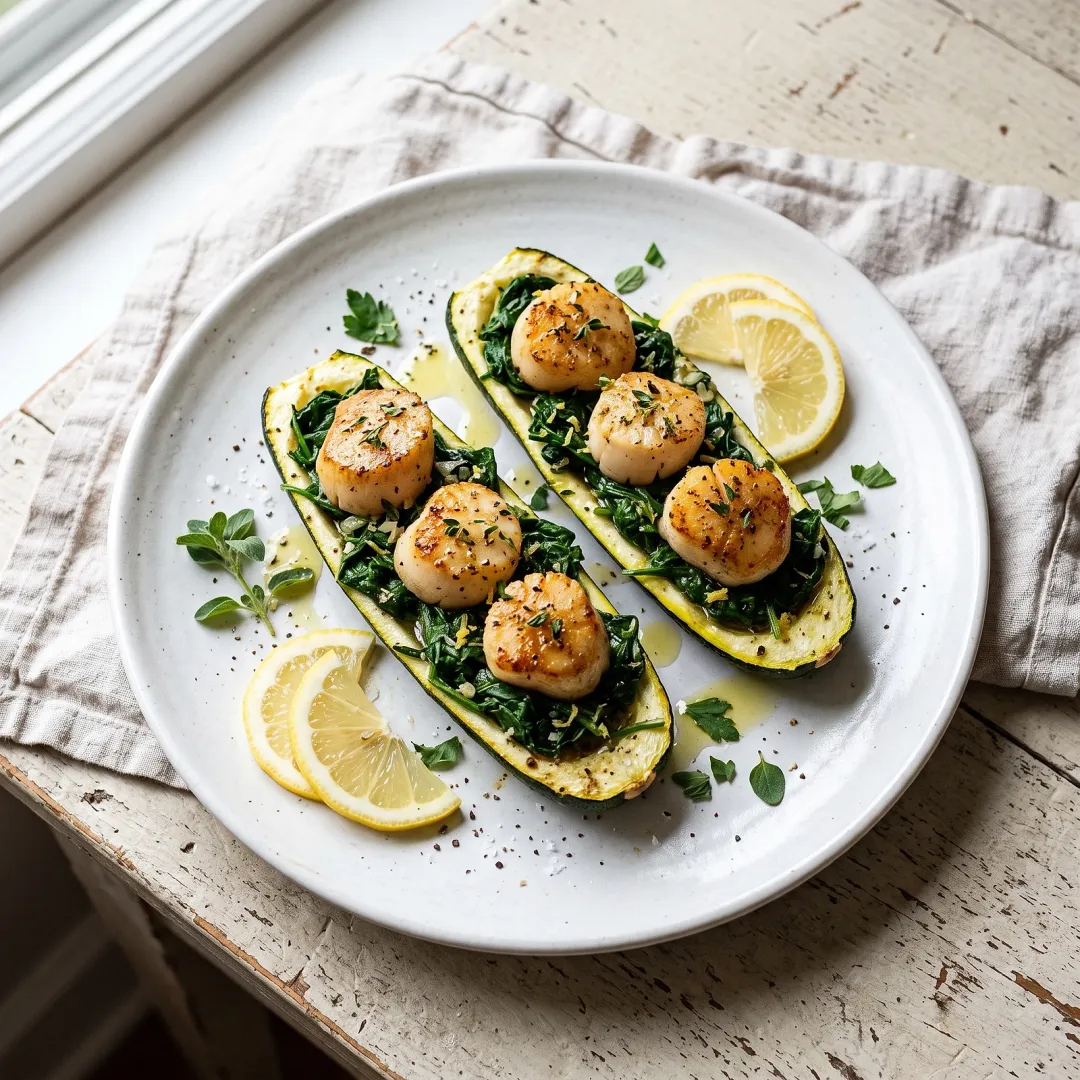

My oven smelled like the Greek islands the first time I made these, and I am not even being dramatic. Fresh oregano and lemon hitting a hot oven is one of those smells that stops you in your tracks. These baked scallop cups started as me staring down a bunch of oversized zucchini from the farmers market and a pound and a half of gorgeous dry-packed scallops I did not want to just sear in a pan again. What came out of that oven was a plate I genuinely could not believe was within the autoimmune protocol. No grains. No dairy. No eggs. No problem. Just real, whole food doing exactly what it is supposed to do. The zucchini halves become little edible boats, and once you scoop out the center and fill them with garlicky wilted spinach, they hold everything in place beautifully. The scallops sit right on top of that green base, drink up the lemon-herb oil, and bake until they are just barely opaque. That is the key with scallops, pull them a touch early and let carryover heat do the rest. Overcooked scallops are rubbery and sad, and nobody has time for that. If you are eating AIP right now for Hashimoto's, rheumatoid arthritis, psoriasis, or any other autoimmune condition your body has thrown at you, this one is going to feel like a reward. Two stuffed halves on a plate with a few lemon slices looks like something you would order at a nice restaurant. But you made it. And you know every single ingredient that went into it. That matters more than people realize.
Nutritional Benefits
Sea Scallops: Lean Protein with Serious Mineral Power
- Sea scallops are one of the leanest, most complete proteins you can put on your plate, about 20g of protein per 3-oz serving with very little fat.
- They are a rich source of vitamin B12, which supports nerve function and energy metabolism, and deficiency is surprisingly common in people with autoimmune conditions.
- Scallops deliver a meaningful dose of zinc, selenium, and iodine, minerals that directly support thyroid function and immune regulation.
- The magnesium in scallops supports muscle relaxation and sleep quality, both of which take a hit during autoimmune flares.
Baby Spinach: An Anti-Inflammatory Powerhouse
- Spinach is loaded with vitamin K1, which plays a role in regulating inflammatory pathways in the body.
- It is one of the best plant sources of magnesium, folate, and iron, all nutrients that tend to run low in people dealing with chronic autoimmune stress.
- The antioxidants in spinach, including lutein and zeaxanthin, help combat oxidative stress that is chronically elevated in autoimmune conditions.
- Cooking spinach briefly (as we do here) actually increases the bioavailability of certain nutrients like beta-carotene while reducing oxalates, a win for those with sensitive guts.
Zucchini: Gentle on a Taxed Gut
- Zucchini is one of the most gut-friendly vegetables you can eat. Low in FODMAPs, easy to digest, and naturally anti-inflammatory.
- It provides a solid hit of vitamin C and potassium without a heavy carbohydrate load, making it a great base for anyone managing blood sugar alongside an autoimmune condition.
- The high water content of zucchini supports hydration at the cellular level, which matters more than most people think.
Olive Oil, Garlic, and Fresh Herbs: The Trio Your Body Loves
- Extra virgin olive oil is one of the most well-studied anti-inflammatory fats on the planet. The oleocanthal in EVOO acts similarly to ibuprofen in the body, without wrecking your gut lining.
- Garlic contains allicin, a compound with potent antimicrobial and immune-modulating properties. Raw and lightly cooked garlic preserves the most benefit.
- Fresh oregano is far more than a garnish. It contains rosmarinic acid and carvacrol, both of which have documented anti-inflammatory and antimicrobial effects.
- Fresh thyme is a source of thymol, an antioxidant that supports respiratory health and immune defense, and it has been used medicinally in Mediterranean cultures for centuries.
- Lemon juice provides vitamin C that enhances iron absorption from the spinach in the same meal, that combination is not accidental in traditional cooking.
FAQs
How do I know when scallops are done in the oven?
Look for the scallop to turn from translucent to just opaque, not white all the way through. At 400°F, 14 to 16 minutes is usually right, but your oven may run hot or cool. Start checking at 13 minutes. The scallop should feel slightly firm but still have a little give when you press it gently. It will finish cooking from residual heat once it comes out of the oven.
What does dry-packed mean and does it really matter?
Yes, it really matters. Most scallops in the grocery store are wet-packed, meaning they have been soaked in a sodium tripolyphosphate solution to add water weight. Wet-packed scallops release all that liquid when they cook, making it nearly impossible to get any browning, even in the oven. Dry-packed scallops are untreated, sear and bake beautifully, and taste like actual scallops. Ask your fishmonger or look for the label. Worth every bit of the extra cost.
Is this recipe safe for the AIP elimination phase?
Yes. Every ingredient in this recipe is compliant with the Autoimmune Protocol elimination phase. There are no grains, legumes, dairy, eggs, nuts, seeds, seed-based spices, nightshades, or refined sugars. If you are brand new to AIP, always double-check your specific seafood source and any packaged ingredients like broth or oils for additives. When in doubt, read the label.
Can I use frozen scallops?
You can, and frozen scallops are often actually fresher than what is sitting in the seafood case at your grocery store (they are often frozen on the boat). Thaw them overnight in the refrigerator, then pat them extremely dry, more dry than you think you need to, before using. Any excess moisture will steam them instead of letting them cook properly.
My zucchini fell apart in the oven. What happened?
A couple of things could cause this. First, zucchini size matters, you want large, thick zucchini so the walls hold up. Second, do not scoop too deeply. You only need about a half-inch trough. Third, make sure your spinach filling is well drained. Excess moisture from the filling steams the zucchini from the inside and turns it mushy fast. Squeeze that filling firmly before loading the cups.
Can I prep this ahead for a dinner party?
Absolutely. You can scoop and pre-bake the zucchini cups for 8 minutes, make the spinach filling, and prepare the lemon-herb oil all the day before, store each separately in the refrigerator. When you are ready to eat, assemble the cups, add the raw scallops, drizzle the oil, and bake fresh. You get all the beauty of a composed plate with almost no last-minute stress.
If you made these, I genuinely want to hear about it. Tag me or drop a comment below and tell me how they turned out. And if you are navigating an autoimmune diagnosis and trying to figure out what real food can do for you, stick around. There is a lot more where this came from.
 That Paleo Chick
Real food that heals
That Paleo Chick
Real food that heals
RecipePaleoDinnerGluten-Free

Fits these needs
Checked ingredient by ingredient. Tap one to see every recipe that fits.
Health needs
New to these? Read our condition guidesDiet
Always check labels on packaged ingredients (gluten-free certification, hidden additives) and follow your clinician's advice.
Ingredients
Instructions
Nutrition Facts Amount per serving
Estimated from the ingredients. Values vary with brands and portions.

Join the conversation
Made it? Tell us how it went.
Free members can comment, reply and like. It takes ten seconds.