
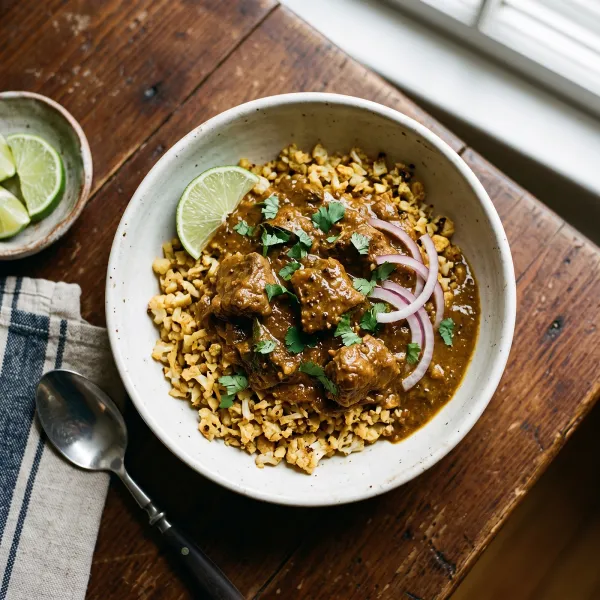
The first time I made a real Kerala-style curry, I burned the mustard seeds, dumped in the coconut milk anyway, and still couldn't stop eating it. There is something about South Indian spice building that just works. The layering. The whole spices popping in oil before anything else goes in. The way coconut milk turns a braise into something almost creamy without a drop of dairy. Veal is genuinely perfect for this. It's mild enough to soak up every single thing you throw at it, and the connective tissue in the shoulder melts into that sauce after a good slow simmer, making it incredibly tender and rich. If you've only ever made curry with chicken, I want you to try this. Not because chicken is wrong, but because veal in a coconut curry is on a completely different level and it doesn't get nearly enough credit. This is a dinner that smells like something you'd get at a tiny family restaurant off the beaten path in Kerala, and it comes together in one pot. The roasted cauliflower rice underneath isn't just a grain-free vehicle. Roasting it at high heat makes it slightly crispy at the edges, which gives you a real textural contrast against the saucy curry on top. Don't skip that step.
Nutritional Benefits
Veal: Lean, Clean Protein with Serious Mineral Density
- Veal shoulder is high in complete protein and notably leaner than beef, making it a solid choice for muscle maintenance without excess saturated fat.
- It's one of the best dietary sources of zinc, which matters deeply for immune function, wound healing, and hormone production. Most people are quietly deficient.
- Veal contains meaningful amounts of B12 and iron in their most bioavailable heme forms. No supplement is going to replicate that. Real food wins.
- Sourcing matters. Look for humanely raised, milk-fed veal from farms you can actually trace. Quality protein from animals treated well is part of the whole picture.
Full-Fat Coconut Milk: The Good Fat Your Brain Wants
- Full-fat coconut milk is rich in medium-chain triglycerides (MCTs), which the body metabolizes differently than long-chain fats, providing a relatively fast, clean energy source.
- The lauric acid in coconut milk has well-documented antimicrobial properties, supporting gut health and immune defense.
- Fat-soluble nutrients in this dish, including fat-soluble vitamins from the spices and veal, are far better absorbed when paired with a quality fat source like coconut milk.
Kerala Spices: These Aren't Just for Flavor
- Turmeric contains curcumin, one of the most studied anti-inflammatory compounds in functional nutrition. The black pepper in this dish contains piperine, which dramatically increases curcumin absorption. They belong together.
- Cardamom has been used in Ayurvedic medicine for centuries for digestive support, and modern research backs up its carminative properties.
- Fresh curry leaves are a nutritional gem that most Western kitchens overlook entirely. They contain antioxidants, support blood sugar regulation, and provide iron and calcium.
- Coriander and cumin together are a classic digestive pairing. Both support healthy gut motility and have traditionally been used to ease bloating.
Roasted Cauliflower Rice: More Than a Grain Stand-In
- Cauliflower is a cruciferous vegetable, which means it supports the liver's detoxification pathways through compounds called glucosinolates. That matters especially for estrogen metabolism.
- It's genuinely low-glycemic and won't spike blood sugar the way white rice does, making it a meaningful swap rather than just a trend.
- One cup of cauliflower provides over 70% of your daily vitamin C needs, along with vitamin K, folate, and choline.
FAQs
Can I use a different cut of veal?
Yes. Veal shoulder is ideal because the connective tissue breaks down during braising, giving you a rich sauce and tender meat. Veal shank (osso buco cut) is another excellent option for this style of cooking. Avoid lean cuts like veal loin chops for braising as they'll tighten up and dry out.
I can't find fresh curry leaves. Can I skip them?
You can use dried curry leaves in a pinch, though fresh are noticeably more aromatic. If you're in the US, Indian grocery stores almost always carry them fresh. Don't substitute bay leaves since they have a completely different flavor profile. If you genuinely can't source them, leave them out rather than sub something else.
Is this recipe Whole30 compliant?
Yes, as written it is Whole30 compliant. Just make sure your tamarind paste contains only tamarind and water, your bone broth has no added sugar or off-plan ingredients, and your coconut milk has no added sulfites or guar gum (though guar gum is technically Whole30 compliant, some prefer to avoid it).
Can I make this in a slow cooker?
Absolutely. Sear the veal and build the spice base on the stovetop first (don't skip this step, it's where most of the flavor comes from), then transfer everything to a slow cooker and cook on low for 6 to 7 hours or high for 3.5 to 4 hours. Make the cauliflower rice fresh before serving.
How do I store and reheat leftovers?
The curry keeps beautifully in the fridge for up to 4 days and the flavor actually deepens overnight. Store the curry and cauliflower rice separately. Reheat the curry gently on the stovetop over low heat with a splash of broth or water to loosen it up. The cauliflower rice is best re-crisped in a dry skillet over medium-high heat.
How do I adjust the heat level?
This recipe as written has moderate heat. For a milder version, remove the seeds and membranes from the green chiles and reduce the Kashmiri chili powder to 1/4 tsp. For more heat, leave the chile seeds in and add an extra half teaspoon of chili powder. Taste before you serve and adjust.
If you make this Kerala Veal Coconut Curry, I genuinely want to hear about it. Drop a comment below and tell me how it went, and especially tell me if it was your first time cooking veal because I love hearing that. Tag me on Instagram too so I can see your bowls. And if you're into cooking with proteins and cuisines that most paleo blogs ignore, stick around. There is so much more coming.
Ingredients
Instructions
Nutrition Facts
| Nutrient | Amount per Serving |
|---|