
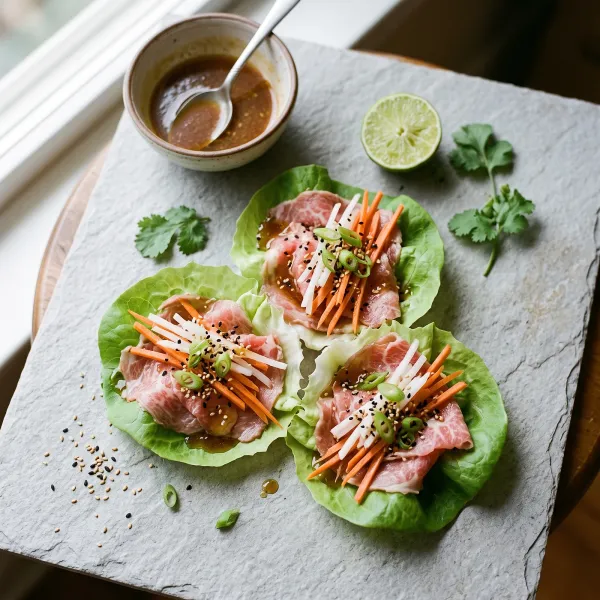
Raw beef for lunch sounds like something that would get me some raised eyebrows at a school pickup line. And honestly, good. More for me. This dish is one of those quiet flexes that looks fancy, costs almost nothing extra, takes twenty minutes flat, and hits every note I want at noon: protein that actually fills me up, crunch, brightness, a little heat, and zero time standing over a hot stove. The Korean-inspired dressing is what makes it. Coconut aminos, sesame oil, fresh ginger and garlic, a squeeze of lime. It's bold without being complicated. The paper-thin beef picks it up and carries it into every single bite. I pile the whole thing into butter lettuce cups because I want something I can eat with my hands without feeling ridiculous. This is real food, made fast, with no apology.
Nutritional Benefits
High-Quality Protein from Whole Muscle Beef
- Beef tenderloin and top sirloin are complete protein sources, delivering all essential amino acids your body cannot make on its own.
- Protein at lunch is one of the single most effective tools for keeping blood sugar stable through the afternoon and avoiding the 3 p.m. crash.
- Minimally processed whole muscle beef retains more of its naturally occurring nutrients, including zinc, iron, and B12, than ground or heavily processed beef products.
Raw Preparation Preserves Nutrients
- Heat destroys some heat-sensitive nutrients. Serving beef raw keeps naturally occurring enzymes and certain B vitamins fully intact.
- The acid from lime juice and the salt in coconut aminos begin a light curing process on the surface of the meat, making it more digestible while maintaining its nutritional profile.
Sesame Oil and Anti-Inflammatory Fats
- Toasted sesame oil is rich in oleic and linoleic acid and contains sesamin and sesamolin, compounds studied for their antioxidant properties.
- Unlike refined seed oils, traditionally pressed sesame oil is minimally processed and has been used in Asian food traditions for thousands of years.
- Healthy fat at lunch helps your body absorb fat-soluble vitamins from the vegetables in this dish.
Daikon and Carrot for Digestive Support
- Daikon radish contains digestive enzymes, particularly amylase and protease, that help break down carbohydrates and proteins in the same meal.
- Carrots provide beta-carotene, a precursor to vitamin A that supports immune function, skin integrity, and eye health.
- Both vegetables add prebiotic fiber that feeds beneficial gut bacteria without spiking blood sugar.
Ginger and Garlic as Functional Ingredients
- Fresh ginger is one of the most researched anti-inflammatory foods available. The active compound gingerol has been shown to reduce markers of inflammation and support digestion.
- Raw garlic retains allicin, its most potent antimicrobial and cardiovascular-supportive compound, which is diminished significantly by cooking.
- Using both fresh in a dressing is one of the easiest ways to actually get therapeutic amounts into your food without supplements.
FAQs
Is it actually safe to eat raw beef?
Whole muscle cuts of beef, meaning a solid piece of meat that has not been ground, mechanically tenderized, or injected, carry bacteria only on the outer surface. That surface gets hit by the salt, acid, and antimicrobial properties in this dressing. Beef tartare and carpaccio have been eaten across European and Asian food cultures for centuries. That said, source your beef carefully. Ask your butcher. Use it the day you buy it. If you are pregnant, have a compromised immune system, or are feeding very young children, sear the outside of the piece briefly before slicing and serving.
What is the best cut of beef for this recipe?
Tenderloin is the classic choice because it is the most tender and has very little connective tissue to fight through when eating raw. Top sirloin is my budget-friendly pick and works beautifully here. Avoid anything pre-marinated, injected, or sold as 'blade tenderized.' You want a clean, whole muscle cut.
Why do I freeze the beef before slicing?
Fifteen minutes in the freezer firms the muscle fibers just enough that a sharp knife can get genuinely thin, clean slices. Without it, the meat compresses and tears instead of slicing. You are not freezing it solid, just giving it a little structure. Pull it out as soon as it feels firm on the outside but not hard all the way through.
Can I make this ahead for meal prep?
Partially. Make the dressing up to four days ahead and keep it in a jar in the fridge. Prep the daikon, carrot, and scallions the night before. Slice the beef the day you plan to eat it and dress it right before serving. Raw beef does not improve with time once dressed, so assemble at the last minute.
Is this Whole30 compliant?
Yes, with one note. Raw honey is not strictly Whole30 compliant. You can simply leave it out and the dressing is still excellent, or add a tiny splash of extra coconut aminos to compensate for the sweetness. Every other ingredient in this recipe is fully Whole30 approved.
What can I use instead of butter lettuce?
Romaine heart leaves work great and hold up even better for carrying the filling. Large radicchio leaves add a beautiful bitter contrast. If you want to skip the cups entirely, just plate everything over a bed of thinly shredded napa cabbage.
If you made these, I genuinely want to know what you thought. Raw beef for lunch is not what most people expect from a paleo recipe blog, and that is exactly why I love it. Drop a comment below, rate the recipe, and tag me if you share it. Someone in your feed needs to see that healthy eating does not have to be the same five things on rotation.
Ingredients
Instructions
Nutrition Facts
| Nutrient | Amount per Serving |
|---|