

On this page
The little sticker on your kiwi says "fresh." The plastic clamshell says "natural." The nutrition panel says "an excellent source of vitamin C." You put it in your cart feeling like you did something right. But did you actually read what any of that means, legally, specifically, down to the fine print? Because the FDA and USDA have definitions for most of those phrases, and they are not what most people picture standing in the produce aisle.
First, Let's Talk About the Kiwi Itself
Before we get into the packaging game, worth being clear on what a kiwi actually is, because not every kiwi on the shelf is the same fruit.
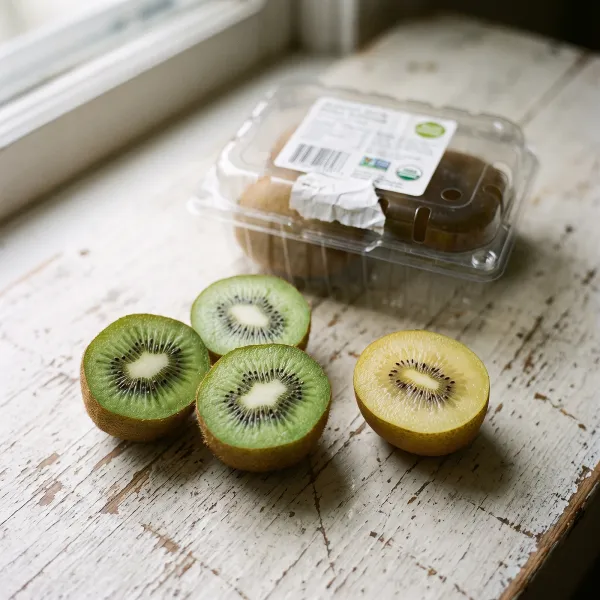
The variety you almost always see in U.S. grocery stores is the Hayward green kiwi, a cultivar of Actinidia deliciosa. It's the big, fuzzy, brown-skinned one with the bright green flesh and black seeds. But there's also the SunGold kiwi (Actinidia chinensis), which has yellow flesh and a smoother skin, and a sweeter, lower-acid flavor. And then there are kiwi berries, which are tiny, grape-sized, smooth-skinned, and fully edible peel included.
They are not interchangeable from a nutrient standpoint, and they are not labeled the same way at retail. That distinction matters when we start picking apart what the package says.
"Fresh", A Word That Does Almost No Work
The FDA's definition of "fresh" for produce is narrower than most people realize, and the gap between the legal definition and what shoppers picture is significant.
According to the FDA's guidance on the term "fresh", the word can only be used on a raw food that has not been frozen, heat-processed, or preserved. That much makes sense. But it says nothing about how long the fruit has been off the vine, how far it traveled, or how many hands it passed through before yours.
A kiwi picked in New Zealand, cold-stored for weeks, shipped across the Pacific, sitting in a distribution center, then a regional warehouse, then a store's back room, and then placed in a bin labeled "fresh", is doing nothing illegal. And New Zealand is, in fact, where a massive share of U.S. kiwi imports originate. The USDA Foreign Agricultural Service consistently shows New Zealand as one of the top kiwi suppliers to the United States, meaning most of what we buy has been in cold chain transit for a meaningful stretch of time.
Cold storage slows ripening and can preserve surface appearance, but it does affect some nutrient content over time. A 2020 review in Foods found that vitamin C content in kiwi declines during extended cold storage, with losses varying by storage temperature and duration. "Fresh" on the label tells you nothing about any of that.
What actually signals freshness: the fruit yields slightly to pressure near the stem end, has no soft spots or shriveling, and smells faintly sweet. That's your real quality indicator, not the sticker.
"Natural", Probably the Most Meaningless Word in the Produce Aisle
For a whole, unprocessed piece of fruit, calling it "natural" is technically redundant. But you'll still see it on packaging for kiwi clamshells, dried kiwi, kiwi fruit cups, and kiwi-based drinks.
The FDA has never formally defined "natural" for food labeling purposes. The agency stated in 2015 that it was reopening the comment period to define the term and, as of this writing, a final binding definition still does not exist. The FDA's informal policy is that "natural" means nothing artificial or synthetic has been added that would not normally be expected in the food, but that's not a hard regulatory line and it's not consistently enforced.
For fresh kiwi, "natural" on the clamshell is essentially decorative. It doesn't mean organic. It doesn't mean pesticide-free. It doesn't mean anything about how the fruit was grown or handled. It means someone in marketing thought it sounded good.
For kiwi-containing packaged products like dried kiwi slices or kiwi juice drinks, "natural" becomes even more suspect. Many of those products contain added sugars, natural flavors (which can cover a wide range of processing), and preservatives that are technically "from nature" by some stretch. The label tells you nothing useful.
"An Excellent Source of Vitamin C", This One Is Actually Regulated
Here's where the label finally starts doing some real work.
The FDA does have specific, binding definitions for nutrient content claims. Under 21 CFR Part 101.54, a food can claim to be "an excellent source of" a nutrient only if a single serving provides 20% or more of the Daily Value for that nutrient. A "good source" claim requires 10 to 19% of the Daily Value per serving.
Kiwi passes that bar for vitamin C without breaking a sweat. One medium green kiwi (about 69 grams) provides roughly 64 mg of vitamin C, which is more than 70% of the 90 mg Daily Value for adult men and over 85% for adult women. The SunGold variety does even better, with some analyses showing over 100 mg per fruit.
So when kiwi packaging says "excellent source of vitamin C," that claim is accurate and regulated. That's worth something. It's one of the few label phrases that has a real number behind it.
But here's what the label is not telling you: vitamin C in whole food comes packaged with cofactors, phytonutrients, and fiber that influence how your body actually uses it. The isolated ascorbic acid in a supplement is not the same thing as the vitamin C complex in a whole kiwi, even if the milligram number on the label looks identical. Real food delivers the whole context. That's not marketing copy; that's basic food science.
"Organic", What It Means and Why It Matters More for Kiwi Than You Might Think
Unlike "natural," the USDA organic seal is federally regulated and actually means something. A product labeled organic must meet USDA National Organic Program standards, which prohibit the use of most synthetic pesticides, synthetic fertilizers, and GMOs.
Kiwi lands in a middle tier on the Environmental Working Group's annual pesticide residue rankings, it's not a Dirty Dozen staple, but it has shown detectable pesticide residues in testing. The EWG's 2023 Shopper's Guide to Pesticides in Produce ranked kiwi on the cleaner end of the list, but "cleaner" is not the same as "residue-free."
For the conventionally grown kiwi sitting in the bin next to the organic, the packaging doesn't have to disclose what pesticides were applied, how recently, or in what quantities. The word "fresh" is still permitted. The word "natural" might still appear on the clamshell. Neither tells you anything about inputs.
If pesticide load is something you actively manage (and a functional-medicine approach does care about that, because cumulative chemical burden is a real consideration in root-cause health work), then the organic label on kiwi is one worth paying attention to.
"Non-GMO", Real, But Probably Irrelevant for Kiwi Right Now
You will see Non-GMO Project Verified stickers on some kiwi packaging. This certification is real and third-party verified, but for kiwi specifically, there are currently no commercially available genetically modified kiwi varieties approved for sale in the United States. So a "non-GMO" kiwi is, right now, just... a kiwi.
That's not a knock on the certification in general. For other crops, it carries genuine weight. For kiwi in 2024, it's mostly a marketing add-on that costs the producer certification fees and costs you nothing extra in terms of actual food quality differentiation. Buy it if you want, but don't pay a premium specifically for that sticker on a kiwi.
The Nutrition Panel's Serving Size Game
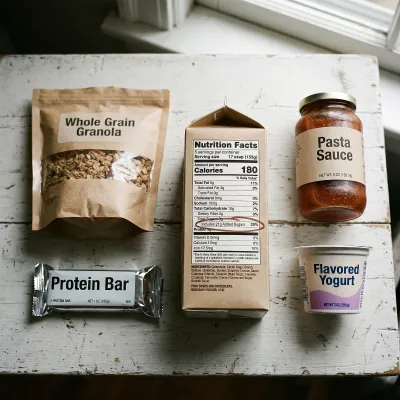
One last label move worth flagging: the serving size listed on kiwi nutrition labels and on packaged kiwi products is not always what a human actually eats.
For whole fresh kiwi, the FDA's standard reference amount for kiwi is one medium fruit, which is reasonable. But for kiwi-flavored snacks, kiwi juice drinks, and dried kiwi slices, serving sizes are sometimes set low enough that the sugar content looks modest per serving while the actual amount most people eat in a sitting is two or three times that.
Dried kiwi is the one I'd flag most directly. The drying process concentrates natural sugars significantly, and the serving size on the package may be listed as a small handful. A realistic portion of dried kiwi can carry 20 to 25 grams of sugar or more, sometimes with added sugar on top of that. If you're reaching for dried kiwi thinking it's basically equivalent to fresh kiwi with the water removed, flip the bag over and read the actual numbers.
What the Label Won't Tell You: The Actinidin Factor
Here's something worth knowing that will never appear on any kiwi package because it's not a regulated claim and food companies generally don't bother with the nuance.
Green kiwi contains a proteolytic enzyme called actinidin. It's one of the things that makes kiwi distinctive from a functional food standpoint. Research, including a study published in Molecular Nutrition and Food Research, has found that actinidin may support the digestion of certain proteins, including meat, egg, and dairy proteins, by helping break them down more efficiently in the stomach.
Actinidin is present in green kiwi but is largely absent in gold kiwi. So if you're choosing between varieties, that's a real nutritional difference the label isn't surfacing for you.
This is exactly why reading the package is only half the job. The label tells you what the FDA requires and what the marketing team decided to highlight. It doesn't tell you everything in the food that might actually matter.
The Real Takeaway: Use the Label as a Starting Point, Not an Answer
This is a pattern I see constantly in my coaching work. People are trying so hard to make good choices, and they're using the label as their primary guide. But the label is a legal document with commercial interests layered on top. Some of it is regulated and reliable. Some of it is loosely defined. Some of it is pure noise.
For kiwi specifically:
- "Fresh" tells you it wasn't frozen or heat-processed. It says nothing about age, origin, or storage time.
- "Natural" is effectively unregulated and meaningless.
- "Excellent source of vitamin C" is a real, regulated claim with a real number behind it.
- "Organic" is the one seal that gives you actual information about how the fruit was grown.
- "Non-GMO" is third-party verified but functionally redundant for kiwi right now.
- Serving sizes on kiwi-based packaged products deserve scrutiny, especially for dried kiwi.
The best version of this fruit is the simplest one: a ripe, whole kiwi, ideally organic if you can, eaten with the skin on if you're brave (yes, the skin is edible and contains additional fiber and folate). No package needed.
God gave us fruit that does the work. Our job is to not let the label talk us out of the obvious choice.
This article is for general informational purposes only and is not medical advice. Always consult a qualified healthcare professional before making changes to your diet or health routine.
Key Takeaways
- "Fresh" on kiwi packaging is an FDA-regulated term, but it only means the fruit was not frozen or heat-processed, it says nothing about age, travel time, or how long it spent in cold storage.
- "Natural" has no binding FDA definition for food labeling and is essentially meaningless on produce or kiwi-based products.
- "Excellent source of vitamin C" is a real, regulated claim: the FDA requires 20% or more of the Daily Value per serving, and kiwi delivers well above that threshold.
- The USDA organic seal is the one label worth paying for, it has actual regulatory teeth and tells you something real about how the fruit was grown.
- Green kiwi contains actinidin, a protein-digesting enzyme largely absent in gold kiwi, a meaningful nutritional difference the label won't mention.
- Dried kiwi products can carry high sugar loads; check the serving size carefully before assuming it equals fresh kiwi minus the water.
Frequently Asked Questions
What does 'fresh' mean on a kiwi label?
Under FDA regulations, 'fresh' on produce means the food has not been frozen, heat-processed, or chemically preserved. It says nothing about how recently the kiwi was harvested, how far it traveled, or how long it spent in cold storage. A kiwi shipped from New Zealand weeks ago is still legally 'fresh' as long as it was never frozen or cooked.
Is 'natural' on a kiwi package regulated?
No. The FDA has never issued a binding definition for 'natural' in food labeling. The agency's informal policy is that nothing artificial or synthetic has been added, but this is not consistently enforced and does not tell you anything about pesticide use, growing practices, or processing. For whole fresh kiwi, the word is essentially decorative.
Is kiwi really high in vitamin C?
Yes, and the label claim is one of the few that is genuinely regulated. One medium green kiwi provides roughly 64 mg of vitamin C, which is more than 70% of the FDA's Daily Value for adult men and over 85% for adult women. The 'excellent source of vitamin C' claim on kiwi packaging meets the FDA's legal threshold of 20% or more of the Daily Value per serving.
What is the difference between green kiwi and gold kiwi nutritionally?
Both varieties are strong sources of vitamin C and contain fiber, folate, and potassium. Green kiwi contains actinidin, a proteolytic enzyme that may support the digestion of proteins including meat, egg, and dairy proteins. Gold kiwi contains little to no actinidin but tends to be sweeter and lower in acidity. The label on either variety won't mention actinidin, it's a real nutritional difference that most shoppers don't know about.
Sources
- FDA: Use of the Term 'Fresh' in the Labeling of Food
- FDA: Use of the Term 'Natural' in Food Labeling
- FDA Electronic Code of Federal Regulations: 21 CFR Part 101.54, Nutrient Content Claims for 'Good Source,' 'High,' and 'More'
- USDA FoodData Central: Kiwifruit, green, raw, Nutrient Data
- USDA Foreign Agricultural Service: New Zealand Kiwifruit: Production and Exports
- USDA Agricultural Marketing Service: National Organic Program
- Foods (MDPI): Quality and Nutritional Changes in Kiwifruit During Cold Storage
- PubMed / Molecular Nutrition and Food Research: Actinidin from Kiwifruit and Its Role in Protein Digestion
- Environmental Working Group: EWG's 2023 Shopper's Guide to Pesticides in Produce, Full List
- FDA: Serving Size and Servings per Container on the Nutrition Facts Label
This article is for general informational purposes only and is not medical advice. Always consult a qualified healthcare professional before making changes to your diet or health routine.