

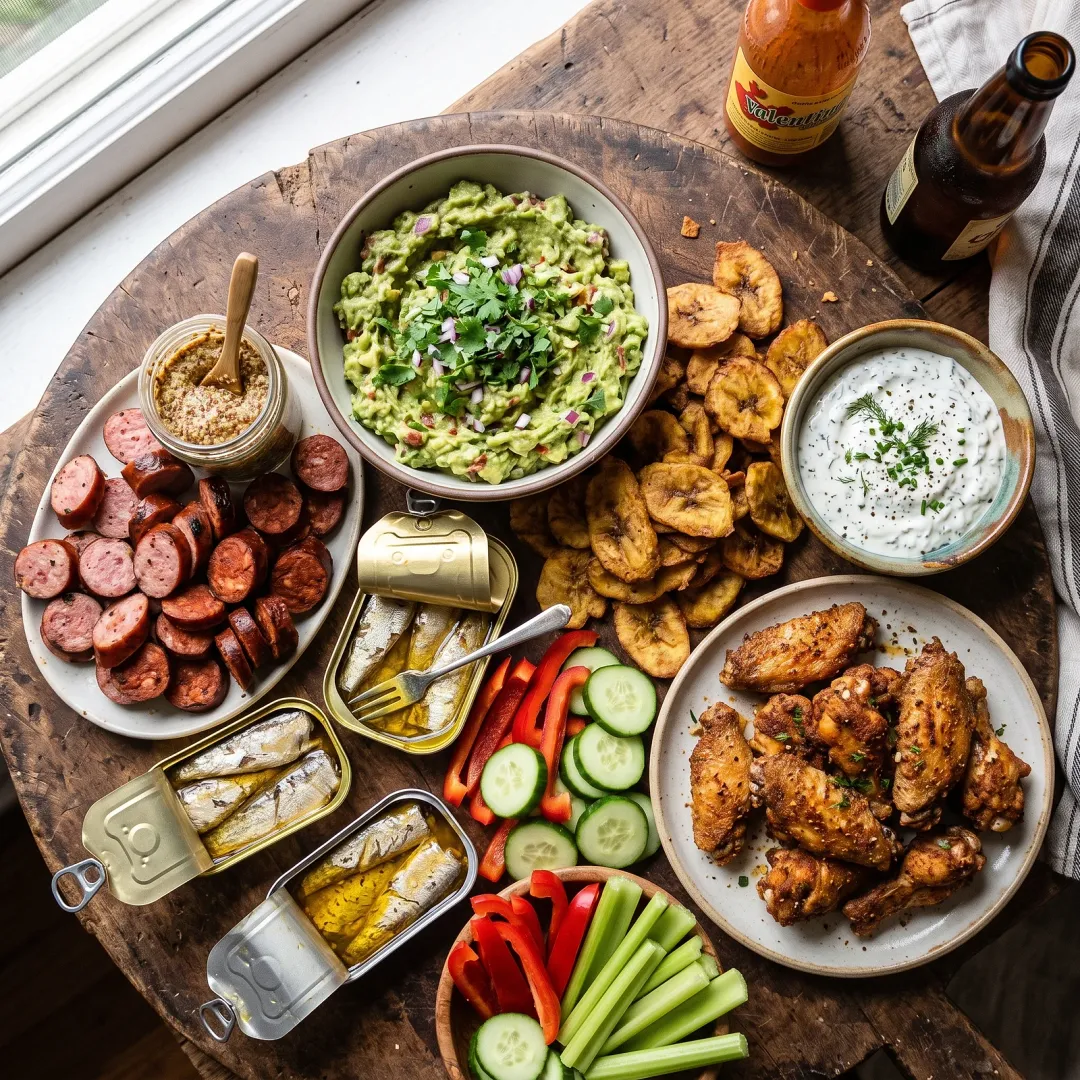

The nacho cheese dip in that plastic tub has seventeen ingredients. The wings from the freezer bag list soybean oil twice. Nobody at the party is reading the label, and honestly, that used to be me too. But once you know what you're looking at, you can't unsee it, and the good news is you don't have to give up the spread. You just have to build a better one.
Why Game-Day Food Is a Label-Reading Minefield
Party food gets a pass most of the time. It's a special occasion, it's communal, it's fun. All true. But the processed party food industry leans hard on that pass. Pre-made dips, frozen appetizers, flavored chip bags, and bottled wing sauces are some of the most ingredient-dense, additive-heavy products in the grocery store, and they're marketed with words like "bold," "real cheese," and "fire-grilled" that mean almost nothing from a regulatory standpoint.
The FDA does require an ingredient list and a Nutrition Facts panel on packaged foods, but the rules around marketing claims on the front of the package are much looser than most people realize. The FDA's overview of food labeling requirements makes clear that nutrient claims like "good source of protein" follow defined rules, but descriptive words like "natural," "real," or "artisan" are largely unregulated. So "real cheese flavor" on your dip does not mean it contains real cheese in any meaningful amount.
The other issue: serving sizes. That bag of tortilla chips lists 140 calories per serving, and the serving is 1 ounce, about 7 chips. Nobody eats 7 chips at a party. The math is designed to look reasonable at a glance. Worth knowing before you write the whole bag off as a reasonable snack.
How to Actually Read a Party Food Label in Under 60 Seconds
You don't need to stand in the chip aisle for ten minutes. Here's what to look for fast:
1. Flip to the ingredient list first, not the nutrition panel. Ingredients are listed by weight, heaviest first. If the first three ingredients are enriched flour, sugar, and soybean oil, the rest of the label doesn't redeem it. You want recognizable food at the top of that list.
2. Count the oils. Seed oils (soybean, canola, sunflower, corn, cottonseed, safflower) often appear multiple times in a single product under different names. A product that lists soybean oil in the crackers AND the seasoning blend is doubling your seed-oil exposure in one snack. The Dietary Guidelines for Americans distinguish between different fat sources, and while the debate over seed oils is ongoing, if you're already working to reduce them, party food is where the most is hiding.
3. Look for the sugar aliases. Party food is surprisingly sugary. Barbecue sauce, wing glazes, dipping sauces, and even savory chip seasonings routinely contain dextrose, maltodextrin, high-fructose corn syrup, or cane sugar. A 2016 analysis published in JAMA Internal Medicine found that added sugar is pervasive in processed foods in categories consumers don't expect to be sweet. Wing sauce is one of those categories.
4. Sodium math. Frozen appetizers and pre-made dips tend to be very high in sodium. That's not automatically a dealbreaker, but if you're eating across a whole spread of packaged items for three hours during a game, the sodium adds up fast. Check the % Daily Value; anything over 20% DV per serving is considered high by FDA standards.
5. Ignore the front entirely. "Gluten-free," "no artificial colors," "made with real ingredients" on the front of a bag can all be technically true and still attached to a product that's 90% refined starch and seed oil. The front is marketing. The back is the data.
The Claims That Sound Good But Mean Almost Nothing
A few specific ones worth naming, because they show up on every party food end-cap:
"All natural" has no formal FDA definition for most foods. The FDA has said it does not object to the use of the term if a product has no added color, artificial flavor, or synthetic substances, but that still allows for heavily processed ingredients. Corn syrup can be "all natural."
"Made with whole grains" means the product contains some whole grain. It does not mean it is primarily whole grain or that the refined flour isn't still the dominant ingredient. The Whole Grains Council notes that you'd need to look for the 100% stamp or check the ingredient list to know how much whole grain is actually present.
"Baked, not fried" sounds like a win for chips, but baked chips are often just as high in refined carbohydrates and may still use seed oils as a coating spray. The baking method doesn't change the ingredient quality.
"No MSG" is a claim that relies on a lot of public confusion. Monosodium glutamate is a flavor enhancer, and while some people report sensitivity, the FDA classifies it as generally recognized as safe (GRAS). More to the point: products that say "no MSG" often achieve the same flavor hit with yeast extract, hydrolyzed protein, or autolyzed yeast, all of which are glutamate-containing ingredients that do the same job under different names. You're not necessarily avoiding anything.
Building the Real-Food Spread: What Actually Goes on the Table
Here's where it gets fun, because a real-food game-day spread is genuinely good. Nobody is going to look at your table and say "ugh, health food." They're going to eat everything.
The anchor: a big protein board. This is your centerpiece. Hard-boiled eggs, sliced quality deli meat (read the label, look for no nitrates and minimal ingredients), and a tin or two of really good oily fish. Mackerel and sardines packed in olive oil are both rich in omega-3 fatty acids, and research published in Nutrients supports regular oily fish consumption as part of a heart-healthy dietary pattern. Put them in a bowl with a little lemon and capers and some grain-free crackers alongside, and I promise you the sports fans will eat it without even knowing what it is. Anchovies mashed into a dip base (more on that below) disappear without a trace.
The dip situation. Make two. A guacamole (avocados, lime, salt, cilantro, done) and a white bean or cashew-based dip with anchovy paste, lemon, and garlic blended in. Anchovies are one of the most nutrient-dense oily fish you can buy, and when blended into a dip, they add a deep savory flavor that nobody will identify as fish. Pair both with cut vegetables and cassava chips or plantain chips, which are made from a whole-food starch with a much shorter ingredient list than conventional tortilla chips.
The wings. Buy whole chicken wings (not frozen, pre-sauced ones), toss them in avocado oil, salt, garlic powder, and smoked paprika, and roast them at 425°F until crispy. Then make your own sauce: hot sauce (most hot sauces have a very clean label, Frank's RedHot original is just aged cayenne peppers, vinegar, water, salt, and garlic powder), melted grass-fed butter or ghee, and a little raw honey if you want a sweet heat. Done. No soybean oil, no maltodextrin, no mystery.
The "chips and something" corner. Plantain chips, cassava tortilla chips (Siete is a solid brand, label is clean), and grain-free crackers alongside a salsa made from whole tomatoes, onion, jalapeño, cilantro, and lime. Salsa from a jar is fine too, just read the label: good salsa has maybe five ingredients.
Something warm. A big pot of chili (no beans if you're strict paleo, sub extra meat and diced sweet potato), or a sheet pan of roasted sausages sliced into rounds with a grain-free mustard for dipping. The warm food is what makes a spread feel like a meal rather than just snacks.
The Shopping List Decoded: What to Look For and What to Skip
When you're walking the store for this spread, here's your fast reference:
Grab:
- Tinned mackerel or sardines in olive oil (look for BPA-free cans; brands like Wild Planet and Season are easy to find)
- Avocado oil or olive oil for roasting
- Cassava or plantain chips (check that the oil used is avocado or coconut, not sunflower)
- Hot sauce with a short, recognizable ingredient list
- Whole chicken wings, not pre-marinated or pre-breaded
- Fresh vegetables for dipping (bell peppers, celery, cucumber, radishes hold up well at a party)
- Real, ripe avocados
- Canned or jarred anchovy fillets in olive oil
Skip:
- Frozen, pre-sauced wing products (usually seed oil, modified starch, and multiple sugar sources)
- Pre-made dips in tubs (the shelf life alone tells you there's something in there keeping it "fresh")
- Flavored crackers with more than six or seven ingredients
- Any chip that lists canola, soybean, or sunflower oil as the first fat source
- Bottled wing sauces that list sugar or corn syrup in the top five ingredients
None of this is about being the person at the party who announces they're eating clean. It's about knowing what you're building your spread from, and choosing options that taste just as good without the ingredient list that reads like a chemistry textbook.
The Real Win: A Spread That Looks Like a Party
God made food to be enjoyed together. That's not a small thing. Community around a table, a game on in the background, people reaching across each other for another handful of something good. That's worth protecting, and you don't protect it by refusing to participate or by making everyone feel like they're eating sad diet food.
You protect it by knowing enough to build the real version. The spread described here will disappear faster than the processed one, because real food made well is genuinely more satisfying. It won't announce itself as paleo or real-food or anything other than really good party food.
That's exactly the point.
This article is for general informational purposes only and is not medical advice. Always consult a qualified healthcare professional before making changes to your diet or health routine.
Key Takeaways
- Flip every party food package to the ingredient list first. If the first three ingredients aren't recognizable food, put it back.
- Seed oils hide in almost every processed party food, often listed multiple times under different names. Chips, frozen apps, and pre-made sauces are the biggest culprits.
- Front-of-package claims like 'all natural,' 'made with real cheese,' and 'baked not fried' are largely marketing language with minimal regulatory teeth.
- Oily fish like sardines, mackerel, and anchovies make excellent protein additions to a game-day board. Blended into a dip, nobody will even know.
- Make your own wings sauce with clean hot sauce, grass-fed butter or ghee, and a touch of raw honey. It takes five minutes and beats anything in a bottle.
- Real-food party spreads don't need a label or an announcement. They just need to taste good, and they do.
Frequently Asked Questions
What chips are paleo-friendly for game day?
Cassava chips and plantain chips are the most common paleo-friendly options. Look for ones fried or baked in avocado oil or coconut oil, not sunflower or canola. Siete cassava chips and Barnana plantain chips are widely available with clean labels, but always flip to the ingredient list to confirm the oil used before buying.
What does 'all natural' actually mean on a food label?
Very little, legally speaking. The FDA has not established a formal definition for 'natural' on most food labels. The agency has said it does not object to the term if a product has no added color, artificial flavor, or synthetic substances, but that still allows heavily processed ingredients. Corn syrup, for example, can legally appear in a product labeled 'all natural.' Always check the ingredient list rather than trusting front-of-package language.
Are sardines and mackerel good protein sources for a party board?
They're excellent. Oily fish like sardines and mackerel are high in protein and rich in omega-3 fatty acids. Research published in Nutrients links regular oily fish consumption to a healthy dietary pattern. On a party board, they work best packed in olive oil and served with grain-free crackers and capers, or blended into a dip where the flavor becomes savory and rich without being overtly 'fishy.'
How do I make homemade wing sauce without seed oils?
The simplest version: melt grass-fed butter or ghee, add your favorite clean hot sauce (check that the label lists cayenne peppers, vinegar, water, and salt with no added oils or corn syrup), and whisk together. A small drizzle of raw honey adds sweetness if you want it. Toss your baked or air-fried wings in the sauce right before serving. Five ingredients, done in two minutes, and better than anything in a bottle.
Sources
- FDA: Food Labeling and Nutrition Overview
- FDA: How to Understand and Use the Nutrition Facts Label
- FDA: Use of the Term 'Natural' in Food Labeling
- FDA: Questions and Answers on Monosodium Glutamate (MSG)
- JAMA Internal Medicine: Added Sugar in the Diet (2016 analysis)
- Dietary Guidelines for Americans 2020-2025: Dietary Guidelines for Americans, 2020-2025
- Whole Grains Council: The Whole Grain Stamp
- Nutrients (MDPI): Oily Fish Consumption and Cardiovascular Health
This article is for general informational purposes only and is not medical advice. Always consult a qualified healthcare professional before making changes to your diet or health routine.


Join the conversation
What do you think?
Free members can comment, reply and like. It takes ten seconds.