
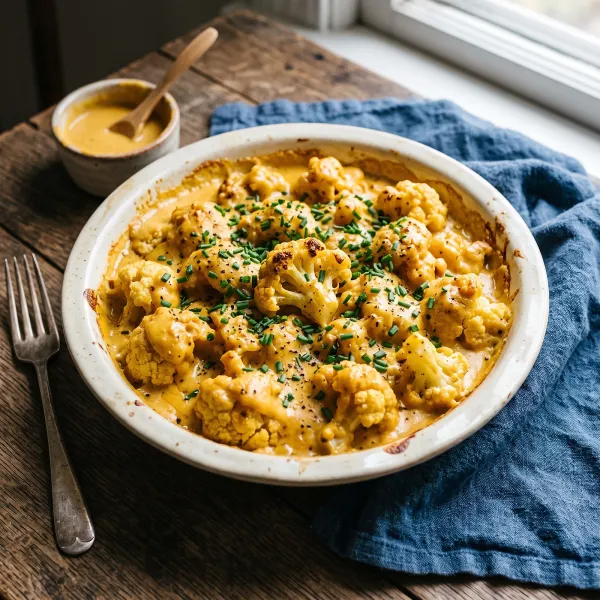
My kids used to wreck a box of Kraft mac and cheese in about four minutes flat. I get it. That orange, creamy, starchy comfort hits something deep in the brain. But after I went down the real-food rabbit hole and figured out what was actually in that box, there was no going back. So I started working on a version that could scratch the exact same itch without the processed cheese powder, the refined grain pasta, or the gut-wrecking aftermath. This one took a few rounds to get right, and I'm genuinely proud of it. Here's the swap breakdown. The pasta is roasted cauliflower florets. I know, I know, but hear me out. When you roast cauliflower at a high temp until the edges go golden and a little caramelized, it stops being bland and starts having real body and chew. It holds up to a thick sauce exactly the way a sturdy pasta does. The cheese sauce is built on soaked raw cashews blended with roasted garlic, coconut milk, nutritional yeast, lemon, and smoked paprika. Nutritional yeast is the key player here, it brings a legit savory, almost sharp flavor that your brain reads as cheese. The turmeric gets the color exactly right. The roasted garlic rounds everything out and makes the sauce taste like it simmered on the stove for an hour. The result is creamy, golden, tangy, and deeply satisfying. It tastes like mac and cheese. It looks like mac and cheese. It is the thing you are making when you want mac and cheese and you also want to feel good afterward.
Nutritional Benefits
Cauliflower: Way More Than a Pasta Stand-In
- Rich in vitamin C, vitamin K, and folate, important for immune function and cell health.
- Contains sulforaphane, a plant compound studied for its antioxidant and anti-inflammatory properties.
- High in fiber relative to its carbohydrate count, which supports healthy digestion and steady blood sugar.
- Low glycemic and genuinely filling, you won't be hungry again in 45 minutes.
Cashews: The Secret Behind the Sauce
- Provide heart-healthy monounsaturated fats, the same type found in olive oil.
- A good source of magnesium, copper, and zinc, minerals a lot of people run low on.
- When blended after soaking, they create a naturally creamy texture without any dairy or thickeners.
- The fat content in cashews helps your body absorb the fat-soluble nutrients in the vegetables.
Nutritional Yeast: The Unsung Hero
- A complete protein, meaning it contains all essential amino acids, uncommon in plant foods.
- One of the best food sources of B vitamins, including B12 in many fortified varieties.
- Brings a naturally savory, cheesy flavor through glutamates, no artificial flavoring needed.
- Supports energy metabolism and nervous system function through its dense B-vitamin profile.
Roasted Garlic: More Than a Flavor Move
- Garlic contains allicin, a sulfur compound with well-documented antimicrobial and immune-supportive properties.
- Roasting mellows the sharp bite and concentrates the natural sweetness without destroying its beneficial compounds.
- Supports cardiovascular health by helping to regulate blood pressure and cholesterol levels.
- Pairs with the other ingredients to give the sauce a depth that makes it taste like it has actual aged cheese in it.
FAQs
Can I make the cashew cheddar sauce ahead of time?
Yes, and it actually works beautifully as a make-ahead component. Blend the sauce and store it in a sealed jar in the refrigerator for up to 4 days. When you're ready to serve, warm it gently in a saucepan over low heat, adding a splash of water or coconut milk to loosen it back up. Toss with freshly roasted cauliflower for best results.
Do I really need to soak the cashews?
If you have a high-powered blender like a Vitamix or Blendtec, you can sometimes get away with skipping it, but you'll get a noticeably silkier, smoother sauce when you soak. Four hours in cold water is ideal. If you're in a hurry, 30 minutes in very hot (not boiling) water will soften them enough to blend well.
Is this recipe Whole30 compliant?
It is very close. Nutritional yeast is technically a gray area on Whole30, some program advisors allow it, others don't. Check your mustard label to make sure it has no added sugar. If you want to stay strictly compliant, skip the nutritional yeast and lean heavier on the smoked paprika, onion powder, and roasted garlic for savory depth. The sauce will still be delicious.
My sauce came out too thick. What do I do?
Just add hot water one tablespoon at a time while blending and it will loosen right up. The thickness also depends on how much fat was in your coconut milk, some cans are thicker than others. You have total control here, so blend it to whatever consistency you want.
Can I use frozen cauliflower instead of fresh?
Fresh is strongly preferred for this recipe. Frozen cauliflower releases a lot of water when it roasts, which makes it steam instead of caramelize. You won't get those golden, chewy edges that give the dish its mac-and-cheese texture. If fresh is genuinely not available, thaw the frozen cauliflower completely, pat it very dry with paper towels, and use a higher oven temp, but manage your expectations a little.
How do I store leftovers?
Store the sauced cauliflower in an airtight container in the fridge for up to 3 days. Reheat in a skillet over medium-low heat with a splash of water to revive the sauce, or in the microwave in short bursts. It won't be quite as perfect as fresh but it's still very good, I've eaten it cold straight from the fridge and had zero regrets.
If you make this, please come back and leave a comment. I genuinely want to know if your family figured out the swap or just dove in headfirst. Tag me on Instagram so I can see your golden, saucy cauliflower situation. And if you're new here and this is your first paleo comfort food win, welcome. There are a lot more where this came from.
Ingredients
Instructions
Nutrition Facts
| Nutrient | Amount per Serving |
|---|