

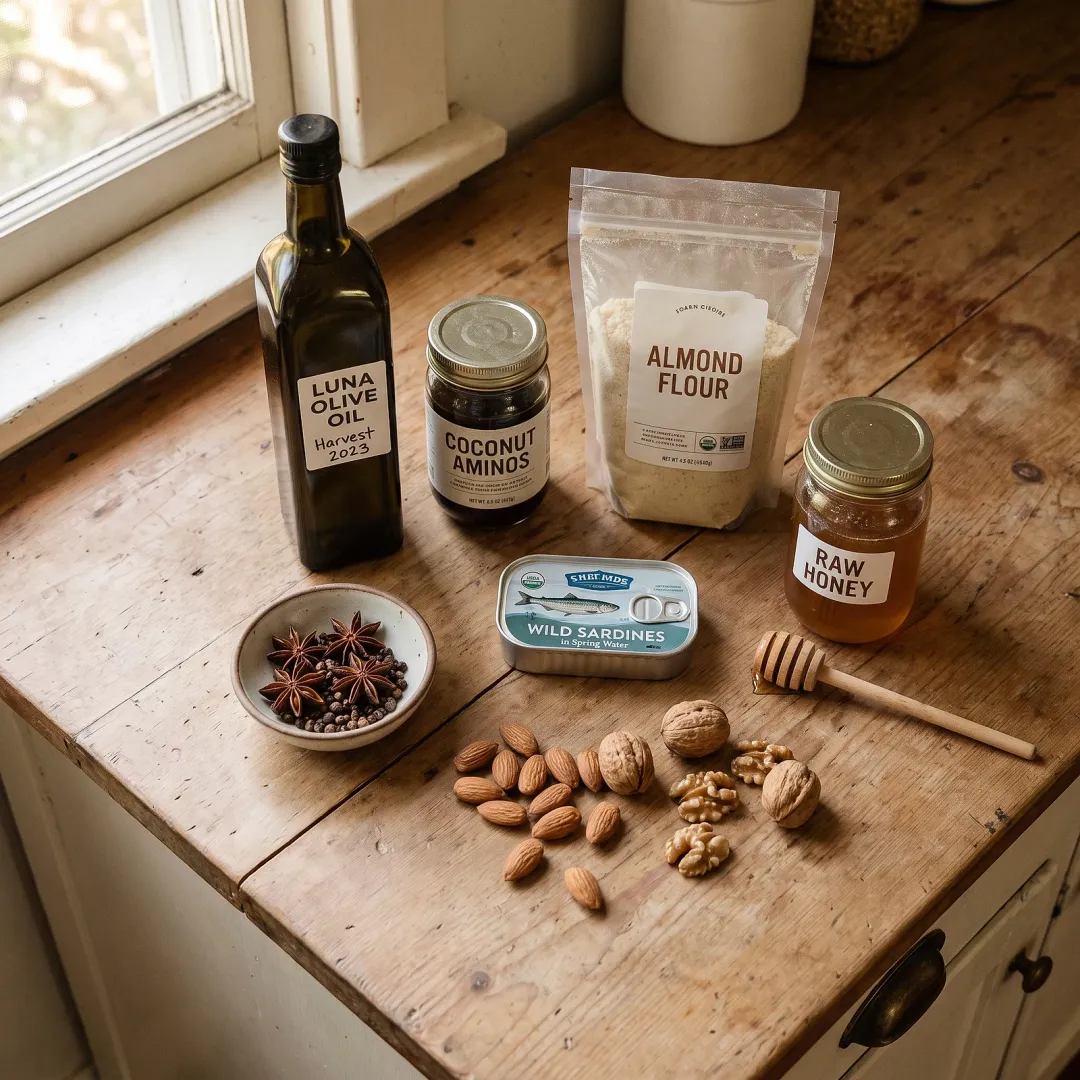

Nobody tells you this when you decide to eat real food: the pantry you already have is going to fight you. You open a cabinet with good intentions and suddenly you're staring at three kinds of vegetable oil, a box of "whole grain" crackers with 22 ingredients, and a jar of peanut butter with added sugar you totally forgot about. I have been there. It is not a fun feeling. But you don't have to throw it all in the trash and start over on a Tuesday. What you need is a game plan for the messy middle, and that's exactly what this is.
Start with an Honest Audit (Not a Purge)
Before you buy a single thing, pull everything out of one cabinet. Just one. Look at the ingredient lists with fresh eyes. You are looking for a short list of things that are going to tell you a lot.
The four red flags to scan for first:
- Refined seed oils, soybean oil, canola oil, corn oil, sunflower oil, safflower oil, cottonseed oil. These are highly processed, and research published in Nutrients notes that the modern Western diet has seen a dramatic increase in linoleic acid intake from these oils, far outpacing what our ancestors consumed. They show up in almost everything packaged.
- Added sugar under sneaky names, brown rice syrup, dextrose, maltodextrin, "evaporated cane juice." If you want the full list, the FDA recognizes over 60 names for added sugar that manufacturers use on labels.
- Artificial additives, colors, "natural flavors" (which can mean almost anything), carrageenan, BHA, BHT, TBHQ.
- Highly refined grains, anything where "enriched" flour is in the top three ingredients. Enriched just means they stripped the nutrition out during processing and then added some synthetic vitamins back in. Not the same thing as whole food.
Make three piles: keep, swap soon, toss now. You don't have to toss everything in the "swap soon" pile today. Use it up and don't rebuy it. That approach is kinder on your wallet and a lot less overwhelming.
This article is for general informational purposes only and is not medical advice. Always consult a qualified healthcare professional before making changes to your diet or health routine.
The Fats and Oils Cabinet: Highest Impact, Easiest Win
If I had to tell you to fix one thing in your kitchen first, it's the cooking fats. This is where you can make the most meaningful shift fastest.
Swap out: Vegetable oil, canola oil, "blended" cooking oils, margarine, spray cooking oils (most are canola or soybean in a can).
Swap in:
- Extra virgin olive oil for dressings, low-heat cooking, and drizzling. Look for a harvest date on the bottle, not just an expiration date. The UC Davis Olive Center has done extensive testing showing that freshness and quality vary wildly between brands. A dark bottle and a recent harvest date are your two best guides.
- Coconut oil for higher-heat cooking and baking. Refined coconut oil has a neutral flavor if the coconut taste isn't your thing.
- Avocado oil for high-heat cooking and mayo-making. It has one of the highest smoke points of any minimally processed oil, which matters when you're searing meat.
- Grass-fed butter or ghee if you tolerate dairy. Ghee is clarified, so most of the casein and lactose are removed, making it a better option for people who are sensitive.
- Lard or tallow from a trusted source. I know, I know. But traditional animal fats are stable at high heat and have been used by humans for thousands of years. The saturated fat in traditional animal fats is chemically stable in ways that polyunsaturated vegetable oils simply are not, which matters when you're cooking at high temperatures.
You do not need all of these at once. Start with olive oil and one high-heat option. Build from there.
Condiments and Sauces: Where Seed Oils and Hidden Sugar Hide
This cabinet is a landmine. I say that with love. Most of us have condiments we've had for years and never really looked at. Ketchup with high-fructose corn syrup. Mayo made with soybean oil. Soy sauce with wheat. BBQ sauce that is basically candy.
Here's how to clean it up without chaos:
Read the oil first. If the mayo, salad dressing, or sauce has canola, soybean, or "vegetable oil" as an ingredient, it goes in the swap pile. Primal Kitchen makes avocado-oil mayo and dressings that are widely available and actually taste good. Sir Kensington's is another solid option. You can also make your own mayo in two minutes with an immersion blender, avocado oil, egg, lemon juice, and a little mustard.
Soy sauce. Swap it for coconut aminos. It's made from coconut blossom sap, slightly sweeter, gluten-free, and soy-free. It's not identical in flavor but it's close enough that most recipes work just fine.
Ketchup. Look for one with no high-fructose corn syrup and no added seed oils. Primal Kitchen and Tessemae's both make solid versions. Or make a quick version at home with tomato paste, a splash of apple cider vinegar, a little date syrup or raw honey, and salt.
Hot sauce. Most plain hot sauces (Tabasco, Cholula, Frank's) are actually pretty clean. Check the label, but these are usually fine.
Mustard. Yellow and Dijon are almost always clean. Check the label, but this one is rarely a problem.
Worcestershire sauce. Most contain soy and sometimes wheat. Coconut aminos with a splash of apple cider vinegar and a little fish sauce gets you most of the way there in a recipe.
Canned and Jarred Goods: What to Keep and What to Scrutinize
Canned goods are your real-food best friend for quick meals. But not all cans are created equal.
Canned fish. Wild-caught sardines, salmon, mackerel, and tuna are genuinely nutritious and affordable. Wild-caught fatty fish are among the richest dietary sources of long-chain omega-3 fatty acids EPA and DHA, according to the NIH Office of Dietary Supplements. Check that they're packed in water or olive oil, not soybean oil.
Canned tomatoes. Fine as long as the ingredients are just tomatoes (and maybe salt and citric acid). San Marzano style are great for sauces. Look for BPA-free lining if possible, brands like Muir Glen and Jovial use BPA-free cans.
Canned coconut milk. A staple for paleo cooking. Full-fat is what you want. Check the label, some brands add guar gum (usually fine) and some add carrageenan (skip those). Thrive Market's house brand and Native Forest are solid.
Canned beans and legumes. I'm going to be honest with you: beans are not strictly paleo. But if you eat them and they work for your body, canned is fine. Drain and rinse thoroughly. If beans give you trouble, that's useful information about your gut. Worth paying attention to.
Broths and stocks. Most store-bought broths are a disappointment, watery, full of yeast extract, and low in actual gelatin. Look for ones with just meat, bones, vegetables, and salt in the ingredients. Kettle and Fire and Epic both make solid options. Or batch-make your own on the weekend and freeze it in silicone molds.
"Health" soups and stews. These tend to be a trap. Check the sodium and added thickeners. Most have modified corn starch or canola oil somewhere in there.
The Spice Rack and Baking Section: Smaller Stakes, Still Worth a Look
Good news: most spices are fine. Salt, pepper, garlic powder, onion powder, cumin, chili powder, turmeric, cinnamon, these are all real food. The thing to watch for is spice blends and seasoning packets.
Seasoning packets and blends almost always contain maltodextrin (a highly refined corn starch used as a filler), added sugar, or anti-caking agents made from questionable ingredients. Taco seasoning packets are one of the worst offenders. Making your own takes about 90 seconds, cumin, chili powder, garlic powder, onion powder, smoked paprika, salt, and a pinch of cayenne. Done.
Baking section swaps:
- Swap all-purpose flour for almond flour, cassava flour, or a combination. Almond flour is the most commonly used in paleo baking. Cassava flour behaves more like conventional flour and is a good swap in recipes where you need that structure.
- Swap canola or vegetable oil in baking recipes with melted coconut oil, avocado oil, or grass-fed ghee.
- Swap refined white sugar with raw honey, pure maple syrup, or coconut sugar. These are still sugar, don't let anyone tell you they're "free" foods, but they are less processed and carry trace minerals that refined sugar does not. Coconut sugar retains small amounts of inulin, a prebiotic fiber, compared to refined sucrose, though the amounts are modest.
- Baking soda and baking powder. Baking soda is just sodium bicarbonate, totally fine. Standard baking powder contains corn starch. Swap for a corn-free version like Rumford or make your own with two parts cream of tartar to one part baking soda.
- Vanilla extract. Most pure vanilla extract is just vanilla beans, water, and alcohol. Fine. Avoid "vanilla flavoring" which is synthetic.
What you don't need at all:
- Powdered non-dairy creamer (almost entirely hydrogenated oil and corn syrup)
- Boxed cake mixes, even the "healthier" ones
- Pancake mixes with 15 ingredients
The Snack Situation: Realistic Swaps for Real Life
I'm not going to tell you to never snack. That's not realistic for most people, especially if you have kids in the house. What I will tell you is that most packaged snacks are engineered to make you keep eating, and the ingredient list reflects that.
The paleo snack world has gotten a lot better in recent years, and there are genuinely good options now. But label-reading still matters.
Chips and crackers: Most grain-free chips are made with cassava, almond flour, or plantain. Siete, Jackson's Honest, and Lesser Evil are brands worth keeping. Check that the oil is avocado or coconut, not sunflower or canola.
Jerky and meat sticks: A great real-food snack on paper, and often a disaster in practice. Most commercial jerky has soy sauce (with wheat), sugar, and nitrates. Look for brands that use minimal ingredients, Epic and Chomps are solid. Steve's PaleoGoods is another one.
Nuts and nut butters: Raw or dry-roasted nuts are fine. Roasted-in-oil nuts usually use canola or peanut oil, check the label. For nut butters, the ingredient list should be: nuts. Maybe salt. That's it. If there's added oil (palm oil is common) or sugar, swap it.
"Protein bars" and "energy bars": Most are glorified candy bars with a protein claim. RX Bars are the cleanest widely available option, dates, egg whites, nuts, and that's about it. Larabars are close. Read everything else with serious skepticism.
Dark chocolate: Real talk, this is a pantry staple in my house. Look for 70% cacao or higher, minimal ingredients, and no soy lecithin if you want to be strict (though soy lecithin is present in such small amounts that most people tolerate it fine). Enjoy Life and Hu Kitchen make soy-free, dairy-free options.
A Note on Timing: You Don't Have to Do This All at Once
If you try to overhaul your entire kitchen in one weekend, you're probably going to exhaust yourself, spend more money than you planned, and feel like you failed if it's not perfect. I've seen it happen. I've done it myself.
Here's the framework I recommend instead:
Week 1: Audit and toss the obvious. The vegetable oil you've had since 2019. The salad dressing with soybean oil as the first ingredient. The crackers with 22 ingredients. Don't replace everything yet. Just remove the worst.
Week 2: Replace your cooking fats. This is the biggest bang for your effort. Pick up a quality olive oil and one high-heat option. That's it for this week.
Week 3: Swap your most-used condiment. Just one. The mayo or the ketchup or the soy sauce. Learn what you like before you overhaul the whole shelf.
Week 4 and beyond: Work through the rest of the audit list category by category, as things run out. This is the most sustainable approach because it keeps the grocery bill manageable and lets you actually learn what works for your family instead of buying 12 new products you might hate.
Stewardship is a principle I come back to a lot in how I think about food. We've been given these bodies and this life and a responsibility to care for them well. That doesn't mean being perfect. It means being intentional. Making the next better choice, not the perfect choice. You don't earn anything by suffering through a kitchen overhaul in one brutal Saturday. Slow and steady actually wins this one.
Key Takeaways
- Audit before you buy anything, pull one cabinet, read labels, and sort into keep, swap soon, and toss now.
- Cooking fats are your highest-impact swap: replace seed oils with olive oil, avocado oil, coconut oil, grass-fed butter, or ghee.
- Condiments are where hidden seed oils and added sugar live, read the oil ingredient before anything else.
- Canned wild-caught fish, BPA-free tomatoes, and full-fat coconut milk are pantry workhorses worth stocking.
- Seasoning packets almost always contain fillers, make your own blends in 90 seconds with real spices.
- Paleo baking swaps (almond flour, cassava flour, raw honey, coconut oil) are straightforward once you know what you're replacing.
- Do the upgrade in phases over four or more weeks, use up what you have, replace as things run out, and keep the grocery bill sane.
Frequently Asked Questions
What is the first thing I should swap when transitioning to a paleo pantry?
Your cooking fat is the highest-impact place to start. Replacing refined seed oils (canola, vegetable, soybean) with quality olive oil, avocado oil, coconut oil, or grass-fed butter or ghee affects every meal you cook. It's one change with a wide reach.
Can I keep canned foods on a paleo diet?
Yes. Canned wild-caught fish (sardines, salmon, tuna, mackerel), BPA-free tomatoes, and full-fat coconut milk are all real-food staples worth keeping. Just check that they're packed in water or olive oil, not soybean oil, and look for BPA-free lining when possible.
What can I use instead of soy sauce on a paleo diet?
Coconut aminos is the go-to swap. It's made from coconut blossom sap, is naturally gluten-free and soy-free, and is slightly sweeter than soy sauce. It works well in marinades, stir-fries, and most recipes that call for soy sauce.
How long does it realistically take to transition a pantry to paleo?
A sustainable approach takes four or more weeks. Audit and remove the worst offenders first, then replace items as they run out rather than buying everything new at once. This keeps the grocery bill manageable and gives you time to figure out which swaps you actually like.
Sources
- Nutrients: Linoleic Acid: A Narrative Review of the Effects of Increased Intake in the Standard American Diet
- U.S. Food and Drug Administration: Added Sugars on the New Nutrition Facts Label
- UC Davis Olive Center: Evaluation of Extra-Virgin Olive Oil Sold in California
- Frontiers in Nutrition: Evidence-Based Challenges to the Continued Recommendation and Use of Peroxidatively-Susceptible Polyunsaturated Fatty Acid-Rich Culinary Oils
- NIH Office of Dietary Supplements: Omega-3 Fatty Acids: Fact Sheet for Health Professionals
This article is for general informational purposes only and is not medical advice. Always consult a qualified healthcare professional before making changes to your diet or health routine.




Join the conversation
What do you think?
Free members can comment, reply and like. It takes ten seconds.