
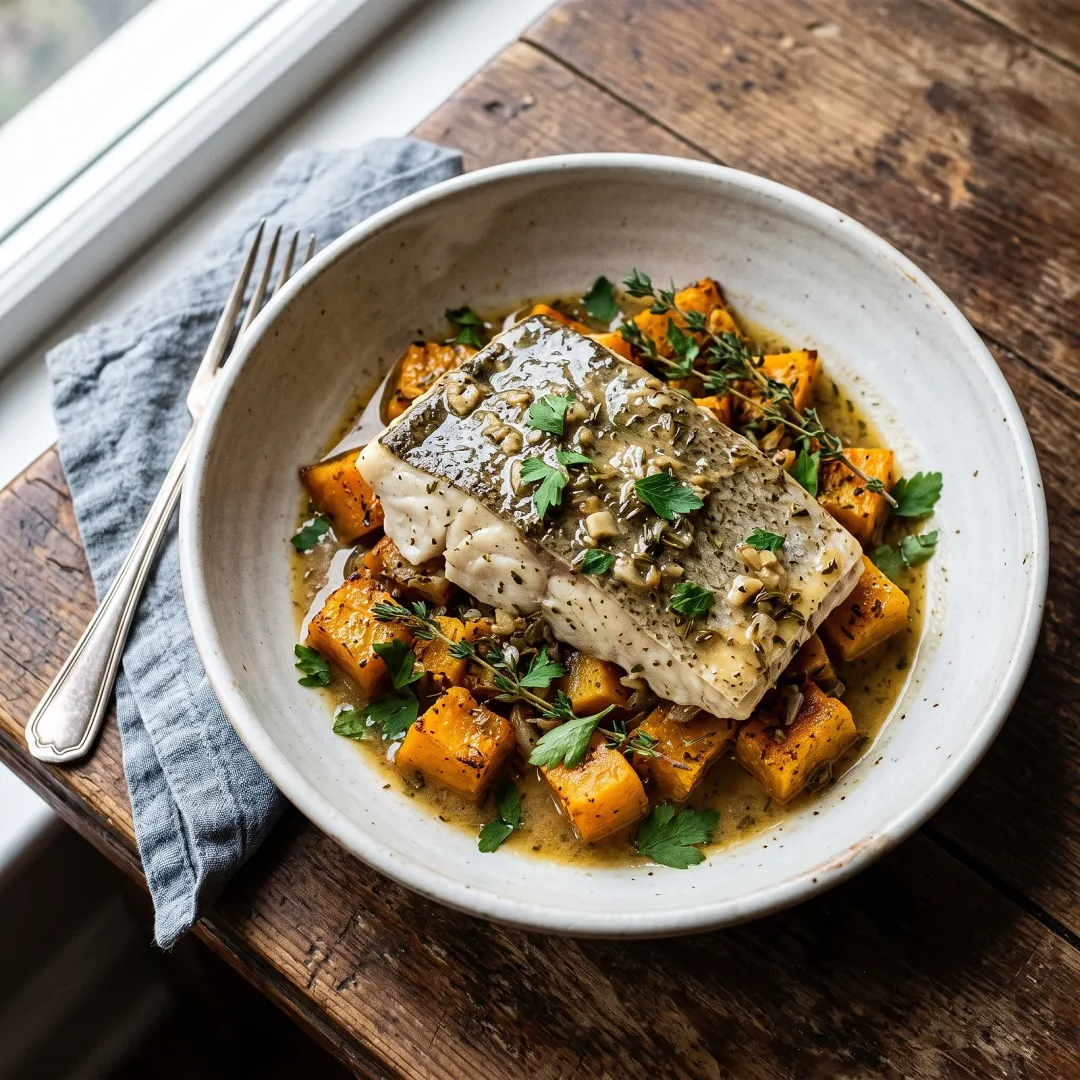

My oven smells like the South of France right now and I am not even a little bit sorry about it. Herbes de Provence blooming in olive oil, garlic going soft and sweet in a pool of coconut cream, fresh thyme doing exactly what fresh thyme does. This dish is quiet and confident. No drama. No thirty-ingredient list. Just a proper French braise that happens to be paleo, dairy-free, and completely safe for anyone navigating histamine intolerance or MCAS. Freshness is everything with this one. If you have histamine issues, you already know this in your bones: it is not just about avoiding the usual trigger foods. It is about how fresh your protein is when it hits the pan. Buy your cod the day you cook it, or the day before at the absolute latest. When the fish is truly fresh, braised gently in fragrant coconut cream, it comes out silky and clean-tasting in a way that feels almost luxurious. The butternut squash base is not an afterthought. Roasted until the edges are just starting to caramelize, it gives you something substantial underneath the fish, almost like a warm vegetable platter that soaks up every drop of those herbed pan juices. This is a real dinner. The kind you plate and sit down for.
Nutritional Benefits
Fresh Cod: Lean Protein That Supports Your Body Without the Histamine Load
- Fresh (never canned or smoked) cod is one of the lowest-histamine fish proteins available, making it a reliable choice for people with MCAS or histamine intolerance.
- A single serving delivers around 30 to 36 grams of complete protein, supporting muscle repair, immune function, and blood sugar stability.
- Cod is naturally low in fat and rich in B vitamins, particularly B12 and niacin, both of which support nervous system health and energy production.
- It provides a meaningful amount of iodine, which is essential for healthy thyroid function, something a lot of us with gut and immune issues need to pay attention to.
Butternut Squash: Blood Sugar-Friendly Carbs with Real Nutritional Depth
- Butternut squash is rich in beta-carotene, the plant-based precursor to vitamin A, which supports immune function, skin integrity, and eye health.
- It provides potassium, which helps regulate fluid balance and supports healthy blood pressure.
- The fiber in butternut squash feeds beneficial gut bacteria and helps slow the absorption of its natural sugars, making it a steadier carbohydrate choice than grains or starchy tubers.
- It is naturally anti-inflammatory and well-tolerated by most people, including those dealing with gut permeability or immune reactivity.
Coconut Cream and Extra Virgin Olive Oil: Healthy Fats That Help You Absorb More
- The combination of coconut cream and extra virgin olive oil in the braising liquid provides both medium-chain triglycerides (MCTs) from the coconut and oleocanthal from the olive oil, both of which have anti-inflammatory properties.
- Dietary fat is essential for absorbing the fat-soluble vitamins, A, D, E, and K, found throughout this dish. You need fat present to actually use what the vegetables are offering.
- Extra virgin olive oil is one of the most studied foods in the world for cardiovascular and metabolic benefit. A real, cold-pressed bottle is worth the spend.
- Coconut cream provides a rich, creamy braising medium without any dairy, making this dish appropriate for people with dairy sensitivity alongside their histamine concerns.
Leeks, Garlic, and Fresh Herbs: Flavor That Also Functions
- Leeks are a prebiotic food, meaning they feed the beneficial bacteria in your gut rather than just passing through. For anyone working on gut health alongside histamine issues, that matters.
- Garlic contains allicin and other sulfur compounds that support the immune system and have been studied for their antimicrobial and anti-inflammatory effects.
- Fresh thyme and herbes de Provence contain thymol and other plant compounds with antioxidant and antimicrobial properties.
- Fresh flat-leaf parsley is a genuinely good source of vitamin K and vitamin C, and it adds brightness to a dish that might otherwise read as heavy.
FAQs
What kind of cod works best for this recipe?
Fresh, skin-on cod fillets are the target here. Wild-caught Pacific cod or Atlantic cod both work. The skin holds the fillet together during braising, so I would not skip it. Buy it the day you plan to cook, or the morning before at the latest. Freshness is not optional when you are cooking for histamine intolerance.
Can I use kabocha squash instead of butternut?
Absolutely. Kabocha has a denser, slightly drier flesh with a nuttier flavor, and it roasts beautifully. Just cut it into similarly sized pieces and check it a few minutes early since it can cook a little faster than butternut. Both work wonderfully as the base for the fish.
My coconut cream broke or looks grainy in the pan. What happened?
Coconut cream can split if the heat gets too high or if it is boiled aggressively. Keep your braise at a gentle simmer, you want small, lazy bubbles, not a rolling boil. If it does look a little separated, it will still taste great. Just give it a gentle stir and keep the heat low.
Is this recipe safe for MCAS or histamine intolerance?
It is carefully designed to be. Every ingredient is low-histamine or histamine-neutral, and there are no aged, fermented, smoked, or canned foods anywhere in it. The most important variable you control is freshness, fresh fish, fresh herbs, fresh everything. And if you have leftovers, freeze them right away rather than storing them in the fridge, where histamine continues to build.
Can I make this ahead of time?
The squash can be roasted a few hours ahead and kept covered at room temperature. The leek and coconut cream base can be made about an hour ahead and held on low. But the cod should always be braised fresh and eaten right away. If you have leftovers, cool them rapidly and freeze them. Reheated braised fish from the fridge is not great for anyone, and for histamine sufferers it is a hard no.
I do not love coconut flavor. Will this taste like coconut?
Less than you might think. The garlic, herbes de Provence, and fresh thyme are assertive enough that the coconut cream reads as rich and creamy rather than tropical. It is the vehicle for all those French aromatics, not the star. Most people who try this are surprised by how subtle the coconut comes through.
What can I serve alongside this dish?
Honestly, the squash base is substantial enough that this is a complete plate on its own. If you want to add something green, steamed broccolini or roasted zucchini work well and stay within a low-histamine framework. A simple green salad with olive oil and a little fresh herb dressing would also be lovely.
If this recipe is landing somewhere new for you, cooking fish this gently, trusting a coconut cream braise, building a whole dinner around a vegetable base, I want to hear about it. Drop a comment below and tell me how it went. And if you are navigating histamine intolerance or MCAS and you want more recipes built around real food and real freshness, pin this one and come back often. This is exactly the kind of cooking I want to keep putting in front of you.
 That Paleo Chick
Real food that heals
That Paleo Chick
Real food that heals
RecipePaleoDinnerGluten-Free

Fits these needs
Checked ingredient by ingredient. Tap one to see every recipe that fits.
Health needs
New to these? Read our condition guidesDiet
Always check labels on packaged ingredients (gluten-free certification, hidden additives) and follow your clinician's advice.
Ingredients
Instructions
Nutrition Facts Amount per serving
Estimated from the ingredients. Values vary with brands and portions.

Join the conversation
Made it? Tell us how it went.
Free members can comment, reply and like. It takes ten seconds.