


The office breakroom has a birthday cake on the counter, a vending machine full of seed-oil chips, and a coffee pot that has been burning since 7 a.m. And somewhere in that mix you are supposed to eat well. I know the feeling. The work day is the single hardest environment for real-food habits, not because you don't know better, but because the whole setup is designed around convenience foods and social eating that has nothing to do with what you actually want to put in your body. These nine tactics are what actually work in the real world, not a meal plan built for someone who works from home with a fully stocked kitchen and three free hours a day.
1. Build Your Desk Snack Drawer (For Real This Time)
A snack drawer sounds basic, and it is, but most people skip it and then end up at the vending machine at 3 p.m. because they were unprepared. Stock it with things that need zero refrigeration and zero prep: raw almonds or walnuts, single-serve packs of almond butter, canned sardines or wild-caught tuna in olive oil, dried mango with no added sugar, jerky from a brand with clean ingredients (look for beef, salt, spices, nothing else), and maybe some grain-free crackers if that is your thing. The goal is a real-food firewall between you and the chip aisle. Research published in the journal Appetite found that the foods people have most visible and accessible at work are the ones they eat most. Put the real stuff where you can see it.
2. Prep One Big-Batch Protein on Sunday, Then Work It All Week
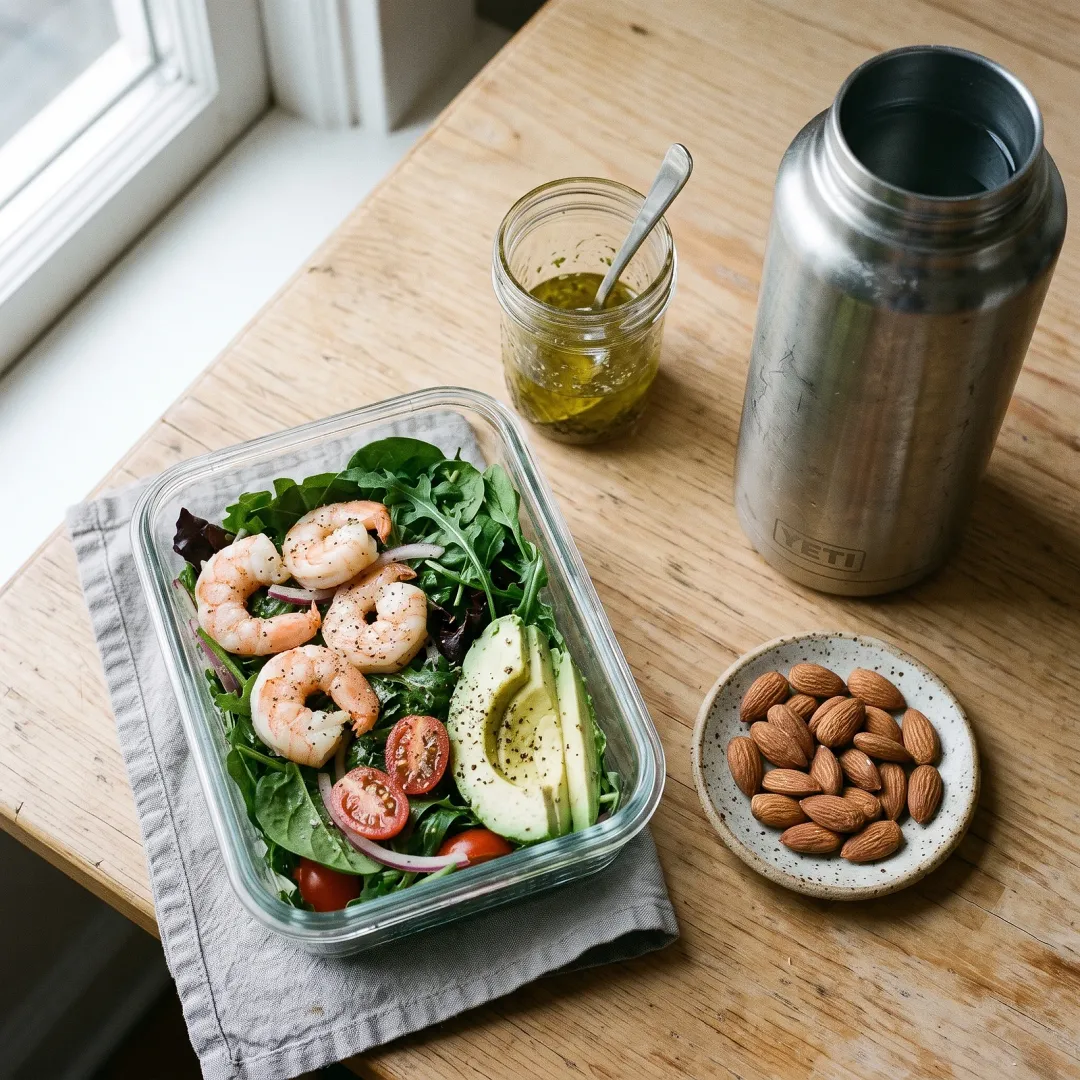
The biggest mistake I see with work lunches is building them from scratch every morning, which means they don't happen. Pick one protein on the weekend and cook a lot of it. Shrimp is a great office-lunch protein because it cooks in under five minutes, stays good cold, and works in a salad, over cauliflower rice, in a lettuce wrap, or straight out of the container with some avocado. Batch a pound or two, divide it up, and you have protein covered Monday through Wednesday without touching a pan in the morning. Add whatever raw or roasted vegetables you have, a good fat (avocado, olive oil, olives), and you are done. No sad desk salad. Actual food.
3. Bring Your Own Dressing (This One Is Not Optional)
If you are ordering a salad from the place downstairs or grabbing one from the cafeteria, the dressing is almost certainly made with soybean or canola oil, added sugar, and stabilizers you wouldn't buy at a store. That is not me being dramatic. The FDA's food labeling data shows that most commercial salad dressings list a refined vegetable oil as the first or second ingredient. Making your own takes about ninety seconds: a small jar, olive oil, lemon juice or red wine vinegar, Dijon mustard, garlic, salt. Shake it. Done. Keep two or three in the office fridge. This one move cleans up your lunch significantly.
4. Order Smarter When the Team Is Ordering Out
Group lunch orders are a landmine if you go in without a plan. At almost any restaurant or delivery option, you can find something workable: a protein bowl with rice instead of a wrap, a burger wrapped in lettuce, a grilled protein with a side salad instead of fries, a grain bowl with extra vegetables and dressing on the side. The strategy is not to find the perfect paleo option; it is to build the best plate from what is available. Protein, vegetables, good fat. Skip the bread, skip the fried sides, skip the sauces you can't read the ingredients on. Nobody at the table needs to know you are eating differently. You are just eating.
5. Rethink the 3 P.M. Slump (It Is Probably Not About Caffeine)
The afternoon energy crash that sends people to the coffee machine or the candy bowl is usually a blood sugar response to a carb-heavy lunch, not a caffeine deficiency. A 2020 review in Nutrients found that meals higher in protein and fiber and lower in refined carbohydrates are associated with more sustained energy and better cognitive performance in the hours after eating compared to high-glycemic meals. That is not to say you can never eat a carb at lunch. It means that if you are crashing every afternoon like clockwork, the fix might start with what you ate at noon, not with another cup of coffee. Try a lunch with a solid protein base, plenty of vegetables, and a smaller carb portion and see how 3 p.m. feels.
6. Navigate the Breakroom Without Making It Weird
Office food culture is real and it matters. Somebody's birthday cake, the holiday cookie tray, the donuts somebody brought on a Friday. You do not have to eat all of it. You also do not have to announce your food choices to the room or lecture anyone about seed oils. Take a small piece if you want one and it feels worth it to you. Skip it without explanation if it doesn't. A simple "I'm good, thanks" is a complete sentence. What you are protecting is your own consistency, and you can do that without making anyone feel judged for bringing donuts. The goal is to be someone who eats real food most of the time, not someone who is perfect at every office party.
7. Read the Label on "Healthy" Workplace Options
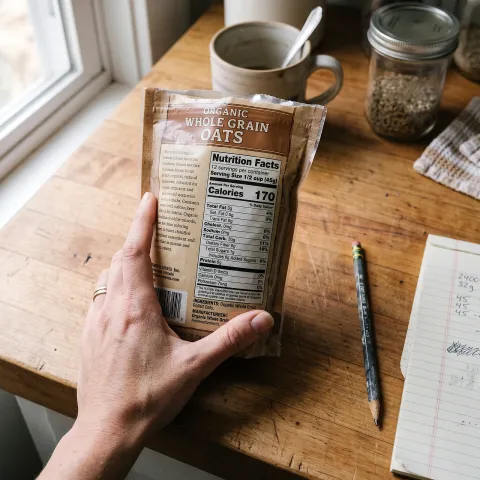
The office fridge is full of things marketed as healthy that are not: low-fat flavored yogurt (sugar bomb), protein bars (look at that ingredient list), "multigrain" wraps (refined flour with a few oat flakes for optics), low-calorie salad kits (soybean oil dressing, croutons, sugar in the dried fruit). None of this is to say you can never eat any of it. It is to say that the word "healthy" on a package is a marketing claim, not a nutrition fact. Flip it over. Read the ingredient list first, the nutrition panel second. If you don't recognize three or more ingredients, or if sugar appears in the first five, that is data. The FDA defines labeling rules for nutrient content claims like "healthy", but "healthy" is a regulated term with updated draft guidance that is still being finalized, which means food companies have been operating under older criteria that do not reflect current nutrition science. You are your own best label reader.
8. Keep Hydration Real (The Drinks Situation at Most Offices Is a Problem)
Office drink culture defaults to flavored waters with sucralose, diet sodas, sweetened creamers in the communal coffee, and energy drinks. None of that is water. The National Academies of Sciences, Engineering, and Medicine recommend about 3.7 liters of total daily water intake for men and 2.7 liters for women, and that includes water from food. Bring a large water bottle, fill it twice, and drink it. If plain water genuinely bores you, squeeze in some lemon or lime, add a few slices of cucumber, or try a plain sparkling water. Staying hydrated also supports focus and energy, which matters on a work day, so this is not a small thing. Do not let the office turn you into someone who drinks four coffees and two diet sodas and barely any actual water.
9. Set a Meal-Prep Floor, Not a Ceiling
The biggest thing I want you to walk away with here is this: you do not have to be perfect at office eating to make real food your default. Set a floor, not a ceiling. The floor might be: I bring lunch at least three days a week. I always have a real-food snack at my desk. I drink real water. That is it. When you have those three things covered, the birthday cake or the occasional takeout lunch does not derail anything, because you have a base. A 2017 study in the International Journal of Behavioral Nutrition and Physical Activity found that people who regularly prepared meals at home had significantly better diet quality overall, even accounting for the meals they ate out. Consistency in the habits you can control makes the meals you can't control much less of a problem.
---
This article is for general informational purposes only and is not medical advice. Always consult a qualified healthcare professional before making changes to your diet or health routine.
Key Takeaways
- Stock a real-food snack drawer at your desk so you're never caught unprepared at 3 p.m.
- Batch cook one protein on Sunday (shrimp works great cold) and build lunches around it all week.
- Bring your own dressing. Almost every commercial dressing uses refined oils and added sugar.
- When ordering with a group, build the best plate from what's available: protein, vegetables, good fat.
- The afternoon crash is often a lunch problem, not a caffeine shortage. A higher-protein lunch may help.
- "Healthy" on a package is a marketing claim. Read the ingredient list, every time.
- Set a prep floor (3 brought lunches a week, a real snack, real water) and let consistency carry you.
Frequently Asked Questions
What are good real food snacks to keep at my office desk?
Raw nuts (almonds, walnuts, macadamias), single-serve almond butter packets, clean beef or turkey jerky (ingredients: meat, salt, spices, nothing else), canned wild-caught fish in olive oil, and no-sugar-added dried fruit are all solid desk staples that need no refrigeration. The key is having them visible and within reach so they win over the vending machine when hunger hits.
How do I eat paleo at the office when I don't have time to cook every morning?
You don't cook every morning. That's the point. Pick one protein on the weekend, cook a large batch, and portion it out for the first three or four days of the week. Shrimp is a great option because it cooks fast, keeps well cold, and works in a salad, a lettuce wrap, or on its own. Add pre-cut raw vegetables, a good fat like avocado, and your own dressing, and lunch takes about two minutes to assemble.
How do I navigate office food culture without being rude or preachy?
You don't have to announce anything. Take a small piece of birthday cake if it feels worth it. Skip it with a simple "I'm good, thanks" if it doesn't. You are not obligated to explain your food choices to coworkers, and you don't need to lecture anyone for eating differently than you do. Consistency in your own habits is the goal. What other people eat is not your project.
Why do I always crash in the afternoon at work and want something sweet?
That afternoon slump is often a blood sugar response to a carb-heavy or low-protein lunch rather than a caffeine deficiency. A 2020 review in the journal Nutrients found that meals higher in protein and lower in refined carbohydrates are linked to more sustained energy and better focus in the hours after eating. If you crash every day around 3 p.m., start by looking at what you ate at noon before reaching for another coffee.
Sources
- Appetite (ScienceDirect): Food accessibility and visibility in the office environment
- Nutrients (MDPI): Protein and Cognitive Performance: A 2020 Review
- FDA: Nutrition Facts Label
- FDA: Labeling & Nutrition Guidance: Nutrient Content Claims including 'Healthy'
- National Academies of Sciences, Engineering, and Medicine: Report Sets Dietary Intake Levels for Water, Salt, and Potassium
- International Journal of Behavioral Nutrition and Physical Activity (BioMed Central): Home meal preparation and diet quality: a 2017 study
This article is for general informational purposes only and is not medical advice. Always consult a qualified healthcare professional before making changes to your diet or health routine.


Join the conversation
What do you think?
Free members can comment, reply and like. It takes ten seconds.