
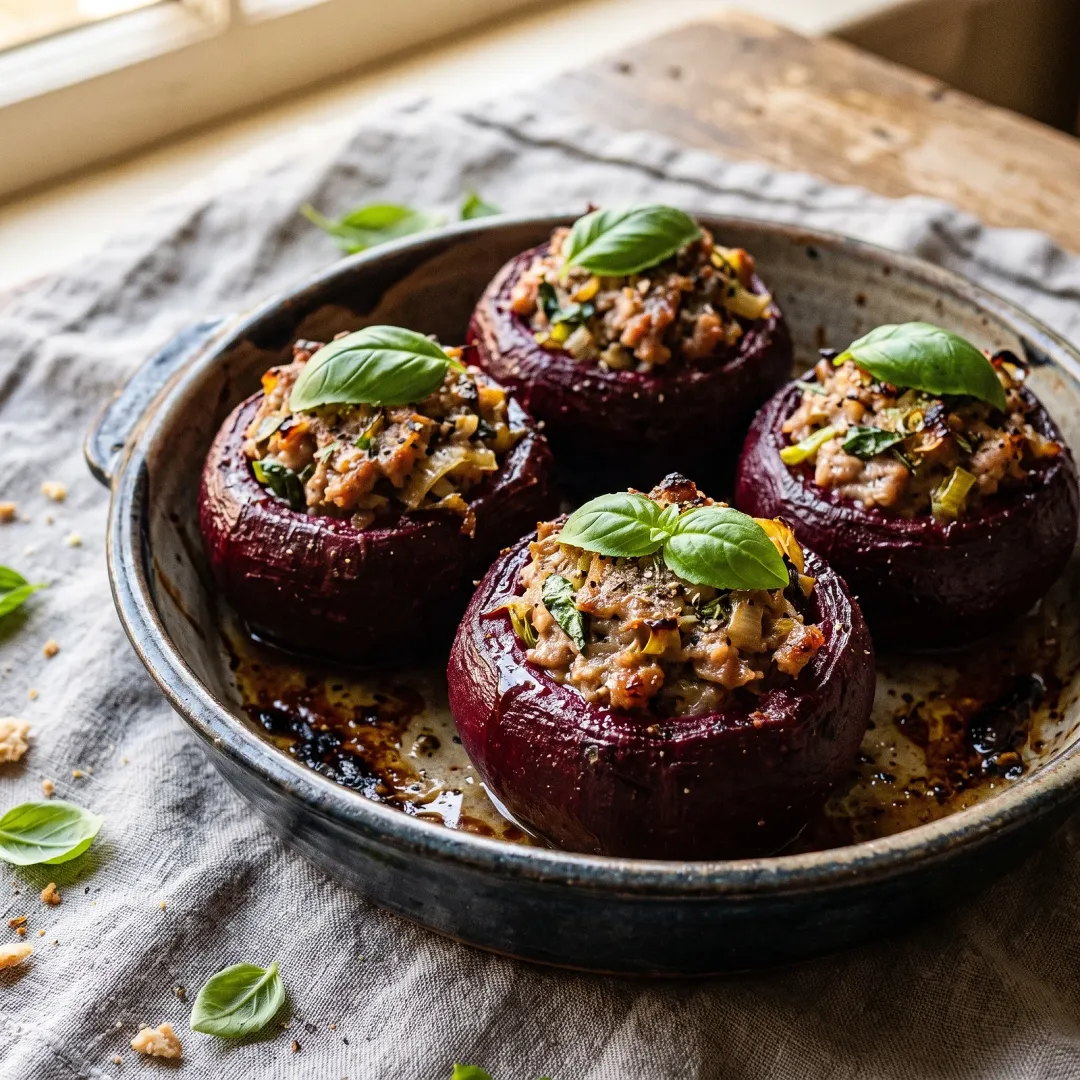

Nobody told me beets could hold a whole dinner inside them. The first time I hollowed one out and filled it with seasoned pork, I felt like I had discovered something the food world had been sitting on for years. These are earthy and sweet and savory all at once, and the caramelized edges where the filling meets the beet wall are genuinely one of my favorite things to eat right now. This recipe exists because histamine intolerance is no joke and finding a dinner that is actually satisfying, protein-forward, and free from the usual triggers is harder than it should be. No aged anything, no fermented anything, no vinegar or canned fish or tomato paste. Just fresh pork, fresh leeks, fresh herbs, and a vegetable that does the heavy lifting in more ways than one. Beets are naturally sweet and hold their structure beautifully after roasting, which makes them the perfect edible vessel for a hearty Italian-leaning filling. The Italian lean here is simple and purposeful: good olive oil, garlic, fresh basil, thyme, a pinch of oregano, a whisper of nutmeg. Not complicated. Not a long list of obscure ingredients. Just the aromatics that have made Italian cooking feel like a warm hug for centuries, stripped back to what matters and built around a real, whole food foundation. One note I take seriously with low-histamine cooking: freshness is everything. Buy your ground pork the day you make this. Freeze any leftovers the same night. Histamine builds fast in cooked meat sitting in the fridge, and I am not willing to undo all that careful ingredient work by letting things linger. Freeze it, reheat it from frozen, and you are good.
Nutritional Benefits
Beets: Nitric Oxide, Detox Support, and Natural Sweetness
- Beets are one of the richest dietary sources of nitrates, which the body converts to nitric oxide, a molecule that supports healthy blood flow and cardiovascular function.
- They contain betaine, which supports liver detoxification and helps the body process and eliminate toxins more efficiently.
- Beets are high in folate, manganese, and potassium, all important for energy metabolism and nerve function.
- Their natural sugars are balanced by a solid hit of fiber, which slows absorption and keeps blood sugar more stable than their sweetness might suggest.
Ground Pork: Accessible Protein with a Strong Nutrient Profile
- Fresh ground pork is a complete protein, meaning it contains all nine essential amino acids needed for muscle repair, immune function, and enzyme production.
- Pork is one of the best food sources of thiamine (vitamin B1), which is critical for carbohydrate metabolism and nerve health.
- It also provides zinc, selenium, and B12, a combination that supports immune resilience and thyroid function.
- Because it is used fresh here and not cured, smoked, or processed, it stays well within low-histamine guidelines without sacrificing any of its nutritional value.
Leeks: A Gentle Prebiotic for Sensitive Guts
- Leeks belong to the allium family and contain fructooligosaccharides, a type of prebiotic fiber that feeds beneficial gut bacteria.
- They are rich in kaempferol, a flavonoid with anti-inflammatory properties, and also provide a meaningful dose of vitamin K for bone and cardiovascular health.
- Leeks are lower in reactive compounds than onions, which makes them a gentler choice for people whose digestion is already working hard.
- Slowly wilting leeks in olive oil before adding them to the filling deepens their flavor while making them easier to digest.
Fresh Herbs: Not Just Garnish
- Fresh thyme contains thymol, a naturally occurring compound with antimicrobial and antifungal properties that has been studied for its role in gut health.
- Fresh basil provides rosmarinic acid, which has documented anti-inflammatory and antihistamine properties, making it particularly relevant for people managing histamine-related symptoms.
- Using herbs fresh rather than dried preserves more of their volatile oils and phytonutrients, which degrade quickly with heat and storage.
- Garlic brings allicin and quercetin to the table, both of which support the immune system and have natural mast cell stabilizing properties.
FAQs
Can I use a different ground meat instead of pork?
Yes. Fresh ground turkey or fresh ground chicken both work well here and stay within low-histamine guidelines as long as they are purchased and cooked fresh the same day. Ground lamb would give you a richer, earthier flavor that pairs beautifully with the beets, but make sure it is fresh ground, not pre-marinated or pre-seasoned. Avoid any pre-made blends that include additives you cannot identify.
My beets are smaller than 3 inches. Can I still make this?
You can, but you will need more beets and you will get a smaller filling-to-beet ratio. I would use six medium beets instead of four large ones and reduce the roasting time to around 40 to 50 minutes. The hollowing step is the trickiest part with smaller beets, so take your time with the melon baller and do not try to rush it.
Why do you say to freeze leftovers instead of refrigerating them?
Histamine is produced by bacteria breaking down proteins in food, and that process does not stop just because something is in your fridge. Cooked meat and fish can accumulate histamine within hours of cooking, which is why the low-histamine protocol recommends freezing promptly rather than storing in the fridge for days. Freeze individual portions the same night, and reheat from frozen when you are ready to eat them.
How do I know the pork filling is cooked through after the second bake?
The filling should reach an internal temperature of 160°F. Use an instant-read thermometer inserted into the center of the filling mound. If you do not have one, the filling should be firm to the touch, no longer pink in the center, and the juices should run clear. The beet walls will also shrink slightly and caramelize at the edges when everything is fully hot through.
Can I roast the beets ahead of time?
Yes, and honestly this is the move if you want to make weeknight dinner faster. Roast the beets up to 24 hours ahead and store them whole and unpeeled in the refrigerator. The day you are ready to eat, peel, hollow, fill, and do the second bake. Just know that the filling and the final bake need to happen the same day with fresh-purchased pork.
Is this recipe safe for Whole30?
Yes. Every ingredient in this recipe is Whole30 compliant. There is no added sugar, no dairy, no grains, no legumes, and no off-plan additives. The olive oil, fresh pork, leeks, garlic, and herbs are all green-light foods. Just make sure the ground pork you buy has no added ingredients beyond the meat itself, which you can confirm by reading the label.
If you made these stuffed beets, drop a comment below and tell me how they turned out. Did you swap the protein? Did your family look at them sideways before realizing how good they are? I want to know. And if you are navigating histamine intolerance or MCAS and looking for more real-food dinners that do not feel like a punishment, save this one and share it with someone who needs it. Fresh, whole, nourishing food is not complicated. It just takes a little intention.
 That Paleo Chick
Real food that heals
That Paleo Chick
Real food that heals
RecipePaleoDinnerGluten-Free

Fits these needs
Checked ingredient by ingredient. Tap one to see every recipe that fits.
Always check labels on packaged ingredients (gluten-free certification, hidden additives) and follow your clinician's advice.
Ingredients
Instructions
Nutrition Facts Amount per serving
Estimated from the ingredients. Values vary with brands and portions.

Join the conversation
Made it? Tell us how it went.
Free members can comment, reply and like. It takes ten seconds.