
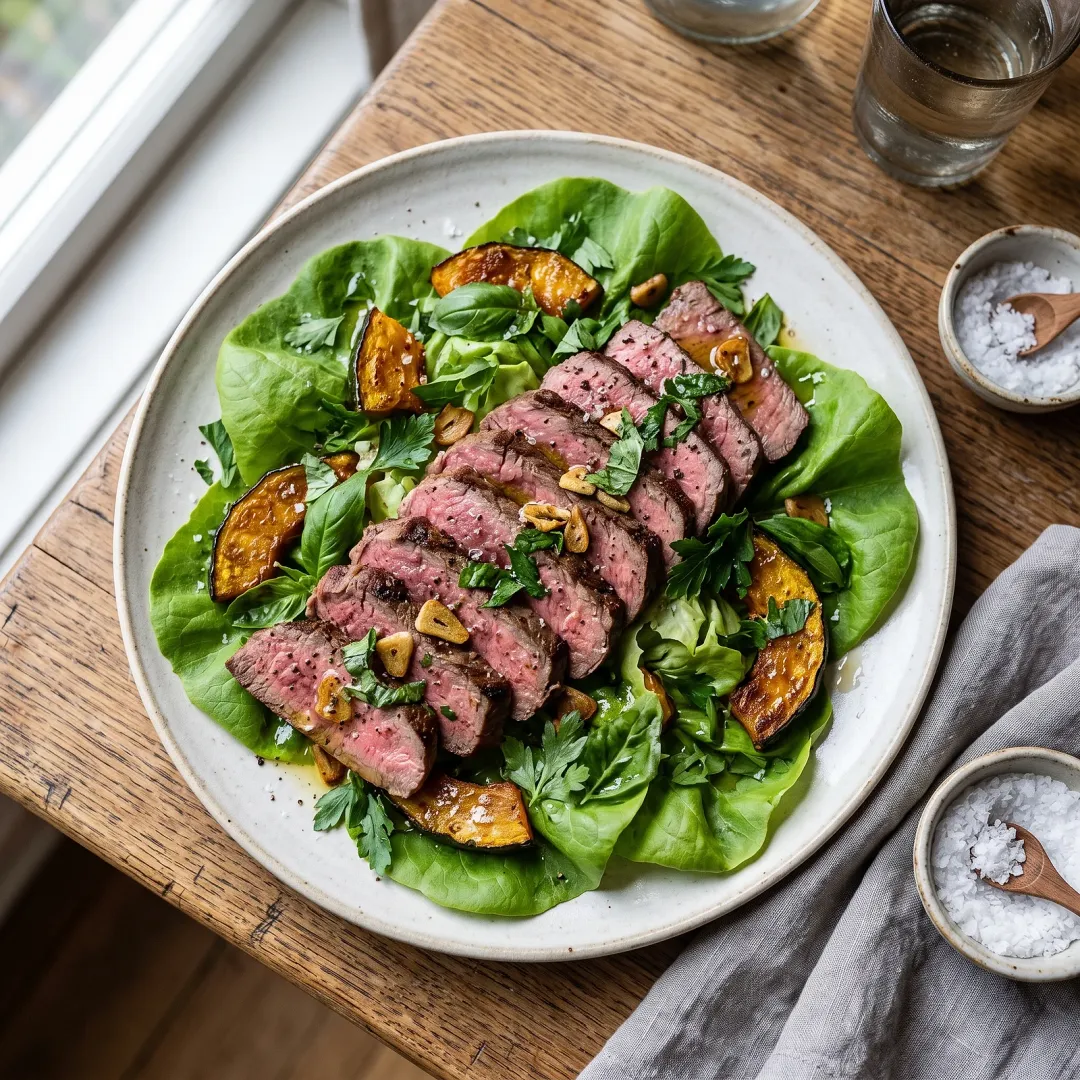

This salad didn't come from a restaurant. It came from me staring at a beautiful piece of beef fillet and a kabocha squash on the counter and deciding that sometimes the most Italian thing you can do is just get out of the way. No vinaigrette. No 14-ingredient sauce. Just warm garlic oil, fresh basil, and salt doing exactly what they were born to do. If you're managing histamine intolerance or MCAS, lunch is where things get genuinely hard. Everything you'd normally reach for, a dressed-up deli situation, anything aged or pickled or sitting in the fridge since Tuesday, is exactly what your body can't handle. So you end up eating the same plain, boring things on repeat and wondering why you even bother trying to make food feel good anymore. This salad is my answer to that. It's composed, it's satisfying, it carries the afternoon, and it's about as low-histamine as a cooked, freshly-prepared meal can get. Cook the beef fresh. Eat it within the hour. If there's any left over, wrap it up and freeze it the same day, don't leave it sitting in the fridge. The Italian soul of this dish is in its restraint. Quality beef. Kabocha squash roasted until it caramelizes at the edges. Butter lettuce for that soft, cool crunch underneath. Warm garlic oil poured over right before you eat. Torn basil. Flaky salt. That's it. And honestly, that's everything.
Nutritional Benefits
Beef Fillet (Tenderloin)
- One of the leanest cuts of beef while still being rich in complete protein, supporting muscle repair and sustained energy through the afternoon.
- Excellent source of zinc and iron in their most bioavailable forms, which matters especially for people with MCAS whose gut absorption is often compromised.
- Naturally low in histamine when cooked fresh and eaten promptly. The freshness of the cook is the key variable here.
Kabocha Squash
- Provides a meaningful dose of beta-carotene and vitamin C without the histamine load that nightshades or fermented vegetables carry.
- Moderately lower in carbohydrates than butternut squash, with a naturally sweet, chestnut-like flavor that needs zero sweetener to taste indulgent.
- Delivers potassium and magnesium, two minerals that MCAS sufferers tend to run low on, especially if mast cell reactions have been frequent.
Extra Virgin Olive Oil and Fresh Garlic
- Extra virgin olive oil is rich in oleocanthal, a compound with anti-inflammatory properties that mirrors ibuprofen in its mechanism. For anyone dealing with chronic immune activation, that matters.
- Fresh garlic offers quercetin, a natural mast cell stabilizer that shows real promise in the functional medicine literature for MCAS support.
- Infusing the garlic gently into the oil (rather than cooking it hard) preserves more of its active compounds while keeping the flavor mellow and accessible.
Fresh Basil and Flat-Leaf Parsley
- Both herbs are low-histamine and contribute a different quercetin and luteolin profile than garlic alone, layering the anti-inflammatory benefit naturally.
- Parsley is a surprisingly solid source of vitamin K and folate. Not bad for something that usually just sits on the side of the plate.
- Using herbs fresh, not dried and not sitting in a jar for six months, keeps the volatile compounds intact and the histamine risk minimal.
Butter Lettuce
- Gentle on a reactive gut. Low-histamine, low-oxalate, and genuinely easy to digest compared to the tougher raw greens that can irritate an inflamed system.
- Provides a small but real amount of folate and vitamin A precursors, plus that cool, tender crunch that makes a composed salad feel like an actual meal rather than a pile of vegetables.
FAQs
Can I use a different cut of beef if I can't find fillet?
Yes. Sirloin or strip steak work well here. The key is using a fresh, high-quality cut and slicing it thin across the grain after resting. Avoid pre-marinated meats, anything from the deli counter, or cuts that have been sitting in the fridge for several days. With histamine, freshness is the whole game.
Can I roast the kabocha squash ahead of time?
You can roast it a few hours ahead and keep it at room temperature if you're eating within the same meal window. For true histamine safety, though, the best practice is to roast it fresh and serve promptly. If you have leftovers, freeze them flat in a zip bag the same day rather than refrigerating.
Is kabocha squash hard to peel?
It can be. The skin is thick. A sharp chef's knife and a steady cutting board are your friends. Some people roast it unpeeled and scoop the flesh out after, which is easier, but for this salad you want neat cubes that hold their shape, so peeling raw is worth the extra two minutes. A quick 2-minute microwave before peeling softens the skin slightly and makes the job easier.
What if I can't tolerate garlic?
Some MCAS and histamine-intolerance folks also have issues with high-FODMAP foods. If garlic is a trigger for you, skip it entirely and just use the warm olive oil with a sprig of fresh thyme or rosemary infused in it instead. The oil alone is still a beautiful dressing for this salad.
Is this recipe Whole30 compliant?
Yes, every ingredient is Whole30 compatible. No sweeteners, no grains, no legumes, no dairy, nothing processed. It is naturally compliant.
How do I know when the beef is done to the right temperature?
An instant-read thermometer is your best friend for this. Pull the fillet at 125 to 130°F for medium-rare, which gives you that pink, tender center that slices beautifully. It will climb another 5°F or so during the rest. At medium-rare, the meat stays juicy and the texture is ideal for a composed salad. Cook it to well-done and it will be a different dish, not in a good way.
If you made this, I want to hear about it. Drop a comment below and tell me how it went, or tag me on Instagram so I can see your plate. And if you're navigating histamine intolerance or MCAS and trying to figure out how to eat real food without everything going sideways, you are not alone. Stick around. There's a lot more where this came from.
Seared Beef and Roasted Kabocha Squash Salad with Basil and Garlic Oil
Thinly sliced pan-seared beef fillet fanned over roasted kabocha squash cubes on crisp butter lettuce, finished with warm garlic-infused olive oil, fresh basil, flat-leaf parsley, and flaky salt. Strictly paleo, low-histamine, and composed for lunch.
Ingredients
- 1 lb beef fillet (tenderloin), trimmed and at room temperature
- 3 cups kabocha squash, peeled and cut into 3/4-inch cubes
- 1 head butter lettuce, leaves separated and washed
- 1/2 cup fresh basil leaves, torn
- 1/4 cup fresh flat-leaf parsley leaves
- 6 tablespoons extra virgin olive oil, divided
- 4 cloves garlic, peeled and thinly sliced
- 1/2 teaspoon fine sea salt, plus more to taste
- 1/4 teaspoon freshly ground black pepper
- 1/2 teaspoon flaky sea salt, for finishing
- 1 tablespoon avocado oil, for searing
Instructions
- Preheat your oven to 425°F. Line a large rimmed baking sheet with parchment paper.
- Toss the kabocha squash cubes with 2 tablespoons of the extra virgin olive oil and a generous pinch of fine sea salt. Spread them in a single layer on the prepared baking sheet. Roast for 25 to 28 minutes, flipping once halfway through, until the cubes are golden at the edges and fork-tender. Remove from the oven and let cool for 5 minutes.
- While the squash finishes roasting, pat the beef fillet thoroughly dry with paper towels. Season all over with 1/2 teaspoon fine sea salt and 1/4 teaspoon black pepper.
- Heat the avocado oil in a heavy skillet (cast iron works best) over high heat until the oil just begins to smoke. Lay the fillet in the pan and sear without moving it for 3 minutes. Flip and sear the other side for 2 to 3 minutes more for medium-rare, or adjust by 1 to 2 minutes per side for your preferred doneness. Sear the narrow sides briefly to seal. Transfer the fillet to a clean cutting board and let it rest for 8 full minutes before slicing.
- Make the garlic oil while the beef rests. Wipe out the skillet and return it to medium-low heat. Add the remaining 4 tablespoons of extra virgin olive oil and the sliced garlic. Cook gently, stirring occasionally, for 3 to 4 minutes until the garlic is soft and just barely golden at the edges. Do not let it brown deeply. Remove from heat and set aside.
- Slice the rested beef fillet thinly across the grain, about 1/4-inch slices.
- Arrange butter lettuce leaves across two plates to form a generous bed. Divide the roasted kabocha squash cubes evenly over the lettuce. Fan the sliced beef over the squash.
- Spoon the warm garlic oil, including the soft garlic slices, over each salad. Scatter the torn basil and flat-leaf parsley over the top.
- Finish each plate with a pinch of flaky sea salt. Serve immediately while the garlic oil is still warm.
Nutrition per serving
- Calories: 520
- Total Fat: 34g
- Carbohydrates: 18g
- Protein: 38g
- Dietary Fiber: 3g
- Sugar: 4g
 That Paleo Chick
Real food that heals
RecipePaleoLunchGluten-Free

Fits these needs
Checked ingredient by ingredient. Tap one to see every recipe that fits.
Ingredients
Instructions
Nutrition Facts Amount per serving
Estimated from the ingredients. Values vary with brands and portions.

Join the conversation
Made it? Tell us how it went.
Free members can comment, reply and like. It takes ten seconds.