



The can is cold, the marketing is loud, and your 2 p.m. brain does not care what is in it. That's how energy drinks keep winning. Not because they work beautifully, but because they are right there and they are fast. I get it. I've reached for one too. But once you flip the can and read what's actually in it, it's hard to un-see.
What You're Actually Reaching For
Most mainstream energy drinks stack synthetic caffeine, taurine, B vitamins at multiples of the daily value, artificial sweeteners or high-fructose corn syrup, artificial colors, and a proprietary "energy blend" that manufacturers are not required to fully disclose. A single 16-oz can can deliver 150 to 300 mg of caffeine alongside enough added sugar to rival a candy bar, or a chemical sweetener lineup instead.
The FDA's Center for Food Safety and Applied Nutrition flags that high-dose caffeine from concentrated sources can carry real cardiovascular risk, particularly for young people. A 2023 review published in Frontiers in Cardiovascular Medicine found associations between regular energy drink consumption and elevated heart rate, higher blood pressure, and increased risk of cardiac arrhythmia. That is not a scare tactic. That is the research.
And then there's the crash. Synthetic caffeine hits faster and harder than caffeine paired with naturally occurring compounds, and what goes up that fast tends to come down hard. You end up reaching for another can before 5 p.m.
The Swap: Green Tea and a Pinch of Real Salt in Water
Green tea and a small glass of water with a pinch of mineral-rich salt sound almost embarrassingly simple next to a can with a lightning bolt on it. That's sort of the point.
Green tea contains caffeine (roughly 25 to 50 mg per cup, depending on steep time and variety) plus L-theanine, an amino acid that research suggests may promote calm, steady focus rather than a spike-and-crash. The combination is why a cup of green tea feels different from an equivalent dose of isolated caffeine. The edge is there; the jitter usually is not.
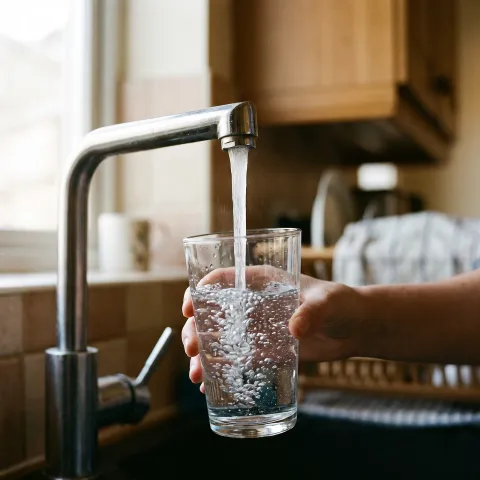
The salt water piece is not about sodium loading. It's about the fact that most people chasing energy are also mildly dehydrated, and plain water alone does not always rehydrate efficiently. A small pinch (literally a pinch, less than 1/8 teaspoon) of a mineral-rich salt like Himalayan pink or Celtic sea salt in a full glass of water adds trace minerals that support cellular fluid balance. This is not a sports drink. It is just water that does its job better.
If you want to make your prep easier, brew a big pitcher of green tea in the morning, let it cool, and keep it in the fridge. Pour it over ice in the afternoon. Have your salt water mid-morning before the slump even arrives. The whole system takes about five minutes to set up.
What Honestly Changes
Taste. Green tea is not a can of Monster. It is light, slightly grassy, and mildly bitter if you over-steep it. Keep the steep under three minutes and the bitterness stays gentle. Add a small amount of raw honey if you need an on-ramp. The salt water is nearly tasteless at a pinch level, though some people notice a very faint mineral quality they actually like.
Energy curve. This is where the swap wins clearly. The L-theanine-plus-caffeine combination in green tea is associated with steadier, more sustained focus compared to high-dose isolated caffeine. You will likely not feel the same rocket-launch that a 200 mg synthetic-caffeine can gives you. That is not a bug. The rocket launch is what produces the crater at 5 p.m.
Cost. A quality box of loose-leaf green tea or tea bags costs a fraction of what you're spending on canned energy drinks. A bag of good mineral salt used this way lasts months.
Effort. Higher, honestly. Boiling water and steeping tea requires more steps than cracking a can. If that friction is real in your day, batch it once in the morning and the rest of the day is easy.
When the swap is not worth pushing. If you are working a night shift, running on two hours of sleep, or need a very specific high-caffeine dose before athletic performance, green tea may not fully replicate the hit you are after. Be honest with yourself about that. This swap shines most for the habitual daily afternoon reach, not the emergency all-nighter.
Making It Stick
The reason most people don't make this swap permanent is that they try to do it in the middle of a slump, when the craving is already loud. Set yourself up before the craving shows up. Brew the tea in the morning. Keep the pitcher cold. Have the salt water ready around 10 a.m., not 3 p.m. when you're already running on fumes.
Give it two weeks. The first three or four days may feel like less energy if your body is used to a bigger synthetic caffeine hit. That is a real adjustment period, not proof the swap does not work.
God designed these bodies to run on real things. Water and plants have been sustaining focus and energy for a very long time without a proprietary energy blend. Sometimes the old tools are the ones that hold up.
---
This article is for general informational purposes only and is not medical advice. Always consult a qualified healthcare professional before making changes to your diet or health routine.
Key Takeaways
- Most energy drinks combine synthetic caffeine, artificial additives, and high-dose B vitamins in amounts that research links to elevated heart rate and blood pressure.
- Green tea delivers caffeine alongside L-theanine, a compound associated with calmer, more sustained focus without the spike-and-crash.
- A small pinch of mineral-rich salt in a full glass of water may support better cellular hydration than plain water alone.
- The swap costs less, but it requires a little more setup. Batching cold green tea in the morning eliminates most of the friction.
- This swap works best for the habitual daily afternoon reach. High-sleep-debt or performance-specific situations may need a different conversation with your doctor or a qualified practitioner.
Frequently Asked Questions
Can green tea replace energy drinks for focus and energy?
Green tea can support steady focus through a combination of caffeine and L-theanine, an amino acid research links to calm alertness. It delivers less caffeine per serving than most energy drinks (roughly 25 to 50 mg per cup versus 150 to 300 mg per can), so the effect is gentler rather than identical. For habitual daily use, many people find the trade-off very worth it. For high-sleep-debt situations, talk to your doctor or a qualified practitioner about what your body actually needs.
Why add salt to water instead of just drinking plain water?
A small pinch of mineral-rich salt (less than 1/8 teaspoon in a full glass) adds trace minerals that support cellular fluid balance. Plain water is absorbed and processed efficiently on its own, but people who are chronically mildly dehydrated sometimes find that a tiny mineral addition helps the water do its job more effectively. This is not about sodium loading; the amount involved is very small.
What kind of salt should I use in water?
Himalayan pink salt or Celtic sea salt are the most commonly used options because they contain trace minerals beyond sodium chloride. Standard table salt is highly refined and often contains additives like anti-caking agents, so it is not the best choice for this purpose. Use a genuine pinch, not a measured teaspoon.
How long does it take to adjust when you stop drinking energy drinks?
If your body is accustomed to a high daily dose of synthetic caffeine, expect a real adjustment period of three to seven days. You may feel more fatigued or notice mild headaches as your system recalibrates. Starting with green tea rather than going fully caffeine-free can help soften that transition. If symptoms are significant or prolonged, check in with your healthcare provider.
Sources
- FDA Center for Food Safety and Applied Nutrition: Information for Consumers on Using Dietary Supplements
- Frontiers in Cardiovascular Medicine: Energy Drinks and Their Impact on the Cardiovascular System
- National Library of Medicine (PMC): The Effects of L-Theanine and Caffeine on Cognitive Performance and Mood
- Harvard T.H. Chan School of Public Health, The Nutrition Source: Water
This article is for general informational purposes only and is not medical advice. Always consult a qualified healthcare professional before making changes to your diet or health routine.



Join the conversation
What do you think?
Free members can comment, reply and like. It takes ten seconds.