

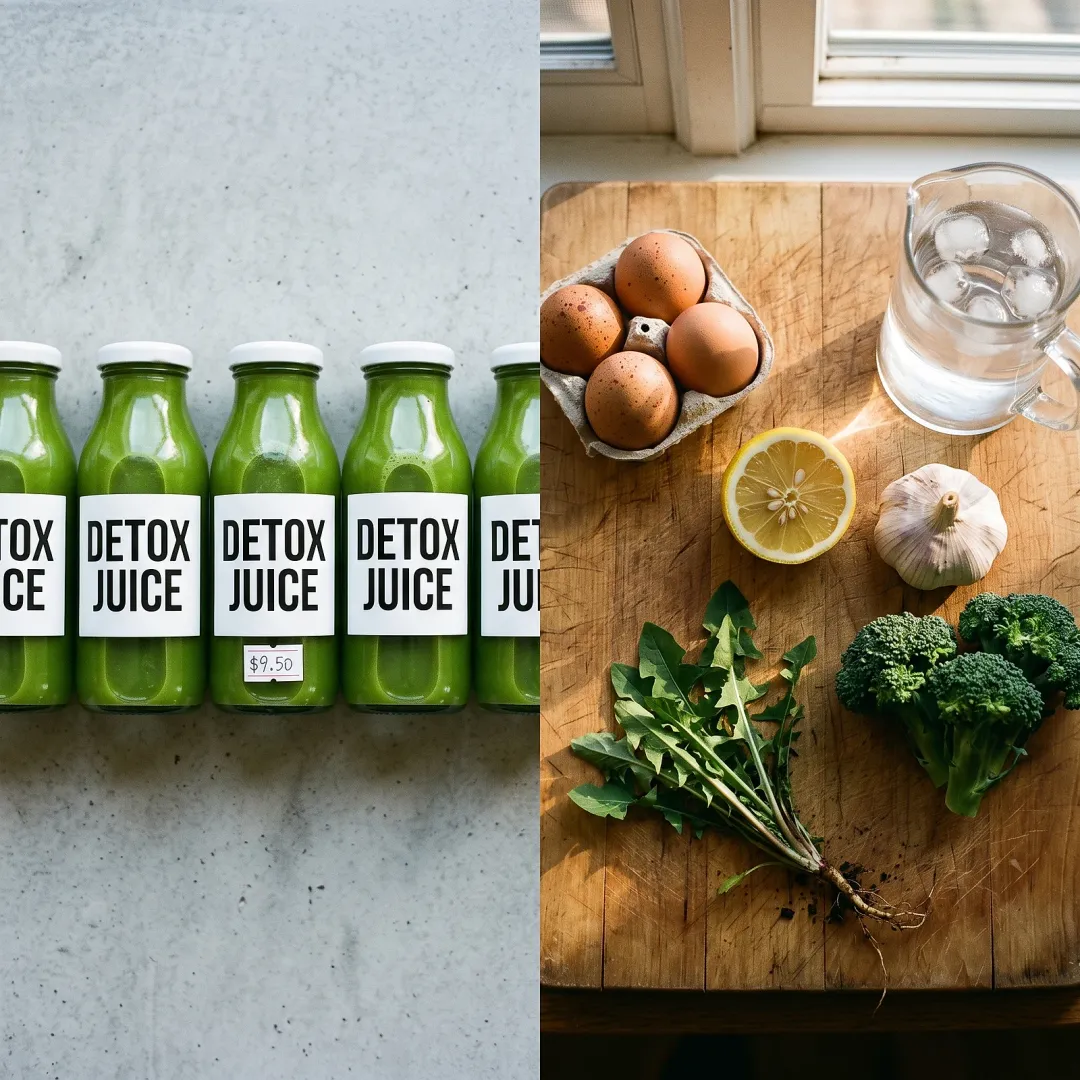

Every January, the same thing happens. Someone buys a $90 seven-day "detox kit," drinks nothing but cold-pressed celery juice for a week, feels terrible by day three, calls it "die-off," and posts about their transformation. And the next January? Same kit. Same misery. Same post.
The word "detox" has been hijacked so thoroughly by the wellness industry that most people have no idea what it actually means anymore. And that bothers me, because real detoxification is something your body does, full stop. It is not a product. It is not a program. And it is not something that happens in seven days after eleven months of ignoring everything else.
What "Detox" Actually Means Physiologically
Let's start with the actual science, because this is where the marketing falls apart.
Your liver is the primary detoxification organ in your body, and it runs a sophisticated two-phase process around the clock. Phase I uses a family of enzymes (the cytochrome P450 system) to break fat-soluble toxins, medications, hormones, and metabolic waste into intermediate compounds. Phase II then conjugates, or attaches, those intermediates to molecules like glutathione, sulfate, or glycine so they become water-soluble and can be excreted through bile, stool, or urine.
According to the National Institutes of Health, the liver performs over 500 functions, and detoxification is one of its core jobs every single day. Not once a year. Every day.
Your kidneys filter roughly 200 liters of blood daily, pulling out waste products and excess minerals. Your lymphatic system moves cellular waste through your tissue. Your lungs exhale carbon dioxide. Your skin eliminates small amounts of waste through sweat. Your colon moves the rest out through stool.
This entire system is running whether you bought a kit or not. The question is not whether you are detoxing. The question is whether the system is working well or whether it is burdened and underfunded.
The Signals Your Body Sends When the System Is Stressed
This is the coaching piece I actually care about, because your body talks to you constantly. The problem is we have been taught to silence those signals with a product instead of read them like information.
Here are some signals worth paying attention to, through a root-cause lens:
Skin breakouts that are not just on your face. The skin is sometimes called the third kidney, because it will try to push out what the liver and kidneys cannot fully process fast enough. Persistent acne along the jawline, chest, or back, especially in adults, can be a signal worth investigating. This does not mean you need a detox cleanse. It may mean your Phase II liver pathways are sluggish, your bowels are backed up, or your diet is running your inflammatory load higher than your elimination can keep up with.
Fatigue that does not respond to rest. When the liver is overloaded, Phase I can generate intermediate compounds that are actually more reactive than the original toxin. If Phase II cannot keep up with clearance, those compounds circulate longer. The result can feel like a heavy, foggy exhaustion that sleep does not fix. A review published in the journal Antioxidants noted that oxidative stress from impaired detoxification pathways is linked to fatigue and systemic inflammation.
Hormonal irregularities. Your liver is responsible for clearing used estrogen. If Phase II conjugation is sluggish, estrogen can get reactivated in the gut and recirculate rather than exit. This shows up as PMS that feels like a freight train, heavy periods, mood swings in the luteal phase, or breast tenderness. This is one reason I pay attention to liver support specifically in women with cycle complaints, not just a hormone panel.
Morning headaches or a foggy first hour. Your body does much of its cellular repair and toxin clearance overnight. If you wake up with a headache or take an hour to feel like a human, that can signal that overnight clearance is incomplete. Dehydration plays a role, but so do liver burden and poor bile flow.
Strong reactions to smells, alcohol, or coffee. If one glass of wine hits you like three, or coffee makes you feel jittery and anxious instead of alert, that can reflect cytochrome P450 enzyme variations or an already-burdened Phase I pathway. It is a signal, not a character flaw.
Why Juice Cleanses Do Not Do What They Promise
A juice cleanse strips out fiber, spikes your blood sugar, and removes most of the protein your liver's Phase II conjugation actually requires to function. Glutathione synthesis requires glycine, glutamate, and cysteine. Sulfation needs sulfur-containing amino acids. Glucuronidation needs adequate glucose regulation. These all come from food, and specifically from protein and fiber-rich whole foods, not from cold-pressed juice.
The Academy of Nutrition and Dietetics has stated plainly that there is no convincing evidence that commercial detox diets remove toxins from the body or improve health, and that the kidneys and liver are quite effective at filtering and eliminating most ingested toxins on their own.
I am not saying that eliminating processed food for a week is bad. If a "cleanse" gets you off fast food and alcohol for seven days, sure, your body will feel better. But that is not the cleanse doing the work. That is just eating less garbage. You did not need a $90 kit for that.
The other thing that bothers me about the detox product culture is what it does to your relationship with your body. It creates this cycle where you "earn" the cleanse by being bad, and you "earn" being bad again by having done the cleanse. It is a hamster wheel with a premium price tag, and it keeps you from ever asking the real question: what is burdening my system in the first place?
What Actually Supports Your Body's Real Detoxification
Here is what I coach, and none of it comes in a kit.
Feed Phase II what it needs. Sulfur-rich foods like eggs, garlic, onions, and broccoli family vegetables support glutathione production and sulfation pathways. Eggs in particular are one of the most complete sources of cysteine, the amino acid your liver uses to make glutathione, your body's master antioxidant. Two eggs at breakfast is more liver-supportive than most supplements on the market and costs about thirty cents.
Keep bile moving. Bile is how Phase II byproducts actually leave your body. Bile flow depends on fat intake (yes, fat), bitter foods like dandelion greens, arugula, and apple cider vinegar, and adequate hydration. If you are eating low-fat and wondering why your detox symptoms are stubborn, this is often a big piece of it.
Fiber is the exit ramp. Soluble fiber in the colon binds conjugated toxins so they leave in stool rather than getting reabsorbed. If you are constipated, your exit ramp is blocked. No amount of juice changes that. Vegetables, fruit, and whole-food carbohydrates are what move the bus.
Water, consistently. Your kidneys filter roughly 200 liters of blood daily, and they need adequate water to do it. Not a "water detox." Just consistent, adequate hydration throughout the day. I aim for half my body weight in ounces as a baseline starting point for most people.
Reduce the incoming load. This is where the root-cause thinking matters most. If you are eating ultra-processed food daily, drinking regularly, using synthetic fragrance products, and under chronic stress, your detox system is running a deficit. The most powerful "detox" intervention is reducing what you are asking the system to process in the first place. Whole food, clean products, stress management. Boring, I know. Effective, absolutely.
Sleep is when clearance peaks. The brain's glymphatic system, which clears metabolic waste from neural tissue, is primarily active during deep sleep, according to research published by the National Institute of Neurological Disorders and Stroke. Cutting sleep to do a 5 AM juice routine is counterproductive at the most basic physiological level.
A Word on Labs and Root-Cause Thinking
If you have persistent signals, like the ones listed above, that do not resolve with consistent whole-food eating and lifestyle basics, it is worth looking deeper. A functional-medicine-informed provider can look at markers like GGT (a liver enzyme sensitive to oxidative stress), homocysteine (a marker tied to methylation, which is connected to Phase II detox capacity), ferritin, and inflammatory markers that a standard panel might miss or wave off as "normal."
Labs are clues, not verdicts. But they give us something to work with instead of guessing.
I also want to say this clearly: I steward my body because I believe it was given to me as a gift, not because I am afraid of it. That shift in framing changes everything about how you approach this stuff. You are not punishing yourself with a juice cleanse because you failed. You are nourishing a system that was designed to work, and your job is to give it what it needs to keep doing so.
The Bottom Line
Your body detoxes. It has been doing it since before you were born. The liver, kidneys, lymph, lungs, colon, and skin are all part of a system that is running constantly in the background.
What you can do is support that system with real food, consistent hydration, quality sleep, reduced incoming burden, and attention to the signals your body sends when something is off. What you do not need is a seven-day kit that sells you back the nutrients your liver already needed.
Read the signals. Feed the system. Skip the cleanse.
This article is for general informational purposes only and is not medical advice. Always consult a qualified healthcare professional before making changes to your diet or health routine.
Key Takeaways
- Your liver runs a two-phase detoxification process daily. It does not need a cleanse. It needs consistent nutritional support.
- Signals like persistent skin issues, cycle irregularities, fatigue, and morning headaches can indicate the detox system is burdened, not that you need a juice kit.
- Commercial detox products remove the protein and fiber your liver's Phase II pathways actually require to function.
- Eggs, sulfur-rich vegetables, bitter foods, fiber, and adequate hydration are among the most evidence-grounded ways to support real detoxification.
- Reducing the incoming toxic load (ultra-processed food, alcohol, synthetic fragrance) is the most powerful "detox" intervention available.
- Deep sleep is when your brain's glymphatic clearance system peaks. Protecting sleep is a detox strategy.
Frequently Asked Questions
Does your body actually need help detoxing?
Your body has a built-in, highly capable detoxification system centered in the liver, kidneys, lymph, colon, and lungs. It does not need a commercial cleanse to function. What it does need is consistent nutritional support: adequate protein, sulfur-rich vegetables, fiber, hydration, and quality sleep. The goal is to reduce the incoming burden and supply the raw materials the system requires, not to replace it with a product.
Are detox teas and juice cleanses actually effective?
No credible clinical evidence supports the claim that commercial detox teas or juice cleanses remove toxins from the body. The Academy of Nutrition and Dietetics has stated there is no convincing evidence these products enhance what the liver and kidneys already do. Some people feel better during a cleanse simply because they have eliminated processed food and alcohol, not because the product itself is working.
What are signs that your liver detox pathways are overburdened?
Common signals include persistent adult acne (especially on the chest or back), fatigue that does not improve with rest, PMS that is severe or worsening, morning headaches or brain fog, and strong reactions to small amounts of alcohol or caffeine. These are signals worth investigating with a qualified healthcare provider, not invitations to buy a cleanse.
What foods actually support liver detoxification?
Eggs are among the most effective whole foods for liver support because they are rich in cysteine, a precursor to glutathione, the liver's primary antioxidant. Sulfur-rich vegetables like garlic, onions, and broccoli family vegetables support both glutathione production and sulfation pathways. Bitter greens such as dandelion and arugula support bile flow. Fiber from vegetables and whole foods provides the exit ramp for conjugated toxins in the colon.
Sources
- National Institutes of Health / StatPearls: Liver: Anatomy and Function
- MDPI Antioxidants: Oxidative Stress and Antioxidant Defense
- Academy of Nutrition and Dietetics: Do Detox Diets Offer Any Health Benefits?
- National Institute of Neurological Disorders and Stroke: Brain May Flush Out Toxins During Sleep
This article is for general informational purposes only and is not medical advice. Always consult a qualified healthcare professional before making changes to your diet or health routine.


Join the conversation
What do you think?
Free members can comment, reply and like. It takes ten seconds.