

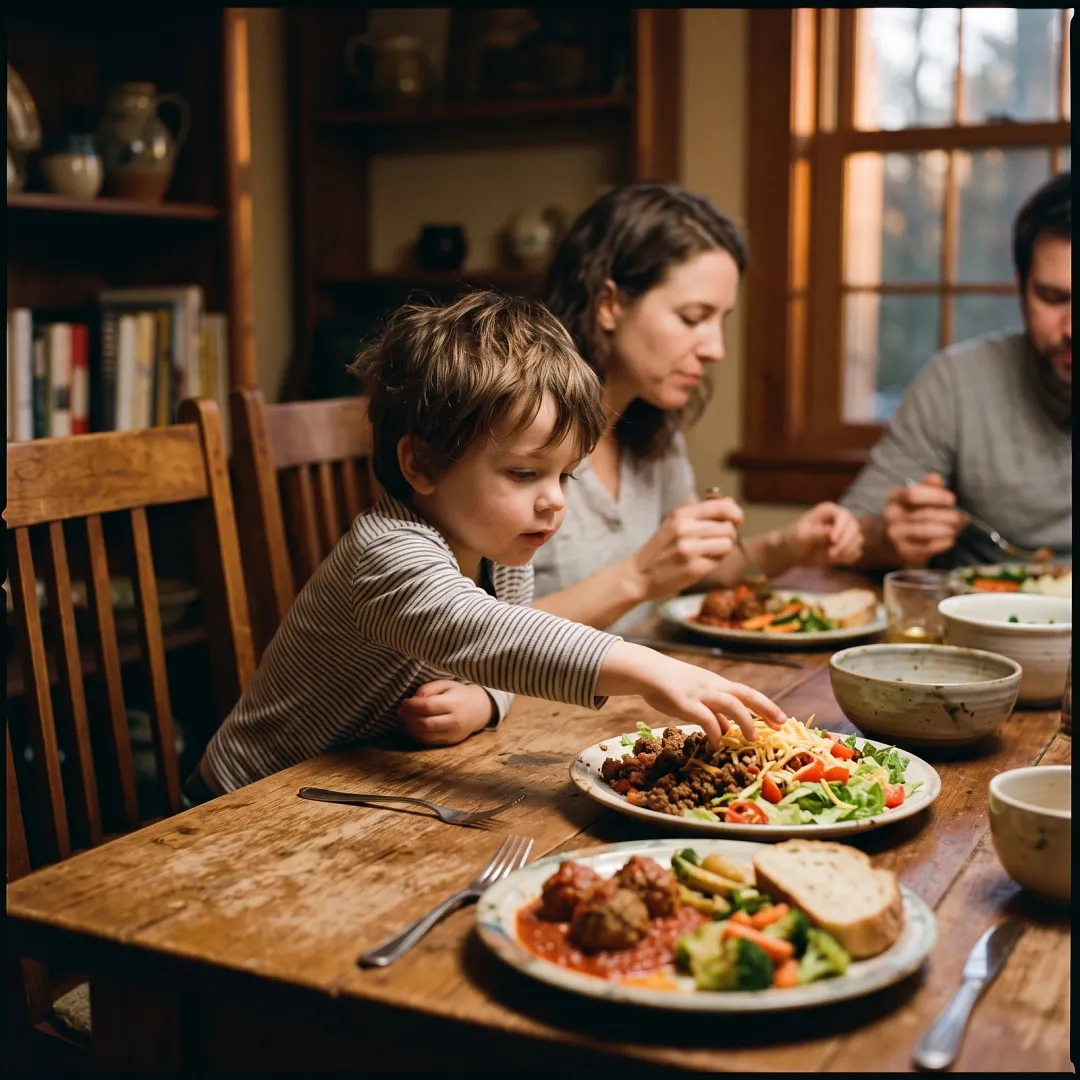

Dinner is getting cold, someone is crying, and you are seriously reconsidering the whole "cook a real meal" thing. Picky eating is one of the most exhausting parts of feeding a family, and most of the advice out there is either condescending or completely disconnected from a real dinner table. So let's talk about what's actually going on, and what you can do about it starting tonight.
First, Understand What's Really Happening
Picky eating is not your kid being dramatic. Research consistently shows that food refusal in children is driven by a mix of sensory sensitivity, developmental biology, and learned associations. Studies show that the peak window for neophobia (that's the technical word for fear of new foods) falls between ages two and six, which means refusing a green bean at three years old is developmentally on schedule, not a character flaw.
Sensory processing also plays a huge role. Texture, temperature, color, and smell can all trigger a genuine refusal response. This is not pickiness as a personality trait. It's the nervous system doing its job, maybe doing it a little too enthusiastically, but still.
And for a smaller subset of kids, Avoidant/Restrictive Food Intake Disorder (ARFID) is a real clinical condition that goes well beyond typical picky eating. If your child's food refusal is severe, is causing nutrient deficiencies, or is paired with major anxiety, please loop in a pediatrician and a feeding therapist. That is outside coaching territory and genuinely requires a specialist.
For most families dealing with everyday mealtime resistance, though, the strategies below are where I'd start.
The Division of Responsibility: Who Decides What
The single most practical framework I've come across for picky eating is Ellyn Satter's Division of Responsibility model. The idea is simple: you decide what's on the table, when it's served, and where you eat. Your child decides whether they eat and how much. Full stop.
This sounds passive, and it's actually the opposite. It takes the power struggle completely off the table because you stop fighting over bites. When you remove the drama from eating, food stops being a control game and starts being, well, food.
Practically, this means:
- You serve the same meal to everyone (with at least one safe, familiar thing on the plate)
- You don't make a separate "kid plate" every single night
- You don't bribe, plead, or negotiate bites
- You let them leave the table without finishing, without guilt-tripping
Satter's research shows this approach supports children in learning to regulate their own hunger and fullness cues over time, which is something we absolutely want. That internal compass matters far into adulthood.
7 Real-Food Strategies That Actually Move the Needle
1. Put a "safe food" on every plate. Every single meal should include at least one thing your child already eats without drama. Not as a reward or a negotiating chip, just there. This lowers the anxiety of sitting down to a plate of unknowns and makes the whole meal feel less threatening.
2. Serve new foods alongside familiar ones, not instead of them. Exposure research is really clear on this. Studies suggest it can take anywhere from 10 to 15 exposures to a new food before a child even accepts it, let alone likes it. That means you might serve roasted zucchini eleven times before it gets eaten. That's not failure. That's the process.
3. Change the form before you give up on the food. A child who refuses steamed broccoli might eat it roasted until it's a little crispy at the edges. Someone who won't touch raw carrots might eat them shredded into a grass-fed beef meatball. Texture is often the real objection, not the food itself. Work the form before you write a food off permanently.
4. Let them touch, smell, and play before they eat. This sounds messy and pointless and it genuinely works. Sensory exposure outside of the pressure to eat helps desensitize the nervous system to new foods. Let them stir the soup. Let them rip the lettuce. Let them smell the herbs. It's low-stakes contact that builds familiarity.
5. Make beef the workhorse. Ground beef is one of the most picky-eater-friendly proteins there is. The texture is soft, the flavor is mild enough to blend into almost anything, and it carries seasoning well. A well-seasoned grass-fed beef patty, a simple Bolognese, beef-and-veggie skewers with the "fun" of eating off a stick, taco bowls where kids build their own. Beef is also a dense source of zinc, which supports taste bud development and immune function. Zinc deficiency can actually blunt taste perception, which may compound food refusal in some kids. Worth knowing.
6. Get them in the kitchen with you. Kids eat what they help make. This is not a myth. A 2012 study from the Journal of Nutrition Education and Behavior00348-7/abstract) found that children who were involved in food preparation were more willing to taste and eat the foods they helped cook. Even something as simple as stirring the pan or pressing the meatball flat changes their relationship to that dish.
7. Eat the same food yourself, at the same table. Family meals matter a lot. Research published in Pediatrics has linked regular family meals to better diet quality and more food variety in children. They are watching you. If you eat the roasted sweet potato and clearly enjoy it, that is more persuasive than any bribe you could come up with.
Bonus: Watch the liquid calories. Kids who fill up on juice, milk, or sweetened drinks at or before meals often aren't hungry enough to try anything new. Water or nothing at meals is a simple lever that makes a real difference in appetite and openness.
What Not to Do (Even When You're Desperate)
I know the urge to sneak vegetables into every single thing. And look, I'm not totally against it. Shredding zucchini into a meatball or blending cauliflower into a sauce has its place. But if that becomes the only strategy, you're not actually expanding the palate. You're hiding food, and kids eventually figure it out. The goal is a child who can sit down to a plate with a vegetable on it and not have a meltdown. Hiding spinach in a brownie does not build that skill.
Also: don't turn food refusal into a power struggle by sitting there until they finish. Research from the Avoidant/Restrictive Food Intake literature shows that pressure and coercion at meals are consistently associated with worse outcomes, not better ones. More pressure creates more resistance. Less pressure, over time, creates more openness.
And please, for the love of everything, stop calling them a picky eater in front of them. Identity labels stick. If they hear "she doesn't eat anything" enough times, that becomes who they are.
A Word on Patience (and Grace)
Feeding our people is one of the most fundamental acts of care we have. I believe the body is designed to want nourishment, and somewhere under all that food resistance is a kid who just needs enough safety, enough time, and enough low-pressure exposure to get there. That doesn't always happen on our timeline, and that's okay.
This is a long game. Some nights dinner is a win and some nights it's a bowl of plain chicken and a piece of fruit and everyone goes to bed fed, and that's enough. You are not failing your kid because they won't eat the roasted vegetables tonight. Keep serving them. Keep sitting together. Keep modeling. That work adds up even when it doesn't feel like it.
This article is for general informational purposes only and is not medical advice. Always consult a qualified healthcare professional before making changes to your diet or health routine.
Key Takeaways
- Picky eating is developmentally normal and peaks between ages 2 and 6. It's not a discipline failure.
- Ellyn Satter's Division of Responsibility model takes the power struggle off the table: you choose what's served, they choose whether to eat.
- It can take 10 to 15 exposures before a child accepts a new food. Repeated, pressure-free serving is the strategy.
- Change the form (texture, cooking method) before giving up on a food entirely.
- Ground beef is one of the most picky-eater-friendly real-food proteins. Use it as a workhorse.
- Involving kids in food prep significantly increases their willingness to eat what they helped make.
- Pressure and coercion at meals consistently make food refusal worse. Less pressure over time creates more openness.
- Stop labeling your child as a picky eater in front of them. Identity sticks.
Frequently Asked Questions
How many times should I offer a new food before giving up?
Research suggests it can take 10 to 15 exposures to a new food before a child even accepts it, let alone enjoys it. That means serving the same food repeatedly without pressure or drama is the actual strategy, not a sign that it's not working. Keep going.
Should I hide vegetables in my picky eater's food?
Occasionally fine, but it shouldn't be your only move. Hiding food doesn't build food acceptance skills. The goal is a child who can eventually eat a vegetable on their plate without a meltdown. Low-pressure repeated exposure to visible foods is what gets you there over time.
What is the Division of Responsibility in feeding, and does it work?
Ellyn Satter's Division of Responsibility model says the parent's job is to decide what is served, when, and where. The child's job is to decide whether and how much to eat. Removing the pressure around eating has been shown to reduce mealtime conflict and support children in developing healthy hunger and fullness cues.
When is picky eating something to be concerned about?
If food refusal is very severe, is limited to only a handful of foods, is causing weight loss or nutrient deficiencies, or is paired with significant anxiety around eating, that may point to Avoidant/Restrictive Food Intake Disorder (ARFID) rather than typical picky eating. In that case, please talk to your pediatrician and ask for a referral to a feeding therapist. That level of restriction is outside the scope of nutrition coaching and genuinely warrants specialist support.
Sources
- NCBI / PMC: Food Neophobia and Picky/Fussy Eating in Children: A Review
- National Eating Disorders Association: Avoidant Restrictive Food Intake Disorder (ARFID)
- Ellyn Satter Institute: The Division of Responsibility in Feeding
- NCBI / PMC: Repeated Exposure and Acceptance of Foods in Infants and Toddlers
- NIH Office of Dietary Supplements: Zinc: Fact Sheet for Health Professionals
- Journal of Nutrition Education and Behavior: Child Involvement in Meal Preparation and Food Acceptance
- Pediatrics (AAP): Is the Family Dinner Table the Answer?
- NCBI / PMC: Coercive Feeding Practices and ARFID: A Review of the Evidence
This article is for general informational purposes only and is not medical advice. Always consult a qualified healthcare professional before making changes to your diet or health routine.


Join the conversation
What do you think?
Free members can comment, reply and like. It takes ten seconds.