

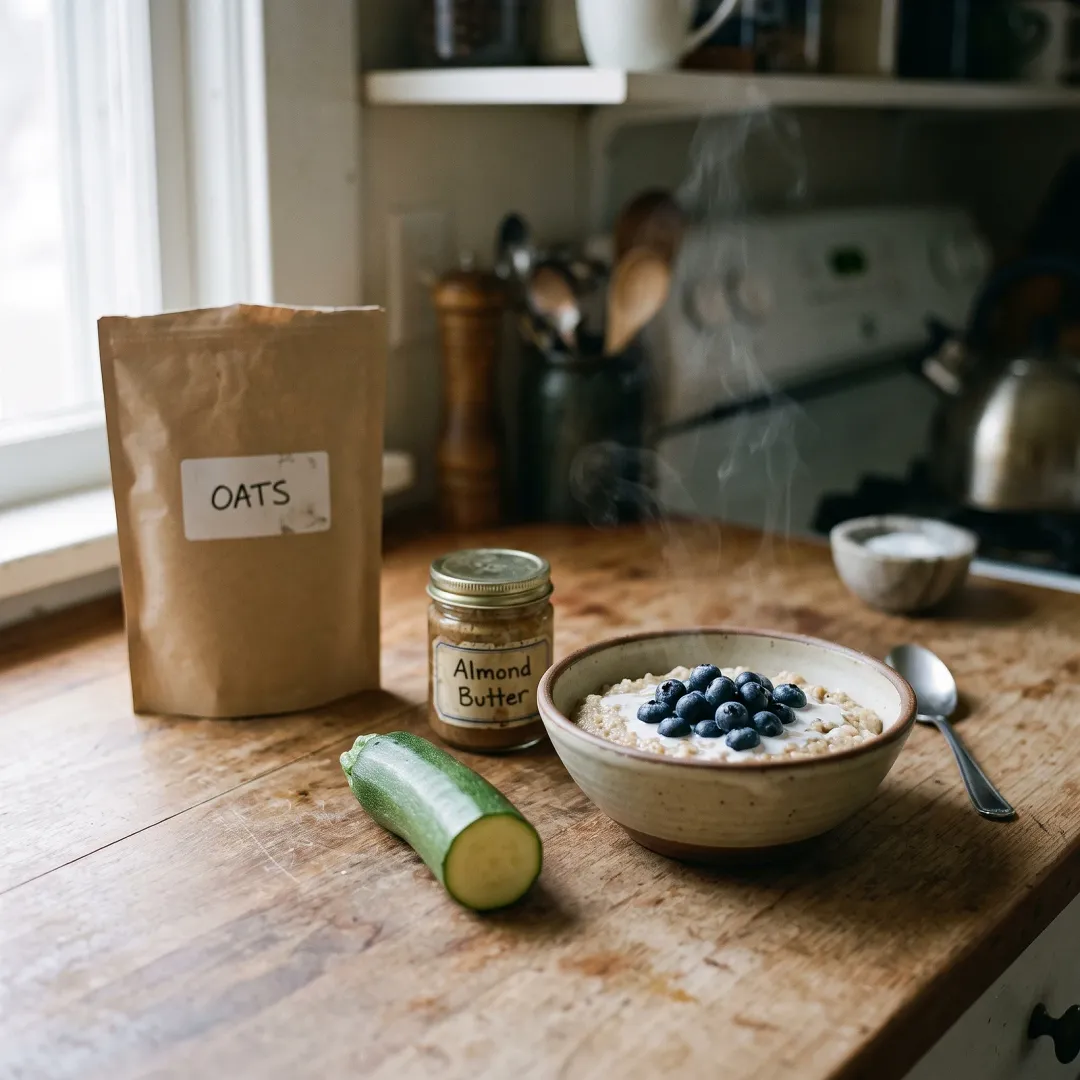

That little paper packet feels virtuous. Whole grain on the label, done in ninety seconds, and you're out the door. I ate them too, every single weekday for years, flavored ones with the cartoon on the box and everything. Then I flipped the packet over and actually read it.
What's actually in that packet
A standard flavored instant oatmeal packet, the kind sitting in every office break room drawer, runs roughly 35 to 45 grams of carbohydrates per serving and often 12 grams of added sugar or more. The oats themselves are pre-cooked and rolled ultra-thin so they dissolve almost instantly, meaning the starch hits your bloodstream faster than rolled oats would. The FDA's own nutrition data and USDA FoodData Central both confirm these numbers, and they vary almost not at all from brand to brand on the sweetened varieties.
The bigger issue for me was the ingredient list: maltodextrin, "natural flavor" (which can mean almost anything), caramel color, and soy lecithin in many popular brands. You thought you were eating oats. You were eating a processed oat-flavored product.
This is not about shaming a food. It's about seeing clearly what you're actually starting your morning with, so you can decide if that's the trade-off you want to make.
The swap: a warm grain-free breakfast bowl
A warm grain-free breakfast bowl gives you the same cozy, spoonable experience without the ultra-processed center. The base is usually cauliflower, shredded zucchini, or cassava-based porridge, and you warm it, top it, and eat it with a spoon, just like oatmeal. Texture is different, yes. It doesn't taste like oats. That's honest. But after about a week your brain stops expecting oats and starts expecting something warm and satisfying, and that is a very different thing.
Here's the upgrade ladder so you can step in wherever you actually are this week.
Good: cauliflower rice porridge from the freezer bag
Grab a bag of frozen riced cauliflower. Microwave about a cup, drain any extra water, then stir in a splash of full-fat coconut milk, a pinch of cinnamon, a small handful of fresh or frozen blueberries, and a drizzle of raw honey or pure maple syrup if you want it. That's it. Three to four minutes, one bowl.
Honest trade-off: the texture is looser than oatmeal. Some people love it immediately, some take a week. It's also cheaper than most grain-free packaged alternatives, and the ingredient list is one word: cauliflower.
Why it counts: you've swapped the processed packet for a real vegetable with a real ingredient list, and you've added some fat from the coconut milk, which research published in the American Journal of Clinical Nutrition suggests may support a more sustained feeling of fullness compared to a low-fat, high-carb breakfast. That's not a cure or a promise, but it's a real physiological shift worth knowing about.
Better: stovetop zucchini and almond porridge
Shred one small zucchini (or grab a bag of pre-shredded from the store), squeeze out the moisture with a clean towel, and cook it in a small saucepan over medium heat for about two minutes. Add a quarter cup of almond butter, a half cup of unsweetened almond or coconut milk, a pinch of sea salt, cinnamon, and a little vanilla extract. Stir until it thickens into a creamy porridge, about three more minutes. Top with sliced banana or a few raspberries.
Honest trade-off: this one takes about ten minutes and an actual pan. It's not faster than a packet. It is more filling, more satisfying, and the almond butter adds protein and fat that are essentially absent in the flavored oatmeal packet. If mornings are chaotic, prep it the night before and reheat it.
Taste-wise: this one wins. It's rich, warm, and feels like real food because it is.
Best: grain-free hot cereal made from scratch or a clean mix
If you want a true oatmeal-texture replacement and you're willing to invest a little more, a grain-free hot cereal made from a blend of shredded coconut, cassava flour, and ground flaxseed or hemp seeds comes the closest in texture and mouthfeel. You can make your own blend and store a jar of it on the counter, or there are a handful of brands with clean, short ingredient lists doing this well now.
Cook it the same way you'd cook oatmeal: simmer in water or milk, add your toppings (roasted sweet potato cubes and a drizzle of tahini is genuinely great), and eat.
Honest trade-off: this takes the most effort and the most money. A homemade blend is very affordable once you buy the components in bulk, but the good pre-made mixes run a few dollars per serving. Worth it for someone who eats breakfast at home most mornings and genuinely misses the oatmeal-bowl ritual.
When this swap is NOT worth it: if you are eating plain rolled oats (not instant, not flavored) with a fried egg and some vegetables on the side, you are probably fine. The problem with instant oatmeal is the processing and the added sugar, not oats in their whole form. If someone in your house loves plain oatmeal and is thriving, don't fix what isn't broken.
How to make the switch stick
Pick one rung of the ladder, not the highest one. The best swap is the one you'll actually do on a Tuesday when you're tired. Make a double batch on Sunday and refrigerate it. Your brain will stop fighting you after about five days once the habit slot is filled with something else warm and real.
Also: this is about adding something nourishing, not punishing yourself for a decade of instant oatmeal packets. You didn't know. Now you do. Start where you are.
This article is for general informational purposes only and is not medical advice. Always consult a qualified healthcare professional before making changes to your diet or health routine.
Key Takeaways
- Flavored instant oatmeal packets often contain 12+ grams of added sugar plus additives like maltodextrin and natural flavorings, making them more processed than they appear.
- A warm grain-free breakfast bowl (cauliflower porridge, zucchini-almond porridge, or a grain-free hot cereal blend) can replace the ritual without the processing.
- Good: frozen cauliflower rice porridge with coconut milk, 3-4 minutes, one ingredient base.
- Better: stovetop zucchini and almond butter porridge, about 10 minutes, richer and more filling.
- Best: homemade or clean-label grain-free hot cereal blend with cassava, coconut, and seeds.
- If you eat plain (unflavored, unpackaged) rolled oats with real food toppings, you may not need this swap at all.
- Pick the rung of the ladder you'll actually use on a tired Tuesday, not the most impressive one.
Frequently Asked Questions
Is a grain-free breakfast bowl actually better than oatmeal?
It depends on what kind of oatmeal you're comparing. Plain, unflavored rolled oats with real toppings are a very different food from a flavored instant packet loaded with added sugar and additives. If you're eating the packet kind every morning, a grain-free bowl made from cauliflower, zucchini, or a cassava-based porridge removes the added sugar and processing while keeping the warm, comforting ritual. If you're eating plain oats with eggs and vegetables, you may not need this swap at all.
What does cauliflower porridge taste like?
It does not taste like oatmeal, and pretending it does would be dishonest. Cauliflower porridge has a very mild, almost neutral flavor on its own, which means the coconut milk, cinnamon, and fruit you add become the dominant taste. Most people describe it as warm, creamy, and lightly sweet. The texture is softer and looser than oatmeal. Give it about five days before your brain stops comparing it to the old thing.
Can I meal prep a grain-free breakfast bowl ahead of time?
Yes. The cauliflower porridge and the zucchini-almond porridge both reheat well. Make a double or triple batch on Sunday, refrigerate it in individual containers, and warm it in the microwave or a small saucepan in the morning. Add fresh toppings after reheating. The texture may be slightly thicker after refrigeration; just add a splash of coconut milk when reheating.
Is instant oatmeal actually bad for you?
The unflavored, plain instant oatmeal varieties are significantly less concerning than the flavored packets. The main issues with flavored instant oatmeal are the added sugars (often 12 grams or more per packet), ultra-processed additives like maltodextrin and natural flavoring, and the very fast-digesting starch from heavily pre-cooked oats. This column is not here to tell you that one packet ends your health, but if it's your daily default, it's worth knowing what's actually in it and whether a whole-food alternative might serve you better.
Sources
- USDA FoodData Central: Oatmeal, instant, flavored, dry
- American Journal of Clinical Nutrition: Dietary fat and satiety: effects on appetite and food intake
- FDA FoodData / Substances: FDA Food Substance Database
This article is for general informational purposes only and is not medical advice. Always consult a qualified healthcare professional before making changes to your diet or health routine.



Join the conversation
What do you think?
Free members can comment, reply and like. It takes ten seconds.