

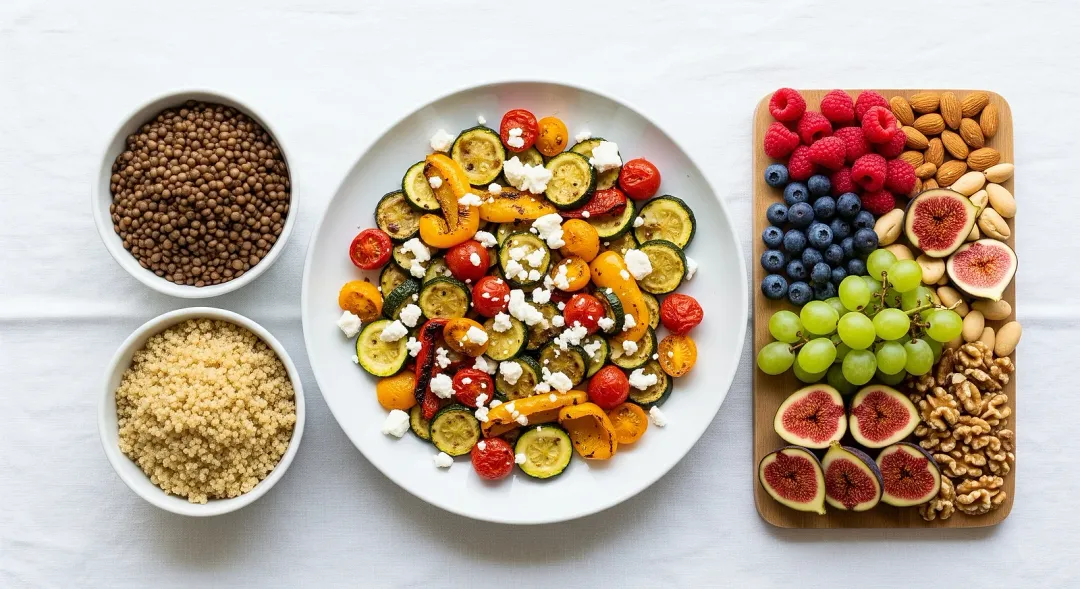

A vegetarian diet skips meat, poultry, and fish and builds meals around plants instead: vegetables, fruits, beans, lentils, whole grains, nuts, seeds, and, for many vegetarians, eggs and dairy too. People arrive here from all kinds of doors: health, the environment, animal welfare, budget, faith, or simply a genuine love of vegetables. The best news is that a well-built vegetarian diet can be deeply nourishing at every stage of life. This guide is here to help you see what this way of eating can do for you and to make it easy and delicious to pull off.
What is the vegetarian diet?
“Vegetarian” is really a friendly umbrella term for a few related styles, all of which leave out meat, poultry, and seafood but differ in whether they include eggs and dairy:
- Lacto-ovo vegetarian: includes both dairy and eggs. This is the most common form and the one national dietary guidance highlights as a healthy, well-rounded pattern.
- Lacto vegetarian: includes dairy but not eggs.
- Ovo vegetarian: includes eggs but not dairy.
- Vegan: leaves out all animal foods, including dairy, eggs, and often honey.
You'll also hear about pescatarian (adds fish) and flexitarian (mostly plants with occasional meat) eating. Strictly speaking those aren't vegetarian, but they sit happily on the same spectrum toward more plants and less meat. Pick the style that fits your life. There's no single “right” way to do this.
Why people feel so good eating this way
There's no metabolic trick here, and that's part of the charm. A vegetarian diet works simply by changing what fills your plate. Leaning into plants naturally brings more fiber, potassium, folate, antioxidants, and colorful plant compounds from produce, legumes, and whole grains, and that's where the good feelings come from. Many people describe steadier energy, comfortable digestion, and meals that leave them satisfied rather than sluggish.
Vegetarian eating has also been studied for decades, and the picture is encouraging. Much of it comes from observational research, so think of it as stacking the odds in your favor rather than a guarantee. But the pattern is consistent and worth celebrating:
- A heart-friendly profile. Vegetarians tend to have lower total and LDL cholesterol, lower blood pressure, and a lower body mass index. Harvard Health points to an analysis of five studies with more than 76,000 people in which vegetarians were, on average, about 25% less likely to die of heart disease.
- Better blood-sugar odds. In that same Harvard summary, vegetarians' risk of developing type 2 diabetes was roughly half that of non-vegetarians, even after accounting for body weight. A 2024 review in the journal Foods similarly reported around a 27% lower risk of type 2 diabetes among vegetarians.
- Easier weight management. Vegetarians, on average, carry a lower BMI, and plant-forward eating is often linked with gentle, sustainable weight loss.
- A gentle nudge on some cancers. The 2024 Foods review found small overall reductions in cancer risk (in the range of 8-15%) among vegetarians, with somewhat larger signals for digestive-tract cancers.
One honest note that's actually good news: these benefits track with whole plant foods, not just the absence of meat. Fill the plate with real vegetables, legumes, and grains and you get the payoff. A diet of white pasta and cookies is technically vegetarian, but it isn't what these studies are describing, and it's not what will make you feel your best.
What you get to eat
This is a genuinely abundant way to cook. A well-stocked vegetarian kitchen leans on:
- Vegetables of every color: leafy greens, cruciferous veg, roots, peppers, tomatoes, squash, mushrooms.
- Legumes: beans, lentils, chickpeas, tofu, tempeh, and edamame, the workhorses of the plate.
- Whole grains: oats, brown rice, quinoa, farro, and whole-grain breads and pastas.
- Nuts and seeds: almonds, walnuts, pumpkin seeds, chia, flax, and their butters.
- Fruit, fresh and frozen, for sweetness and fiber.
- Eggs and dairy, if your style includes them, a flexible, protein-rich anchor for meals.
- Good fats and flavor: olive oil, avocado, herbs, spices, citrus, and vinegars.
Build a plate around a legume or egg, a whole grain, a big pile of vegetables, and a source of healthy fat, and you've got a meal that's satisfying and complete.
Making the vegetarian diet work for you
A little intention early on makes vegetarian eating effortless later. Here's how to set yourself up to thrive:
- Ease in at your own pace. Whether you go all-in or start with a few meatless days a week, both paths work. Let your tastes and routines lead.
- Anchor each meal with protein. Beans, lentils, tofu, tempeh, edamame, nuts, seeds, whole grains, and (if you include them) eggs and dairy make this easy. Eating a variety across the day naturally covers the amino acids you need.
- Give a few key nutrients a friendly plan. The more animal foods you leave out, the more these matter, and each has a simple solution:
- Vitamin B12 is naturally found in animal foods, so vegans do best with fortified foods (some cereals, plant milks, nutritional yeast) or a small daily supplement; adults need about 2.4 micrograms a day. Lacto-ovo vegetarians get some from dairy and eggs. It's an easy box to check.
- Iron: plant (non-heme) iron is absorbed a bit less efficiently, so enjoy iron-rich foods like beans, lentils, tofu, spinach, and fortified cereals alongside a vitamin-C source (citrus, peppers, tomatoes) to boost absorption. A tasty pairing does the work.
- Zinc is found in beans, nuts, seeds, whole grains, and (for lacto-ovo vegetarians) dairy and eggs. Variety keeps you covered.
- Omega-3 fats: the long-chain forms (EPA and DHA) come mainly from fish, and plant foods supply ALA (flaxseed, chia, walnuts). Many vegetarians, especially those who skip eggs and dairy, like an algae-based supplement, a lovely vegetarian source of EPA and DHA.
- Calcium and vitamin D are simple for lacto vegetarians via dairy; vegans can lean on fortified plant milks, calcium-set tofu, leafy greens, and often a vitamin-D supplement.
- Favor whole foods over beige convenience. Building meals around vegetables, legumes, and grains, rather than refined carbs and cheese, is what delivers the energy and benefits you're after.
- Partner with a provider when it helps. If you're pregnant, breastfeeding, feeding a growing child, or managing a health condition, a quick check-in with your doctor or a registered dietitian can fine-tune your plan and, if you're curious, confirm your levels with simple bloodwork. A varied vegetarian diet can absolutely meet the needs of every life stage.
How the vegetarian diet fits a real-food approach
At That Paleo Chick we cook from a real-food, paleo-leaning playbook, and yes, vegetarian eating differs from paleo in obvious ways: it welcomes beans, grains, and (usually) dairy, which paleo sets aside. But the overlap is bigger than the difference. Both approaches want you cooking real, minimally processed food, eating a rainbow of vegetables, and stepping away from ultra-processed convenience products. A vegetarian who fills the plate with vegetables, legumes, nuts, seeds, eggs, and quality dairy is eating in a way any real-food cook can cheer for. If you're vegetarian, our produce-forward recipes, dressings, and vegetable sides slot right in. You're simply building the center of the plate from plants and eggs rather than meat. Different framework, same kitchen values.
Key takeaways
- “Vegetarian” covers several friendly styles: lacto-ovo (the most common), lacto, ovo, and vegan, so you can choose the one that fits your life.
- A well-planned vegetarian diet is nourishing at every life stage and is linked to a heart-friendly profile, better blood-sugar odds, easier weight management, and a gentle nudge on some cancers.
- Most of the evidence is observational, so think “stacks the odds in your favor,” a lovely bonus on top of meals you enjoy.
- Give B12, iron, zinc, omega-3, protein, and (for vegans) calcium and vitamin D a simple plan, and you're set.
- Whole plant foods drive the good stuff, so keep the plate colorful and real.
- If you're pregnant or managing a health condition, a doctor or registered dietitian can help you dial it in with confidence.
This guide is for general education and is not medical advice. Everyone's body and needs are different, so before making a big change (especially during pregnancy, while breastfeeding, or if you have a medical condition) talk with your doctor or a registered dietitian who can help tailor it to you.
Frequently Asked Questions
How do I start a vegetarian diet?
Start at whatever pace feels good — some people go all-in, others begin with a few meatless days a week. Build each plate around a protein (beans, lentils, tofu, tempeh, eggs, or dairy), a whole grain, plenty of vegetables, and a healthy fat. Keep the pantry stocked with legumes and grains, and you'll always have a meal ready.
What's the difference between lacto-ovo, lacto, and ovo vegetarian?
All three leave out meat, poultry, and fish. Lacto-ovo vegetarians eat both dairy and eggs (the most common style), lacto vegetarians eat dairy but not eggs, and ovo vegetarians eat eggs but not dairy. Vegans leave out all animal foods. Pick whichever fits your life.
Can a vegetarian diet give me enough protein?
Absolutely. Beans, lentils, tofu, tempeh, edamame, nuts, seeds, and whole grains — plus eggs and dairy if you include them — make it easy to meet your protein needs. Eating a variety of these across the day naturally covers all the amino acids your body needs.
Will I get enough B12, iron, and omega-3?
Yes, with a simple plan. Vegans do best with a reliable B12 source (fortified foods or a supplement) and often enjoy vitamin D and an algae-based omega-3. Pair plant iron with a vitamin-C food to boost absorption. Lacto-ovo vegetarians get more of these from eggs and dairy. A dietitian can personalize it if you'd like.
Is a vegetarian diet a good fit during pregnancy?
It can be a wonderful fit with a little planning. A varied vegetarian diet can meet the needs of pregnancy and breastfeeding, and nutrients like B12, iron, and omega-3 simply deserve a bit of extra attention. Your doctor or a registered dietitian can help you tailor it with confidence.
Is a vegetarian diet right for me?
If you love vegetables, want a heart-friendly and budget-friendly way to eat, or feel drawn to it for the environment, animals, or your values, it's absolutely worth exploring. There's no single right way to do it — you can shape it around your tastes and lifestyle and adjust as you go.
Sources
- Harvard Health Publishing: Becoming a vegetarian
- MedlinePlus (NIH): Vegetarian Diet
- Foods (peer-reviewed journal): Health Benefits of Vegetarian Diets: An Insight into the Main Topics
- NIH Office of Dietary Supplements: Vitamin B12 - Consumer
- NIH Office of Dietary Supplements: Iron - Consumer
- NIH Office of Dietary Supplements: Zinc - Consumer
- NIH Office of Dietary Supplements: Omega-3 Fatty Acids - Consumer
This guide is for general education and is not medical advice. Everyone is different, so talk with your doctor or a registered dietitian before making a major change to how you eat, especially if you are pregnant, managing a health condition, or have a history of disordered eating.




Join the conversation
What do you think?
Free members can comment, reply and like. It takes ten seconds.