

On this page
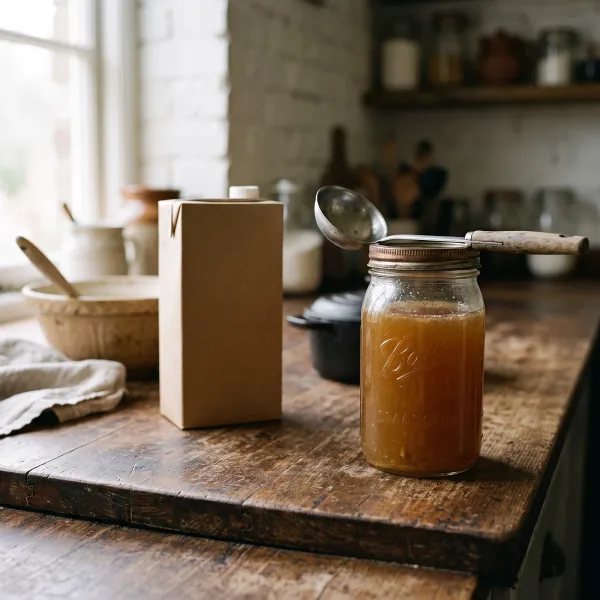
That carton of chicken broth sitting in your pantry? Flip it over. Water is the first ingredient. Salt is somewhere in the top three. What it does not contain is anything your body can actually use from a real animal bone.
What's Actually in That Carton
Most commercial boxed broth is flavored, salted water. The FDA allows a product to be labeled "chicken broth" with very little actual chicken content, and it does not require any bone contact at all. What you often get is water, a hit of salt (sometimes 800 to 900 mg of sodium per cup), yeast extract for umami, and natural flavors that could mean almost anything. A 2021 analysis published by the USDA's FoodData Central shows most commercial chicken broths contain negligible amounts of protein, often under 1 gram per cup. Real bone broth made from simmered bones typically delivers 6 to 10 grams of protein per cup, along with naturally occurring collagen, gelatin, and minerals from the bones themselves. That difference matters in the kitchen before it matters anywhere else: boxed broth produces thin, watery sauces; bone broth made right turns gelatinous in the fridge, which is exactly what good stock is supposed to do.
Swap 1: The Soup Pot (Boxed Broth → Homemade or Store-Bought Bone Broth)
This is the most obvious one and also the easiest win. Any soup recipe that calls for a carton of chicken or beef broth works better with real bone broth. The depth of flavor alone is worth it. You can make a big batch on Sunday from a chicken carcass or beef knuckle bones, or you can buy a quality commercial bone broth (look for one that gels when cold, plain packaging, short ingredient list, no "natural flavors"). Honest trade-off: homemade costs almost nothing if you're already roasting chickens, but it takes 4 to 12 hours of hands-off simmer time. Store-bought bone broth costs more than a carton of regular broth, usually $6 to $10 for a quart versus $2 to $3. For soup, the swap is worth every penny and every minute.
Swap 2: The Morning Mug (Boxed Broth "Sipping" → Actual Gelatinous Bone Broth)
A lot of people are drinking boxed broth warm in a mug and calling it a bone broth ritual. That's not the same thing. If your broth doesn't gel in the fridge, you are drinking hot salty water. Real bone broth, whether homemade or from a reputable brand, should have enough naturally occurring gelatin from collagen-rich bones that it sets up when chilled. Healthline's overview of bone broth notes that gelatin content varies significantly by preparation method and bone type, with longer cook times and collagen-rich bones (feet, knuckles, necks) producing more. For the mug, use your own frozen batch or a brand that explicitly states the protein content per serving on the label. Season it with good salt and a splash of apple cider vinegar if you like. Honest trade-off: some people find plain bone broth too rich or funky straight. Add a slice of fresh ginger or a pinch of turmeric to make it a ritual you'll actually repeat.
Swap 3: The Braising Pan (Boxed Broth → Bone Broth + Less of It)
Braising is where real bone broth earns its keep the most. When you reduce a boxed broth, you concentrate the salt and not much else. When you reduce real bone broth, you get a silky, deeply flavored pan sauce that tastes like you spent hours on it. You actually need less of it too. A half cup of bone broth in a braise goes further than a full cup of boxed because the gelatin creates body in the liquid. Honest trade-off: this is the one swap where using a lesser-quality store-bought bone broth shows. If you're braising a nice short rib or a whole chicken, use homemade or a brand you trust. This is not the moment for the $2 carton with a bone on the label.
Swap 4: The Freezer Stash (Buying Weekly → Batch and Freeze)
The whole system gets easier when you stop thinking of bone broth as a grocery item you buy every week and start treating it like a pantry staple you make in batches. Roast a chicken, strip the meat, throw the carcass in a pot with whatever vegetable scraps you've been collecting in a freezer bag, cover with cold water, and let it go low and slow. Pour the finished broth into silicone muffin tins or ice cube trays, freeze, and transfer to a bag. Now you have small portions ready to go into any pan sauce, soup, or mug without thawing a whole quart. According to the USDA Food Safety guidelines, properly frozen broth is safe for up to 6 months. That is six months of never reaching for a carton again. Honest trade-off: you need freezer space and about 20 minutes of active work. That's it. The rest is the stove doing its job while you live your life.
When the Swap Is Not Worth It
If you're making a dish where broth is truly a background player, a very small amount in a marinade or to deglaze a pan briefly before the liquid evaporates completely, the difference between boxed and homemade is minimal. Use what you have. This column is not about being precious. It's about knowing when the upgrade makes a real difference and choosing it on purpose. The soup pot, the mug, and the braise are those moments. A two-tablespoon deglaze is not.
This article is for general informational purposes only and is not medical advice. Always consult a qualified healthcare professional before making changes to your diet or health routine.
Key Takeaways
- Most boxed broth is flavored, salted water with very little protein and no gelatin.
- Real bone broth gels when cold. That's how you know it's the real thing.
- The soup pot, morning mug, and braising pan are the three places where the swap makes the biggest difference.
- Batch-cooking and freezing in small portions is the move that makes this sustainable long-term.
- For tiny, incidental uses, don't stress. Use what you have.
Frequently Asked Questions
Is store-bought bone broth the same as homemade?
Not always. The key test is whether it gels when refrigerated. A broth with enough collagen from real bone simmering will turn gelatinous when cold. Many commercial products labeled 'bone broth' are thin and watery, which suggests minimal actual bone content. Look for brands that list protein content of at least 6 grams per cup and have a short, clean ingredient list.
How long does homemade bone broth last in the freezer?
According to USDA food safety guidelines, properly stored frozen broth is safe for up to 6 months. Freeze in small portions (silicone muffin tins or ice cube trays work great) so you can grab exactly what you need without thawing a whole batch.
How do I know if my bone broth is actually good quality?
The gel test is the simplest way. Pour a small amount into a jar and refrigerate it overnight. If it firms up like a loose jello, you've got real bone broth with collagen. If it stays liquid, the collagen content is low. For store-bought, a protein content of 6 to 10 grams per cup is a reliable indicator of quality.
Can I use boxed broth in a recipe that calls for bone broth?
Technically yes, but the result will be different. For soups and stews, boxed broth produces a thinner, saltier result with less depth. For braising and pan sauces where the liquid reduces and concentrates, the difference is most noticeable. For small incidental uses like a quick deglaze or a splash in a marinade, the swap is not going to matter much.
Sources
- USDA FoodData Central: Chicken Broth, Canned, Ready-to-Serve
- Healthline: Bone Broth: How to Make It and Why You Should
- USDA Food Safety and Inspection Service: Freezing and Food Safety
This article is for general informational purposes only and is not medical advice. Always consult a qualified healthcare professional before making changes to your diet or health routine.