

On this page
The number one reason people say they won't eat liver is because they think it's full of toxins. 'It's the detox organ,' they say, as if every impurity the animal ever processed is just sitting there waiting for you. That is not how any of this works. And once you understand what liver actually does, and what it actually contains, you'll stop avoiding it and start standing in front of the butcher counter wondering why you waited so long. The next question is how to pick a good one. That part matters more than most people realize.
First, Let's Kill the Detox Myth
Liver does not store toxins. Full stop. What the liver does is process and neutralize harmful substances, then ship them out of the body through bile or urine. The liver is more like a water treatment plant than a garbage dump. What it actually stores is an extraordinary concentration of nutrients: vitamins, minerals, and protein that are genuinely difficult to find anywhere else in the food supply.
A three-ounce serving of beef liver delivers over 600% of your daily vitamin B12, more than 300% of vitamin A, significant copper, folate, riboflavin, and a hefty dose of heme iron, the form your body absorbs most readily. Research published by the USDA National Nutrient Database and confirmed across peer-reviewed nutrition literature puts beef liver in a category few foods can touch for sheer micronutrient density.
So if you've been skipping it because you thought you were protecting yourself, you've actually been leaving one of the most bioavailable sources of real nutrition on the table. Now let's talk about how to buy a good one.
Grass-Fed and Pasture-Raised: Why This Matters More for Liver Than Almost Anything Else
For most cuts of meat, the difference between grass-fed and conventional is meaningful but not enormous. For liver, it's a bigger deal. Here's why: liver is a metabolically active organ, and the nutrient profile of the animal's liver reflects how that animal lived and ate.
Grass-fed beef liver contains meaningfully higher concentrations of fat-soluble vitamins, particularly vitamin A and vitamin K2, compared to liver from grain-fed, feedlot cattle. Research comparing pasture-raised and conventionally raised cattle consistently shows that grass-fed animals produce fat and organ meat with a more favorable fatty acid profile and higher levels of certain micronutrients. You're eating the organ that filtered and processed everything that animal consumed, so what that animal consumed genuinely matters.
Feedlot cattle are often exposed to a higher load of synthetic hormones, antibiotics, and grain-based feed. Their livers are working harder. You don't need to catastrophize this, but if you're going to eat liver specifically for the nutrition, buying the best-sourced liver you can access and afford makes real sense.
What to look for on the label or ask your butcher:
- 100% grass-fed and grass-finished (not just grass-fed, which can mean finished on grain)
- Pasture-raised for chicken or pork liver
- No added hormones or antibiotics
- USDA Organic is a reasonable floor if grass-fed isn't available
Which Animal? Beef, Chicken, Pork, Lamb, What's the Difference
Beef liver is the gold standard for nutrient density, and it's the one most functional-medicine practitioners and ancestral-eating communities talk about for good reason. The concentration of B12, copper, vitamin A, and heme iron in beef liver is genuinely in a league of its own.
Chicken liver is a close second and a much gentler starting point if you're new to this. The flavor is milder, the texture is softer, and it's easier to work with in the kitchen. Chicken liver is also widely available as pasture-raised, which matters for the reasons I already covered. The nutrient profile is still excellent, great B12, good iron, solid folate, just not quite as concentrated as beef.
Lamb liver sits between chicken and beef in terms of intensity of flavor, and it tends to be very fresh at ethnic grocery stores and halal butchers, which is worth knowing.
Pork liver is less common in American kitchens but used widely in European cooking. It has a stronger, slightly sweeter flavor and a softer texture. The nutrient profile is solid, though the fat-soluble vitamin A content is lower than beef.
For most people starting out: grab chicken liver, cook it simply, and work your way up. For seasoned liver eaters who want maximum nutrition: beef liver, grass-finished, is where you want to be.
What to Look for at the Counter: Color, Smell, and Texture
Fresh liver is easy to evaluate if you know what you're looking at.
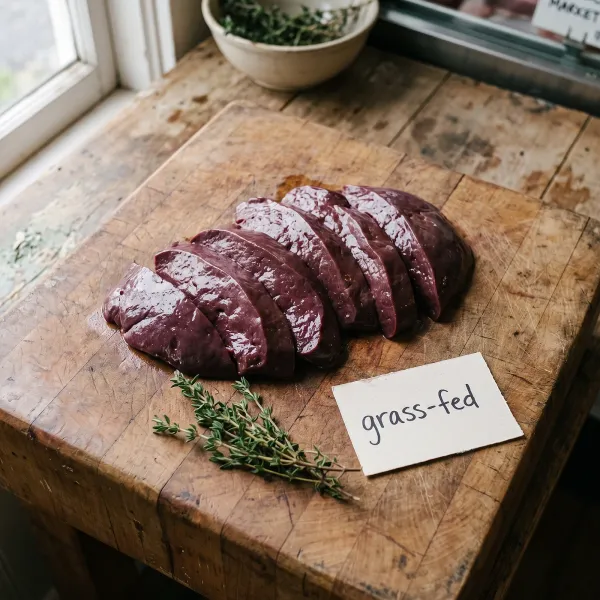
Color: Beef liver should be a deep, rich reddish-brown, think burgundy or mahogany. Not grayish, not pale, not greenish around the edges. Chicken livers should be a warm, reddish-tan color. Any grayish tinge means it sat too long.
Smell: Fresh liver smells faintly metallic and mineral-forward, clean but distinctive. If it smells sour, ammonia-like, or frankly off, put it back. Trust your nose. It will not lie to you.
Texture: Liver should look moist and glossy, not dry or tacky. If you're buying it packaged, the liquid in the tray should be a pale pinkish-red. If it's dark, pooled, and thick, that's a sign of age.
Thickness: For beef liver, look for slices that are roughly a quarter to half an inch thick. Too thin and it dries out and turns bitter before it has a chance to caramelize. You want a bit of thickness so the inside stays just slightly pink, that's when the flavor is best and the texture doesn't turn grainy.
Membranes: Most good butchers will remove the outer membrane, but if they haven't, plan to do it at home. It's a thin, translucent film, just slide your finger under it and pull. It comes off easily and makes a real difference in final texture.
Fresh vs. Frozen: What's Actually Worth It
Fresh liver from a local rancher, a farmers market, or a quality butcher is the ideal. You can evaluate it with your own senses, it hasn't been sitting in a freezer, and you're often getting it from an animal you could actually look up if you cared to.
But frozen grass-fed liver? Totally worth it, and sometimes the better option. High-quality frozen liver from a reputable producer, US Wellness Meats and White Oak Pastures both ship nationally, is often fresher than 'fresh' liver at a conventional grocery store that may have traveled a long distance and sat in distribution. Frozen organ meat retains its nutrient content well when frozen quickly at peak freshness.
What to avoid: mystery-origin liver at a big-box grocery store with no sourcing information, packaged in a foam tray with no indication of where the animal came from or how it was raised. That is the liver I would skip.
Is It Worth Paying More? Let's Talk Price
Grass-fed beef liver runs anywhere from four to eight dollars a pound depending on your source. That might sound steep until you realize a pound of liver is two to three generous servings, and the micronutrient density in a single serving exceeds what many people get from a full day of eating. The Weston A. Price Foundation has documented liver as among the most nutrient-dense foods per dollar available, and that holds even at the higher grass-fed price point.
Compare it to a bottle of vitamin supplements covering even half the same micronutrient ground and the math shifts fast. I'm not anti-supplement across the board, but eating real food that your body recognizes and actually absorbs is a different thing entirely.
If the budget is tight, chicken livers from a pasture-raised source are genuinely affordable, often two to four dollars a pound, and the nutritional payoff is still very real. Start there.
Who Should Be Cautious (This Is Real)
Liver is not for everyone without any caveats, and I'm not going to skip this part.
Vitamin A: Beef liver is extraordinarily high in preformed vitamin A (retinol). One serving can deliver several times the recommended daily intake. Most people metabolize this fine when liver is eaten a few times a week rather than daily, but excessive retinol intake over time can be harmful. The National Institutes of Health Office of Dietary Supplements notes that tolerable upper intake levels for preformed vitamin A are around 3,000 mcg RAE per day for adults. Eating liver once or twice a week fits well within safe ranges for most healthy adults. Daily is where it could become an issue for some people.
Pregnancy: This is important. Pregnant women are often told to avoid liver because of the high vitamin A content, particularly in the first trimester. That guidance exists for a reason. Talk to your midwife or OB before adding liver to your rotation during pregnancy. The folate in liver is genuinely wonderful for pregnancy, the vitamin A piece requires a real conversation with someone who knows your situation.
Gout and elevated uric acid: Liver is high in purines. If you have gout or have been told to watch uric acid levels, go slow and talk to your doctor.
Copper overload: Liver is extremely high in copper. People with Wilson's disease or known copper metabolism issues should avoid it. For everyone else, it's a non-issue at normal serving frequencies.
For healthy adults eating liver one to two times a week as part of a varied real-food diet, this is one of the most nourishing things you can put on your plate. The cautions are real but proportionate.
Where to Actually Buy Good Liver
Here's my honest buying hierarchy:
- A local farmer or rancher at your farmers market who raises 100% grass-fed and grass-finished cattle or pasture-raised chickens. Ask them directly. Most farmers who care about how they raise their animals love this question.
- A local butcher shop that sources from known regional farms. Ask where the beef comes from and whether it's grass-finished. A good butcher will know.
- Online mail-order from reputable producers. US Wellness Meats, White Oak Pastures, and similar companies ship frozen grass-fed organ meat directly. The quality is consistently good and the sourcing is transparent.
- Natural grocery stores like Whole Foods or Natural Grocers, where the sourcing standards are higher than conventional supermarkets. Check the label carefully, look for grass-fed, grass-finished, and no added hormones.
- Ethnic grocery stores for lamb liver, which is often fresh and well-priced. Middle Eastern and halal butchers frequently have excellent quality liver.
The one thing I'd encourage you to do is not treat liver like a last-minute grab. It's not something you toss in the cart without thinking. Know where it came from, use it within a day or two of purchase if fresh, and freeze what you won't use right away.
This article is for general informational purposes only and is not medical advice. Always consult a qualified healthcare professional before making changes to your diet or health routine.
Key Takeaways
- Liver does not store toxins, it processes and clears them. The 'detox organ' fear is a myth that keeps people from one of the most nutrient-dense foods available.
- Grass-fed, grass-finished beef liver has a more favorable nutrient and fatty acid profile than feedlot liver. For an organ that reflects the animal's diet, sourcing matters more here than for most cuts.
- Fresh liver should be deep burgundy or warm reddish-tan, smell clean and mineral-forward, and feel moist and glossy. Gray color, sour smell, or tacky texture means skip it.
- Beef liver is the most nutrient-dense option; chicken liver is milder, more affordable, and a great starting point for beginners.
- Eating liver one to two times per week is the practical sweet spot for most healthy adults. Daily consumption of beef liver pushes vitamin A intake high enough to warrant caution.
- Pregnant women, people with gout or elevated uric acid, and those with Wilson's disease should talk to a healthcare provider before adding liver regularly.
- Frozen grass-fed liver from a reputable online producer is often fresher and better-sourced than unlabeled 'fresh' liver at a conventional grocery store.
Frequently Asked Questions
Is liver safe to eat or does it store toxins?
Liver is safe to eat, and no, it does not store toxins. The liver's job is to filter, process, and clear harmful substances out of the body, not to hold onto them. What liver does store in high concentrations is nutrients: B12, vitamin A, heme iron, copper, folate, and more. The 'toxin storage' fear is one of the most persistent myths in real-food circles, and it has no basis in how liver physiology actually works.
How often should you eat liver?
Most functional nutrition practitioners and ancestral-eating communities suggest one to two servings per week as a practical sweet spot for healthy adults. Beef liver in particular is very high in preformed vitamin A (retinol), and eating it daily in large amounts over time pushes intake higher than most people need. Once or twice a week gives you the substantial micronutrient benefit without the concern.
Does grass-fed liver really make a difference?
For organ meat, yes, sourcing makes a bigger difference than it does for most cuts. Grass-fed and grass-finished cattle produce liver with a more favorable fatty acid profile and higher concentrations of fat-soluble vitamins like A and K2 compared to grain-fed feedlot cattle. Since liver is a metabolically active organ that reflects what the animal ate, the animal's diet is directly relevant to what you're getting.
Can pregnant women eat liver?
This one needs a direct conversation with your midwife or OB, not a blog post. The concern is the very high preformed vitamin A (retinol) content in beef liver, particularly in the first trimester when excess retinol has been linked to developmental concerns. The folate in liver is genuinely beneficial in pregnancy, but the vitamin A question is real and the answer depends on your total diet and individual situation. Please ask your healthcare provider.
Sources
- USDA FoodData Central: Beef Liver, Cooked, Nutrient Profile
- PubMed Central / Nutrition Journal: Nutritional and Health Benefits of Pasture-Raised Animal Products
- Weston A. Price Foundation: Liver: Nature's Most Potent Superfood
- NIH Office of Dietary Supplements: Vitamin A: Health Professional Fact Sheet
This article is for general informational purposes only and is not medical advice. Always consult a qualified healthcare professional before making changes to your diet or health routine.