


Recipes are training wheels. Useful when you are learning, absolutely, but if you need one every single night to get dinner on the table, you are one missing ingredient away from a meltdown or a drive-through. Cooking without a recipe is a skill, and like most skills, it comes down to a handful of repeatable principles you learn once and then use forever. Once those click, the question shifts from 'what does the recipe say?' to 'what do I have, and how do I make it taste good?' That second question is way more powerful, and honestly, it is more fun.
Why Recipes Can Actually Hold You Back
A recipe is a blueprint someone else drew for someone else's pantry, someone else's stove, and someone else's taste buds. Following it to the letter trains you to outsource your judgment. The moment an ingredient is out of stock, or you forgot to thaw something, or you are just staring at a fridge full of random stuff on a Wednesday night, you freeze.
There is real value in recipes when you are building foundational technique. But research on skill acquisition consistently shows that understanding underlying principles, the why behind a technique, leads to far more flexible, durable competence than rote repetition of fixed steps. That is true whether you are learning a language, a sport, or how to make a pan sauce.
Once you know the principles, your whole fridge becomes a recipe. That is the goal.
The Four Building Blocks of Every Good Meal
Every satisfying plate, no matter how simple, hits four notes. Get these right and people will think you cooked from a recipe.
1. Fat for flavor and satiety. Real fats, think ghee, coconut oil, avocado oil, good olive oil, tallow, are how flavor gets carried and how a meal actually keeps you full. The USDA's Dietary Guidelines acknowledge that fat is essential for absorbing fat-soluble nutrients. Start your cook with fat in the pan. Always.
2. Protein as the anchor. Protein is the center of every real-food plate, not an afterthought. It is also what makes a meal satiating, with research published in the American Journal of Clinical Nutrition linking higher dietary protein to greater satiety signals. Pick your protein first, then build around it.
3. Vegetables for volume and texture. Whatever is in your crisper drawer is fair game. Different cooking methods, roasting, sauteing, eating raw, completely change how a vegetable eats. Roasted vegetables taste richer and sweeter than the same vegetable raw or steamed, because dry heat drives off water and concentrates natural sugars through the Maillard reaction.
4. Acid and salt to finish. This is the single most common reason home-cooked food tastes flat compared to restaurant food. A squeeze of lemon, a splash of apple cider vinegar, or just the right amount of good salt at the end brightens everything and pulls the flavors together. Taste as you go. Finish with acid.
A Dead-Simple Flavor Formula to Memorize
You do not need a recipe when you have a ratio in your head. Here is the one I come back to constantly:
Fat + Aromatics + Protein + Vegetables + Acid + Salt
That is it. In practice it looks like this: heat a fat in a pan, add your aromatics (garlic, onion, shallot, ginger, whatever you have), get your protein going, add your vegetables, then finish with something acidic and season properly.
Aromatics are the secret weapon most home cooks underuse. Garlic and onion cooked in fat lay a flavor foundation that makes almost anything taste intentional. Even a simple scramble of eggs, roasted sweet potato, and spinach goes from 'fine' to 'actually good' with two cloves of garlic in ghee first.
Speaking of eggs: they are the single best fallback protein for cooking without a recipe. They cook in minutes, they pair with almost any vegetable or leftover from the fridge, they are genuinely affordable, and they are nutritionally dense. Research published in Nutrients notes that eggs provide all nine essential amino acids along with fat-soluble vitamins and choline, making them one of the most complete whole foods available. When you genuinely do not know what to make, the answer is almost always eggs.
The 'Use What You Have' Method, Step by Step
This is how I actually approach a random Tuesday night with no plan and a fridge that needs attention.
Step 1: Take inventory, protein first. Open the fridge and identify what protein you have. Leftover chicken? Ground beef? A carton of eggs? That is your anchor. Everything else follows it.
Step 2: Pull every vegetable that needs to be used. Anything looking a little tired goes first. Half an onion, two limp celery stalks, a handful of cherry tomatoes, a bag of spinach that is two days from turning. These are not problems, they are ingredients.
Step 3: Choose your cooking method based on your time.
- Under 15 minutes: Saute or a quick scramble.
- 20 to 30 minutes: Sheet pan. Everything on a lined pan, fat, salt, into a 400-degree oven.
- More time: Braise in a pot with some broth, garlic, and whatever spices sound right.
Step 4: Pick a flavor direction. You do not need a full recipe, you just need a direction. Mediterranean (olive oil, lemon, oregano, garlic). Mexican-inspired (cumin, chili powder, lime). Asian-inspired (coconut aminos, ginger, sesame oil). Pick one and commit. Use the spices and condiments that match.
Step 5: Finish it. A squeeze of citrus, a drizzle of good olive oil, fresh herbs if you have them, flaky salt. Do not skip this step. It is the difference between 'edible' and 'actually good.'
Egg-Based Fallback Meals That Never Fail
Eggs deserve their own section because they are genuinely the cook-without-a-recipe MVP. Here are four no-recipe egg meals that work with almost any combination of leftovers and random produce.
The Skillet Scramble. Saute any vegetables you have in ghee or avocado oil with garlic. Add beaten eggs, season well, fold gently. Done in ten minutes. Works with literally anything in your fridge.
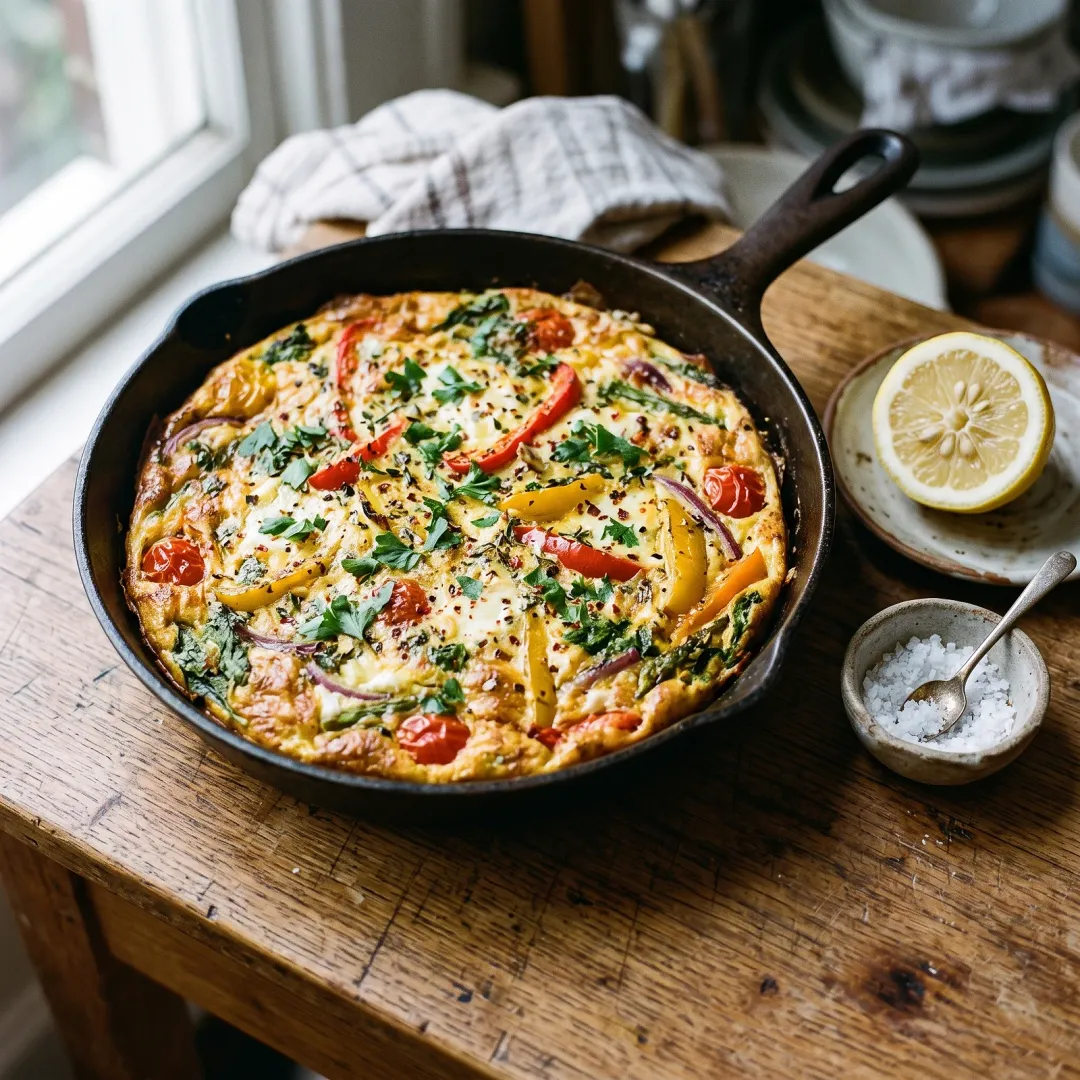
The Frittata. Everything a scramble is, but you finish it in the oven so it holds its shape. Great for using up a larger amount of vegetables or leftover roasted protein. Cast iron in, 375 degrees, about 12 minutes.
Eggs Over Roasted Vegetables. Sheet pan your odds-and-ends vegetables, then crack eggs directly onto the pan for the last 8 minutes of cooking. One pan, zero decisions.
Egg Drop Soup. Heat bone broth, add ginger and garlic, bring to a gentle simmer, then slowly stream in beaten eggs while stirring. Add whatever vegetables you have. Season with coconut aminos and a splash of lime. Ready in 15 minutes and feels like you actually tried.
All four of these follow the same underlying formula. Different textures, different vessels, same bones.
Label Moment: What 'Seasoning Blends' Are Hiding
If you are going to cook by feel, your spice rack needs to be clean. A lot of pre-made seasoning blends are loaded with maltodextrin, anti-caking agents, natural flavors (which can hide dozens of undisclosed compounds), and sometimes sugar. The FDA's definition of 'natural flavors' is broad enough to include things most real-food eaters would not choose if they saw them listed directly.
The fix is simple: build your own spice blends from single-ingredient spices. A basic Mexican blend is cumin, chili powder, garlic powder, and smoked paprika. A basic Italian blend is oregano, basil, thyme, and garlic. Mix them in small jars, label them, and you have a clean seasoning system that supports real-food cooking without any guessing about what is in the jar.
Build the Skill, Not the Dependency
The real point of cooking without a recipe is not impressing anyone or claiming some kind of culinary identity. It is freedom. Freedom from the grocery list that has to be exact. Freedom from the weeknight spiral when one ingredient is missing. Freedom from processed food being the path of least resistance just because you do not know what to do with what you have.
This is a form of food sovereignty, and it matters. When you know how to work with real ingredients by feel, a whole-food diet stops requiring perfect conditions to execute. That is when it actually sticks.
Start small. Make one scramble without a recipe this week. Pick a flavor direction, use what is in your fridge, finish it with acid and salt. See what happens. The confidence compounds fast.
---
This article is for general informational purposes only and is not medical advice. Always consult a qualified healthcare professional before making changes to your diet or health routine.
Key Takeaways
- Every satisfying meal hits four notes: fat, protein, vegetables, and acid plus salt. Learn those and a recipe becomes optional.
- A simple flavor formula, fat + aromatics + protein + vegetables + acid + salt, works for almost any combination of ingredients you have on hand.
- Eggs are the best no-recipe fallback protein: fast, affordable, nutritionally complete, and compatible with nearly any vegetable or leftover.
- Choose a flavor direction (Mediterranean, Mexican, Asian) before you start cooking. It focuses your spice choices and makes the meal taste intentional.
- Check your spice blends for hidden additives. Single-ingredient spices mixed at home give you a clean, flexible seasoning system.
- The sheet pan and the cast-iron skillet are the two most forgiving tools for no-recipe cooking. Master them.
Frequently Asked Questions
How do I start cooking without following a recipe?
Start by memorizing four building blocks: a cooking fat, a protein, vegetables, and something acidic plus salt to finish. From there, pick a flavor direction (Mediterranean, Mexican, Asian) and let that guide your spice choices. Eggs are a great protein to practice with because they are forgiving, fast, and pair with almost any vegetable combination.
What is the easiest meal to make with no recipe?
A skillet egg scramble is hard to beat. Heat ghee or avocado oil in a pan, add garlic and whatever vegetables you have, cook them down, then add beaten eggs and fold gently. Season with salt, finish with a squeeze of lemon or a splash of hot sauce. Done in under ten minutes from start to plate.
How do I make food taste good without a recipe?
Two things make the biggest difference: aromatics (garlic, onion, ginger cooked in fat at the start) and finishing with acid (lemon juice, lime, or vinegar) and proper salt at the end. Most home-cooked food tastes flat because it skips one or both of those steps. Taste as you go, and add acid right before you serve.
Are eggs a good protein for quick no-recipe meals?
Yes. Eggs cook in minutes, they contain all nine essential amino acids, and they work with nearly any vegetable or leftover you have in the fridge. Research published in Nutrients notes they also provide fat-soluble vitamins and choline, making them one of the more nutritionally complete whole foods available. For fast, flexible, real-food cooking, they are hard to top.
Sources
- USDA Dietary Guidelines for Americans 2020-2025: Dietary Guidelines for Americans, 2020-2025
- American Journal of Clinical Nutrition: The role of protein in weight loss and maintenance
- Nutrients (MDPI): Egg Consumption and Human Health
- FDA Code of Federal Regulations: CFR 501.22 - Natural Flavors Definition
This article is for general informational purposes only and is not medical advice. Always consult a qualified healthcare professional before making changes to your diet or health routine.

Join the conversation
What do you think?
Free members can comment, reply and like. It takes ten seconds.