


Every wellness influencer has told you the Blue Zones prove we should all go plant-based. Every carnivore account has told you the Blue Zones are a myth. Both of them are cherry-picking. The actual research is more interesting, more nuanced, and honestly more useful than either camp wants to admit.
What the Blue Zones Actually Are (Before We Go Anywhere Else)
The Blue Zones are five geographic regions where researchers identified unusually high concentrations of people living past 100 with relatively low rates of chronic disease. The original demographic work was done by demographer Michel Poulain and physician Gianni Pes in Sardinia, Italy, where they drew a blue circle on a map around the area with the highest male longevity. Dan Buettner later partnered with National Geographic and expanded the concept to five regions: Sardinia (Italy), Okinawa (Japan), Loma Linda (California), the Nicoya Peninsula (Costa Rica), and Ikaria (Greece).
Here's what gets lost in translation. The Blue Zones research was never a controlled clinical trial. It was observational and demographic. That matters, not because it makes the data useless, but because it means we cannot pull one variable (say, legume consumption) and declare it the cause of longevity. What the research captures is a cluster of behaviors, food patterns, community structures, sleep habits, and life purpose that appear together in these populations. The food is one signal in a much bigger picture.
The Food Pattern Signal: What They Actually Eat
The dietary overlap across the five Blue Zones, as documented by Buettner and reviewed in peer-reviewed literature, looks like this:
Mostly whole plants, but not exclusively. Vegetables, legumes, whole grains, fruits, nuts, and seeds make up the majority of calories across most of the zones. A 2016 analysis published in the American Journal of Lifestyle Medicine that examined Blue Zone food patterns found that 95 to 100 percent of the diet in most zones was plant-derived, but the range matters: that 5 percent is animal food, and it shows up differently across regions.
They do eat animal protein. Just not every day, and not in the portions we serve in the U.S. Sardinians eat sheep's milk cheese and goat's milk products regularly. Okinawans eat pork, traditionally in small amounts on celebratory occasions. Nicoyans eat eggs and some chicken and pork. The Adventists of Loma Linda are the one genuinely plant-exclusive population in the group, and they are intentionally vegetarian for religious reasons, which is a confounding factor worth naming.
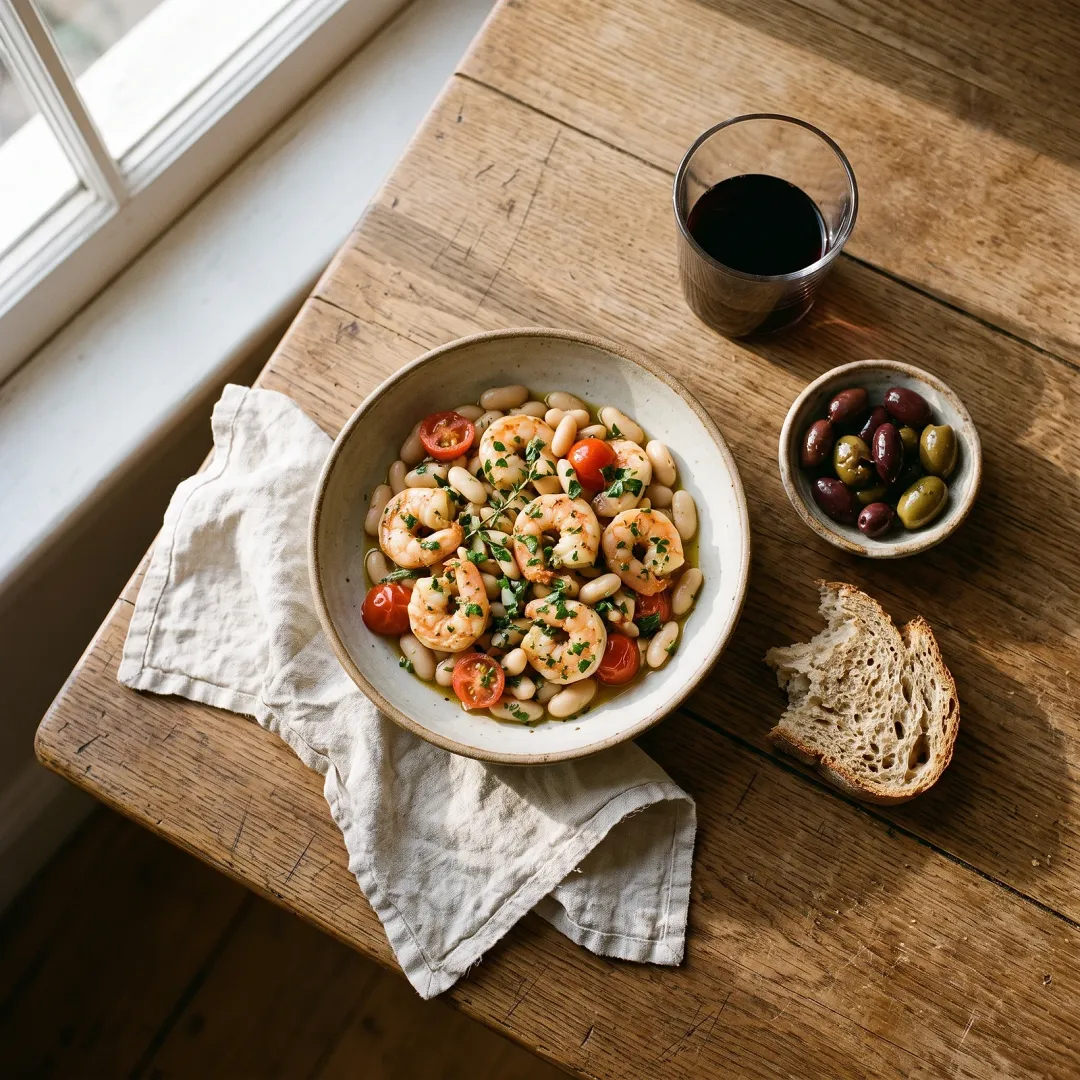
Fish is part of the picture. Several Blue Zone communities, particularly in Ikaria and the Nicoya Peninsula, include modest amounts of fish as a regular protein source. Coastal access and traditional fishing culture matter here. A small portion of clean, simply prepared seafood, like shrimp grilled with olive oil and garlic or tossed into a bean stew, fits the Blue Zone template more accurately than a nightly 8-ounce steak does, but also more accurately than zero animal food.
They eat real food. Full stop. Across every zone, the food is whole, minimally processed, and largely cooked at home. There are no Blue Zone populations that thrive on refined seed oils, ultra-processed snack foods, or added-sugar drinks. This, to me, is the loudest signal of all, and it is the one that gets the least attention because it doesn't map cleanly onto a brand or a movement.
The Legume Signal People Misread
Legumes are the most consistent food across all five zones. Fava beans in Sardinia, black beans in Nicoya, soybeans (mostly fermented) in Okinawa, lentils and chickpeas in Ikaria. A 2004 study in the Asia Pacific Journal of Clinical Nutrition found that legume consumption was the single strongest dietary predictor of survival in elderly populations across multiple cultures, including Japan, Sweden, Greece, and Australia.
Now. Before you use that to tell me legumes are the answer to everything: legumes in these populations are prepared traditionally. They are soaked, slow-cooked, often fermented or sprouted, and eaten alongside fat, vegetables, and in modest portions. They are not a processed protein bar. They are not canned in BPA-lined cans with additives. Context matters.
I'm not saying legumes are mandatory on a paleo plate. I have my own thoughts about that, and I know my readers do too. What I am saying is that the Blue Zone signal around legumes is specifically about whole, traditionally prepared legumes as a fiber and protein source, not an argument for any particular diet label.
The Olive Oil, Fat, and What They Are NOT Eating Signal
Olive oil is ubiquitous in Sardinia and Ikaria. Okinawans historically cooked in lard. Nicoyans use coconut and animal fats. None of these populations, in their traditional forms, used refined vegetable or seed oils. That is a modern industrial product, and it is conspicuously absent from the traditional diets that produced the longevity data.
A 2022 study in the Journal of the American College of Cardiology found that higher olive oil consumption was associated with lower risk of cardiovascular and total mortality in a large U.S. cohort. That is one data point, not the whole story, but it is consistent with what the Blue Zone pattern shows.
What is equally telling is what these populations do not eat in large quantities: refined sugar, processed flour, packaged snacks, fast food, or industrial seed oils. The absence of those things is part of the signal, and it is the part that gets quietly edited out of the pop-science version.
The Alcohol and Wine Signal (Yes, We're Going There)
The Sardinian and Ikarian patterns both include moderate, regular consumption of wine, typically a locally produced red wine consumed with meals and in a social setting. Buettner's team has noted the Sardinian Cannonau wine is particularly high in polyphenols.
This gets weaponized constantly, by people who want to justify their evening glass and by people who want to dismiss the whole Blue Zone framework. The honest read is this: moderate wine consumption, in the context of a real-food diet, strong social bonds, low chronic stress, and regular movement, appears alongside long life in some of these populations. It is not a magic bullet. The National Institute on Alcohol Abuse and Alcoholism is clear that alcohol carries real health risks, and individual context matters enormously. I am not telling you to drink wine. I am telling you the data includes it, and pretending it doesn't is intellectually dishonest.
What This Signals for Your Plate Right Now
Here is the coaching application, because data without a practical landing is just trivia.
Signal 1: Variety of whole plants is the foundation. Not one superfood. Not a supplement. A wide range of vegetables, legumes (if your gut tolerates them), whole fruits, and nuts, prepared simply and eaten regularly. That is the clearest repeating signal across all five zones.
Signal 2: Animal protein in the Blue Zones is a supporting character, not the lead. Small portions, often from local or traditional sources, often fish or pork or eggs rather than beef as the daily staple. If you eat a paleo plate, you are probably already eating animal protein in a way that is not wildly out of step with the Blue Zone pattern, especially if you are including quality seafood. A bowl of shrimp sauteed in good olive oil with garlic, tomatoes, and white beans is an entirely Blue Zone-coherent meal, and it is also straight-up delicious. The shrimp brings complete protein and iodine; the beans bring fiber and plant protein; the olive oil brings polyphenols. That is a functional meal that doesn't need a label.
Signal 3: The food environment matters as much as the food. Blue Zone longevity is not explained by diet alone. Every zone shows strong social connection, a sense of purpose (the Okinawans call it ikigai, the Nicoyans call it plan de vida), regular low-intensity movement, and low chronic stress. If you are eating perfectly and sleeping four hours a night in a state of constant cortisol overload, no amount of legumes is going to bridge that gap.
Signal 4: The absence of ultra-processed food is non-negotiable. This is the one area where every Blue Zone, every functional-medicine practitioner, and every credible researcher agrees. A 2019 JAMA Internal Medicine study linked higher ultra-processed food consumption to increased all-cause mortality. The traditional Blue Zone diet is not compatible with a diet built on packaged food, period.
Signal 5: Stop waiting for the perfect dietary framework. The Blue Zone populations were not reading studies or tracking macros. They were eating the food that grew near them, prepared the way their grandmothers prepared it, sitting down with people they loved. The sophistication of their diet is in its simplicity.
The Part Nobody Wants to Say Out Loud
The Blue Zones have been commercialized aggressively. Buettner's work is real and worthwhile, but it has also spawned a cottage industry that sometimes oversimplifies the data to sell a plant-based message. Some researchers have also raised legitimate methodological questions about the demographic data, particularly around birth record accuracy in Sardinia and Okinawa.
A 2023 study published in PLOS ONE by Saul Newman raised pointed questions about whether some of the supercentenarian data in the Blue Zones may reflect record-keeping errors rather than genuine longevity. That doesn't mean the lifestyle observations are worthless. It does mean we should hold the specific age claims with appropriate scientific humility.
I am not here to tear down the Blue Zones. The food patterns are genuinely instructive. But the lesson I take from them is not "go plant-based and live forever." It is: eat real food, mostly whole plants, with some quality animal protein, olive oil, and traditional preparation methods. Sit with people you love. Move your body. Sleep. Have a reason to get up in the morning. We were designed for that kind of life, and most of us are living about as far from it as possible.
That gap is worth paying attention to.
A Practical Note on Protein
One thing that frustrates me about the popular Blue Zones conversation is how it gets used to argue against protein adequacy, especially for women over 40. The Blue Zone populations eat less animal protein than the standard American diet, yes. But they are also not sedentary, they are not chronically stressed, their guts tend to absorb nutrients well from whole foods, and they are eating protein at every meal, just from a wider variety of sources including legumes.
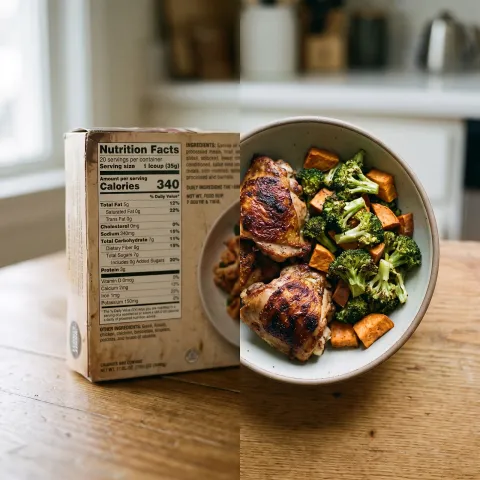
If you are a 50-year-old woman with a demanding job, disrupted sleep, and a history of dieting, your protein needs are not the same as a 90-year-old Sardinian shepherd who has walked mountainous terrain his whole life and slept nine hours a night. The research on protein and muscle preservation in aging women is clear that adequacy matters. You can honor the spirit of the Blue Zone food pattern and still hit your protein targets. They are not in conflict. See how I think about that balance:
The Bottom Line
The Blue Zones are not a diet plan. They are a set of signals, and the loudest ones are the simplest: eat whole food, eat mostly plants with some traditionally sourced animal protein, cook it yourself, eat it with people, and live a life with purpose and rest built into it.
That is not a revolutionary message. It is just increasingly countercultural. And if that sounds like a faith-driven call back to something more human and more intentional, that's because for me, it is.
This article is for general informational purposes only and is not medical advice. Always consult a qualified healthcare professional before making changes to your diet or health routine.
Key Takeaways
- Blue Zone diets are mostly whole plants but are not exclusively plant-based; all five zones include some animal food.
- Legumes are the most consistent food across all five zones, but they are traditionally soaked, cooked, and eaten in whole form.
- Olive oil and traditional animal fats appear throughout Blue Zone regions; refined seed oils do not.
- The complete absence of ultra-processed food is one of the strongest and most consistent signals across every zone.
- Longevity in these populations is tied to a cluster of habits including sleep, community, purpose, and movement, not diet alone.
- Methodological questions exist about some demographic data in the Blue Zones; hold specific age claims with healthy scientific skepticism.
- The Blue Zone pattern is compatible with a real-food, quality-protein approach when you read the research rather than the headlines.
Frequently Asked Questions
Do Blue Zone populations eat meat?
Yes, with some exceptions. Four of the five Blue Zones include animal protein as part of the traditional diet, typically in smaller portions and less frequently than the standard American diet. Sardinians eat sheep's milk cheese and some pork. Okinawans eat pork, historically on special occasions. Nicoyans eat eggs and some chicken. The Loma Linda Adventists are the one genuinely plant-exclusive group, and their vegetarianism is religiously motivated. Fish and seafood also appear in several zones as a regular protein source.
Are the Blue Zones scientifically proven?
The Blue Zones research is observational and demographic, not a controlled clinical trial. That means it identifies patterns that appear alongside longevity but cannot prove any single factor causes it. A 2023 study published in PLOS ONE also raised methodological questions about the accuracy of birth records in some zones, which affects the reliability of supercentenarian age claims. The lifestyle and food pattern observations remain instructive, but the research should be read with appropriate scientific humility rather than taken as definitive proof.
What is the one food eaten in every Blue Zone?
Legumes are the most consistent food across all five zones, identified in peer-reviewed research as one of the strongest dietary predictors of survival in older populations. Different zones feature different legumes: fava beans in Sardinia, black beans in Nicoya, soybeans (often fermented) in Okinawa, lentils and chickpeas in Ikaria. In traditional Blue Zone cooking, legumes are soaked and slow-cooked, not eaten from a can or processed into a bar.
Can you follow a Blue Zone diet and still eat paleo?
There is more overlap than the headlines suggest. Both approaches emphasize whole, minimally processed food, quality fats, and the elimination of refined and packaged products. The main difference is legume consumption, which features prominently in Blue Zones but is limited or excluded in strict paleo. If your gut tolerates traditionally prepared legumes, adding them as one component of a real-food plate is not at odds with a paleo-informed approach. The non-negotiable in both frameworks is ditching ultra-processed food.
Sources
- American Journal of Lifestyle Medicine: Blue Zones: Lessons From the World's Longest Lived
- Asia Pacific Journal of Clinical Nutrition: Legumes: the most important dietary predictor of survival in older people
- Journal of the American College of Cardiology: Consumption of Olive Oil and Risk of Total and Cause-Specific Mortality
- JAMA Internal Medicine: Association Between Ultraprocessed Food Consumption and Risk of Mortality
- PLOS ONE: Supercentenarians and the oldest-old are concentrated into regions with no birth certificates
- National Institute on Alcohol Abuse and Alcoholism: Alcohol's Effects on the Body
This article is for general informational purposes only and is not medical advice. Always consult a qualified healthcare professional before making changes to your diet or health routine.

Join the conversation
What do you think?
Free members can comment, reply and like. It takes ten seconds.