
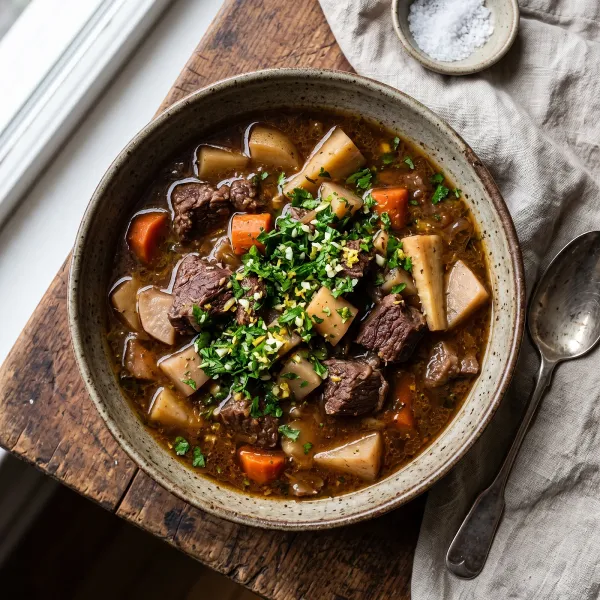
Elk spent 48 hours in a salt brine on my counter and I will not apologize for it. The first time I fermented a wild game protein before braising it, I was not totally sure what to expect. What I got was the most deeply flavored, fork-tender stew I had ever made from a game animal. No gamey edge, no toughness, no dry sad chunks of protein hiding under a bland broth. Just rich, savory, alive-tasting meat that had been given time to do something extraordinary before it ever touched heat. This is not your average weeknight dinner. It requires a little planning ahead, because the elk needs at least 24 hours in a lacto-ferment brine before you cook it. But the active work? Thirty minutes. The rest is time and patience, and you will be rewarded in a way that a same-day braise just cannot match. Elk is one of those proteins that I think deserves so much more attention in the real-food world. It is leaner than beef, rich in iron and B12, and it comes from animals that have actually lived. If you have a hunter in your life, this is the recipe to finally put that freezer meat to legendary use. If you source it, you can find elk online from reputable ranches or at specialty butcher shops and co-ops. The lacto-fermentation step tenderizes the meat by letting natural bacteria begin to break down the proteins, the same principle behind traditional European "sour meat" techniques that have been used for centuries. It also adds a subtle, complex depth to the flavor of the finished braise that you genuinely cannot replicate any other way. The brine is simple: water, salt, garlic, peppercorns, coriander, bay leaf. No special equipment. No fancy starter culture. Just the wild fermentation that happens when you give good ingredients a little time and trust the process. The fresh herb gremolata at the end is non-negotiable. I mean it. The bright lemon zest, parsley, and garlic cut right through the richness of that slow braise and make the whole bowl feel alive. Do not skip it.
Nutritional Benefits
Elk: Lean Wild Protein With Serious Nutrition
- Elk is significantly leaner than beef, with comparable or higher protein per serving, making it excellent for muscle maintenance without excess saturated fat.
- Wild and ranch-raised elk is naturally high in iron, zinc, and B12, nutrients that support energy, immune function, and neurological health.
- Because elk roam and graze, their fat profile tends to include more conjugated linoleic acid (CLA) and omega-3 fatty acids than conventional feedlot beef.
- The lacto-fermentation step actually begins pre-digesting the meat proteins, which may make the nutrients more bioavailable and easier on digestion.
Lacto-Fermentation: Ancient Wisdom, Real Benefits
- The salt brine creates an environment where beneficial lactobacillus bacteria proliferate and begin breaking down proteins and connective tissue in the meat.
- Fermented foods and fermentation-adjacent techniques support a healthy gut microbiome by introducing and feeding beneficial bacteria.
- Pre-fermented meat braised low and slow produces a naturally more tender result, reducing the need for long cook times to break down toughness.
- Traditional cultures around the world relied on fermented and cured meats as a preservation and digestion strategy long before refrigeration.
Root Vegetables: Steady Fuel and Fiber
- Carrots, parsnips, turnips, and celery root provide a wide range of prebiotic fiber, which feeds the good bacteria already living in your gut.
- These root vegetables offer steady complex carbohydrates without blood sugar spikes, unlike refined grains or starchy fillers.
- Parsnips are a particularly underrated source of folate and vitamin C, and they add a subtle natural sweetness to the broth.
- Celery root (celeriac) is low glycemic, high in vitamin K, and adds a savory, slightly herbal depth that rounds out the whole dish.
Bone Broth: The Liquid Foundation That Matters
- Beef bone broth provides gelatin and collagen precursors that support joint health, gut lining integrity, and skin elasticity.
- Mineral-rich broth contributes calcium, magnesium, and phosphorus to the finished stew without any supplementation needed.
- Using bone broth as the braising liquid means the stew is deeply nourishing in a way that water or a store-bought stock simply cannot match.
FAQs
Can I use a different wild game meat if I do not have elk?
Absolutely. Venison (deer) is the closest substitute and works beautifully with the same brine and cook time. Bison chuck is another great option. Bear and moose have been made this way by hunters with excellent results. Just stick to a tougher braising cut, not a tender backstrap or tenderloin, which does not need slow braising.
Is the fermentation step safe to do at room temperature?
Yes, when done correctly. The key is using a 2 to 3 percent salt brine (about 1 tablespoon of non-iodized salt per 2 cups of water) and keeping the meat fully submerged. The salt prevents harmful bacterial growth while allowing beneficial lactobacillus to thrive. Keep it at 65 to 72 degrees F and limit it to 48 hours maximum. If you are in a very warm environment (above 75 degrees F), ferment in the refrigerator for 48 to 72 hours instead.
What does lacto-fermented elk actually taste like compared to unfermented?
The fermented version is noticeably more tender, and the flavor is deeper and more savory with a very subtle tang in the background that you would not necessarily identify as sour if you did not know it was there. The gamey edge that some people find off-putting in elk is also significantly mellowed by the fermentation process. It is one of those differences that is hard to explain until you taste both side by side.
Can I make this in a slow cooker instead of a Dutch oven?
Yes. Sear the elk and build the base on the stovetop as directed, then transfer everything to your slow cooker. Cook on LOW for 7 to 8 hours or HIGH for 4 to 5 hours. Add the root vegetables in the last 2 to 3 hours on LOW (or the last 1.5 hours on HIGH) so they do not turn to mush. Stir in the arrowroot slurry during the last 20 minutes with the lid cracked.
Where can I buy elk meat if I am not a hunter?
Several online retailers ship high-quality ranch-raised elk directly to your door. Look for ranches that raise their elk on pasture without added hormones. Specialty butcher shops and co-ops in many areas carry it as well, and it is increasingly available at natural grocery stores. It is worth calling ahead before you make the trip.
Is this Whole30 compliant?
Yes, with the wine substitution. Use 1 cup of beef bone broth plus 1 tablespoon of apple cider vinegar in place of the red wine and every other ingredient in this recipe is fully Whole30 compliant. The arrowroot starch is considered acceptable by most Whole30 practitioners when used as a thickener in small amounts.
If you made this and your household looked at you like you were suddenly a completely different level of cook, good. You are. Pin this one, share it with your hunter friends, and come back and tell me how long the ferment changed the game for you. This is the kind of meal that reminds me why I fell in love with real food in the first place. We were designed to eat this way.
Ingredients
Instructions
Nutrition Facts
| Nutrient | Amount per Serving |
|---|