
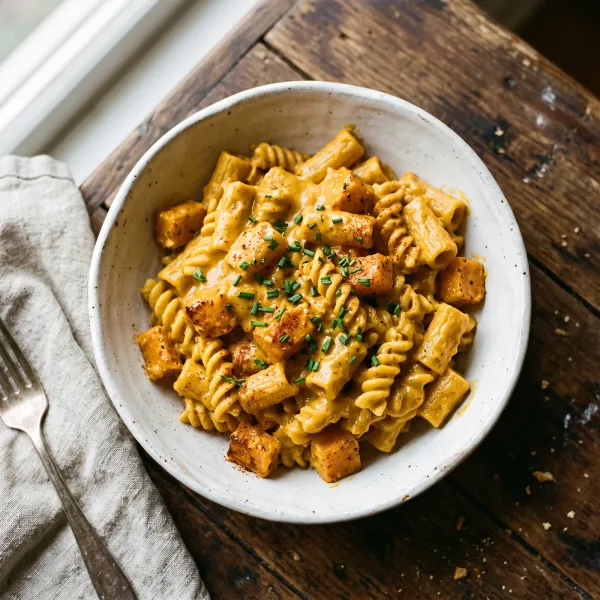
Macaroni and cheese is not a dish I was willing to just let go of when I went paleo. It is the ultimate comfort food, and if you have kids or a spouse who is skeptical about this whole real-food thing, this is the dish that either wins them over or loses them for good. No pressure. The two problems with classic mac and cheese are the pasta and the cheese sauce. Both had to go, and both had to be replaced with something that actually delivers. Here is what I did. The pasta is butternut squash cut into short, stubby tubes that roast up with just enough chew and caramelized edge to mimic the bite of an elbow macaroni. And the sauce, which I know sounds crazy until you eat it, is built on soaked raw cashews blended with coconut milk, broth, nutritional yeast, Dijon, smoked paprika, and apple cider vinegar. That combination creates something genuinely thick, tangy, savory, and rich. The nutritional yeast brings the umami depth you expect from cheese, the vinegar gives it the sharp bite, and the smoked paprika does the rest. People who do not know what is in it will not guess. I have served this to skeptics and watched them go back for seconds without asking questions. That is all I need to know.
Nutritional Benefits
Butternut Squash
- Rich in beta-carotene, which your body converts to vitamin A for eye, skin, and immune health.
- A good source of vitamin C and potassium, supporting immune function and healthy blood pressure.
- Contains fiber that feeds beneficial gut bacteria and helps steady blood sugar after a meal.
- Naturally lower in starch than regular pasta, making it a much gentler option for blood sugar balance.
Raw Cashews
- Provide heart-healthy monounsaturated fats along with a solid hit of plant-based protein.
- Contain magnesium, which supports muscle function, nerve signaling, and restful sleep.
- Soaking cashews before blending makes their nutrients more bioavailable and improves digestibility.
- Create a naturally creamy, dairy-free sauce base without any additives or thickeners.
Nutritional Yeast
- Delivers B vitamins including B12, which is especially important for those reducing or eliminating animal products.
- Provides a savory, cheesy flavor without any dairy, making it a smart tool in grain-free and dairy-free cooking.
- Contains beta-glucans, a type of soluble fiber linked to immune support and reduced inflammation.
- Adds a meaningful boost of complete protein to the sauce.
Avocado Oil and Ghee
- Avocado oil has one of the highest smoke points of any whole-food fat, making it safe and stable for roasting.
- Ghee is clarified butter with the milk solids removed, making it tolerated by many who are sensitive to dairy.
- Both fats help your body absorb the fat-soluble vitamins in this dish, including the vitamin A from the squash.
- These are the kinds of fats your body was designed to use for fuel, not the industrially processed seed oils hiding in the conventional version of this dish.
FAQs
Can I make this Whole30 compliant?
Yes. Every ingredient in this recipe is already Whole30 compliant as written. Just double-check that your broth and Dijon mustard labels are clean with no added sugar or off-plan ingredients.
I do not have a spiralizer. How else can I shape the squash?
The most effective low-tech method is to use a melon baller to scoop rounds from the neck of the squash, then trim them into short cylinder shapes with a paring knife. You can also just cut the squash into small cubes or half-moon slices. It will not look like macaroni, but the flavor and sauce combination are the same and just as good.
Can I use a different nut if I am allergic to cashews?
Macadamia nuts are the closest substitute in terms of creaminess and mild flavor. Soak them the same way. Sunflower seeds also work and keep this nut-free, though the sauce will be slightly more earthy in flavor. Blanched almonds are another option, though the texture is a little grainier even after a long blend.
Can I make the sauce ahead of time?
Yes, and it actually holds up really well. Blend the sauce and store it in a sealed jar in the refrigerator for up to 4 days. When you are ready to serve, warm it in a skillet with the garlic step and add a splash of broth to loosen it back up. Then fold in your freshly roasted squash.
Why does the sauce look orange? Is that normal?
Completely normal and actually intentional. The turmeric and smoked paprika give the sauce that warm orange-yellow color you expect from a cheddar cheese sauce. It is purely for visual appeal. If you skip the turmeric, the sauce will be more cream-colored but taste exactly the same.
Will picky kids actually eat this?
I cannot promise anything because kids are feral little chaos agents. But the sauce is genuinely rich and mild, the squash is tender, and the whole thing is orange and saucy, which is the visual kids expect from mac and cheese. Start with a small serving alongside something they already love and let them discover it on their own terms.
If this paleo mac and cheese surprised you, I want to hear about it. Drop a comment below or tag me on Instagram so I can see your version. And if you have a skeptic in your house who tried it, I especially want that story.
Ingredients
Instructions
Nutrition Facts
| Nutrient | Amount per Serving |
|---|