

On this page
Full lunchboxes coming back through the door at 3pm are a special kind of demoralizing. You spent time, money, and actual thought on that food. And it sat there untouched while someone ate a bag of pretzels instead. There is one thing that fixes this more reliably than anything else I have tried, and it has nothing to do with fancy containers or bento-box aesthetics. It is about what you put in first.
Why Most Lunches Fail Before They Leave the House
Most packed lunches are built backwards. Someone reaches for the carb or the snacky filler first, then tries to squeeze in a protein as an afterthought, and ends up with a box that is mostly crackers and fruit pouches. That kind of lunch spikes and crashes energy fast, and it does not hold anyone over. Kids (and adults) hit a wall by mid-afternoon, feel awful, and often will not even bother to eat it in the first place because, on some level, the body already knows it is not going to be satisfying.
Research backs this up. A 2023 review in Nutrition Reviews found that higher-protein meals increase satiety and reduce overall calorie intake at subsequent meals, compared with lower-protein or carb-heavy options. The body is not wrong to crave something that will actually fuel it.
So the fix is simple in concept, even though it requires a real shift in how you think about building a box: protein goes in first, everything else fills around it.
The One Move: Anchor With Protein, Then Build Out
This is the whole technique. Pick your protein anchor before you pick anything else. Not the crackers. Not the fruit. The protein. That one decision changes the entire character of the lunch.
Here is how to do it, start to finish.
Step 1: Choose your anchor before you open a single cabinet. Decide what the protein is going to be. Write it on a sticky note if that helps. This is the non-negotiable center of the box. Everything else is a supporting cast.
Good real-food protein anchors for a packed lunch:
- Hard-boiled eggs (batch a week's worth on Sunday)
- Nitrate-free deli meat or leftover roasted meat rolled tight
- A few slices of cold leftover venison (roast, burger patties, or meatballs all hold up well cold and do not need reheating to taste good)
- Canned wild-caught fish with a fork
- Almond butter or sunflower seed butter in a small jar if nuts are allowed
- Compliant jerky as a backup, not a primary
Venison is genuinely underrated here. It is one of the leanest, most nutrient-dense red meats available, and according to the USDA's FoodData Central, a 3-ounce cooked serving of ground venison delivers around 26 grams of protein with far less total fat than conventional ground beef. Cold venison meatballs, sliced venison roast, or a small container of venison chili travel without any drama.
Step 2: Ask what textures and temperatures work for this situation. Before you start filling the rest of the box, think practically. Will there be a microwave? Probably not. Is the person eating this a child who needs something they can eat with their hands? Are they eating at a desk? Texture variety matters for palatability. A 2016 study in the journal Food Quality and Preference found that texture variety in a meal increases overall eating enjoyment and satisfaction. So pair your protein anchor with something crunchy, something soft, and ideally something colorful.
Step 3: Fill the rest of the box in this order: fat, fiber, flavor. After the protein anchor is decided and placed (mentally or physically), layer in:
- A fat source: avocado slices, a small handful of olives, coconut flakes, or a few macadamia nuts
- A fiber source: raw veggies, a piece of whole fruit, or grain-free crackers if you use them
- A flavor pop: pickles, a tiny container of compliant mustard or guacamole, fresh herbs on top of the protein
This order keeps the box from becoming a pile of fillers with a token piece of chicken on the side. The protein anchor holds the whole thing together nutritionally and practically.
Step 4: Package the protein so it actually gets eaten. Presentation matters more than most adults want to admit, and it matters enormously for kids. If the protein looks unappetizing or is buried under other stuff, it will come home. A few things that help:
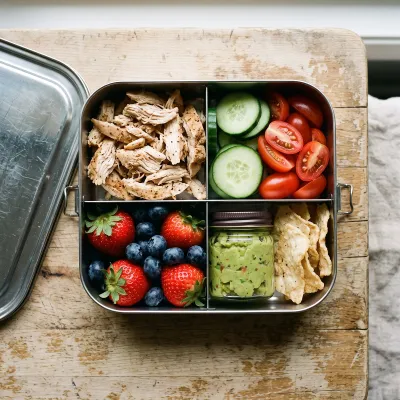
- Cut meat into small pieces or strips rather than leaving it as a whole slice
- Put the protein in the biggest compartment or the most visible spot in the container
- Include a small dip (compliant ranch, nut butter, guacamole) alongside the protein specifically, not the veggies
- Cold venison meatballs on a toothpick or skewer go from "leftover" to "interesting" instantly
Step 5: Prep the anchor in bulk so this is not a daily decision. The reason people default to crackers and cheese is that crackers require zero thought. Your protein anchor needs to be just as grab-ready. Batch it. Hard-boil a dozen eggs. Cook a full venison roast or a big batch of meatballs on Sunday. Portion jerky into small bags. When the anchor is already sitting in the fridge ready to go, you will actually use it.
This is the part most tips articles skip over. The technique only works if the execution is frictionless. Decision fatigue is real, and research from the National Institutes of Health has linked higher decision load throughout the day to lower-quality food choices. Removing the morning protein decision entirely by having it prepped is not laziness, it is strategy.
What This Looks Like in Practice: A Real Box
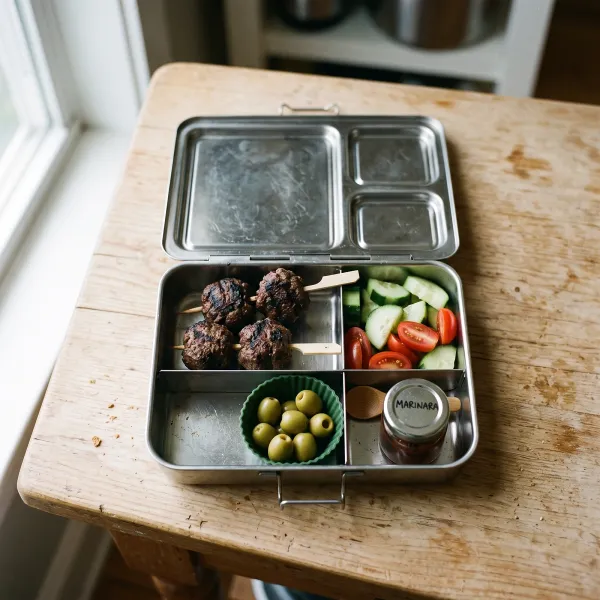
Here is an example of this built out fully.
Monday lunch for an adult or older child:
- Anchor: 4 cold venison meatballs (prepped Sunday, stored in fridge)
- Fat: 6 to 8 olives in a small silicone cup
- Fiber: sliced cucumber and a handful of grape tomatoes
- Flavor pop: small container of compliant marinara for dipping the meatballs
- Fruit: a small apple on the side
That box has protein, fat, fiber, crunch, color, and something to dip. It does not look like a sad desk lunch. It looks like someone actually thought about it. And it comes back empty.
The same framework works for a 7-year-old with smaller portions, for someone eating at their office desk, and for the person who swore they were too busy to pack a real lunch. The anchor changes, the supporting cast changes, but the build order stays the same.
A Few Things That Derail This (And How to Avoid Them)
Relying on the protein anchor being something that needs reheating. Most people do not have reliable access to a microwave or will not use one. Build your anchor selections around food that tastes good cold. Venison, hard-boiled eggs, compliant deli meat, canned fish, all of them work cold. A piece of chicken breast that has dried out overnight does not, and it will come home.
Making the protein the least fun thing in the box. If everything else is interesting and the protein is a plain, naked piece of meat with no dip or seasoning, the protein loses. Season your batch-cooked proteins before storing them. Marinate the venison. Add garlic to the meatballs. Put the dip right next to the protein on purpose.
Packing too much. A box stuffed to the rim is overwhelming and often does not get finished simply because it is too much to manage in a short lunch break. Enough food to be genuinely satisfying without being a production. For most adults that means about 3 to 4 ounces of protein plus two to three small supporting components, not eight little containers of things.
Skipping the protein anchor when you are running late. This is the moment the whole system falls apart. Keep a backup anchor in the fridge at all times: a hard-boiled egg, a small portion of jerky, a tablespoon of almond butter in a jar. The anchor does not have to be elaborate. It just has to be there.
The Bottom Line
Packed lunches fail when they are built around convenience fillers instead of a real-food protein center. Anchor the box with protein first, fill in fat and fiber around it, make the protein as grab-ready and appetizing as the snacky stuff, and you will stop finding that box sitting on the counter at 6pm exactly as you packed it.
One move. Same box. Different result.
This article is for general informational purposes only and is not medical advice. Always consult a qualified healthcare professional before making changes to your diet or health routine.
Key Takeaways
- Most packed lunches fail because they are built around fillers instead of protein, flip the order.
- Choose your protein anchor before anything else goes in the box; everything else supports it.
- Venison, hard-boiled eggs, and batch-cooked meats are ideal cold-lunch protein anchors.
- Pair the anchor with a fat source, a fiber source, and a small flavor pop for a lunch that is actually satisfying.
- Batch-cook your protein anchor on the weekend so the morning decision is already made.
- Presentation matters: cut protein small, put it in the most visible spot, include a dip right next to it.
Frequently Asked Questions
What protein works best in a packed lunch that doesn't need to be reheated?
Hard-boiled eggs, cold venison meatballs or sliced roast venison, nitrate-free deli meat, compliant jerky, canned wild-caught fish, and nut or seed butter all hold up well at room temperature or cold. The key is seasoning them well before storing so they taste good without being hot.
How do I pack a paleo lunch that my kid will actually eat?
Lead with a protein anchor, cut it into small pieces or put it on a toothpick, and place a dip right next to the protein specifically, not just next to the veggies. Texture variety matters: pair something soft (like meatballs) with something crunchy (like cucumber slices) and something bright and colorful. Keep the total volume manageable so it does not feel overwhelming.
How do I meal prep lunches for the week without spending all Sunday in the kitchen?
Focus only on the protein anchor. Batch-cook one protein, a venison roast, a tray of meatballs, or a dozen hard-boiled eggs, and the rest of the box (fruit, raw veggies, olives, nuts) requires zero cooking. When the anchor is ready and portioned in the fridge, the whole lunch takes under three minutes to assemble each morning.
Why does a high-protein lunch keep you fuller than a carb-heavy one?
Protein stimulates satiety hormones and slows gastric emptying, meaning you feel full longer and are less likely to crash and graze before your next meal. A 2023 review in Nutrition Reviews found that higher-protein meals are consistently linked to greater satiety and reduced food intake at subsequent meals compared to lower-protein options.
Sources
- Nutrition Reviews: Dietary protein and satiety: a review of the evidence
- Food Quality and Preference: Texture in food: contribution to eating satisfaction
- USDA FoodData Central: Game meat, deer, ground, cooked, Nutritional data
- National Institutes of Health / PubMed Central: Decision fatigue and its effect on dietary choices
This article is for general informational purposes only and is not medical advice. Always consult a qualified healthcare professional before making changes to your diet or health routine.