

On this page
My kid used to trade his lunch at school. Not swap it, trade it, for a bag of Goldfish crackers and a Capri Sun, like a little commodity broker in sneakers. That was the moment I stopped packing what I thought was a great paleo lunch and started paying attention to what actually made it to his mouth. These nine tactics changed everything.
Why the Lunchbox Is Worth Your Attention
Kids eat roughly 180 school lunches a year. That is not a small number. And if those lunches are coming from the school cafeteria line, there is a real chance they are built around ultra-processed foods, refined grains, and added sugars that research links to attention issues and energy crashes in children. I am not here to scare you. I am here to tell you that the lunchbox is one of the most practical places you have to influence how your child eats, and it does not have to be a battleground.
Packing paleo lunches for kids is genuinely manageable once you have a repeatable system. These nine tactics are the ones that actually work in real kitchens, for real kids with opinions.
This article is for general informational purposes only and is not medical advice. Always consult a qualified healthcare professional before making changes to your diet or health routine.
9 Paleo Lunch Packing Tactics That Actually Work
1. Start with protein and build outward from there.
Protein is the anchor. When kids get enough of it at lunch, studies suggest they stay fuller longer and have more stable energy through the afternoon. Pick the protein first, then build everything else around it. Leftover shredded chicken thighs, a couple of hard-boiled eggs, sliced turkey roll-ups, or sardines packed in olive oil (yes, some kids genuinely love them, especially if they grew up with them on the table) are all fast and real. For a simple, cost-friendly option, try tinned mackerel mashed with a little avocado and served with cassava crackers. Oily fish give kids a dose of omega-3 fatty acids that may support focus and brain development, and the mackerel-avocado mash is surprisingly popular with kids who have grown up eating real food.
---
2. Use compartments like a weapon.
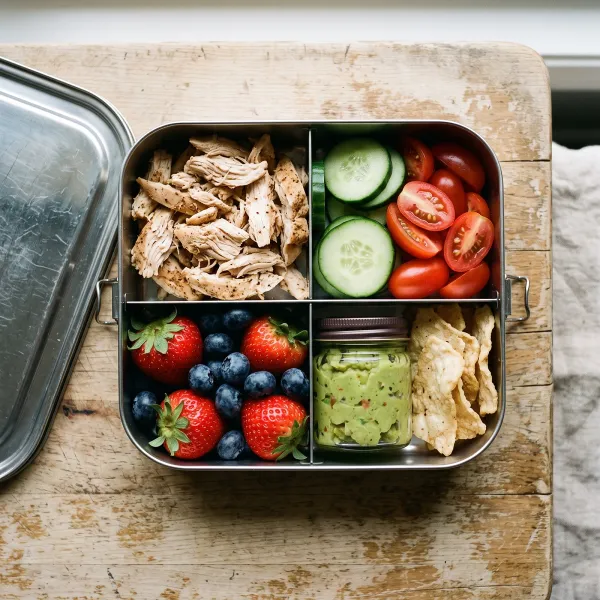
Bento-style lunchboxes with separate compartments are not just a cute Pinterest thing. They are a strategic tool. Kids are visual eaters. When food does not touch and each section looks manageable, they are far more likely to eat it. Fill compartments with small, distinct items: cubed fruit, raw veggies with a compliant dip, bite-sized protein pieces, a small handful of compliant crackers or nuts. Stainless steel bento boxes are a solid investment. They hold up, they do not leach anything, and they make the whole process feel organized instead of chaotic.
---
3. Make Sunday your secret weapon.
Batch prepping even two or three lunchbox components on Sunday cuts your weekday packing time dramatically. Hard-boil a batch of eggs. Wash and chop raw vegetables. Cook a sheet pan of chicken thighs or meatballs. Portion out snack items into small containers. When the fridge is already stocked with grab-and-go pieces, building a compliant lunch at 7 a.m. is actually doable instead of something that sends you straight to the pantry for a bag of pretzels because you ran out of time.
---
4. Involve your child in the picking, even a little.
This one sounds obvious, but it makes a measurable difference. Research on children and food autonomy consistently shows that when kids have some say in what goes in their lunch, they are more likely to eat it. That does not mean they get to demand gummy bears. It means you offer two or three real-food options for each lunchbox slot and let them choose within those guardrails. "Do you want apple slices or grapes today? Chicken or egg?" That small bit of ownership goes a long way.
---
5. Make the food visually fun without losing your mind over it.
You do not need to sculpt a dinosaur out of watermelon. But small, intentional presentation choices matter. Use cookie cutters to cut fruit or compliant wraps into simple shapes. Skewer grape tomatoes and cucumber rounds on a toothpick. Pack a small container of guacamole alongside plantain chips instead of just dumping everything into a bag. These are five-minute moves that signal to your kid that lunch is something worth opening. Novelty helps, especially with younger children.
---
6. Rotate a "lunchbox formula" instead of reinventing the wheel daily.
Decision fatigue is real, and it hits hardest at 6:45 in the morning. Build a simple rotating formula and stick to it: Protein + Vegetable + Fruit + Fat + One Fun Thing. The items inside each category change throughout the week, but the structure does not. Monday might be chicken strips, cucumber rounds, strawberries, a handful of macadamia nuts, and a few squares of dark chocolate. Tuesday might be sardines on cassava crackers, snap peas, blueberries, avocado slices, and a couple of plantain chips. Same formula, completely different lunch. This approach keeps things varied enough for kids without requiring you to be creative from scratch every morning.
---
7. Handle the "But everyone else gets..." conversation with honesty.
Kids notice what their friends are eating. If your child comes home upset that everyone else had Lunchables and he had chicken and grapes, that is worth talking about directly instead of dodging. Explain, in age-appropriate language, that your family eats real food because it is how you take care of the bodies God gave you. Not as a lecture, just as a fact of life in your house. Kids are more resilient to being different than we sometimes give them credit for, especially when they feel secure about the reason and when the food in their box actually tastes good.
---
8. Keep a short list of fail-safe, no-cook lunchbox staples.
Some weeks are just a lot. Keep a mental (or actual written) list of paleo lunchbox items that require zero cooking and can be assembled in under three minutes:
- Canned sardines or mackerel in olive oil
- Pre-washed fruit pouches or whole fruit
- Single-serve guacamole cups
- Compliant jerky (check labels for sugar and additives)
- Raw nuts or seed mixes
- Cassava or almond flour crackers
- Sliced deli turkey with no nitrates and no fillers
- Baby carrots and celery sticks
- Hard-boiled eggs from a batch you prepped earlier
When life gets hard, you fall to your systems. That list is your system.
---
9. Let go of perfect and keep showing up.
Some days the lunch is beautiful and compliant and your kid eats every bite. Some days you forget to pack anything and you are stuffing a banana and some jerky into a paper bag at the door. Both days still count. The goal is not a perfect paleo lunchbox every single day. The goal is that real food is the default, and the habit is strong enough to carry you through the imperfect days. Feeding research on dietary patterns in children consistently points to overall patterns mattering far more than any single meal. One off day does not undo a strong week. Keep going.
A Few More Quick Wins
Beyond the nine tactics above, here are a handful of small moves worth knowing:
Skip the juice box. Even 100% fruit juice spikes blood sugar fast and adds very little compared to whole fruit. Pack water or unsweetened coconut water instead.
Freeze individual portions of compliant muffins or energy bites. Pull one out the night before and it thaws by lunch. One batch on Sunday can carry you through several weeks of "fun" lunchbox extras with zero weekday effort.
Label-check anything packaged. Jerky, crackers, dried fruit, and nut butters are common hiding places for added sugars, soybean oil, and fillers. Flip the package over every time. Ingredients matter more than whatever claim is on the front.
Invest in an insulated thermos for warm lunches. Leftover soup, chili, or grain-free pasta with meat sauce can go in a preheated thermos and stay warm until noon. It changes the game in the winter when your kid does not want cold food, and it makes the previous night's dinner pull double duty with no extra cooking.
Key Takeaways
- Protein first: build every paleo lunchbox around a real protein anchor like eggs, chicken, or oily fish such as sardines or mackerel.
- Bento-style compartment boxes make food more approachable and help kids eat more of what you packed.
- Sunday batch prep (eggs, veggies, proteins) cuts weekday packing time to minutes.
- Giving kids limited choices within real-food options increases how much they actually eat.
- A rotating lunchbox formula (Protein + Vegetable + Fruit + Fat + One Fun Thing) kills decision fatigue.
- Dietary patterns matter more than any single meal. One imperfect day does not derail a strong week.
Frequently Asked Questions
What can I pack in a paleo lunchbox for kids?
Great paleo lunchbox options include hard-boiled eggs, shredded chicken, turkey roll-ups, tinned sardines or mackerel, raw veggies with guacamole or compliant dip, fresh fruit, cassava crackers, almond butter, plantain chips, and compliant jerky. The easiest approach is to pick one protein, one vegetable, one fruit, one fat source, and one small fun item and rotate the ingredients throughout the week.
How do I get my picky kid to eat a paleo lunch at school?
Involve them in choosing (within real-food guardrails), use compartment-style bento boxes so food does not touch, make presentation visually fun with simple cookie-cutter shapes or skewers, and build in at least one item you know they already love. Research suggests kids eat more when they have some ownership over the choice, even if that choice is limited to two or three options you approve.
Is paleo realistic for school-age kids?
Yes, with a system. The hardest part is the morning time crunch, not the food itself. Sunday batch prepping proteins, washing vegetables, and portioning snack items in advance cuts weekday packing to a few minutes. A rotating formula (Protein + Vegetable + Fruit + Fat + One Fun Thing) removes the daily need to be creative, which is what makes it sustainable long-term.
What are good paleo protein options for kids' lunchboxes?
Hard-boiled eggs, shredded or cubed chicken thighs, nitrate-free deli turkey, compliant meatballs, and oily fish like sardines or mackerel (mashed with avocado and served with cassava crackers) are all solid options. Oily fish also provide omega-3 fatty acids that may support healthy brain development in children.
Sources
- NCBI / PMC: Dietary Sugars and Body Weight in Children and Adolescents
- NCBI / PMC: Dietary Protein and Appetite Regulation
- Harvard T.H. Chan School of Public Health: Omega-3 Fatty Acids
- NCBI / PMC: Child Feeding Practices and Food Autonomy
- Harvard T.H. Chan School of Public Health: Kids Healthy Eating Plate
This article is for general informational purposes only and is not medical advice. Always consult a qualified healthcare professional before making changes to your diet or health routine.