

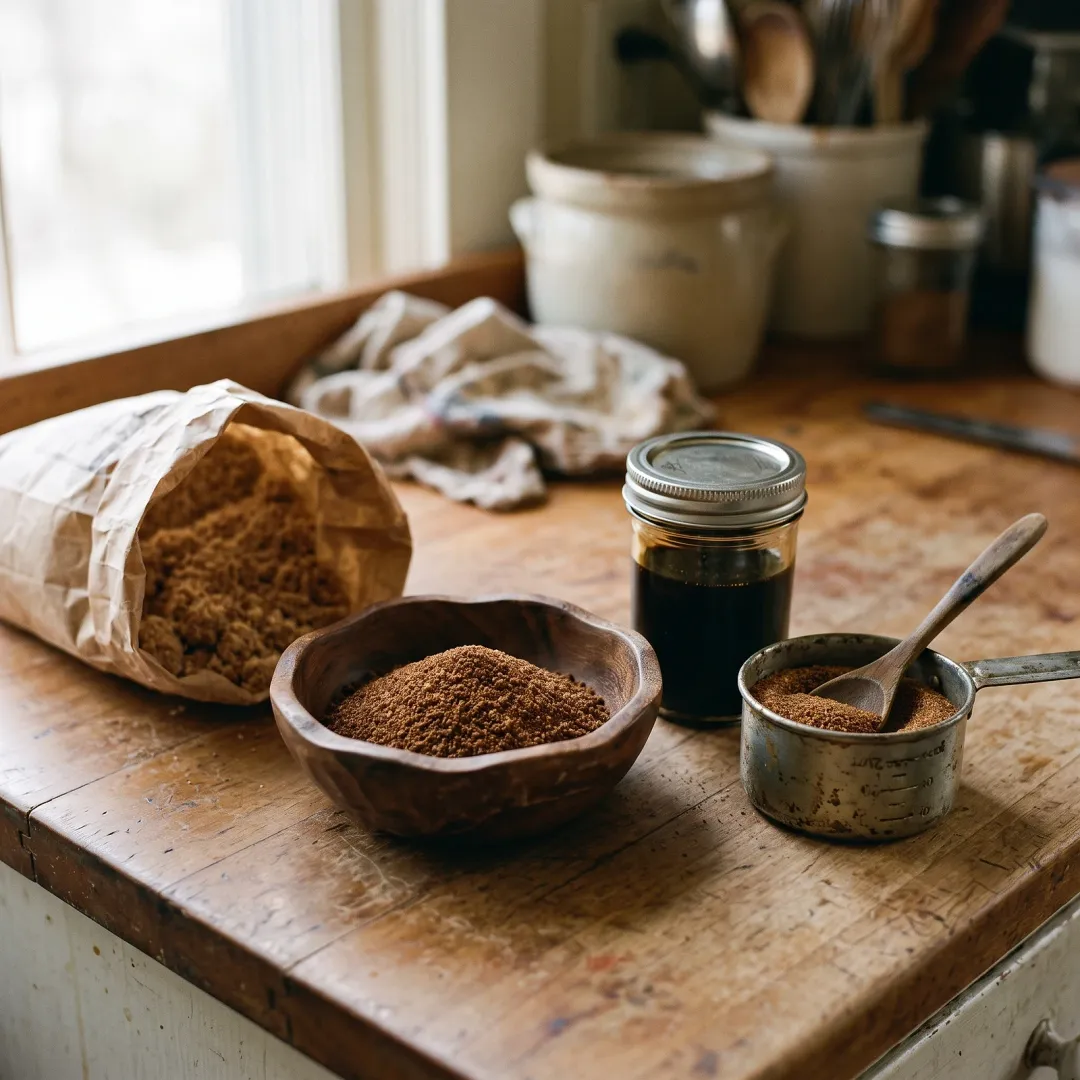

Brown sugar feels wholesome. It's brown, it smells like cookies, it comes in a little burlap bag at some stores. But that color and that caramel smell aren't signs of a whole food. They're signs of a manufacturing trick.
What Brown Sugar Actually Is
Brown sugar is refined white sugar with a small amount of molasses added back in after processing. That's it. Most commercial brown sugar is 95 to 97 percent sucrose, with just enough molasses to change the color and give it that sticky texture. The molasses trace does carry a tiny amount of minerals, mainly potassium and calcium, but at the quantities you'd actually use in a recipe, it's not moving the needle on your nutrition. What you're getting is still a highly refined, fast-digesting sugar that spikes your blood glucose and provides almost nothing else.
The "raw" and "natural" brown sugars you see marketed at health stores are a little different. Turbinado and muscovado are less refined and retain more molasses naturally, which means more mineral content and a more complex flavor. But they're still sugar. Don't let the marketing fool you into thinking they're a health food.
What to Reach for Instead: Coconut Sugar
Coconut sugar is the swap I actually use and recommend most for paleo baking. It's made from the sap of coconut palm blossoms, which is collected, heated, and evaporated into granules. Minimal processing. Nothing added, nothing stripped away.
The glycemic index of coconut sugar is lower than that of regular table sugar, largely because it contains a small amount of inulin, a prebiotic fiber that may help slow glucose absorption. It also holds onto its trace minerals, including iron, zinc, and potassium, in amounts more meaningful than what you get from brown sugar. It's not a free pass. It's still sugar and your body knows it. But as a swap within real-food baking, it's a meaningful upgrade.
For a deeper brown-sugar flavor, the closest match is coconut sugar mixed with a small pour of blackstrap molasses. About a teaspoon of molasses per quarter cup of coconut sugar gets you there. Blackstrap molasses is the byproduct left after sugar cane juice has been boiled down three times, and unlike refined brown sugar, it actually delivers on the mineral promise: iron, calcium, and magnesium in amounts that matter.
Another option worth knowing is medjool date sugar, made from dried, ground dates. It's less refined than coconut sugar, and the fiber content is higher. The downside is that it doesn't dissolve as cleanly, which matters in some recipes.
What Honestly Changes
Coconut sugar swaps 1:1 for brown sugar by volume, which makes it easy. The taste is slightly more complex, a little butterscotch and almost earthy, and most people prefer it once they've tried it. Cookies come out a touch denser. Baked goods brown a little faster, so pull things from the oven a few minutes early the first time.
Cost is real. Coconut sugar runs two to three times the price of brown sugar, sometimes more. If you're baking for a crowd every week, that adds up. Where the swap is absolutely worth it: any recipe where the sugar flavor is front and center, like a paleo cookie, a marinade, or a spice rub on something like a venison backstrap where that molasses-caramel note is part of the profile.
Where it might not be worth it: a sauce or stew where brown sugar is a background note and you're using a tablespoon. In that case, a drizzle of raw honey usually does the job at a lower cost.
Date sugar is worth keeping on hand for energy balls and bars where the fiber helps and the texture of the finished product is already dense. Skip it in anything that needs the sugar to dissolve into a smooth batter.
How to Make the Switch Stick
Buy one bag of coconut sugar and swap it into the next recipe that calls for brown sugar. Don't overhaul your pantry in one run. Just try it once and see what you think.
Keep your coconut sugar in an airtight container because it can clump the same way brown sugar does. A piece of a food-safe terra cotta disc in the container keeps it soft without any tricks.
If you want the DIY version: blend coconut sugar with a small amount of blackstrap molasses for a near-identical flavor to dark brown sugar. This is useful when you want a deeper, richer flavor in a paleo BBQ sauce or a slow-cooked braise.
One note of honesty: none of these are a reason to bake more often. A paleo cookie is still a treat. The goal isn't to replace every brown-sugar recipe with a paleo version and eat dessert every night. The goal is that when you do bake, the ingredients in what you're making are real, whole, and worth it. That's a reasonable bar, and coconut sugar clears it.
This article is for general informational purposes only and is not medical advice. Always consult a qualified healthcare professional before making changes to your diet or health routine.
Key Takeaways
- Brown sugar is refined white sugar with molasses added back in. It is not a whole food regardless of how it is marketed.
- Coconut sugar is the most practical 1:1 paleo swap for brown sugar in baking, with a lower glycemic index and more trace minerals.
- Mixing coconut sugar with a small amount of blackstrap molasses most closely replicates dark brown sugar in flavor.
- Coconut sugar costs more. For background-note uses, raw honey is a lower-cost alternative.
- Date sugar works well in dense, no-bake recipes but does not dissolve cleanly in smooth batters.
- None of these swaps make baked goods a free food. They make the ingredients worth it when you do bake.
Frequently Asked Questions
Can I substitute coconut sugar for brown sugar in equal amounts?
Yes. Coconut sugar swaps 1:1 for brown sugar by volume in most baking recipes. The texture of the finished product will be slightly denser and the color may deepen a little faster in the oven, so check a few minutes early the first time you try it.
Is coconut sugar actually better for you than brown sugar?
It is less refined and contains a small amount of inulin, a prebiotic fiber that may help slow glucose absorption, giving it a lower glycemic index than regular sugar. It also retains trace minerals more meaningfully than brown sugar does. That said, it is still sugar, and it should be used the same way you would treat any sweetener: occasionally and in reasonable amounts.
What is the best paleo substitute for dark brown sugar specifically?
Mix coconut sugar with a small amount of blackstrap molasses, about one teaspoon of molasses per quarter cup of coconut sugar. This closely replicates the deeper, richer flavor of dark brown sugar and works well in marinades, spice rubs, and baked goods where that molasses note is important.
Can I use raw honey instead of brown sugar in paleo baking?
Raw honey works as a substitute for brown sugar in many recipes, but it is a liquid sweetener, so it changes the moisture balance of a baked good. It works better as a swap in sauces, dressings, marinades, and energy balls than in a dry-batter cookie or cake. For recipes where the sugar dissolves into a batter, coconut sugar is the cleaner swap.
Sources
- ScienceDirect: Sugar composition and mineral content of brown sugar
- Healthline: Coconut Sugar: A Healthy Sugar Alternative or Just Hype?
- WebMD: Health Benefits of Blackstrap Molasses
- The Kitchn: How to Keep Brown Sugar Soft
This article is for general informational purposes only and is not medical advice. Always consult a qualified healthcare professional before making changes to your diet or health routine.

Join the conversation
What do you think?
Free members can comment, reply and like. It takes ten seconds.