

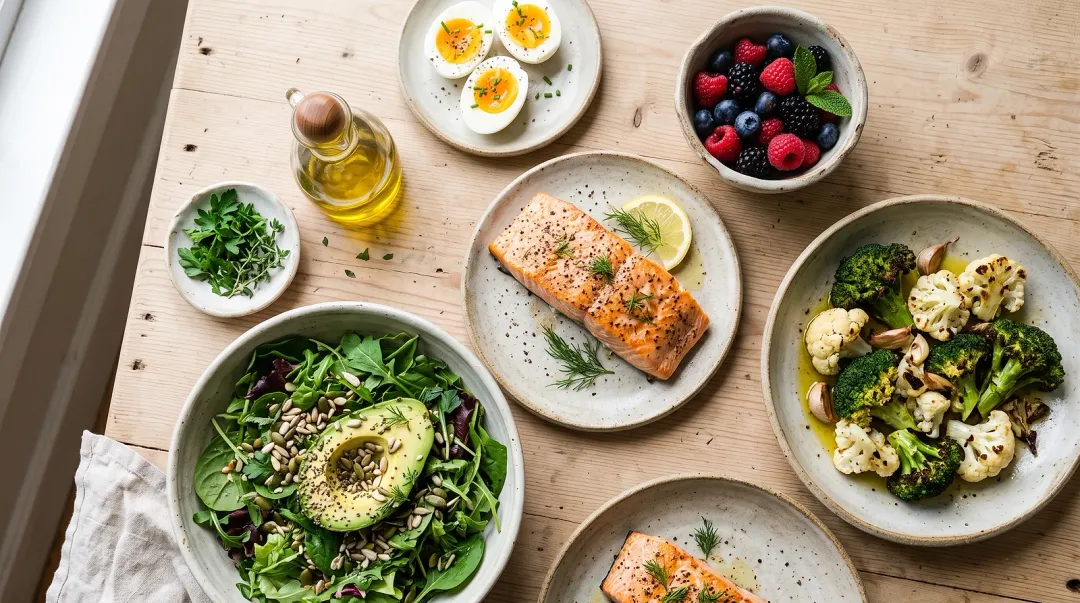

Polycystic ovary syndrome, or PCOS, is one of the most common hormone conditions in women, and one of the most misunderstood. It can affect periods, skin, hair, weight, fertility and long-term metabolic health. Food is not a cure, but it is one of the most useful levers you have, and it does not have to mean a punishing diet. This guide covers what PCOS is, what the evidence says about eating with it, and how we mark PCOS-friendly recipes.
What is PCOS?
PCOS is a set of symptoms related to a hormonal imbalance. Under the widely used Rotterdam criteria, a diagnosis requires two of these three features: signs of high androgen levels (such as excess hair growth or acne, or high levels on a blood test), irregular cycles or ovulation problems, and polycystic ovaries on ultrasound.
Insulin resistance, where the body does not use insulin well, is common in PCOS. That is why PCOS and blood sugar are so closely linked, and why food and movement can make such a difference.
Key facts
- PCOS affects between 10% and 13% of women of reproductive age (2023 international guideline, as summarized in an editorial).
- More than half of women with PCOS develop type 2 diabetes by age 40 (CDC).
- PCOS also raises the risk of gestational diabetes, heart disease, high blood pressure, stroke, sleep apnea and unhealthy cholesterol, especially with excess weight (CDC).
- The 2023 guideline found no evidence that any one type of diet works better than another for PCOS. Any diet consistent with general healthy eating guidelines has health benefits.
- The guideline recommends 150 to 300 minutes of moderate activity, or 75 to 150 minutes of vigorous activity, each week, plus muscle strengthening twice a week.
Symptoms and how it is diagnosed
Common signs include irregular or missed periods, acne, extra hair growth on the face or body, unexplained weight gain and dark patches of skin in body creases. PCOS is also the most common cause of infertility due to lack of ovulation, and many women are not diagnosed until they try to get pregnant (NICHD, CDC).
Diagnosis is based on your history, a physical exam, blood tests and sometimes an ultrasound. If you have PCOS, the CDC recommends asking your provider about testing for diabetes.
How food relates to PCOS
The 2023 guideline is reassuring: there is no single PCOS diet you must follow. What helps is a sustainable pattern of healthy eating and regular activity, and for people at a higher weight, weight management is associated with significant clinical improvements. The guideline notes that healthy lifestyle changes appear to work just as well in PCOS as in everyone else.
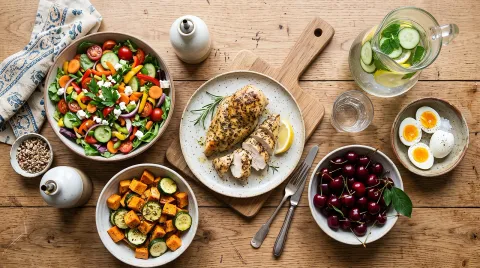
Because insulin resistance is so common, many women find it helpful to build meals that keep blood sugar steady: protein and fiber at every meal, plenty of vegetables, healthy fats, and fewer added sugars and refined starches. Think of it as a way to feel more even through the day, not a strict rulebook.
Foods to build on
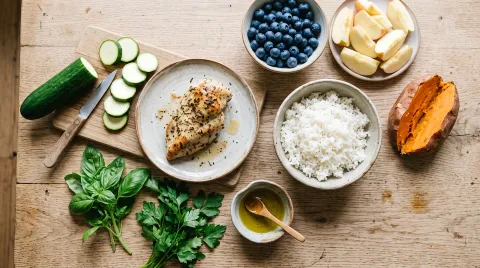
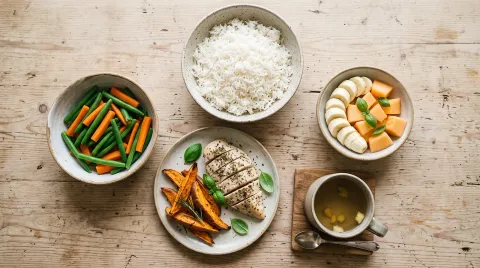
- Protein at every meal: fish, poultry, eggs and lean meats
- Plenty of non-starchy vegetables
- Fiber-rich carbohydrates in sensible portions: sweet potato, squash, berries and other whole fruit
- Healthy fats: olive oil, avocado, nuts and seeds
- Water and unsweetened drinks
Foods to limit
- Added sugars: sugar, honey, maple syrup and syrups
- Sweet drinks, including soda, juice, sweetened coffee drinks and kombucha with added sugar
- Refined starches: white bread, pasta, white rice and baked goods made from refined flour
- Highly processed snacks and fried foods
- Alcohol
Label reading and eating out
- Check "Added Sugars" on the label, especially on yogurts, granolas, sauces and "healthy" bars.
- Pair carbohydrates with protein when eating out: add chicken or eggs to a salad, or choose a protein-forward main with extra vegetables.
- Do not skip meals and then overeat later. Regular, balanced meals help energy and cravings.
- Move in ways you enjoy. The guideline's activity targets matter as much as what is on your plate.
How we label recipes on That Paleo Chick
A recipe earns our PCOS-Friendly label only when, per serving, it has at most 35 grams of carbohydrate and 10 grams of sugar and at least 20 grams of protein, with no added sweeteners, refined starches, alcohol or seed oils. That is our own steady-energy standard, built around blood sugar, rather than an official PCOS diet, since the 2023 guideline does not favor any single diet.
FAQs
Is there a best diet for PCOS?
The 2023 international guideline found no evidence that any one type of diet is better than another. A healthy pattern you can keep up is what counts.
Do I need to cut out carbs?
No. Many women feel better choosing fiber-rich carbohydrates and pairing them with protein, but the guideline does not require any particular carbohydrate level.
Can PCOS lead to diabetes?
The risk is higher. The CDC reports that more than half of women with PCOS develop type 2 diabetes by age 40, so regular testing and healthy habits matter.
Does losing weight help?
For women at a higher weight, weight management is associated with significant clinical improvements. It is not required for everyone, and healthy habits help at any size.
This guide is for general education and is not medical advice. Please work with your doctor or a registered dietitian on diagnosis, testing and a plan that fits you.

Join the conversation
What do you think?
Free members can comment, reply and like. It takes ten seconds.