

On this page
Chronic inflammation doesn't send you a warning letter. It just quietly degrades everything, your joints, your energy, your ability to think straight, your mood, until one day you're staring at a doctor's report full of elevated markers and wondering how you got here. I've been there. And the first real tool I give every single client who sits across from me isn't a supplement protocol or a lab order. It's a plate. A specific, intentional, built-on-purpose plate. Because food is where inflammation either starts or stops, three times a day, every day. This is the exact framework I walk clients through.
Why a Protocol Instead of a Food List
Most people searching 'anti-inflammatory foods' end up with a list they pin to the fridge and then ignore. And I get it. A list doesn't tell you what to do at 6 PM on a Tuesday when you're tired and there's leftover ground beef in the fridge. A protocol does.
The framework I use has a specific order for a reason. Each step builds on the one before it. You're not just swapping ingredients, you're restructuring what your body gets, in what proportion, and in what combination. That combination is what drives the downstream effect on inflammatory markers.
Research out of Harvard's T.H. Chan School of Public Health has consistently linked dietary pattern, not single superfoods, to systemic inflammation. The overall structure of your plate matters more than whether you remembered to sprinkle turmeric on something. That's the whole premise here.
This disclaimer applies to everything I share: This article is for general informational purposes only and is not medical advice. Always consult a qualified healthcare professional before making changes to your diet or health routine.
Step 1: Anchor the Plate with Quality Protein
Before anything else touches the plate, I want protein there. Not as an afterthought, not as a side. As the anchor.
Here's why this matters in an anti-inflammatory context: protein provides the amino acids your body uses to repair tissue, build immune cells, and produce antioxidants like glutathione. Without adequate protein, the repair process stalls. And a body that can't repair is a body stuck in a low-grade inflammatory loop.
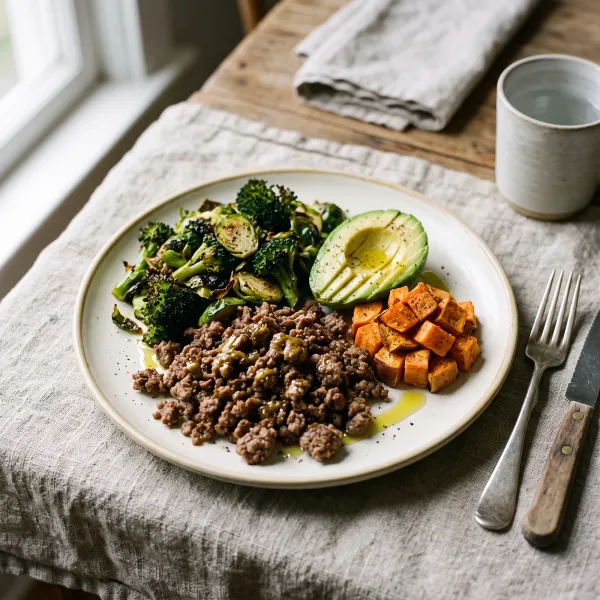
For most of my clients, I'm aiming for a palm-sized portion, roughly 4 to 6 ounces, of a quality animal protein. Grass-fed ground beef is my go-to example because it's affordable, fast, and it actually contains conjugated linoleic acid (CLA) and a better omega-6 to omega-3 ratio than conventional grain-fed beef, which matters for inflammation signaling.
Other solid anchors: pasture-raised eggs, pastured chicken thighs, lamb, wild-caught sardines if you're doing fish. Beef liver if you're adventurous and haven't already read my piece on that.
What I'm NOT doing at this step: reaching for a low-fat protein bar, a scoop of pea protein in a smoothie, or a tiny portion of chicken breast because someone told you protein is hard on your kidneys. That myth applies to people with already-diagnosed kidney disease, not healthy adults. Don't let it shrink your plate.
Practical note: cook once, eat twice. Brown two pounds of grass-fed beef on Sunday. It makes every weekday plate faster and gives you zero excuse not to anchor it right.
Step 2: Load Half the Plate with Non-Starchy Vegetables
Once the protein anchor is set, I want half the plate covered in non-starchy vegetables. Not a side salad. Half the plate.
This is where the anti-inflammatory firepower lives: polyphenols, flavonoids, carotenoids, and fiber that feeds the microbes producing short-chain fatty acids, which help regulate inflammatory pathways. The PREDIMED study, one of the largest dietary intervention trials ever done, found that a high-vegetable, whole-food eating pattern was linked to significantly reduced markers of cardiovascular inflammation compared to a low-fat control diet. Vegetables were a cornerstone of that pattern.
My client favorites that actually make it onto weeknight plates (not just aspirational Pinterest boards):
- Roasted broccoli or cauliflower, high in sulforaphane, which has been studied for its role in activating the body's own antioxidant pathways
- Dark leafy greens, spinach, arugula, kale, Swiss chard, tossed in olive oil and eaten warm or raw
- Shaved Brussels sprouts, sautéed with garlic, they taste nothing like the boiled Brussels of your childhood trauma
- Zucchini, asparagus, green beans, fast, friendly, and easy to batch-roast alongside protein
- Beets, yes, these are slightly starchy but they're also rich in betalains, compounds with notable anti-inflammatory properties
Color is your cheat code. The more colors on that half of the plate, the broader the polyphenol range. I tell clients: if your plate is one color, you missed something.
What I'm steering away from here: corn, white potatoes in large amounts, and anything battered or in a cream sauce. This isn't about perfection, it's about deliberate proportion.
Step 3: Choose a Low-Glycemic Carbohydrate (Optional but Strategic)
I put 'optional' in that heading and I mean it. Not every plate needs a starch. But for clients who are active, who have a long day ahead, who are nursing or pregnant, or who just need more food, this step adds a strategic, low-glycemic carbohydrate that works with the plate instead of spiking the post-meal inflammatory response.
Blood sugar swings are themselves pro-inflammatory. A 2020 paper in Frontiers in Immunology outlined the mechanisms by which postprandial (after-meal) glucose spikes activate NF-kB, a master inflammatory signaling pathway. So the goal isn't just 'eat carbs that are healthy', it's 'eat carbs that don't torch your blood sugar 45 minutes after dinner.'
Good options at this step:
- Sweet potato (about a half-cup serving, roasted)
- Butternut squash
- Plantains (green or lightly ripe)
- Cassava-based dishes in modest portions
- White rice, yes, I said it. White rice is not the devil. It's low in anti-nutrients, easy to digest, and when eaten with protein and fat, the glycemic impact is blunted significantly
What I'm skipping: bread, pasta, crackers, 'healthy whole grain' anything. Not because grains are inherently evil in every body, but because for clients dealing with active inflammation, they're often reactive foods that muddy the water. We eliminate, let the body settle, then test. That's the functional-medicine way.
Portioning note: this is a quarter of the plate, max. Protein and vegetables are doing the heavy lifting. The carbohydrate is a supporting role.
Step 4: Finish with Anti-Inflammatory Fat
The last step is fat, and I want to be clear: I'm not drizzling fat on as an afterthought. I'm choosing it deliberately, because the type of fat on your plate is one of the most direct levers you have over inflammatory signaling.
The ratio of omega-6 to omega-3 fatty acids in the modern diet is estimated at somewhere between 15:1 and 20:1, where ancestral diets likely ran closer to 4:1 or less. That skew drives the production of pro-inflammatory prostaglandins and cytokines. You cannot out-supplement a fat ratio that's wrecked by your cooking oil and salad dressing.
So here's what finishing the plate with fat looks like in practice:
- Extra-virgin olive oil, drizzled over the finished plate, not used for high-heat cooking. The polyphenols in quality EVOO are heat-sensitive.
- Avocado or avocado slices, half an avocado on a plate is one of the easiest wins in real food
- Grass-fed butter or ghee, used in cooking the protein or vegetables, adds fat-soluble vitamin transport (vitamins A, D, E, K all need fat to absorb)
- Full-fat coconut milk, in sauces, soups, curries built around the plate
- Olives, a handful eaten alongside the plate counts
What I'm removing: refined seed oils. Canola, soybean, corn, sunflower, safflower, vegetable oil blends. These are the primary source of the excess omega-6 linoleic acid driving that ratio into the danger zone. They're in restaurant food, in most store-bought dressings, in almost every packaged product. This single swap, getting seed oils out and real fats in, is one of the highest-leverage moves a client can make.
If there's beef on the plate and it was cooked in grass-fed ghee and finished with EVOO, you're already winning the fat game without needing a single supplement.
What to Expect: Week by Week
This is the part nobody puts in the food list articles, and it's the part my clients actually need. Because eating this way for three days and then declaring it 'doesn't work' is one of the most common things I see. Inflammation didn't build overnight. It's not leaving overnight either.
Week 1: Don't expect to feel amazing. Expect to feel different, maybe a little off, maybe some digestive shifting, maybe a headache if you're cutting sugar or processed carbohydrates at the same time. Some clients feel genuinely great by day four or five. Others need longer. Both are normal. This week is just about building the habit of building the plate.
Weeks 2 to 3: This is usually when I start hearing things like 'my afternoon crash isn't as bad' or 'I woke up without that stiff feeling in my hands.' Joint stiffness and post-meal energy crashes are often among the first things to shift, because you're stabilizing blood sugar and reducing the post-meal inflammatory response at the same time.
Week 4 and beyond: Skin changes, clearer thinking, more even energy through the day, less reactive mood. Some clients notice their clothes fit differently without the scale moving much, that's inflammation reduction, not fat loss per se. The puffiness that chronic inflammation carries around starts to ease.
If you have access to labs, C-reactive protein (CRP) and homocysteine are the markers I'd watch. Many functional-medicine practitioners and even standard PCPs will order these. They're not perfect inflammation proxies, but they're accessible and they trend in response to dietary changes over 8 to 12 weeks.
And listen, if you've been eating a standard American diet for 20 years, four weeks of anti-inflammatory plates is the beginning of the story, not the whole thing. I'm not promising a cure. I'm telling you this is the direction your body was designed to move in, and every single plate in that direction counts.
The One Thing That Derails This Protocol (And How to Catch It)
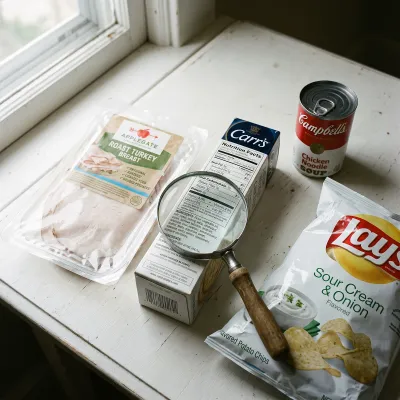
The most common place I see this protocol fall apart isn't at dinner. It's at lunch. Clients build a beautiful breakfast, feel great, and then at noon they're standing in a break room eating a granola bar and a bag of chips because 'there wasn't time.'
So the real coaching here is this: the protocol only works if you apply it to all three meals, not just the ones you had time to plan. That means batch-cooking matters. That means having leftover grass-fed beef in the fridge on Tuesday matters. That means a handful of olives and some sliced avocado matters more than waiting for the 'perfect' paleo lunch.
Perfect is the enemy of anti-inflammatory. A plate that's 80% there, eaten consistently, will do more than a perfect plate eaten twice a week.
I'd also gently push back on the idea that this protocol is expensive. Grass-fed ground beef is widely available and often cheaper per serving than processed lunch meat. Frozen vegetables are nutritionally comparable to fresh and a fraction of the cost. Eggs from pasture-raised hens are a few dollars more a dozen than conventional. This isn't a wealthy person's diet. It's a prioritization choice, and I say that with full respect for real budget constraints, because I've been budget-constrained too.
You build the plate you can build today. And then tomorrow you build a slightly better one.
Key Takeaways
- Build every anti-inflammatory plate in order: quality protein anchor first, half the plate with non-starchy vegetables second, optional low-glycemic carbohydrate third, anti-inflammatory fat to finish.
- Dietary pattern, the full plate structure, matters more than any single superfood or supplement.
- The omega-6 to omega-3 ratio in your cooking and finishing fats is one of the most direct levers you have over inflammatory signaling. Get seed oils out; get real fats in.
- Expect week 1 to feel like adjustment, weeks 2 to 3 to bring early wins in energy and joint comfort, and week 4 onward for deeper shifts. Inflammation didn't build overnight.
- Consistency across all three meals matters more than perfection at any one meal. Batch-cook, keep real food accessible, and build the best plate you can build today.
Frequently Asked Questions
What does an anti-inflammatory plate look like?
An anti-inflammatory plate is built in four steps: a quality protein anchor (like grass-fed beef or pasture-raised eggs), non-starchy vegetables covering about half the plate (as many colors as possible), an optional low-glycemic carbohydrate in a modest portion (like sweet potato or white rice), and an anti-inflammatory fat to finish (extra-virgin olive oil, avocado, or ghee). The overall pattern matters more than any single ingredient.
How long does it take to see results from an anti-inflammatory diet?
Most clients notice early shifts in energy and joint stiffness within two to three weeks of eating consistently anti-inflammatory. Deeper changes, clearer skin, more stable mood, less bloating, often show up by week four and beyond. Inflammatory markers like C-reactive protein (CRP) typically trend downward over eight to twelve weeks when tracked with labs.
What fats are anti-inflammatory?
Extra-virgin olive oil, avocado, grass-fed butter, ghee, and full-fat coconut milk are the fats I recommend in an anti-inflammatory plate protocol. The goal is improving the omega-6 to omega-3 ratio, which means removing refined seed oils (canola, soybean, corn, sunflower) and replacing them with whole-food fats that support, rather than drive, inflammatory signaling.
Can I eat carbs on an anti-inflammatory diet?
Yes, strategically. The key is choosing low-glycemic carbohydrates in modest portions, because blood sugar spikes after meals can activate inflammatory pathways in the body. Good options include sweet potato, butternut squash, plantains, and white rice eaten alongside protein and fat, which blunts the glycemic impact. Refined grains, bread, and crackers are the carbohydrates most worth avoiding when inflammation is active.
Sources
- Harvard T.H. Chan School of Public Health: Anti-Inflammatory Diet
- PubMed / British Journal of Nutrition: Fatty acid composition of grass-fed and grain-fed beef and the effect on omega-3 and CLA content
- New England Journal of Medicine: Primary Prevention of Cardiovascular Disease with a Mediterranean Diet (PREDIMED)
- Frontiers in Immunology: Hyperglycemia and Inflammation: The NF-kB Connection
- PubMed / Biomedicine & Pharmacotherapy: The importance of the omega-6/omega-3 fatty acid ratio in cardiovascular disease and other chronic diseases
This article is for general informational purposes only and is not medical advice. Always consult a qualified healthcare professional before making changes to your diet or health routine.