

On this page
The package says "no artificial colors, no artificial flavors" and you feel pretty good about that. You put it in the cart. But there, buried in the ingredient list in a font designed to be ignored, are five or six chemical names that the FDA has classified as GRAS, Generally Recognized As Safe. A new study suggests some of those names deserve a much harder look.
What the Study Actually Found
A large observational study published in late 2025 identified eight common food preservatives associated with elevated rates of high blood pressure and cardiovascular disease. Participants with the heaviest consumption of these compounds had substantially higher rates of hypertension and heart disease than those with low exposure.
I want to be fair about what this study is and is not. The researchers themselves said it clearly: this is an observational study. It cannot prove the preservatives caused the cardiovascular outcomes. There are confounders. People who eat a lot of heavily preserved food are also often eating more ultra-processed food overall, moving less, and sleeping worse. The study can't untangle all of that perfectly.
But here is where I push back on the "it's just observational" dismissal that will come from the food industry's corner: we have mountains of observational data on cigarettes too, long before the mechanistic studies caught up. And the GRAS designation these additives hide behind was never meant to be a permanent green light. It was meant to be a starting point.
The researchers were not cranks. They were looking at a real signal in a large dataset, and that signal is: heavy intake of certain preservatives tracks with worse cardiovascular outcomes. That is worth paying attention to.
The Claim vs. The Receipt
The Claim: Food preservatives approved in the United States are safe. The FDA's GRAS process ensures that additives used in our food supply have been evaluated and found to present no harm.
The Receipt: The GRAS system is one of the most industry-captured corners of food regulation in existence. Under GRAS, a company can determine that its own additive is "generally recognized as safe" without any mandatory FDA review or notification. You read that right. A food company can self-certify that its additive is safe, and the FDA does not have to know about it. The Government Accountability Office flagged this gap back in 2010, noting that the FDA has no way to even know how many substances are in the food supply under GRAS claims.
So when the label says "approved additives" or the PR statement says "all ingredients meet FDA safety standards," understand what that sentence actually means. It may mean the company decided its ingredient was safe. Full stop.
The Claim: A little preservative in food isn't a big deal. The doses are tiny.
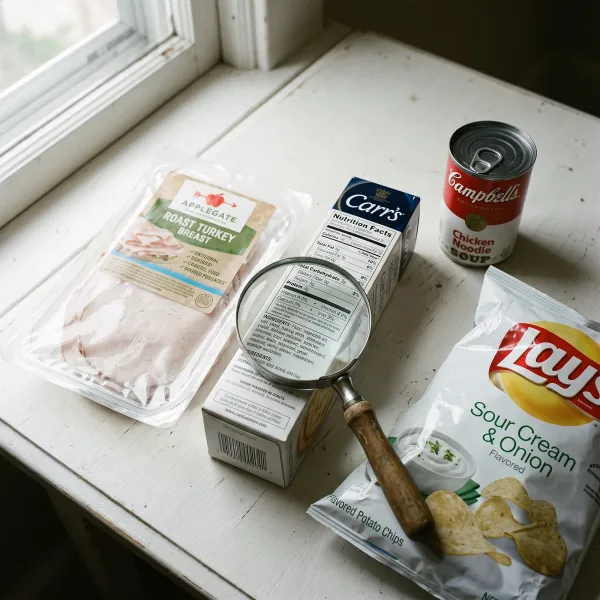
The Receipt: The new research on these eight preservatives is a problem for the "tiny dose" argument because the highest-risk group in the study was the one with the heaviest cumulative consumption. Dose matters. And if you are eating packaged deli meat, canned soup, shelf-stable bread, flavored crackers, and a frozen entree in the same day, you are not getting a tiny dose of anything. You are stacking exposure after exposure, every single day, and most Americans are doing exactly that. The CDC's National Center for Health Statistics data consistently shows that ultra-processed foods make up more than half of the average American's caloric intake. Half. That is not a tiny-dose situation.
Which Preservatives Are We Talking About?
The study identified a group of eight commonly used preservatives flagged in this analysis. These types of compounds appear across several well-known preservative categories that show up regularly on food labels:
Nitrates and nitrites (sodium nitrate, sodium nitrite) are used in cured and processed meats. They extend shelf life and fix that pink color in deli meats, hot dogs, and bacon. When nitrites interact with protein in high heat or in the stomach's acidic environment, they can form nitrosamines, compounds that have raised cancer and cardiovascular concerns in research for decades. Some food-grade sources of nitrate (like beets and leafy greens) behave differently in the body because they come packaged with antioxidants. The synthetic version in a package of bologna is a different conversation.
Sulfites (sodium sulfite, potassium bisulfite, sulfur dioxide) show up in dried fruit, wine, some vinegars, and packaged potato products. If you've ever eaten a handful of conventional dried apricots and felt off afterward, sulfites may be why.
Benzoates (sodium benzoate) are preservatives in acidic foods like salad dressings, juices, and pickled products. Sodium benzoate has been studied in combination with artificial food dyes and linked to behavioral effects in children in research that prompted UK food authorities to act even while the FDA held firm on no mandatory action.
BHA and BHT (butylated hydroxyanisole, butylated hydroxytoluene) are antioxidant preservatives used to prevent fats from going rancid, found in cereals, chips, and chewing gum. The National Toxicology Program has listed BHA as "reasonably anticipated to be a human carcinogen" in its Report on Carcinogens. It is still in your grocery store right now.
I am not listing these to panic you. I'm listing them so you can read a label and know what you're actually looking at.
What the Food Industry Will Say (And Why It Doesn't Hold Up)
The response from the processed food side will be predictable. They will say the study is observational and cannot show causation. They will say amounts used in food are far below any level of concern established by regulatory bodies. They will say removing preservatives would lead to more foodborne illness and food waste.
Some of that is partially true. The observational limitation is real, I already said that. And yes, some preservatives do prevent spoilage and genuine pathogen risk.
But here is what they won't say: there are countries that have restricted or banned several of these same compounds in specific food applications because their regulatory agencies took a more cautious approach. The UK's Food Standards Agency moved on sodium benzoate and dyes. The European Food Safety Authority has tighter restrictions on BHA. The argument that these preservatives are universally necessary, with no viable alternatives, is an industry argument, not a scientific one.
They also won't say that the entire ultra-processed food model, which relies on these additives to create shelf-stable products that can sit in a warehouse for 18 months, is itself the problem. Preservatives are not incidental to ultra-processed food. They are the point. You cannot have one without the other.
And they absolutely will not tell you that the lobbying budget protecting these ingredients from tighter scrutiny dwarfs any public health research budget aimed at studying them.
The Real-Food Translation
This is the part where I stop being fired up and start being practical, because being angry without giving you something to do is just venting.
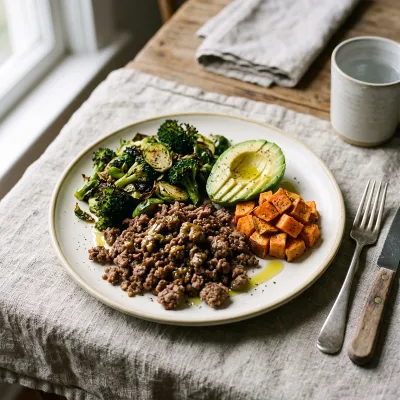
The simplest way to reduce your exposure to food preservatives is the same advice I give for every processed food concern: stop buying shelf-stable food products that require a chemistry set to stay edible. That's it. That is the core strategy.
For protein, this means skipping conventional deli meat almost entirely. Nitrate-free options exist (look for "uncured" and no added nitrates, though be aware that some of these still use celery powder which contains naturally occurring nitrates), or you cook your own. A whole duck leg braised on Sunday gives you real food you can slice cold all week with zero sodium nitrite in sight. It takes maybe 20 minutes of active time. That is not a sacrifice. That is just cooking.
For packaged snacks, the swap is shorter ingredient lists. The five-ingredient almond flour cracker beats the 22-ingredient "whole grain" cracker every time, not because almond flour is magic but because fewer ingredients means fewer preservatives.
For canned and jarred goods, look for options preserved only with salt, vinegar, or citric acid from a real citrus source, and check that the can itself is BPA-free while you are at it.
Frozen vegetables with no sauce packet are clean. It's the sauce packets and the seasoned frozen entrees where the additives pile up.
None of this is about being perfect. It is about moving your daily baseline closer to actual food and farther from a chemistry experiment. Every meal you cook from whole ingredients is a meal where those eight preservatives are not stacking up in your body.
Why This Matters More Than the FDA Is Letting On
Cardiovascular disease is the leading cause of death in the United States. Not a distant second. Number one, year after year. And we keep looking for answers inside a medical system that wants to prescribe a pill for the blood pressure and another pill for the cholesterol without ever seriously asking what people are eating every single day.
When a study points a finger at the preservatives inside the ultra-processed foods that make up more than half of the average American's diet, the appropriate response from public health agencies should be urgency. More research, faster. Tighter provisional standards while we wait for clearer evidence. Label transparency at minimum.
Instead, we get GRAS. We get self-certification. We get the same "approved and safe" talking points that have been covering for these ingredients for decades.
I believe our bodies were designed to run on real food. Not because it is trendy, but because I have seen what happens when people actually make the switch, and I have lived some version of it myself. The complexity of a real whole food, the fiber, the antioxidants, the cofactors, is exactly what industrial preservation is trying to strip out and fake back in. It doesn't work. The new research on preservatives and cardiovascular risk is just one more piece of a very large, very consistent picture.
Read your labels. Cook your food. Trust the science that follows the evidence, even when the industry doesn't like where it points.
This article is for general informational purposes only and is not medical advice. Always consult a qualified healthcare professional before making changes to your diet or health routine.
Key Takeaways
- A large observational study identified eight common food preservatives associated with significantly higher rates of high blood pressure and cardiovascular disease in heavy consumers.
- The study is observational and cannot prove direct causation, but the signal is consistent with broader research on ultra-processed food and cardiovascular risk.
- The FDA's GRAS system allows food companies to self-certify additive safety without mandatory FDA review, a structural gap flagged by the Government Accountability Office.
- BHA, listed by the National Toxicology Program as a probable human carcinogen, is still widely used in U.S. grocery products.
- The most effective strategy for reducing preservative exposure is shifting from packaged shelf-stable food to whole, home-cooked food with short, recognizable ingredient lists.
- Countries including the UK have already taken regulatory action on some of these same additives; the argument that they are necessary and safe is an industry position, not a scientific consensus.
Frequently Asked Questions
What food preservatives are linked to high blood pressure?
A recent large observational study flagged eight common preservatives associated with elevated blood pressure and cardiovascular disease in heavy consumers. These fall into categories that include nitrates and nitrites (found in cured meats), sulfites (in dried fruit and wine), benzoates (in acidic packaged foods), and BHA and BHT (in chips, cereals, and packaged snacks). The study is observational and cannot prove direct causation, but the signal is consistent with broader research on ultra-processed food and heart health.
Is BHA in food actually dangerous?
BHA (butylated hydroxyanisole) is listed by the U.S. National Toxicology Program as 'reasonably anticipated to be a human carcinogen' in its Report on Carcinogens. It remains legal and widely used in U.S. food products. The FDA classifies it as GRAS (Generally Recognized as Safe) at current use levels, but critics note that the GRAS system allows companies to self-certify additive safety without mandatory FDA review, which limits independent oversight.
What does GRAS mean on a food label?
GRAS stands for Generally Recognized as Safe, an FDA designation for food additives. What most people don't realize is that under current rules, food companies can sometimes determine their own ingredient qualifies as GRAS without mandatory notification to or review by the FDA. The Government Accountability Office identified this as a significant oversight gap in 2010, noting the FDA cannot always know how many substances are in the food supply under GRAS claims.
How do I avoid food preservatives on a real-food diet?
The most effective strategy is shifting away from shelf-stable ultra-processed packaged food and toward whole foods with short, recognizable ingredient lists. Practically: skip conventional deli meat and cook your own protein instead, choose packaged items with five ingredients or fewer, opt for plain frozen vegetables without sauce packets, and look for canned or jarred goods preserved only with salt or vinegar. You don't need to be perfect, reducing your daily baseline exposure is what adds up over time.
Sources
- ScienceDaily: 8 common food additives linked to high blood pressure and heart disease
- U.S. Government Accountability Office: Food Safety: FDA Should Strengthen Its Oversight of Food Ingredients Determined to Be Generally Recognized as Safe (GRAS)
- CDC National Center for Health Statistics: Calories from Ultra-Processed Foods Among U.S. Adults
- UK Food Standards Agency: Colors and hyperactivity in children: information for consumers
- National Toxicology Program (NIH): Report on Carcinogens: Butylated Hydroxyanisole (BHA)
This article is for general informational purposes only and is not medical advice. Always consult a qualified healthcare professional before making changes to your diet or health routine.