


A gout flare is hard to forget. The pain often arrives suddenly, frequently at night, and a single joint, very often the big toe, becomes swollen, red, hot and too tender to touch. Medication is the backbone of treatment, but what you eat and drink plays a supporting role. This guide explains how gout works and how to build a lower-purine plate that is still full of flavor.
What is gout?
Gout is a type of inflammatory arthritis. It happens when extra uric acid, a normal waste product, builds up in the body and forms sharp crystals in a joint. Flares usually last a week or two. The NIAMS describes gout as one of the most controllable forms of arthritis with early diagnosis, treatment and lifestyle changes.
Uric acid is made when the body breaks down purines, compounds found in our own cells and in many foods. Some foods and drinks raise uric acid more than others, which is where diet comes in.
Key facts
- Gout affected about 3.9% of US adults, an estimated 9.2 million people, in 2015 to 2016: 5.2% of men and 2.7% of women (Chen-Xu and colleagues, 2019).
- Gout is more common in men and in people with a family history. Heart failure, high blood pressure, diabetes and kidney problems raise the risk (CDC).
- Women rarely develop gout before menopause (NIAMS).
- The American College of Rheumatology's 2020 guideline addresses alcohol, purines and high-fructose corn syrup, while noting only limited evidence that restricting them lowers uric acid, and that vitamin C supplements are not effective (American Family Physician summary).
- Weight loss reduces gout flare-ups (same summary).
Symptoms and how it is diagnosed
Gout flares bring sudden, intense joint pain with swelling, redness and heat, often starting at night and often in the big toe. Other joints can be affected too.
Your doctor may test fluid from the joint for uric acid crystals, check blood uric acid levels or use imaging. If you think you are having a flare, especially for the first time or with a fever, see a doctor, since a hot swollen joint can also mean infection.
How food relates to gout
The CDC lists alcohol, especially beer, sugary foods and drinks, red meat and certain seafood such as sardines and tuna among the things that raise uric acid. Organ meats are among the richest purine sources. The NIAMS also advises limiting sugar-sweetened drinks like soda, and the ACR guideline addresses high-fructose corn syrup alongside alcohol and purines.
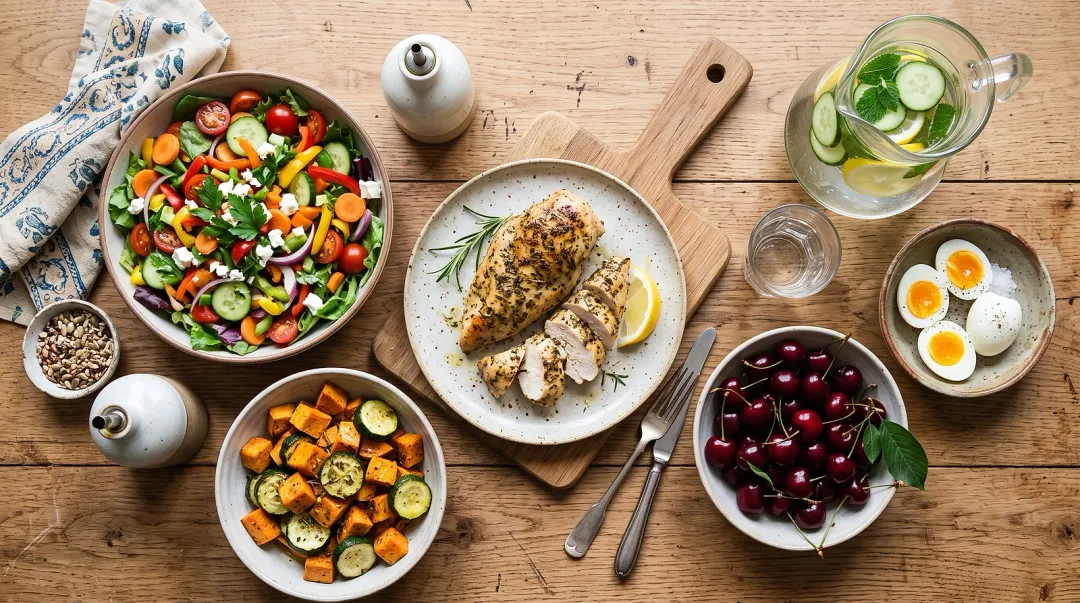
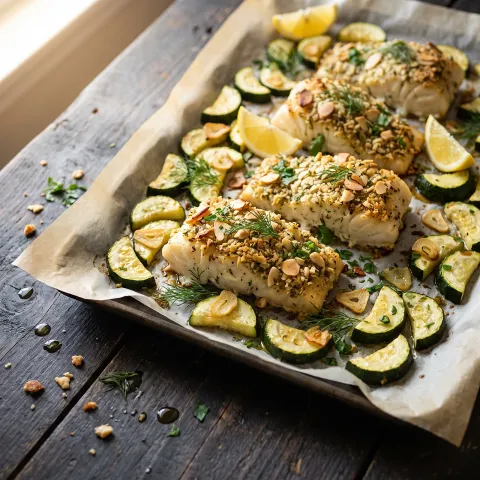
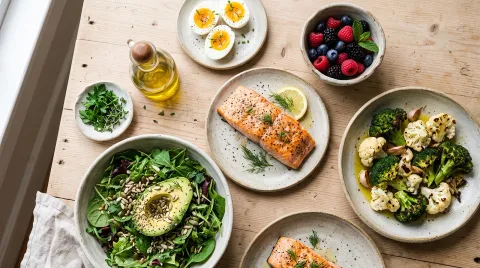
Two encouraging points. First, you do not need to eat a bland diet. Poultry, eggs, vegetables, fruit, nuts and healthy fats all fit. Second, the benefit of diet is real but modest, so be kind to yourself. The ACR summary notes that the risk of patients feeling blamed for their gout can outweigh the small benefit of strict diets. The goal is steady habits alongside the treatment your doctor recommends.
Staying well hydrated helps, and the NIAMS recommends drinking more water. Regular movement helps too: the CDC suggests 150 minutes of moderate activity a week.
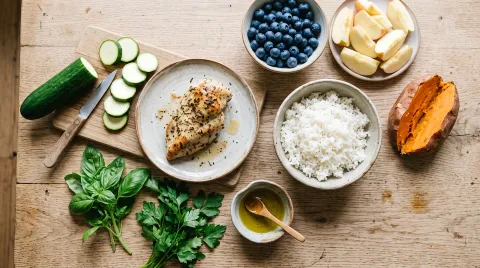
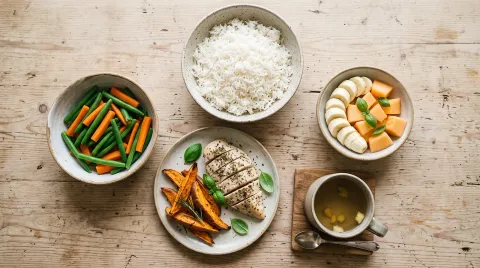
Foods to build on
- Chicken and turkey in moderate portions
- Eggs
- Vegetables of all kinds
- Fresh fruit, including cherries
- Nuts, seeds and olive oil
- Sweet potatoes, squash and other starchy vegetables
- Plenty of water
Foods and drinks to limit
- Organ meats: liver, kidney, heart and sweetbreads
- Red meat: beef, pork, lamb and game such as venison
- Higher-purine seafood: anchovies, sardines, mackerel, herring, tuna, trout, mussels, scallops and other shellfish
- Rich meat broths, stocks and gravies
- Yeast extracts and nutritional yeast
- Beer and other alcohol
- Sugary drinks, juice and foods sweetened with high-fructose corn syrup or lots of sugar
Label reading and eating out
- Scan for high-fructose corn syrup in sauces, dressings, sodas and snack foods.
- Swap the beer for sparkling water with citrus or a non-alcoholic option.
- At restaurants, choose chicken, eggs or a big salad over steak, shellfish platters or anything in a rich gravy.
- Keep portions of any meat moderate and fill the rest of the plate with vegetables.
How we label recipes on That Paleo Chick
A recipe earns our Low-Purine label only when no ingredient line contains red meat, game, organ meat, higher-purine fish or shellfish, broth or stock, gravy, yeast, alcohol or an added sweetener. Poultry is allowed, so think of portion size as your own dial.
FAQs
Can diet alone treat gout?
Usually not. Diet supports treatment, but medication that lowers uric acid is the main tool for preventing flares. Talk to your doctor about what is right for you.
Which foods matter most?
The CDC and NIAMS point to red meat, organ meats, certain seafood, alcohol, especially beer, and sugary foods and drinks as the main dietary contributors.
Is fruit okay with all its sugar?
Whole fruit fits most gout-friendly diets. The guidance focuses on sugary drinks and foods sweetened with high-fructose corn syrup.
Does drinking water help?
Yes. The NIAMS recommends increasing water intake as part of managing gout.
This guide is for general education and is not medical advice. Please work with your doctor on diagnosis, medication and diet, and get prompt care for a hot, swollen joint with fever.



Join the conversation
What do you think?
Free members can comment, reply and like. It takes ten seconds.