

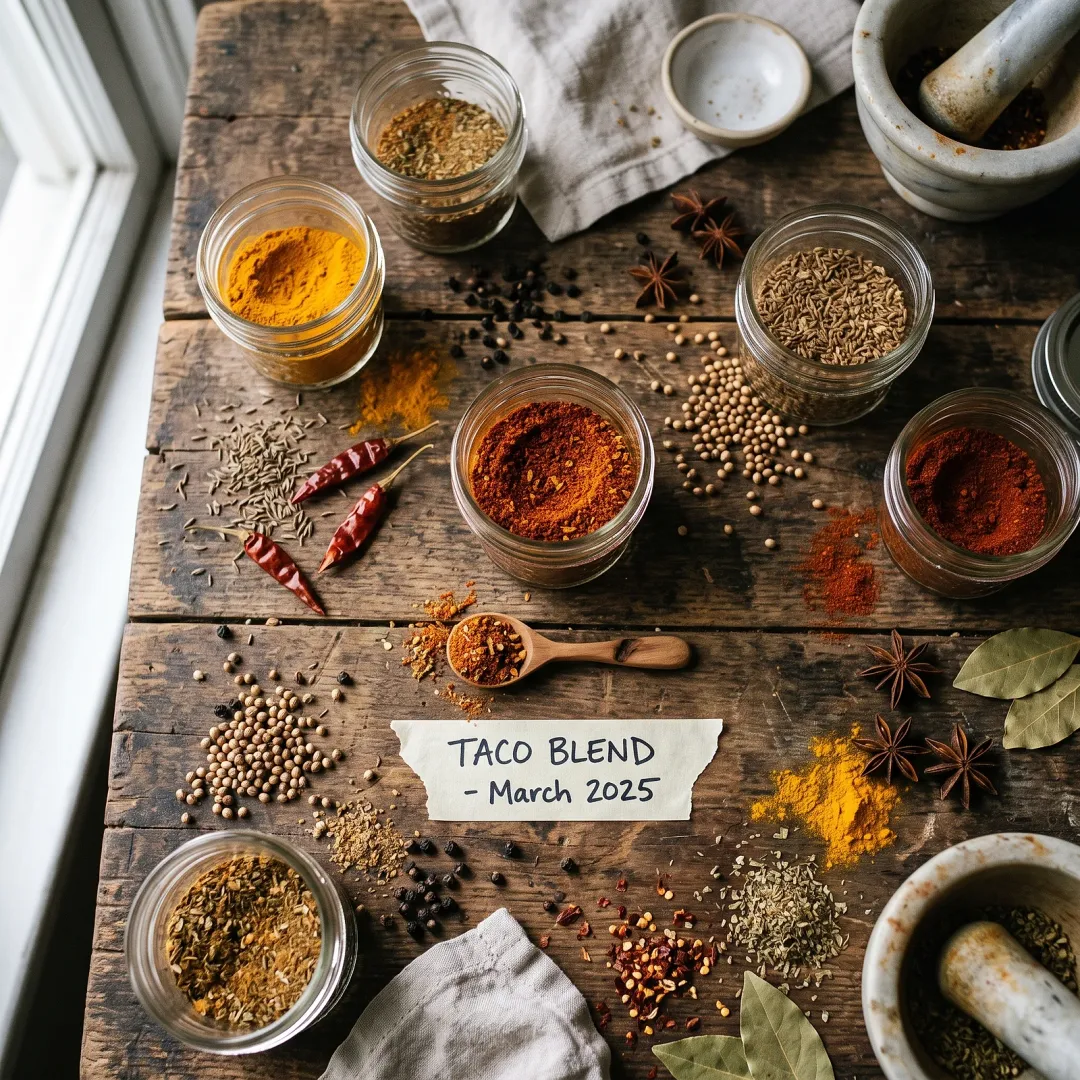

Pick up almost any store-bought taco seasoning or "Italian blend" and flip it over. You will find spices, sure. You will also find maltodextrin, silicon dioxide, tricalcium phosphate, and something called "natural flavors" that could mean anything. That is not seasoning. That is a chemistry project that somehow ended up in your food. Making your own blends is one of the simplest, cheapest things you can do in a real-food kitchen. But there is a right order to doing it, and skipping steps is exactly why most people mix something once, are disappointed, and go back to the packet. Follow the sequence below and you will never go back.
Why the Filler Problem Is Worth Taking Seriously
Before we get into the how, let's be honest about what is actually in those little jars. Anti-caking agents like silicon dioxide and tricalcium phosphate are added to commercial spice blends to keep them from clumping. They are considered "generally recognized as safe" by the FDA, but that label gets applied pretty broadly and does not tell you much about long-term cumulative exposure across everything you eat daily. Maltodextrin, a highly processed starch derived mostly from corn, is used as a filler and flow agent. It has a very high glycemic index, higher than plain table sugar according to a review published in Nutrients, even though it shows up in "savory" products where you would never expect it. And then there is "natural flavors," a catch-all FDA category that can legally include hundreds of compounds derived from plant or animal sources through extensive processing. The manufacturer does not have to tell you what those compounds are. You just have to trust them. I don't. When you make your own blends, the ingredient list is exactly what you put in it, full stop.
Step 1: Source Single-Ingredient Spices First (Before You Blend Anything)
This step comes first because everything else depends on it. A blend is only as clean as its components. Before you buy a single spice to blend, read the label of every individual spice. Yes, even single spices can contain fillers. "Garlic powder" should list one ingredient: garlic. "Chili powder" should list dried chilis, nothing else. If you see silicon dioxide, maltodextrin, or "anti-caking agent" in a single-ingredient spice, put it back.
The best sources I have found are:
- Bulk bins at a co-op or natural grocery store. You buy exactly what you need, the turnover is high so things are fresher, and the ingredient is the spice.
- Single-ingredient bags from brands that publish their sourcing. Frontier Co-Op, Simply Organic, and Mountain Rose Herbs are good starting places, but always check the label regardless of brand.
- Ethnic grocery stores. Seriously underutilized. Indian and Middle Eastern grocery stores especially carry large bags of single spices at a fraction of the price, and they are almost always pure. High turnover means fresher product.
Buy small amounts first. A pound of cumin sounds economical until it goes stale in six months because you bought more than you could use. Spices are most potent within six to twelve months of grinding, according to the USDA, so matching quantity to your actual cooking pace matters.
Step 2: Smell and Taste Each Spice Alone Before It Goes Into Any Blend
This step feels unnecessary until you skip it and ruin a whole batch of something. Old, oxidized spice does not suddenly become vibrant when you mix it with other things. It just makes the entire blend flat.
Open every jar or bag and smell it. It should hit you with something real, sharp, earthy, floral, or pungent depending on what it is. Cumin should smell warm and a little smoky. Smoked paprika should smell like smoke with a sweet edge. Dried oregano should smell sharp and bright. If you open it and it mostly smells like dust or old cardboard, it is spent. Do not blend with it.
Then taste a tiny pinch. You are not just checking freshness. You are calibrating your palate for that specific spice so you understand what it is bringing to the blend. This is actually how spice blenders work. They taste components individually before they combine anything. You are doing the same thing on a home scale, and it takes about three minutes. Do it.
Step 3: Decide on a Flavor Function Before You Decide on Ratios
Most homemade blend attempts fail right here. People start grabbing jars and eyeballing things without having a clear sense of what the blend is supposed to DO. Is it the main flavor on a piece of tuna? Is it a background note in a soup? Is it meant to be punchy and bold or subtle and layered?
Spice blends have a structure. Think of it in three layers:
Base (the bulk, 50 to 60% of the blend). These are the earthy, neutral-ish spices that carry volume. Cumin, coriander, mild paprika, garlic powder, and onion powder are common bases. They tie everything together without dominating.
Character (20 to 30%). These are the spices that actually define the blend's personality. Smoked paprika, chili powder, turmeric, dried oregano, thyme, and cinnamon live here. This layer tells your palate what tradition or flavor direction you are in.
Heat and brightness (10 to 20%). Cayenne, black pepper, white pepper, red pepper flakes, and dried citrus peel (if using) go here. These are potent, so they need to stay in check. They lift and sharpen the whole blend without taking over.
Write this structure down before you measure anything. Seriously, a sticky note works fine. Knowing the function of each component is what lets you fix a blend that isn't working, instead of just adding more of random things until it tastes weird.
Step 4: Mix a Small Test Batch First, Always
Do not make a full jar of anything on the first attempt. Mix a teaspoon-scale test batch using the ratios you sketched out in the previous step. A teaspoon of total blend means you are only using a fraction of a teaspoon of each component, which is where a small digital kitchen scale (accurate to 0.1 gram) is genuinely useful.
Rub a small pinch of the test blend between your fingers and smell it. Then taste it directly on the tip of your tongue. Then cook with it. Put it on a piece of tuna, roast some sweet potato with it, stir it into ground meat, whatever the intended use is. Flavor raw off the spoon is not the same as flavor under heat.
Make one adjustment at a time. If it needs more warmth, increase the cumin. If it needs more depth, bump the smoked paprika. If it's too sharp, pull back the cayenne. Change one variable, test again. This is the step that feels slow but it is the step that gives you a blend you actually want to make forever.
Step 5: Grind Whole Spices Right Before You Finalize the Batch
If any of your components are whole spices, like whole cumin seeds, whole coriander, whole black peppercorns, or whole dried chilis, grind them right before you mix the final batch. Not days before. Not even hours before if you can help it.
The reason is simple chemistry. The aromatic compounds in spices are volatile oils. When you crack or grind a spice, those oils are exposed to oxygen and begin to degrade. A 2021 review in Food Chemistry documented that essential oil content in ground spices drops measurably within hours of grinding when stored at room temperature. This is why freshly cracked black pepper is so much more alive than the pre-ground stuff you have had in a jar for two years.
A basic electric coffee grinder dedicated to spices works perfectly. Mortar and pestle if you want the arm workout and more texture control. Grind, then immediately add to your blend. Pre-ground spices you bought already ground can go straight in, but that is another reason to buy from places with high turnover.
Step 6: Mix and Store in the Right Container
Combine your finalized ratio in a bowl first, stirring well to distribute everything evenly before you put it anywhere. This sounds obvious but dumping everything directly into a jar and shaking it rarely mixes things as thoroughly, especially if there are density differences between components.
For storage:
- Glass jars with tight lids are the best option. Small wide-mouth mason jars work perfectly. They do not absorb odors, they do not leach anything, and you can see what is inside.
- Avoid plastic long-term. The volatile oils in spices can interact with plastic over time and both degrade the flavor and potentially pick up off-notes from the container.
- Store away from heat and light. Above the stove is the worst place in the kitchen for spice storage, even though it feels logical. Heat and light accelerate oxidation. A cabinet or drawer away from the oven is better.
- Do not store in the freezer unless the blend contains no salt. Condensation from temperature changes can introduce moisture, which clumps the blend and shortens shelf life.
Step 7: Label Everything With the Date, Not Just the Name
This step gets skipped constantly and it is the reason people end up with a shelf full of mystery jars. Label every blend with the name and the date you made it. Use a piece of masking tape and a Sharpie. It takes ten seconds.
Ground spice blends hold their best flavor for about three to six months when stored properly. After that, they do not become dangerous, they just become dull. Having the date lets you rotate properly, use older blends first, and know when it is time to make a fresh batch. It also lets you note the version number if you are still tweaking a recipe. "Taco Blend v3, March 2025" is a lot more useful than an unmarked jar when you are trying to remember what you changed last time.
This is also where your recipe card or notes app becomes worth maintaining. Write down your final ratios. The first time you nail a blend and then can't recreate it because you didn't write it down is genuinely one of the most frustrating kitchen experiences. Save yourself the grief.
Three Starter Blends to Make This Week
Here are three workhorse blends to put the sequence above into practice. These are starting points, not commandments. Adjust based on what your palate is telling you in steps 3 and 4.
All-Purpose Savory Blend (great on tuna, roasted vegetables, or ground meat)
- 2 tsp garlic powder
- 2 tsp onion powder
- 1 tsp smoked paprika
- 1 tsp ground cumin
- 1/2 tsp black pepper
- 1/2 tsp dried thyme
- 1/4 tsp cayenne (optional)
Warm Moroccan-Inspired Blend (sheet-pan everything)
- 2 tsp ground cumin
- 1 tsp ground coriander
- 1 tsp turmeric
- 1 tsp smoked paprika
- 1/2 tsp cinnamon
- 1/2 tsp ground ginger
- 1/4 tsp black pepper
- 1/4 tsp cayenne
Simple Italian-Style Herb Blend (soups, sauces, roasted tomatoes)
- 2 tsp dried oregano
- 2 tsp dried basil
- 1 tsp dried thyme
- 1 tsp dried rosemary (crumbled fine or briefly ground)
- 1/2 tsp garlic powder
- 1/4 tsp black pepper
- 1/4 tsp red pepper flakes
Make a teaspoon-scale test of each first. Then scale up once you know they work in your kitchen, with your specific spices, at your heat level.
A Note on Faith and Stewarding What You Eat
This might sound like a small thing. It is just spices. But this is actually one of the areas where taking ten minutes to be intentional makes a real difference in what goes into your body every single day. We season almost everything we cook. If the seasoning on your food contains corn-derived fillers, mystery compounds, and chemicals to prevent clumping, that is not trivial. That adds up across every meal, every week, for years.
I believe we were given real food, whole and as-created, and that stewarding our health starts in the kitchen with the smallest decisions. Making your own blends is not a hardship or a restriction. It is one of those things that, once you do it, makes the store-bought version seem genuinely absurd by comparison. The flavor is better. The ingredient list is honest. And it costs a fraction of what the fancy packaged blends charge you for the privilege of reading silicon dioxide on the label.
This article is for general informational purposes only and is not medical advice. Always consult a qualified healthcare professional before making changes to your diet or health routine.
Key Takeaways
- Most store-bought spice blends contain fillers like maltodextrin, silicon dioxide, and undisclosed "natural flavors" that have no business in your food.
- Source single-ingredient spices first and read every label before blending anything.
- Smell and taste each spice alone to check freshness before it goes into a blend.
- Design your blend around a flavor function (base, character, heat/brightness) before measuring ratios.
- Always test a teaspoon-scale batch first and adjust one variable at a time.
- Grind whole spices immediately before mixing to preserve volatile oils.
- Store blends in glass, away from heat and light, and label everything with the date made.
- Clean, filler-free blends taste noticeably better and cost less than the packaged alternative.
Frequently Asked Questions
What fillers are commonly found in store-bought spice blends?
The most common ones are maltodextrin (a processed starch used as a filler and flow agent), silicon dioxide and tricalcium phosphate (anti-caking agents), and "natural flavors," which is an FDA catch-all category that can legally cover hundreds of compounds without the manufacturer specifying what they are. Even single-spice products like garlic powder sometimes contain anti-caking agents, so reading the label on every single ingredient matters.
How long do homemade spice blends last?
A well-stored homemade blend in a sealed glass jar, kept away from heat and light, typically holds its best flavor for three to six months. After that, it won't be dangerous to use but it will lose potency and depth. Dating every jar when you make it makes it easy to track freshness and know when it is time to mix a new batch.
Can I use pre-ground spices or do I need to grind whole spices myself?
You can absolutely use pre-ground spices. The quality bar is: buy from a source with high turnover, check that the ingredient is only the spice itself, and smell it before you blend to confirm it still has life. If you do have whole spices on hand (whole cumin seeds, whole coriander, whole peppercorns), grinding them right before you mix the final batch will give you noticeably more aroma because the volatile oils are still intact.
What is the best container for storing homemade spice blends?
Small glass jars with tight-fitting lids are the best option. Small wide-mouth mason jars work well and are inexpensive. Glass does not absorb odors or interact with the volatile oils in spices the way plastic can over time. Store in a cabinet or drawer away from the stove, not above it, because heat and light both speed up oxidation and flatten flavor.
Sources
- FDA CFR - Code of Federal Regulations: FDA: Silicon Dioxide - Generally Recognized as Safe (GRAS) Listing
- Nutrients (MDPI): Glycemic Index of Maltodextrin and Other Carbohydrates - Nutrients 2020
- FDA CFR - Code of Federal Regulations: FDA: Definition of Natural Flavors - 21 CFR 101.22
- USDA Blog: Keeping Your Food Fresh - USDA
- Food Chemistry (ScienceDirect): Degradation of essential oil content in ground spices - Food Chemistry 2021
This article is for general informational purposes only and is not medical advice. Always consult a qualified healthcare professional before making changes to your diet or health routine.

Join the conversation
What do you think?
Free members can comment, reply and like. It takes ten seconds.