



The pain is gone. You can walk without wincing, sleep without a pillow barricade around your foot, and you have mostly stopped thinking about the joint that lit up like a road flare two weeks ago. That quiet period feels like a finish line. For a lot of people, it becomes one: the flare ends, the memory fades, and nothing changes until it happens again.
But the biology does not pause when the pain does. Understanding what is still going on between gout flares, and what choices may actually matter during that calm window, is some of the most useful information you can have if you are living with this condition.
What Gout Actually Is (The Quick Version)
Gout is a form of inflammatory arthritis caused by the buildup of uric acid in the blood, a state called hyperuricemia. When uric acid concentrations get high enough, it can crystallize and deposit in joints and surrounding tissue, most famously in the big toe but also in ankles, knees, wrists, and other joints. Those crystals are what trigger the immune response that produces the intense pain, swelling, and heat of an acute flare.
Uric acid itself is a normal byproduct of the body breaking down purines, compounds found in many foods and produced naturally during cell turnover. Most of the time, uric acid dissolves in the blood, passes through the kidneys, and leaves the body in urine. When the body produces too much of it, the kidneys excrete too little of it, or both, levels rise. According to the National Institute of Arthritis and Musculoskeletal and Skin Diseases, gout affects millions of Americans, with rates rising over recent decades.
The Interval Is Not Neutral
Here is what a lot of people are never told: the absence of pain does not mean the absence of crystals or elevated uric acid. Researchers call the period between flares "intercritical gout," and it is an active biological state, not a reset.
Uric acid crystals can remain deposited in joints even when there is no acute inflammation. Over time, if uric acid levels stay elevated, those deposits can grow into tophi, lumpy collections of crystals visible under the skin near joints, ears, and tendons. A review published in Arthritis Research and Therapy noted that chronic deposition can lead to progressive joint damage even in the absence of acute attacks. The flares are the fire alarm. The smoldering is what happens in between.
This is also why the intercritical period is actually the most strategic time. Pain is gone, mobility is restored, and there is real bandwidth to make thoughtful, sustainable changes to food patterns, hydration, and lifestyle habits that may support the body's ability to manage uric acid levels. Waiting until the next flare to think about any of this is like waiting for the kitchen to flood before looking for the dripping pipe.
Uric Acid and Food: What the Research Actually Shows
Diet is one piece of a larger picture that also includes genetics, kidney function, medications, and body weight, but it is a piece you have some control over. The Mayo Clinic notes that certain foods and drinks are linked to higher uric acid levels, while others are associated with lower levels or more normal excretion.
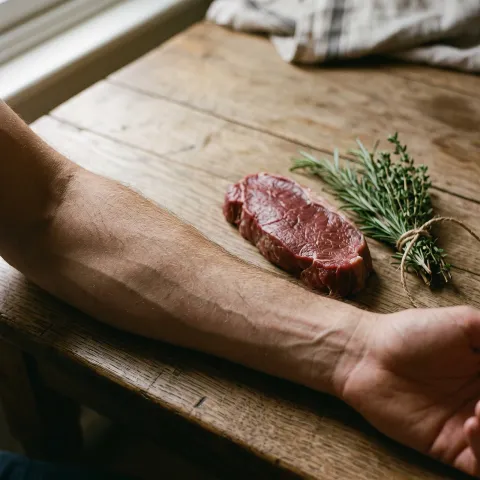
Foods that are high in purines, and therefore linked to higher uric acid, include organ meats. Offal, things like liver, kidney, sweetbreads, and heart, are among the highest-purine foods in a typical diet. A study in the New England Journal of Medicine found that higher intake of meat and seafood was associated with elevated risk of gout, and organ meats specifically are flagged by major rheumatology guidelines as foods to limit for people managing hyperuricemia. That does not mean offal is off the table for everyone forever, but if gout is part of your health picture, it is a genuinely useful conversation to have with your doctor or a registered dietitian rather than one to guess at on your own.
On the other side of the ledger, a few things appear more favorable. The same NEJM study found that dairy consumption was associated with a lower risk of gout. Research published in the Journal of Rheumatology has also suggested that tart cherries and cherry juice may be linked to lower uric acid levels and reduced frequency of flares, though the evidence is still developing and cherries are not a substitute for any treatment plan your doctor has put together. Vegetables, including some higher-purine ones like asparagus and spinach, have not shown the same association with elevated uric acid risk as animal-source purines, according to NIAMS.
Hydration matters here in a real, practical way. The kidneys are the primary exit route for uric acid, and adequate fluid intake supports that process. The National Kidney Foundation guidance on uric acid and kidney health consistently points to water intake as a modifiable factor worth discussing with your care team.
What About Fructose and Alcohol?
Two non-protein sources deserve a plain conversation because they show up in places people do not always expect.
Fructose, particularly the high-fructose corn syrup in sweetened sodas, packaged juices, and many processed foods, has been linked in research to increased uric acid production. The NEJM study found that fructose-rich beverages were associated with elevated gout risk in a large prospective cohort. The mechanism appears to involve fructose stimulating purine synthesis in the liver. This is a meaningful reason, grounded in actual research, to pay attention to added sugars beyond just the usual carbohydrate arguments.
Alcohol, particularly beer and spirits, is associated with higher uric acid levels through a couple of pathways: alcohol metabolism produces lactate, which competes with uric acid for renal excretion, and beer specifically carries a substantial purine load from its yeast content. The Arthritis Foundation lists alcohol as one of the most significant dietary contributors to gout flares. Wine appears to carry lower risk than beer or spirits in the research, though the evidence is not strong enough to call any amount of alcohol low-risk for someone managing gout. This is another honest conversation to have with your physician, not a self-directed experiment.
Weight, Insulin Resistance, and the Bigger Picture
Gout rarely arrives alone. It has well-documented associations with obesity, type 2 diabetes, high blood pressure, and cardiovascular disease, a cluster sometimes called metabolic syndrome. According to the Cleveland Clinic, excess body weight is a significant risk factor for elevated uric acid because adipose tissue contributes to uric acid production and because higher body weight is linked to reduced renal uric acid excretion.
Insulin resistance is part of this story too. Research in the Journal of Clinical Endocrinology and Metabolism found that insulin resistance is independently associated with impaired renal excretion of uric acid. A real-food approach that supports stable blood sugar, whole proteins, fiber-rich vegetables, healthy fats, reduced refined carbohydrates, is not gout-specific advice so much as metabolic health advice that has meaningful overlap with gout management. Gradual, sustainable changes to body weight, achieved through real food rather than crash dieting, may support uric acid levels over time, but the pace matters. Very rapid weight loss can actually trigger a flare by releasing stored purines as tissue breaks down quickly, so this is genuinely a place to work with your doctor rather than go hard on your own.
Using the Calm Period Well: Questions Worth Raising
The intercritical period is the best time to have a real conversation with your physician about what your uric acid levels actually look like on a number, what the target is for someone with your history, and whether any medication adjustments or dietary referrals make sense. A lot of people get their uric acid tested only during or right after a flare, when the number can actually be misleadingly lower than baseline because the crystals have sequestered the uric acid out of the bloodstream.
Asking for a uric acid level check during a pain-free period gives a clearer picture of where you actually stand. The American College of Rheumatology has published guidelines on target serum urate levels for people with established gout, and that conversation belongs with your rheumatologist or primary care physician, not a blog.
A referral to a registered dietitian who has experience with metabolic conditions is also worth asking for. Navigating a high-purine foods list alongside whatever else you are managing, medications, weight, blood pressure, kidney health, is genuinely nuanced work, and a dietitian can personalize it in ways a general list cannot.
Real Food in the Quiet Periods
On a practical, day-to-day level, the intercritical period is when real-food habits are easiest to build because you are not managing acute pain at the same time. Some things that fit within a paleo or whole-food framework and align reasonably well with what the research suggests for gout management include:
Prioritizing lower-purine animal proteins. Eggs and most dairy carry far lower purine loads than organ meats or shellfish. If your real-food approach includes animal proteins, leaning on these in the day-to-day, and treating offal as an occasional food you discuss with your care team, is a reasonable middle ground.
Loading up on vegetables. The evidence on vegetable-source purines is reassuring, and the fiber, antioxidants, and water content in vegetables all support metabolic health broadly.
Drinking enough water. Plain, simple, unsexy, and genuinely supported by the physiology of how uric acid leaves the body.
Removing sweetened beverages. Soda, commercial juice, and sweetened drinks carry fructose and added sugar that, per the research, are meaningful contributors to uric acid load in a way that has nothing to do with purines.
None of this is a treatment plan. All of it is a starting point for the conversation you should be having with the people on your care team during this window when you have the capacity to actually have it.
Key Takeaways
- The period between gout flares is biologically active: uric acid levels and crystal deposits do not automatically resolve when pain stops.
- High-purine foods, including organ meats like liver and kidney, are linked to elevated uric acid levels; discuss frequency and portion with your doctor or a registered dietitian.
- Fructose from sweetened beverages and alcohol, especially beer, are associated with higher uric acid independently of dietary purines.
- Stable blood sugar, adequate hydration, and gradual (not rapid) weight management may support uric acid levels over time.
- The pain-free interval is the best time to get your uric acid level tested, ask about urate targets, and build a food and lifestyle plan with your care team.
- This article is for general informational purposes only and is not medical advice. Always consult a qualified healthcare professional before making changes to your diet or health routine.
Frequently Asked Questions
Is gout between flares still doing damage?
Yes, potentially. Even without acute pain, elevated uric acid can continue to deposit crystals in joints and surrounding tissue during the intercritical period. Over time, these deposits, called tophi, can contribute to joint damage. This is why managing uric acid levels between flares, not just during them, is considered important by rheumatologists. Talk to your doctor about getting your uric acid level measured during a pain-free period for the clearest picture of where you stand.
Can you eat organ meats if you have gout?
Organ meats like liver, kidney, sweetbreads, and heart are among the highest-purine foods in a typical diet, and purine metabolism raises uric acid levels. Research, including a large prospective study in the New England Journal of Medicine, has associated high intake of organ meats with elevated gout risk. Whether and how often offal fits into your eating pattern is a genuinely individual question worth discussing with your doctor or a registered dietitian who understands your full health picture.
Why do gout flares sometimes happen when you are losing weight?
Rapid weight loss can temporarily raise uric acid levels because breaking down tissue quickly releases purines into the bloodstream. This is one reason very low-calorie or crash diets are associated with triggering gout attacks in some people. Gradual, sustainable changes to body weight, supported by real food rather than extreme restriction, are generally considered safer for people managing gout. Always discuss weight loss goals with your physician if gout is part of your health history.
When should I get my uric acid level tested?
During or immediately after a flare is actually not the most reliable time, because uric acid can sequester into crystals and appear lower in the blood than your true baseline. Many rheumatologists recommend testing uric acid during a pain-free intercritical period to get an accurate picture. Ask your doctor about timing and what your target urate level should be given your individual history.
Sources
- NCBI / StatPearls: Hyperuricemia (Purines and Uric Acid Metabolism)
- NIAMS (National Institute of Arthritis and Musculoskeletal and Skin Diseases): Gout
- New England Journal of Medicine: Purine-Rich Foods, Dairy and Protein Intake, and the Risk of Gout in Men
- Arthritis Research and Therapy: Crystal deposition and joint damage in gout
- Journal of Rheumatology: Cherry consumption and decreased risk of recurrent gout attacks
- Mayo Clinic: Gout: Symptoms and Causes
- Cleveland Clinic: Gout
- Arthritis Foundation: Gout Diet: Foods to Eat and Avoid
- Journal of Clinical Endocrinology and Metabolism: Insulin Resistance and Hyperuricemia
- American College of Rheumatology: Gout: Patient and Caregiver Resources
- NIDDK (National Institute of Diabetes and Digestive and Kidney Diseases): Eating, Diet, and Nutrition for Kidney Stones (Uric Acid)
Cook for it
Start with one of these Low-Purine recipes:
- Grilled Chicken Thighs over Charred Eggplant with Warm Cumin-Coriander Herb Oil
- Provençal Braised Cod on Roasted Butternut Squash with Herbes de Provence and Garlic
- Herb-Scented Sole en Papillote over Zucchini with Garlic, Dill, and Roasted Red Onion
Browse every Low-Purine recipe
This article is for general informational purposes only and is not medical advice. Always consult a qualified healthcare professional before making changes to your diet or health routine. Nothing here diagnoses, treats or cures any condition, and food is support alongside medical care, not a replacement for it. If you have, or think you may have, the condition discussed here, work with your doctor or a registered dietitian, and do not start, stop or change any medication without talking to them first.



Join the conversation
What do you think?
Free members can comment, reply and like. It takes ten seconds.