

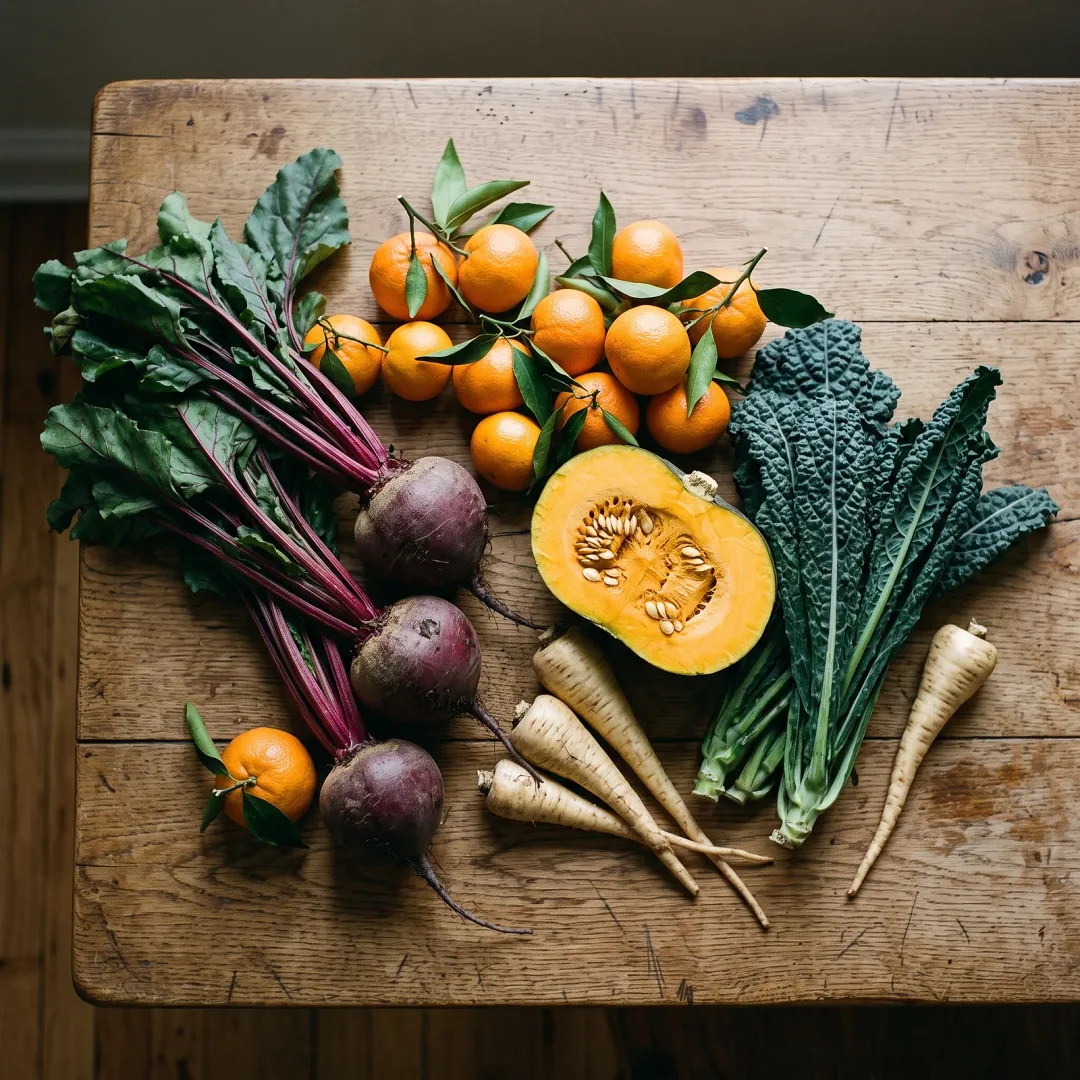

The grocery store in January does not look like the farmers market in July, and pretending otherwise is how you end up with a watery tomato in a salad that tastes like mild disappointment. Winter has its own produce. And when you know how to pick it, it is genuinely excellent, not a consolation prize.
Why Winter Produce Deserves More Respect Than It Gets
Most of the real-food conversation revolves around summer abundance. Heirloom tomatoes. Stone fruit. Fresh corn. And yes, that stuff is spectacular. But winter has a completely different set of stars, and a lot of people either ignore them or buy them wrong and then wonder why they tasted like nothing.
The produce that actually thrives in cold weather tends to be dense, sturdy, and nutrient-forward in ways that softer summer produce is not. Root vegetables store nutrients in concentrated form. Brassicas get sweeter after a frost. Citrus peaks in winter. These are not year-round foods that happen to be available in January. They are genuinely cold-season foods, and buying them at the right time from the right source is half the battle.
The other half is knowing what to look for at the point of purchase, because even in-season produce can be poorly handled, prematurely harvested, or just plain bad. This is where most shoppers leave money on the table.
Root Vegetables: What to Look For and What to Pass On
Carrots, parsnips, turnips, beets, celeriac, and sweet potatoes are the backbone of cold-weather cooking, and they are generally affordable, widely available, and incredibly forgiving in the kitchen. But "root vegetable" is not a quality guarantee.
Carrots. Reach for the ones that are firm all the way to the tip. The moment a carrot bends without breaking, it has already lost moisture and flavor. Limp carrots are not dangerous, but they are also not worth your time. If you have access to whole carrots with their greens still attached, that is usually a signal of freshness (the greens wilt faster than the roots, so if they still look alive, the carrot probably was harvested recently). Baby-cut carrots from a bag are fine in a pinch but are typically processed from older, less-sweet root material. According to the USDA Agricultural Marketing Resource Center, most commercially sold baby-cut carrots are whittled from larger, machine-harvested carrots and treated with a chlorine wash before packaging. Not harmful, but worth knowing.
Beets. Pick ones that feel heavy for their size and have smooth, unblemished skin. Soft spots mean storage damage has already set in. If the tops are attached, look for greens that are not completely wilted. (And cook those greens. They are good.) Avoid beets that have cracked or are shriveled at the stem end.
Celeriac. This ugly, knobby root intimidates people and I get it, it looks like something from a fever dream. But it is one of the best winter vegetables there is: earthy, nutty, versatile. Look for a root that feels heavy and solid. Any with soft areas or hollow sounds when tapped are past their prime. Smaller celeriac tends to have more concentrated flavor than the overgrown ones.
Sweet potatoes. Contrary to what the grocery store makes you think, sweet potatoes are not a Thanksgiving-only item. They store beautifully and are genuinely good all winter. Pick ones that are firm with smooth, dry skin. Reject anything with cuts, soft spots, or a wet, shriveled look at the ends. Note: true yams (the starchy, drier tuber common in West African cooking) and sweet potatoes are entirely different plants. What American grocery stores label "yams" is almost always a variety of sweet potato.
Brassicas: The Cold Makes Them Better, Seriously
Kale, Brussels sprouts, cabbage, cauliflower, and broccoli all belong to the brassica family, and the thing most people do not know is that a frost actually improves them. Cold temperatures trigger the plant to convert some of its starches into sugars as a kind of antifreeze mechanism, which means winter-harvested brassicas can taste noticeably sweeter than the same vegetable picked in warmer months.
Kale. Lacinato (also called dinosaur or Tuscan kale) holds up better in cold-weather cooking than curly kale. Look for deep, dark leaves with no yellowing and no sliminess at the stem ends. Smaller leaves tend to be more tender; if you are eating it raw, go small. Big, tough leaves are best braised or added to soups.
Brussels sprouts. If you can find them still on the stalk, buy them that way. Sprouts degrade much faster once they are cut from the stalk. On the stalk, they can last in your fridge for a couple of weeks and stay sweeter longer. For loose sprouts, look for ones that are compact and vivid green with no yellowing outer leaves. Avoid any that feel soft or have a heavy sulfur smell before cooking.
Cabbage. Criminally underrated. A solid head of green or red cabbage will last weeks in the refrigerator and costs almost nothing. Pick one that feels heavy and dense, with tightly packed leaves and no browning on the cut surface. Red cabbage tends to be more nutrient-dense than green, with higher anthocyanin content. A 2021 review published in the journal Antioxidants confirmed that anthocyanins, the pigments responsible for red and purple coloring in plants, are associated with antioxidant activity in the body.
Cauliflower. The head should be white or cream-colored and compact, with no dark spots or loose, spreading florets. A little green leaf curl around the head is normal. Any yellowing or softening of the curds means it sat too long.
Winter Citrus: When to Spend More and When Not To
Citrus is one of the genuine bright spots of winter eating, and this is its actual season. Navel oranges, blood oranges, Meyer lemons, Cara Cara oranges, grapefruit, mandarins, clementines, kumquats. The late fall through early spring window is when citrus is at its best and most affordable.
The single best way to pick good citrus: pick it up. A heavy fruit for its size is a juicy fruit. A lightweight orange that looks beautiful from the outside is going to be dry and disappointing inside. Skin texture is secondary, because some of the most flavorful citrus has imperfect, rough, or slightly blemished skin. What the skin looks like has almost no bearing on what is inside.
For blood oranges specifically, you usually will not know from the outside how deeply red the interior is. That color depends on cold temperatures during the growing period. A blood orange grown in a warmer season or region may look virtually identical on the outside to a deeply pigmented one. It is fine to just buy them and be pleasantly surprised (or not). The flavor difference between a pale and a deeply colored blood orange is minor.
For Meyer lemons, the rounder shape and more orange-tinged skin are your visual cues. They are sweeter and less acidic than standard Eureka lemons, and they do not need to be heavy like regular citrus because they are naturally less juicy. What you want is skin that gives just slightly when pressed, not waxy and hard.
Grapefruit is almost always available in winter, and like oranges, weight is your best guide. Pink and ruby varieties tend to be sweeter than white. If you are on any medication, check with your pharmacist before eating grapefruit regularly, as it can interact with a number of common drugs, including some statins and blood pressure medications. The FDA has documented this interaction and it is worth taking seriously.
Winter Squash: What the Skin Tells You
Butternut, acorn, delicata, kabocha, spaghetti squash, hubbard. These are not root vegetables, but they share one important quality with them: they store well, which means they are reliably available and affordable all winter long.
The trick with winter squash is the skin. It should be matte, not shiny. A shiny squash was likely harvested before the skin fully cured, which means it will not store well and the flavor may be less developed. The rind should feel genuinely hard, with no give anywhere. Any soft spot is a sign of damage or rot starting from the inside out.
Stem-on is better than stem-off. The stem acts as a natural cap. When it falls off or is cut flush, the squash begins to dehydrate and deteriorate faster. If you see a butternut with a short, dry, corky stem, that is what you want.
Size matters differently for different varieties. With delicata and acorn squash, medium is usually better than enormous. Oversized specimens can be stringier and less sweet. With kabocha and butternut, a mid-to-large size is fine and gives you more to work with.
A note on pre-cut squash. Those pre-cubed butternut trays in the refrigerated produce section are convenient and there is no shame in using them. But know that they have a much shorter shelf life than a whole squash, the exposed surface starts to degrade and oxidize quickly, and they are sometimes cut from squash that was not at peak ripeness. If you buy pre-cut, cook it within two days and check for any sliminess before using.
What Is Actually Worth the Premium Price in Winter
Winter produce pricing is not always rational. Here is a quick read on where your extra dollars actually buy something and where they do not.
Worth paying more for: Organic apples, pears, and citrus if you are eating the skin. These consistently appear on the Environmental Working Group's Shopper's Guide to Pesticides in Produce, and eating the skin is where the exposure is highest. If you are always peeling, the calculus changes.
Usually not worth the premium: Organic butternut squash and other thick-skinned winter squash. The skin is typically not eaten and acts as a physical barrier, so conventional is generally a reasonable call for these.
Worth paying more for: Locally grown root vegetables and brassicas from a farmers market in winter, even if they are not certified organic. Small farms that sell at winter markets are often using lower-spray or no-spray practices, and the produce is usually fresher than what traveled from a distant growing region. Ask the farmer directly.
Usually not worth the premium: Exotic citrus varieties at high-end grocery stores that were imported from far away and have been in transit for two weeks. A rock-solid, locally grown navel orange from a California co-op is going to eat better than an imported luxury variety that has been sitting. Weight and freshness beat provenance and branding almost every time.
Quick Visual Checklist Before You Buy
Pull this up in the produce section if you need to. These are the signals that matter most across all winter produce categories:
Weight. For citrus, beets, cabbage, and squash: heavier than it looks means more moisture and more flavor. If it feels hollow or light, put it back.
Firmness. For root vegetables and brassicas: firm all the way through, with no soft spots or give. Softness means cell walls are already breaking down.
Color. Vivid and even means the produce was harvested at the right time. Yellowing brassicas, pale beets, and patchy squash are all past their best.
Smell. Trust your nose. Citrus should smell like citrus when you give the skin a light scratch. Root vegetables should smell earthy, not fermented. Brassicas with a strong sulfur smell before they are cooked are already declining.
Surface integrity. Cuts, cracks, soft spots, and sunken areas all indicate damage that progresses quickly once the produce is off the plant. Cosmetic imperfections are fine. Structural damage is not.
Stem and leaf cues. Intact, dry stems on squash and attached greens that are not fully wilted on beets and carrots both signal fresher harvests.
Winter produce is not summer produce, and the sooner you stop expecting it to be, the better your kitchen gets. Roasted roots, braised cabbage, charred brassicas, fresh citrus over white fish. This season has a whole different kind of excellent, and it is right there in the produce section if you know what you are reaching for.
--- This article is for general informational purposes only and is not medical advice. Always consult a qualified healthcare professional before making changes to your diet or health routine.
Key Takeaways
- Weight is the single most reliable quality indicator for citrus, beets, cabbage, and winter squash: heavy for its size means more moisture and better flavor.
- Brassicas like kale and Brussels sprouts actually improve after a frost, so true winter-harvested versions are often sweeter than the same vegetables in warmer months.
- Matte skin on winter squash signals proper curing and better storage life; shiny skin usually means it was harvested too early.
- Organic is worth the premium for thin-skinned winter produce you eat whole, like apples and citrus where you consume the zest; thick-skinned squash and root vegetables where you discard the skin are lower priority.
- Pre-cut squash and bagged baby carrots are convenient but are typically less flavorful and have a much shorter shelf life than their whole counterparts.
- Grapefruit can interact with certain medications: check with your pharmacist before adding it to your regular winter rotation.
Frequently Asked Questions
What winter produce is actually in season right now?
In most of the U.S., true winter-season produce includes citrus fruits (navel oranges, blood oranges, grapefruit, Meyer lemons, mandarins), root vegetables (carrots, beets, parsnips, turnips, celeriac), brassicas (kale, Brussels sprouts, cabbage, cauliflower), and storage winter squash (butternut, kabocha, acorn, delicata). These are cold-season foods at their peak, not just available out of habit.
How do you pick a good butternut squash?
Look for matte skin, not shiny. Shiny skin usually means the squash was harvested before the rind fully cured. The stem should be short, dry, and corky. The squash should feel very heavy for its size with absolutely no soft spots anywhere on the surface. A hard, dense squash with a dry stem will store for weeks on your counter.
Is it worth buying organic winter produce?
It depends on the produce. For thin-skinned items you eat whole, like apples, pears, and citrus where you use the zest, organic is worth considering because the skin is where pesticide residue tends to concentrate. For thick-skinned winter squash and root vegetables where you peel and discard the skin, conventional is generally a more reasonable call from a cost-benefit standpoint.
Why does winter kale taste better than summer kale?
Brassicas, including kale, Brussels sprouts, and cabbage, go through a process where cold temperatures trigger the plant to convert some of its starches into sugars. This is essentially the plant's natural antifreeze response. The result is a noticeably sweeter, less bitter flavor in kale harvested after a frost compared to the same variety harvested in warm weather.
Sources
- USDA Agricultural Marketing Resource Center: Carrots
- Antioxidants (MDPI): Anthocyanins: From Sources and Bioavailability to the Regulation of Epigenetics and Chromatin
- U.S. Food and Drug Administration: Grapefruit Juice and Some Drugs Don't Mix
- Environmental Working Group: Shopper's Guide to Pesticides in Produce
This article is for general informational purposes only and is not medical advice. Always consult a qualified healthcare professional before making changes to your diet or health routine.

Join the conversation
What do you think?
Free members can comment, reply and like. It takes ten seconds.