

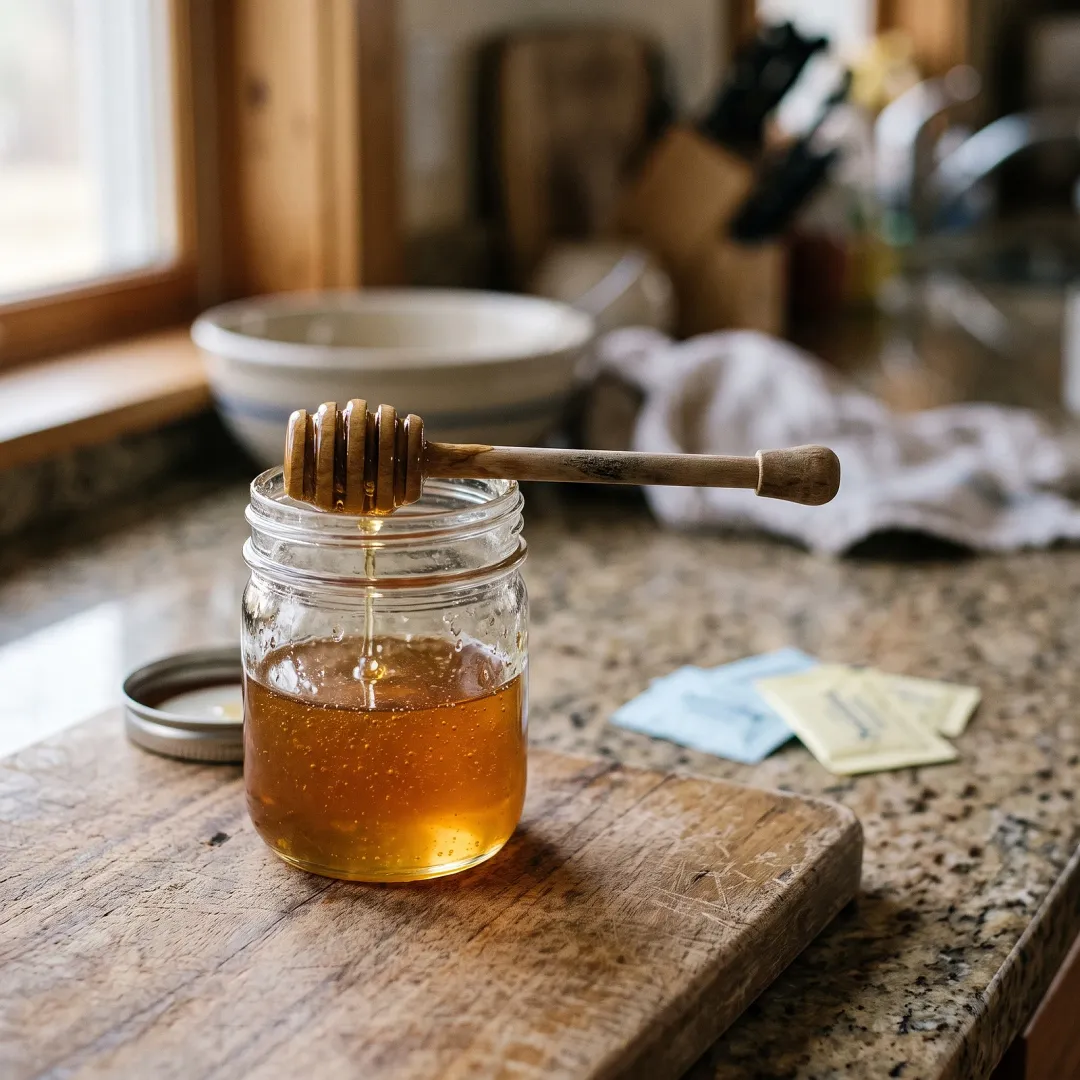

The little pink, blue, and yellow packets sitting next to the coffee at every diner in America have been marketed as the smart choice for decades. Zero calories, no sugar, no guilt. Except the research on what they actually do inside your body is a lot less tidy than the packaging suggests, and a small pour of real honey is starting to look like the more honest option.
What You're Actually Reaching For
Most common artificial sweeteners, including aspartame, sucralose, and saccharin, are synthetic compounds designed to trigger sweetness receptors without delivering calories. They show up in diet sodas, "light" yogurts, protein bars, flavored waters, and those little countertop packets. The pitch is simple: all the sweetness, none of the consequences.
The problem is that the research has been catching up, and it's not a clean story. A 2023 review from the World Health Organization advised against using non-sugar sweeteners for weight control, noting that long-term use is not associated with reduced body fat and may be linked to increased risk of type 2 diabetes and cardiovascular disease in adults. That came from the WHO, not a fringe blog. Worth sitting with.
The Gut Piece They Don't Put on the Label
One of the more interesting threads in recent research involves what artificial sweeteners may do to the gut microbiome. A 2022 study published in Cell00919-9) found that saccharin and sucralose significantly altered gut microbiome composition and impaired glucose tolerance in healthy adults. This was a controlled human trial, not a rodent study, which makes it harder to dismiss.
Your gut microbiome does a lot of quiet, important work. Nudging it with synthetic compounds every single day, even in small amounts, is not a neutral act. Whether the effect is meaningful at the doses most people use is still being studied, and no single study is the final word. But "zero calories" is not the same as "zero effect."
What to Use Instead: A Little Real Honey
Raw honey is not a free food. It is real sugar, and that matters. But it also comes with things a packet cannot offer. Raw honey contains small amounts of antioxidants, enzymes, and trace minerals, and research published in Nutrients suggests it may have a modestly different metabolic profile than refined sugar, though the evidence is not strong enough to call it a health supplement.
The key word in this swap is little. A half teaspoon of raw honey in your coffee, a drizzle over plain whole-milk yogurt with fruit, a teaspoon stirred into a marinade for shrimp. That's the move. You're not replacing a sweetener habit with a honey habit. You're replacing a synthetic compound with a real food, used sparingly.
Raw or minimally processed honey is the better choice here. Highly processed commercial honey has fewer of those trace compounds and can even have added sweeteners. Look for "raw" or "unfiltered" on the label, ideally from a local source when you can find one.
What Honestly Changes
The taste is different, and some people need a minute to adjust. Honey is not a 1:1 flavor match for a sweetener packet. It has its own floral, slightly complex flavor that changes depending on what the bees were foraging. In coffee, most people find they actually like it once they stop expecting it to taste like Sweet'N Low.
The cost goes up. Real raw honey is not cheap. A good jar runs anywhere from $8 to $20 depending on your area and the source. If you're used to grabbing a free packet off a diner table, that's a real adjustment. But you're also using far less volume than you might think, so a jar goes further than it looks.
The calorie count does go up. One teaspoon of honey is about 21 calories. If you're using multiple packets of sweetener in multiple drinks every day, that math adds up and you should know it going in. This swap works best for people who are already mostly past the heavy sweetener habit and just want to use something real for the occasional cup of tea or drizzle on a bowl of fruit.
When This Swap Isn't Worth It
If you are drinking four sweetened beverages a day, swapping the sweetener packets for honey is not the answer. The answer there is pulling back the sweetness expectation overall, and honey will not solve that. Also, if you're managing blood glucose and your doctor has you tracking carbohydrates carefully, talk to your healthcare provider before adding honey to your routine. This is a real-food swap, not a blood sugar strategy, and I'm not your doctor.
And infants under 12 months should never have honey, due to the risk of infant botulism. Not negotiable, not a paleo exception. The CDC is clear on this.
How to Make It Stick
Put the jar on the counter next to the coffee maker. Out of sight is out of mind, and with honey, a little visibility helps you actually use it before you forget it exists. Start with half a teaspoon, not a full one. Let your palate recalibrate without overwhelming your coffee with sweetness.
If you make paleo-style marinades or salad dressings at home, honey works beautifully in small amounts where a recipe might otherwise suggest maple syrup or agave. A teaspoon in a shrimp marinade with lime, garlic, and a little chili flake is a legitimate use of the jar, not just a coffee add-in.
The goal isn't perfection. It's using something real instead of something synthetic, in amounts that are honest. That's a swap worth making.
Key Takeaways
- The WHO advised in 2023 against using artificial sweeteners for weight control, citing potential links to cardiovascular and metabolic concerns with long-term use.
- A 2022 controlled human trial found that saccharin and sucralose altered gut microbiome composition and impaired glucose tolerance.
- Raw or unfiltered honey contains trace antioxidants, enzymes, and minerals that processed sweeteners lack, though it still counts as real sugar and should be used sparingly.
- This swap works best for light, occasional sweetener use. If you're heavily dependent on sweetened drinks all day, the bigger move is reducing sweetness expectations overall.
- Honey is not safe for infants under 12 months. Never a paleo exception.
- Always talk to your healthcare provider before changing your diet if you are managing a diagnosed condition or taking medication.
Frequently Asked Questions
Is honey actually better for you than artificial sweeteners?
The honest answer is: it depends on how you're using them. Raw honey contains trace antioxidants, enzymes, and minerals that artificial sweeteners lack, and recent research has raised real questions about the long-term effects of synthetic sweeteners on gut bacteria and metabolic health. That said, honey is still real sugar and affects your blood glucose. Used sparingly as a real-food option, it may be the better choice for many people. Used in large amounts, it's still a significant source of sugar. Always talk to your healthcare provider if you're managing a diagnosed condition.
What kind of honey is best for this swap?
Raw or unfiltered honey is the better option. Heavily processed commercial honey loses many of the trace compounds that make it distinct from plain sugar, and some commercial products have added sweeteners. Look for the words "raw" or "unfiltered" on the label. Local honey from a farmers market or a trusted small producer is ideal when you can find it.
Can I use honey if I'm eating paleo?
Yes. Honey is generally considered paleo-friendly as a natural, minimally processed sweetener used in small amounts. The emphasis in real-food and paleo eating is on whole, unprocessed ingredients, and raw honey fits that framework. The key is "small amounts" rather than treating it as a free pass.
Are artificial sweeteners safe?
Regulatory agencies like the FDA have approved certain artificial sweeteners as generally recognized as safe at established intake levels. However, the World Health Organization's 2023 guidance advised against using them for weight control due to a lack of long-term benefit and potential links to metabolic concerns. Research is ongoing. If you have questions about your specific health situation, talk to your doctor.
Sources
- World Health Organization: WHO advises not to use non-sugar sweeteners for weight control in newly released guideline
- Cell (Suez et al., 2022): Personalized microbiome-driven effects of non-nutritive sweeteners on human glucose tolerance
- Nutrients (Bogdanov et al., 2020): Honey for Nutrition and Health: A Review
- CDC: Infant Botulism: Prevention
This article is for general informational purposes only and is not medical advice. Always consult a qualified healthcare professional before making changes to your diet or health routine.




Join the conversation
What do you think?
Free members can comment, reply and like. It takes ten seconds.