

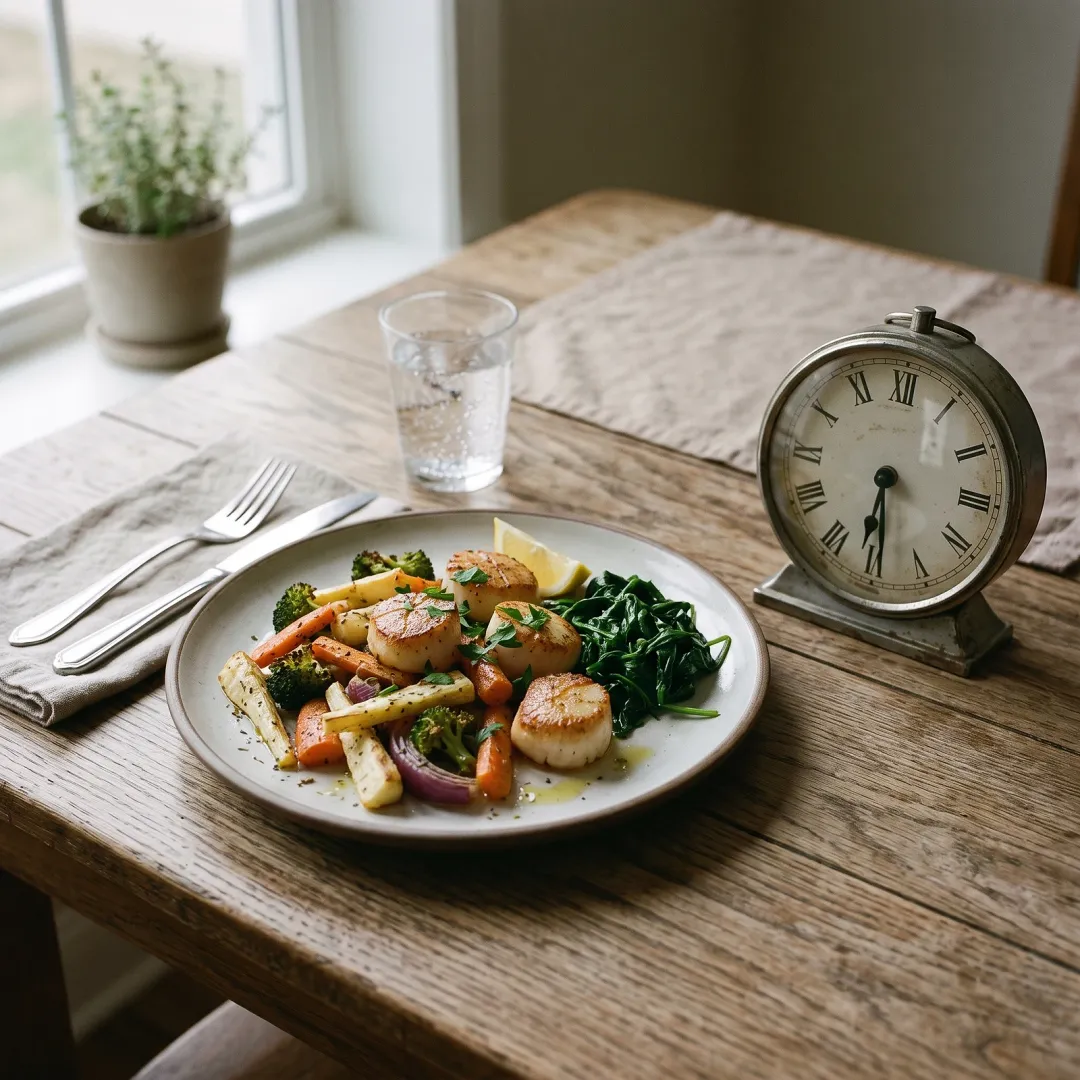

Acid reflux and GERD are conditions a lot of people manage quietly, assuming the only real tool is the little purple pill on the nightstand. But some of the most practical questions about this condition have nothing to do with medication at all. They are about timing, portions, and what happens when you lie down after a meal. Your doctor and your registered dietitian can give you personalized guidance on all of it, and the questions below are a good place to start.
First, a Quick Orientation: What GERD Actually Is
Gastroesophageal reflux disease (GERD) is a condition in which stomach contents flow back up into the esophagus frequently enough to cause symptoms or tissue changes. The National Institute of Diabetes and Digestive and Kidney Diseases (NIDDK) describes it as persistent acid reflux, meaning reflux that happens more than twice a week and disrupts daily life. The key structure involved is the lower esophageal sphincter, a ring of muscle that is supposed to stay closed between meals. When it relaxes or weakens at the wrong time, stomach acid moves where it should not go.
Symptoms can include heartburn, a sour taste in the mouth, difficulty swallowing, a chronic cough, or hoarseness. If any of those sound familiar, bring them to your doctor. A clinician is the right person to evaluate what is actually happening and to rule out other conditions that can look similar. This article is not a diagnostic tool. It is a way to help you walk into that appointment with better questions.
Question 1: Does When I Eat Matter as Much as What I Eat?
This is one of the most underasked questions in the reflux conversation, and the research behind it is worth understanding before you sit down with your doctor.
The NIDDK guidance on GERD specifically lists eating two to three hours before lying down as a behavioral change that may help manage symptoms. That window matters because digestion is not instant. The stomach needs time to move its contents forward into the small intestine, and while that process is underway, the stomach is fuller and acid production is higher. Lying down during that window removes gravity from the equation.
Why does gravity matter? When you are upright, gravity helps keep stomach contents where they belong. Horizontal, that assist disappears, and a weakened or relaxed lower esophageal sphincter has a harder job. A review published in the American Journal of Gastroenterology noted that nocturnal reflux, the kind that happens while sleeping or shortly after lying down, is associated with more significant esophageal acid exposure compared to daytime reflux.
Ask your doctor: Given my symptoms and my schedule, what is the minimum gap between my last meal and bedtime that you would recommend for me specifically?
Question 2: Could My Portion Sizes Be Making This Worse?
Portion size is a structural issue in reflux, not just a wellness platitude. The Mayo Clinic's overview of GERD includes eating smaller meals as one of the lifestyle adjustments that may reduce symptoms. Here is the mechanism: a very full stomach puts physical pressure on the lower esophageal sphincter. That pressure can push the sphincter open and allow acid to escape upward.
This is particularly relevant for people who eat one or two large meals a day rather than spreading food intake out. Research published in Diseases of the Esophagus found that meal volume is one of the modifiable factors associated with reflux episodes, alongside meal composition and timing.
For those eating real, whole food, there is some natural portion regulation built in: vegetables, proteins like pastured meats or seafood (scallops are a great example, gentle on digestion and easy to prepare in smaller servings), and healthy fats are generally more satiating per calorie than ultra-processed food, so overeating to discomfort is less common. That said, even a clean meal eaten in excess can trigger reflux in someone with a sensitive or compromised lower esophageal sphincter.
Ask your doctor or registered dietitian: Should I be thinking about meal frequency and volume differently, and is there a distribution of calories throughout the day that tends to reduce my symptom load?
Question 3: Is There a Specific Position I Should Sleep In?
This one surprises people. Sleep position is a genuine clinical conversation in GERD management, not just a folk remedy.
The Cleveland Clinic notes that elevating the head of the bed may help reduce nighttime reflux. The standard recommendation involves raising the head of the bed by six to eight inches using a wedge under the mattress or risers under the bed frame. Stacking pillows under your head alone does not achieve the same effect and can actually increase abdominal pressure by bending the torso.
Sleep side also matters. A study in The American Journal of Gastroenterology found that right-side sleeping was associated with more acid exposure compared to left-side sleeping. The anatomical reason has to do with where the lower esophageal sphincter sits relative to the stomach: left-side sleeping positions the junction in a way that may make it harder for acid to flow back up.
This is worth raising specifically if you are waking up with symptoms, experiencing a sour taste in your mouth overnight, or noticing a cough or hoarseness in the mornings.
Ask your doctor: Should I try elevating my head of bed, and would left-side sleeping be appropriate given my anatomy and symptoms?
Question 4: Are There Foods That Relax the Lower Esophageal Sphincter?
Yes, and your doctor or dietitian can help you figure out which ones are relevant to your pattern specifically, because this is not a one-size answer.
The NIDDK lists several foods and substances that are commonly associated with relaxing the lower esophageal sphincter or increasing acid production: fatty foods, chocolate, caffeine, alcohol, and peppermint are among those frequently cited. Tomato-based foods and citrus are also commonly discussed, though for a slightly different reason: they may not relax the sphincter but can irritate esophageal tissue that is already inflamed.
The honest answer is that trigger foods vary considerably between individuals. What reliably causes problems for one person may not cause any symptoms for another. Keeping a simple food-and-symptom journal for two to three weeks before your appointment can give your clinician much more useful information than any generic trigger list.
From a real-food perspective, it is worth asking this question in the context of your whole eating pattern, not just individual foods. A diet built around whole proteins, non-starchy vegetables, and healthy fats looks very different from one built around processed, high-fat, high-sugar convenience food, and your symptoms may reflect that.
Ask your doctor or dietitian: Based on what I eat, which categories of food are most likely contributing to my symptoms, and how would I know if eliminating one is actually making a difference?
Question 5: How Long Should I Wait Before Exercise After Eating?
Physical activity after meals is a real reflux variable, and it does not get enough airtime in most conversations about this condition.
High-impact exercise, think running, jumping, or intense interval work, creates abdominal pressure and jostles stomach contents. Done too soon after a meal, that combination can be a significant reflux trigger. Research published in Sports Medicine found that exercise can impair lower esophageal sphincter function and increase reflux events, particularly during high-intensity activity.
That does not mean movement after meals is off the table. A gentle walk after eating has actually been associated with improved gastric emptying, which means the stomach moves its contents along more efficiently, potentially reducing the window of reflux risk. The Mayo Clinic includes avoiding lying down after meals as a lifestyle recommendation, and light movement fits neatly into that guidance.
Ask your doctor: Given my current activity routine, is there a timing or intensity adjustment that might reduce my post-exercise symptoms?
Question 6: Does Body Weight Play a Role, and How Directly?
This is a question worth asking directly, because the research here is fairly clear and it matters for anyone managing GERD with a real-food approach.
Abdominal adiposity, specifically fat around the midsection, increases intra-abdominal pressure, which puts mechanical stress on the lower esophageal sphincter. A meta-analysis published in Gut found a significant association between body mass index and GERD symptoms, with abdominal obesity showing a particularly strong link. This is a structural issue as much as a metabolic one.
For people working toward better body composition through real, whole food, this is a natural part of the conversation. It does not mean weight is the only factor, and it certainly does not mean thin people cannot have GERD. But if your doctor has raised weight as relevant to your reflux, understanding the mechanism helps the conversation land differently than a generic lifestyle recommendation.
Ask your doctor: Is my current weight or body composition contributing to my symptoms, and is that something we should address as part of managing this condition?
Question 7: What Should I Track Between Now and My Next Appointment?
This is the question that ties all the others together, and most people never ask it.
Your doctor or dietitian can only act on what they know. If you come in with two weeks of data, a rough note of what you ate, when you ate it, how much, what time you went to bed, and when symptoms showed up, you are giving them something to work with. Without it, you are both working from impression rather than pattern.
A simple log does not need to be elaborate. Time of meals, rough portion size, any notable foods or drinks, bedtime, sleep position, and symptoms along with when they occurred is enough to start seeing patterns. Some people notice that large dinners eaten after 7 PM are the primary trigger. Others notice it is the coffee after dinner, or the late glass of wine, or the week they are under unusual stress. The point is that the pattern reveals itself in the data, and your clinician can help you interpret it.
Ask your doctor: Is there a specific symptom diary or tracking tool you recommend, and are there particular data points that would be most useful for you to see?
A Note on Food as Support, Not a Substitute
Managing GERD with attention to meal timing, portion size, and sleep position is legitimate, evidence-informed, and genuinely useful. But it works alongside medical care, not instead of it. If your symptoms are frequent, if you are waking at night, if you have trouble swallowing or notice your symptoms are changing, those are things to bring to your doctor promptly.
Real, whole food built around quality proteins (including gentle, easy-to-prepare options like scallops), vegetables, and fats that are not heavily processed is a reasonable foundation. No single food is a guaranteed solution, and no eating pattern overrides anatomy. What it does is reduce the structural and chemical load on a digestive system that is already working hard.
That is worth something. And it is worth talking through with someone who can see the full picture.
Key Takeaways
- GERD is a clinical condition involving the lower esophageal sphincter; a doctor is the right person to evaluate and diagnose it.
- Meal timing research suggests a two-to-three-hour gap before lying down may help reduce nighttime reflux episodes.
- Portion size affects intra-abdominal pressure; smaller, more frequent meals are commonly recommended alongside medical treatment.
- Sleep position, particularly left-side sleeping and head-of-bed elevation, is a clinically recognized factor in nighttime GERD management.
- Trigger foods vary considerably between individuals; a food-and-symptom journal before your appointment gives your clinician useful data.
- High-impact exercise too soon after meals may increase reflux events; gentle walking after eating may support gastric emptying.
- Abdominal body composition is linked to reflux through mechanical pressure on the lower esophageal sphincter.
- Tracking meals, timing, portions, and symptoms between appointments gives your doctor or dietitian something concrete to work with.
Frequently Asked Questions
How long after eating should you wait before lying down if you have GERD?
The NIDDK and other major medical sources commonly suggest waiting at least two to three hours after eating before lying down or going to bed. This gives the stomach time to empty and reduces the window during which acid is most likely to reflux. Your doctor can help you determine the timing that fits your specific symptoms and schedule.
Does sleeping position affect acid reflux?
Research suggests it can. Studies have found that sleeping on the left side is associated with less esophageal acid exposure compared to sleeping on the right side, due to the anatomical position of the lower esophageal sphincter. Elevating the head of the bed, rather than just stacking pillows, is also a commonly recommended adjustment. Ask your doctor if either approach is appropriate for you.
Can eating smaller meals help with GERD symptoms?
Smaller, more frequent meals are commonly recommended as part of GERD management because large meals increase the volume and pressure inside the stomach, which can put more stress on the lower esophageal sphincter. This is a structural issue. Whether meal frequency and size changes are appropriate for your specific situation is something to work through with your doctor or a registered dietitian.
What foods should I avoid if I have acid reflux?
The NIDDK lists fatty foods, chocolate, caffeine, alcohol, and peppermint as commonly associated with relaxing the lower esophageal sphincter or increasing acid production. Citrus and tomato-based foods are also frequently mentioned. That said, trigger foods vary considerably between individuals. Keeping a food-and-symptom journal and reviewing it with your clinician is more useful than following a generic elimination list.
Sources
- NIDDK: Acid Reflux (GER and GERD) in Adults
- Mayo Clinic: GERD: Symptoms and Causes
- Cleveland Clinic: Gastroesophageal Reflux Disease (GERD)
- American Journal of Gastroenterology (Nocturnal Reflux): Nocturnal Gastroesophageal Reflux Disease: Prevalence, Pathogenesis, and Complications
- American Journal of Gastroenterology (Sleep Position): The Effect of Lateral Decubitus Positioning on Gastroesophageal Reflux
- Diseases of the Esophagus: Meal volume and GERD
- Sports Medicine: Exercise and Gastroesophageal Reflux
- Gut (BMJ): Body Mass Index and Symptoms of Gastroesophageal Reflux: A Systematic Review and Meta-analysis
Cook for it
Start with one of these Reflux-Friendly recipes:
- Herb-Roasted Cod on Crispy Yuca with Diner-Style Brown Pan Gravy
- Herb-Baked Mackerel Stuffed Avocados with Cucumber-Dill Tzatziki-Style Coconut Yogurt
- Grilled Chicken Thighs over Charred Eggplant with Warm Cumin-Coriander Herb Oil
Browse every Reflux-Friendly recipe
This article is for general informational purposes only and is not medical advice. Always consult a qualified healthcare professional before making changes to your diet or health routine. Nothing here diagnoses, treats or cures any condition, and food is support alongside medical care, not a replacement for it. If you have, or think you may have, the condition discussed here, work with your doctor or a registered dietitian, and do not start, stop or change any medication without talking to them first.



Join the conversation
What do you think?
Free members can comment, reply and like. It takes ten seconds.