

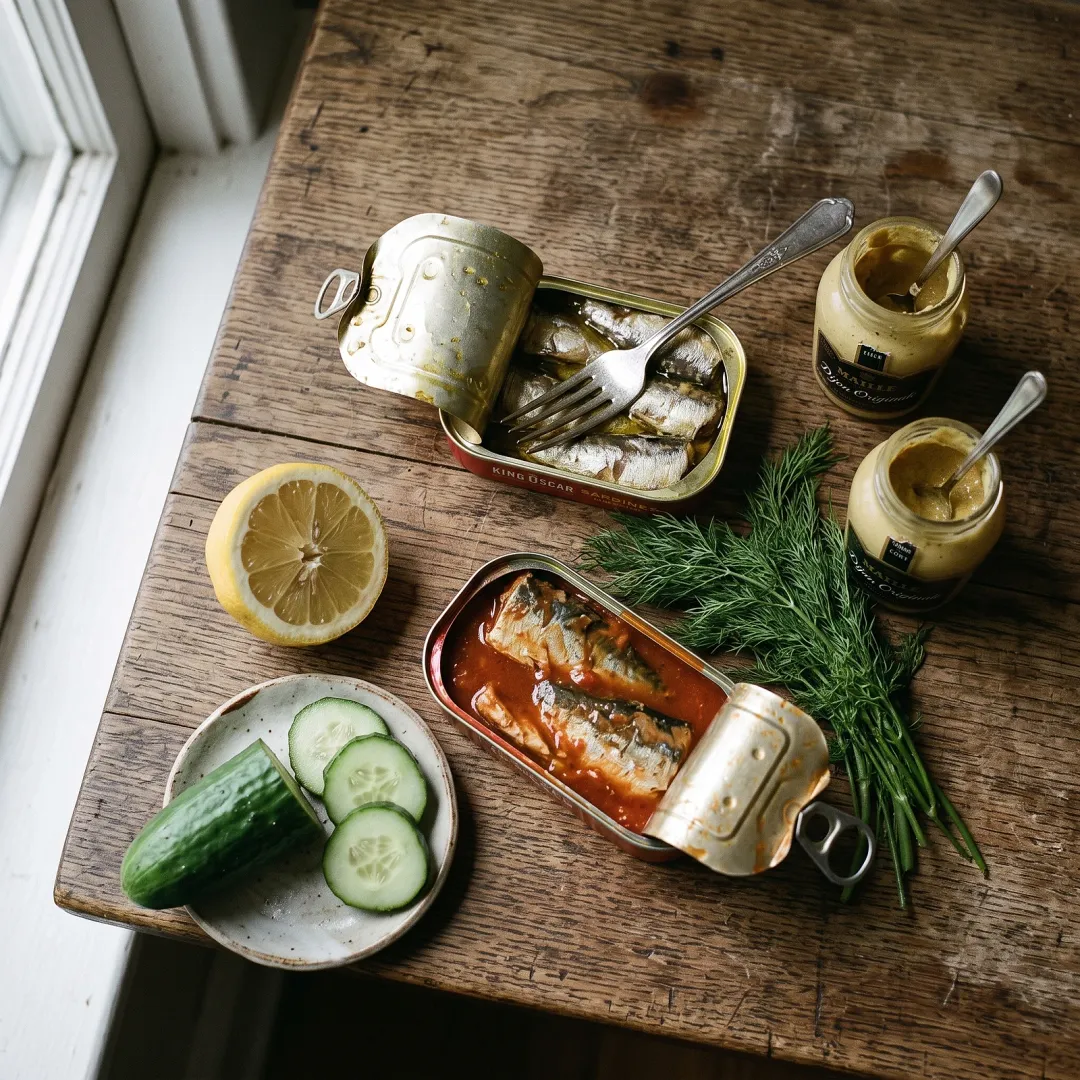

The can has been sitting in the back of your pantry since 2021. You grabbed it because you heard sardines were good for you, then put it down every single time you opened that cabinet. That's a shame, because what's inside that can is genuinely hard to beat on nutrition per dollar. Sardines, mackerel, anchovies, herring, and sprats, the whole category of small oily fish, are some of the most complete foods available in any grocery store in America, and they cost less than a latte.
What We're Actually Talking About
"Small fish" isn't a precise scientific category. It's a practical one. These are generally schooling fish that spend their whole lives eating plankton and zooplankton rather than other fish, which is why they accumulate so little mercury compared to apex predators like tuna, shark, or swordfish. The main players:
Sardines are the most common in American pantries. "Sardine" is actually a loose catch-all term, the FDA lists 21 different species that can legally be called sardines on a U.S. label, including pilchards, sprats, brisling, and Atlantic herring. So when you see "sardines" on a can, you're often looking at a variety of small clupeid fish depending on where they were caught.
Mackerel (particularly Atlantic mackerel) is closely related nutritionally. It's fattier and more pronounced in flavor. King mackerel is a different animal, it's much larger, higher in mercury, and not what you want to be eating regularly.
Anchovies are small, cured, and intensely salty. They're usually packed in oil or salt and used in small amounts as a flavoring.
Herring is widely eaten in Europe (pickled, smoked, fresh) and deserves more respect in American kitchens. It has a flavor profile similar to sardines but often milder depending on preparation.
Sprats are tiny, eaten whole, and popular in Scandinavian and Baltic cooking. Hard to find in most U.S. stores but worth seeking out.
All of these share the same core nutritional profile: high in protein, rich in long-chain omega-3 fatty acids (EPA and DHA), loaded with vitamin D, vitamin B12, selenium, and calcium (especially when you eat the soft, edible bones, which you should).
What the Label Actually Says vs. What You Think It Says
This is where things get interesting, because small fish labels can be genuinely confusing if you don't know the rules.
"Wild-caught" This phrase has no single federal legal definition that applies uniformly across all seafood marketing. The USDA's country-of-origin labeling (COOL) rules do require retailers to disclose where fish was harvested and whether it was wild or farm-raised, but those rules apply at the point of retail sale, not to canned shelf goods in the same way. "Wild-caught" on a canned sardine label is largely a marketing claim, not a federally regulated term with hard enforcement teeth behind it. In practice, most canned sardines ARE wild-caught because sardines haven't been commercially farmed at scale, but the label alone doesn't tell you where or how they were caught.
If sourcing matters to you (and it should), look for cans that specify the fishery or carry a third-party certification like the Marine Stewardship Council (MSC) blue fish logo. That's an independent sustainability standard with actual auditing behind it.
"Packed in water" vs. "packed in olive oil" Shoppers often assume "packed in water" is healthier. It can be, depending on what you're optimizing for. But the fish in both are the same fish. What changes is what happens to the omega-3 content. Fat is fat-soluble, the omega-3s in the fish can leach into surrounding oil during the canning process. A 2011 study published in the Journal of Food Science found that the type of packing medium affected the lipid content of canned tuna; similar dynamics apply to sardines. If you're draining and discarding the liquid from a water-packed can, you may be pouring some of those nutrients right down the drain. If you're using olive-oil-packed sardines and consuming the oil, you're actually keeping more of what you paid for, as long as the oil is a quality olive oil and not refined soybean or sunflower oil (check the label).
"Skinless and boneless" This one matters nutritionally. The skin and bones in whole-pack sardines are completely edible and soft after the canning process. The bones are one of the best natural sources of calcium in any food, a single 3.75-oz can of sardines with bones provides roughly 351 mg of calcium, according to the USDA FoodData Central. That's a significant chunk of the recommended 1,000 mg daily for most adults. Skinless, boneless sardines are easier for skeptical eaters to handle texturally, but you are giving something up.
"No salt added" This is a real, regulated claim. The FDA defines "no salt added" as meaning no salt was added during processing, though the food may still contain naturally occurring sodium. Standard canned sardines can be fairly high in sodium, often 300 to 400 mg per serving, so if you're watching sodium for a specific health reason, this label matters. Otherwise, for most people eating a real-food diet low in processed food, the sodium in a can of sardines is not a problem.
"Product of [country]" Sardines come from all over: Morocco, Portugal, Poland, Canada, the Pacific U.S. coast. "Product of" means the fish was processed there, which may or may not be where it was caught. Moroccan and Portuguese sardines have long, solid reputations. Some shoppers prefer American-caught fish for traceability reasons, look for Pacific sardines caught off the U.S. or Canadian coast if that's important to you.
What These Fish Actually Offer, Nutritionally
A single 3.75-oz can of sardines (with bones, packed in water, drained) delivers approximately 22 grams of protein, around 1.5 to 2 grams of combined EPA and DHA omega-3 fatty acids, significant amounts of vitamin D, vitamin B12, selenium, phosphorus, and that calcium we already talked about, all according to USDA FoodData Central.
The omega-3 content is worth paying attention to. EPA and DHA are the long-chain forms that your body can actually use directly, unlike ALA (the plant-based omega-3 in flaxseed and chia) which has to go through a conversion process that is, frankly, inefficient in most people. Research from the NIH Office of Dietary Supplements confirms that conversion of ALA to EPA and DHA in the human body is limited. Small oily fish are one of the most direct, efficient sources of these fatty acids in the food supply.
Vitamin D deserves a separate mention because so many people are low in it, and food sources are genuinely rare. Fatty fish is on the short list of foods that naturally contain meaningful amounts. The NIH Office of Dietary Supplements lists salmon, herring, and sardines among the top dietary sources of vitamin D.
Vitamin B12 is another one. A single can covers well over 100% of the daily value for most adults. B12 is found almost exclusively in animal foods, which makes sardines particularly useful if you're eating mostly real food and want to make sure your bases are covered.
And selenium, an often overlooked mineral that matters for thyroid function and acts as an antioxidant in the body, according to the NIH Office of Dietary Supplements on selenium. Sardines are a meaningful source.
Now, because this is Real Food 101 and I'm not going to pretend nutrition exists in a vacuum: the same nutrients show up in eggs too. Eggs are genuinely one of the best whole foods in existence and a cornerstone of a real-food kitchen. But even if you're already eating eggs every day, small fish give you things eggs can't replicate at scale, particularly the pre-formed EPA and DHA, the calcium from the bones, and that hit of vitamin D. They're not competing. They belong in the same kitchen.
The Mercury Question (And Why Small Fish Are Different)
The reason people hesitate around fish is usually mercury, and that concern is legitimate for the wrong fish. Mercury accumulates through the food chain, the bigger the fish, the longer it lives, the more it eats, the more mercury it concentrates in its tissue. That's called biomagnification, and it's why the FDA and EPA jointly advise limiting intake of large predatory fish like shark, swordfish, king mackerel, and tilefish.
Small fish like sardines, Atlantic mackerel, anchovies, and herring sit at the very bottom of the marine food chain. They're short-lived and eat plankton. They barely have time to accumulate mercury before they're caught. The FDA's current fish consumption guidance explicitly lists sardines and canned light fish as "best choices", meaning 2 to 3 servings per week are considered appropriate for most adults, including pregnant women. That's meaningful regulatory context, not just general wellness advice.
The one exception in this category: king mackerel. It's larger, longer-lived, and specifically listed by the FDA as a fish to avoid during pregnancy. Atlantic mackerel (what you'll typically find in canned mackerel at U.S. grocery stores) is a completely different situation, it's small, short-lived, and low in mercury.
How to Actually Eat These Things
The biggest barrier to small fish isn't access or price. It's the "I don't know what to do with them" problem. So here's a direct list of what actually works.
Sardines straight from the can. With a squeeze of lemon, some hot sauce, salt, and pepper. On a plate with sliced cucumber and avocado. This sounds aggressively simple and it is, and it's good.
On a grain-free cracker or cucumber round. A tin of good olive-oil-packed sardines, some Dijon, thinly sliced red onion. Five minutes, no cooking.
Mashed into a simple "sardine butter." Drain a tin, mash with softened ghee or avocado, lemon zest, garlic, and parsley. Use it on top of roasted sweet potato or stuff it into a half an avocado.
Mixed into scrambled eggs. Sardines and eggs are a genuinely good combination. Add capers, fresh dill, a little cracked pepper. People do this in a lot of coastal European kitchens and nobody acts like it's unusual.
Anchovies as a cooking ingredient. This is the easy entry point for anchovy skeptics. You melt two or three fillets into warm olive oil or ghee at the start of cooking, they dissolve completely and leave no fishiness, just an underlying savory depth. Do this in a pan before adding garlic and roasted vegetables. Nobody will know. This is why Caesar dressing tastes the way it does.
Herring or mackerel in a quick salad. Smoked mackerel flaked over dressed greens with pickled beets, shaved fennel, and a simple lemon-olive oil vinaigrette. This is a real meal.
The flavor of small fish is more pronounced than chicken or white fish, and that's the honest truth. If you're new to them, start with smaller amounts mixed into familiar things (eggs, salads, sauces) and work your way up to eating them straight. The payoff, nutritionally and financially, is real.
Who Should Be Cautious
Small fish are broadly safe and well-tolerated for most people, but a few notes:
Purines and gout. Sardines are high in purines, which break down into uric acid in the body. If you're managing gout or have been told by your doctor to limit purine-rich foods, talk to your provider before significantly increasing your intake of sardines or other small oily fish. The American College of Rheumatology lists organ meats and certain fish (including anchovies and sardines) as high-purine foods to be mindful of.
Sodium sensitivity. Standard canned small fish can be moderately high in sodium. If your doctor has you on a sodium-restricted plan, opt for "no salt added" varieties and rinse before eating.
Fish allergies. Self-explanatory, but worth saying: if you have a confirmed fish allergy, this whole category is off the table. Talk to your allergist.
Pregnancy. Good news here: sardines, herring, and Atlantic mackerel are all on the FDA's "best choices" list for pregnant women because of their low mercury content. The omega-3 content makes them genuinely valuable during pregnancy. Always confirm with your OB or midwife.
Thyroid and iodine. Seafood is a natural source of iodine. For most people, this is a benefit. If you've been told by your doctor to manage your iodine intake for a specific thyroid condition, factor that in.
This article is for general informational purposes only and is not medical advice. Always consult a qualified healthcare professional before making changes to your diet or health routine.
Key Takeaways
- "Sardine" is a catch-all term covering up to 21 different species under FDA rules, the can may contain pilchards, sprats, brisling, or Atlantic herring depending on the fishery.
- "Wild-caught" on a canned fish label is largely a marketing phrase with limited federal regulatory enforcement; look for MSC certification if sustainability is a priority.
- Skinless, boneless sardines are easier to eat but give up meaningful calcium, the soft, canned bones are edible and one of the best food sources of calcium available.
- Olive-oil-packed sardines consumed with the oil may retain more omega-3s than water-packed sardines where the liquid is drained and discarded.
- Small fish like sardines, Atlantic mackerel, anchovies, and herring are on the FDA's "best choices" list for low mercury, eat 2 to 3 servings per week without concern for most people.
- People managing gout should talk to their doctor before increasing small fish intake, as sardines and anchovies are high in purines.
Frequently Asked Questions
Are sardines high in mercury?
No. Sardines, Atlantic mackerel, herring, and anchovies are among the lowest-mercury fish available. Because they're small, short-lived, and eat plankton rather than other fish, they accumulate very little mercury. The FDA lists them as "best choices" and considers 2 to 3 servings per week appropriate for most adults, including pregnant women. King mackerel is a separate species and a different story, it's larger, longer-lived, and specifically flagged by the FDA as a high-mercury fish to limit.
What does "wild-caught" mean on a can of sardines?
Less than most people assume. While USDA country-of-origin labeling rules apply at retail for fresh and frozen seafood, "wild-caught" on a canned product is largely a marketing claim without strong federal enforcement behind it. Most canned sardines are in fact wild-caught because sardines aren't commercially farmed at scale, but the label alone doesn't tell you where they were caught or under what conditions. If sustainability and traceability matter to you, look for cans carrying the Marine Stewardship Council (MSC) blue fish certification, which involves independent fishery audits.
Should I buy sardines packed in water or olive oil?
It depends on what you're optimizing for. Omega-3 fatty acids are fat-soluble, meaning they can leach from the fish into the surrounding liquid during canning. If you drain and discard water from a water-packed can, you may be losing some of those nutrients. If you buy olive-oil-packed sardines and use the oil in your meal, you're likely retaining more of what you paid for nutritionally. The key is to check that the oil is actually olive oil and not refined soybean or sunflower oil, which some cheaper brands use.
Can you eat the bones in canned sardines?
Yes, and you should. The bones in canned sardines are fully softened by the canning process and are completely safe to eat. They're also one of the best food sources of calcium available, a single 3.75-oz can provides around 351 mg of calcium according to USDA data. Skinless, boneless sardines are easier for new eaters to handle, but you're giving up meaningful calcium when you skip the bones. If texture is the issue, try mashing sardines (bones and all) into a spread or mixing them into scrambled eggs, where the bone texture becomes essentially undetectable.
Sources
- USDA FoodData Central: Sardines, Atlantic, canned in oil, drained solids with bone
- FDA: Advice About Eating Fish
- NIH Office of Dietary Supplements: Omega-3 Fatty Acids: Fact Sheet for Health Professionals
- NIH Office of Dietary Supplements: Vitamin D: Fact Sheet for Health Professionals
- NIH Office of Dietary Supplements: Selenium: Fact Sheet for Health Professionals
- Journal of Food Science (Wiley): Effect of Packing Medium on the Lipid Content and Fatty Acid Profile of Canned Tuna
- FDA: Sodium in Food Labeling
- USDA Agricultural Marketing Service: Country of Origin Labeling (COOL)
- Marine Stewardship Council: MSC Blue Fish Label
- American College of Rheumatology: Gout
This article is for general informational purposes only and is not medical advice. Always consult a qualified healthcare professional before making changes to your diet or health routine.



Join the conversation
What do you think?
Free members can comment, reply and like. It takes ten seconds.