


Nobody walked into your dinner party wanting a food philosophy lecture. They came because you invited them, because they were hungry, and because they actually like you. The food being real, clean, and made from scratch, that's your business, and it should stay quietly, confidently in the background. The trick is that it can. You do not have to hide what you believe about food, and you do not have to make it the centerpiece of every conversation either.
Let the Food Do the Talking (Silently)
The single biggest mistake real-food hosts make is front-loading the explanation. You set the platter down and immediately say, "So this is grain-free, I used coconut aminos instead of soy sauce, and the sweetener is just dates..." Stop. Just say "Dig in" and let them taste it first. People who are suspicious of "healthy food" will drop that suspicion faster than any explanation can achieve it, the moment something tastes genuinely good. The food is your argument. Let it make the case.
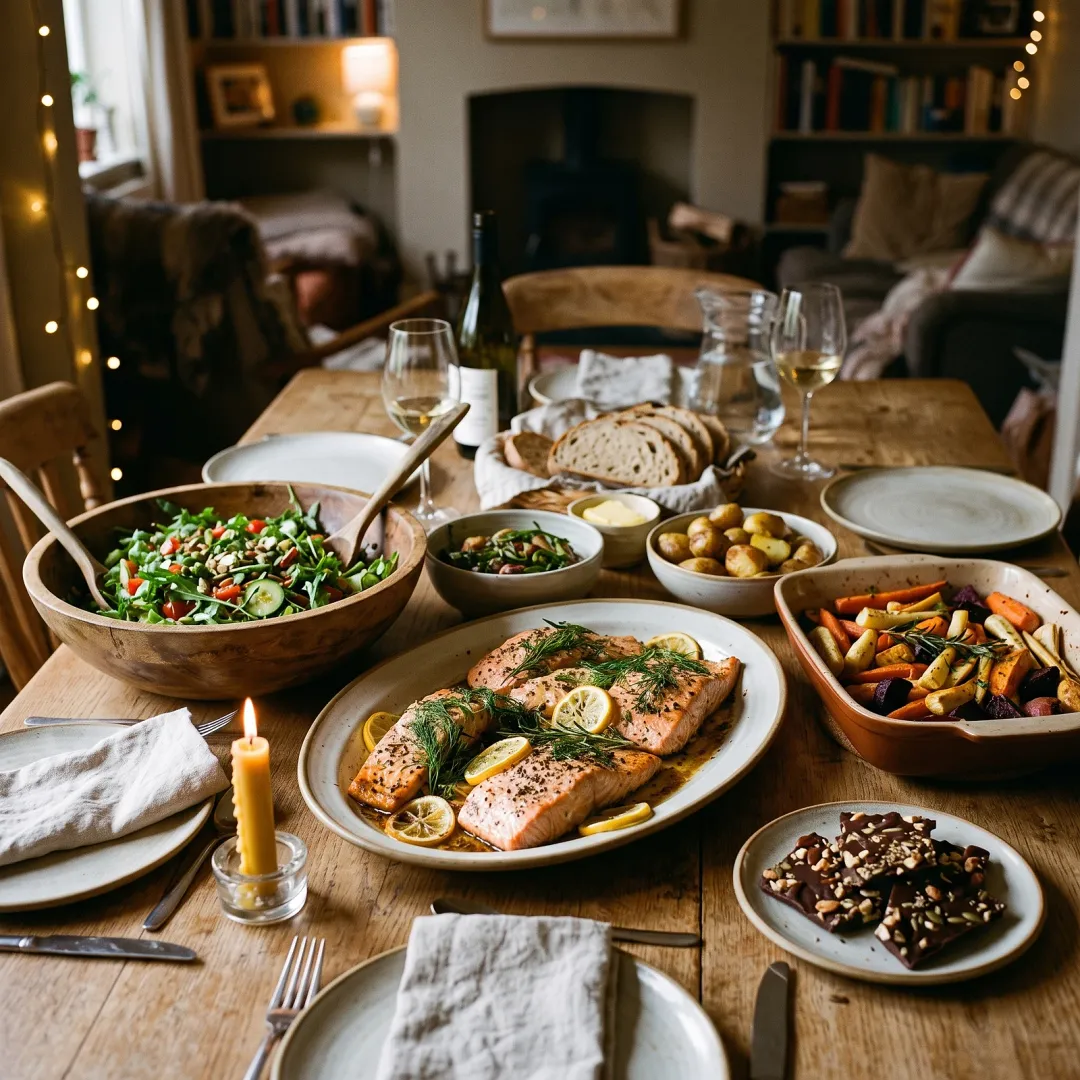
A beautifully roasted sheet-pan dinner, a slow-braised something that fills the house with smell before guests arrive, a platter of crudités with an herbed almond dip that people grab before they even sit down, these things do not announce themselves as paleo or grain-free. They announce themselves as delicious. That is the whole strategy.
Pick a Menu Built Around Abundance, Not Restriction
Real-food hosting goes sideways when the menu is organized around what is missing. "No gluten, no dairy, no grains" is a restriction list. "Slow-roasted salmon with a citrus herb crust, roasted root vegetables with garlic and olive oil, a big green salad with toasted pumpkin seeds and a honey-lemon vinaigrette, and dark chocolate bark for dessert", that is a dinner. Same meal. Completely different energy.
Build your menu around what IS there: high-quality proteins, colorful vegetables, good fats, something bright and acidic, something a little sweet at the end. Salmon is a natural anchor here, it is universally appealing, cooks beautifully for a crowd, and brings real nutritional depth without needing a single explanation. Roast it simply, finish it with something vibrant, and it will disappear. Research from the USDA confirms that fatty fish like salmon are among the most concentrated food sources of omega-3 fatty acids, which most Americans undereat anyway, but you don't need to say any of that at the table. Just serve it.
Do Not Label the Food Unless Someone Asks
Your menu card does not need asterisks. The food on the table does not need a placard. If a guest has a genuine allergy or a dietary need, they will ask, and you can answer honestly. "No gluten in anything, no seed oils, sweetened with honey." That's a complete, honest answer. It is not a manifesto.
The labeling impulse comes from wanting guests to understand and approve. But approval is not actually the goal. The goal is feeding people a good meal. Those are different things, and mixing them up is where dinner parties get weird.
Have One Crowd-Pleasing Dip Ready the Second People Walk In
Hungry people arriving to an empty table get cranky and grab the nearest processed thing at the bar. Solve this before it starts. A good dip, guacamole, a roasted red pepper walnut dip, a chunky olive tapenade, with cut vegetables and plantain chips or grain-free crackers out when people arrive means everyone is eating something real before they even sit down, without noticing that is what is happening.
This is not a trick. This is hospitality. Getting food into people's hands the moment they arrive is one of the oldest hosting moves there is, and it happens to work beautifully for a real-food table.
Anchor the Plate with Something Familiar
Real-food hosting fails with certain crowds when the entire menu is unfamiliar. One or two dishes that read as "normal", roasted chicken thighs, a classic green salad, fruit for dessert, carry the unfamiliar things through. If you want to serve cauliflower mash or a grain-free tart, that lands better when it sits next to something the pickiest person at the table already recognizes and trusts.
You are not compromising. You are cooking strategically. Familiarity is a hospitality tool, not a concession to processed food.
Stock the Bar Thoughtfully (Without Making It a Big Deal)
The drink situation matters more than most real-food hosts plan for. If you are not serving alcohol, or if you want non-alcohol options that are genuinely good, have something ready that is interesting on its own terms. Sparkling water with muddled mint and citrus. A big pitcher of hibiscus tea over ice. A mocktail made with kombucha and fresh ginger.
If you do serve alcohol, wine and hard cider are the simplest real-food-compatible choices. Beer brings gluten for anyone sensitive to it. This doesn't need to be announced, just have good options available and let people choose. A guest who doesn't drink should never feel like an afterthought at your table, and a guest who is quietly avoiding gluten shouldn't have to navigate it alone.
The Comment Will Come. Have a Short Answer Ready.
Somebody will say something. "Is this paleo?" or "Wait, what's in this?" or the classic "I could never eat like you do." You are going to get one of these, so have a short, warm, non-defensive answer ready and then change the subject to something about them.
"Yeah, we eat mostly real food, meat, vegetables, good fats. This turned out really well, I'm glad you like it. Hey, how's [their thing] going?" Twenty seconds, redirect, done. You didn't hide anything. You didn't launch a TED talk. The conversation moves on. The food stays good. That is the whole game.
The faith piece here, for me personally, is real: I actually believe this body is a gift and food is one of the ways I steward it. That is not something I need everyone at my table to agree with. I just need to cook with care and feed people well. The rest is between me and God.
Skip the Apology
"I know it's a little different," "Sorry there's no bread," "I hope this is okay", all of these signal to guests that they should be uncertain about what they're eating. Hosts set the emotional tone for a meal before anyone takes a bite, and an apologetic host creates an apologetic table.
Put the food down like you mean it. Say "I hope you love this" instead of "I hope this is okay." Small difference. Big shift. Confidence is contagious at the table, and so is self-consciousness. Choose one.
Dessert Is Your Secret Weapon
A real-food dessert that genuinely delivers will do more for your reputation as a host than any explanation about your food philosophy ever could. Dark chocolate bark with sea salt and dried fruit. A coconut milk panna cotta with mango. Almond flour brownies that hold together and taste like brownies. Fresh berries with whipped coconut cream.
End on something sweet, something that lands, and guests leave thinking about the food, not about the label you put on it. That is the whole goal. You fed people well. Quietly, confidently, with real ingredients. That is enough.
Key Takeaways
- Build your menu around abundance, what IS on the table, not what is absent.
- Let the food speak first. Skip the pre-explanation and let taste do the work.
- Anchor the plate with at least one familiar dish to carry the rest of the menu through.
- Have food ready the moment guests arrive so no one reaches for something processed out of hunger.
- Prepare one short, warm answer for the inevitable "what is this?" question, then redirect.
- Confidence at the table sets the tone. Present your food like you mean it, no apologies needed.
- A genuinely good real-food dessert is the most persuasive thing you can serve.
Frequently Asked Questions
How do I host a paleo dinner party for guests who don't eat paleo?
Build your menu around naturally appealing whole foods, roasted proteins, colorful vegetables, a great salad, and a real-food dessert, without labeling them as paleo. Let the taste do the convincing. Anchor the meal with at least one familiar dish, and have food ready when guests arrive so no one is reaching for processed snacks out of hunger.
What should I serve at a gluten-free dinner party that won't feel restrictive?
Focus on abundance rather than absence. A meal built around roasted salmon, seasonal vegetables with good olive oil, a fresh salad, and a coconut or almond-flour dessert reads as generous and delicious, not limited. Guests who need gluten-free options will appreciate it; guests who don't will simply enjoy the food.
How do I respond when guests ask about my paleo or real-food diet at dinner?
Keep it short and warm: 'We eat mostly real food, meat, vegetables, good fats. Glad you're enjoying it!' Then redirect to something about them. You don't need to defend it, explain it, or apologize for it. One sentence and move on.
What are good real-food appetizers to serve when guests arrive?
A simple dip, guacamole, roasted red pepper walnut dip, or tapenade, with cut vegetables and plantain chips or grain-free crackers is ready in minutes and gets real food into people's hands before they sit down. It's one of the easiest hosting moves you can make.
Sources
This article is for general informational purposes only and is not medical advice. Always consult a qualified healthcare professional before making changes to your diet or health routine.


Join the conversation
What do you think?
Free members can comment, reply and like. It takes ten seconds.