

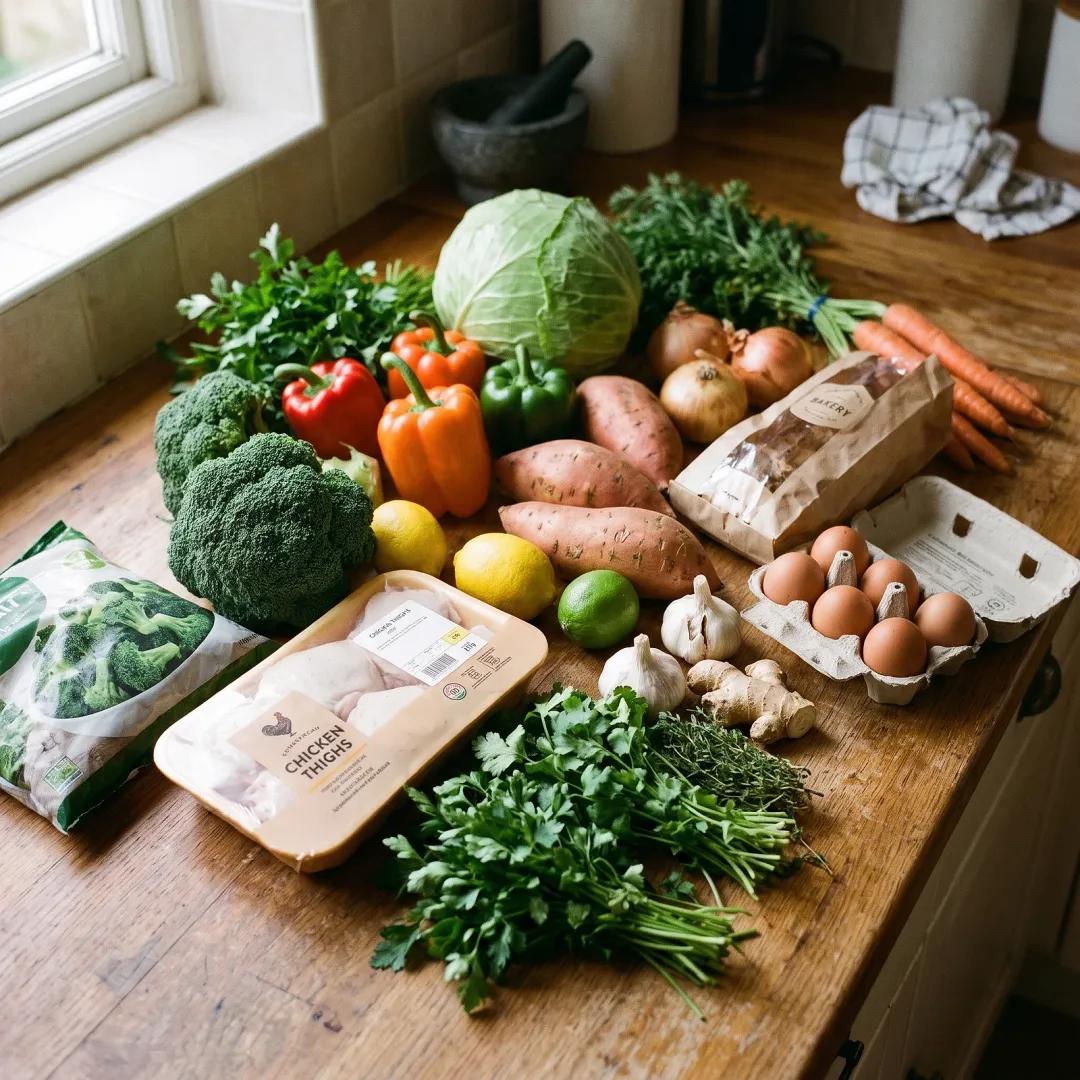

Tuesday rolls around, you open the fridge, and three things happen at once: the fresh herbs are slimy, the chicken you bought last Friday smells questionable, and the expensive grass-fed ground beef is somehow still sitting there untouched behind a bag of apples. Sound familiar? You did not fail at meal planning. You just ate in the wrong order. There is a sequence to working through a grocery haul that keeps real food off the compost pile and your money actually feeding you, and it has nothing to do with willpower or elaborate prep schedules.
Why the Order Matters More Than the Plan
Most grocery haul advice is about what to buy. Very little of it is about when to eat it once it is home. That gap is expensive. The USDA estimates that American households waste between 30 and 40 percent of the food supply, and a large share of that happens at the consumer level, in our own refrigerators, one forgotten bunch of cilantro at a time.
Real, whole food has no preservatives extending its shelf life. That is part of why it is good for you, and it is also why it requires a smarter sequence than a cart full of shelf-stable processed food. When you understand how fast different foods degrade, and you plan your meals around that degradation rate rather than around a rigid weekly menu, you stop fighting biology. You work with it.
This is not about being perfect. It is about being intentional with the gift of food on your table. I do not want to sound preachy about that, but I will say this plainly: wasting real food feels wrong to me in a deep way. Good food costs real money and real earth. Eating it in the right order is just basic stewardship.
The Freshness Hierarchy: How to Rank What You Bought
Before you plan a single meal, do a quick visual audit of everything you bought. Sort it mentally (or literally, on the counter) into three buckets:
Eat within 1 to 2 days: This is your most perishable real food. Fresh fish, raw ground meat, fresh-cut fruit, any leafy green that is already slightly wilted, fresh herbs, cooked leftovers from before the shop, and anything that was already close to its edge when you bought it.
Eat within 3 to 5 days: Whole raw cuts of meat like chicken thighs or breasts (more on that below), whole eggs, most raw vegetables (broccoli, bell peppers, zucchini, mushrooms, green beans), opened nut milks, and freshly cooked proteins you prep on Day 1.
Eat within 1 to 2 weeks or longer: This is your slow-burn category. Root vegetables like sweet potatoes, carrots, beets, and turnips; whole citrus; cabbage; hard squash; onions; garlic; and anything you intentionally bought frozen or pantry-stable.
The FDA's food safety guidelines confirm that raw ground meats should be used within 1 to 2 days of purchase, while whole poultry cuts give you 1 to 2 days as well before they need to go into the freezer or onto the heat. Knowing those numbers before the week starts changes everything.
Day 1 to 2: Hit Your Most Perishable Food First
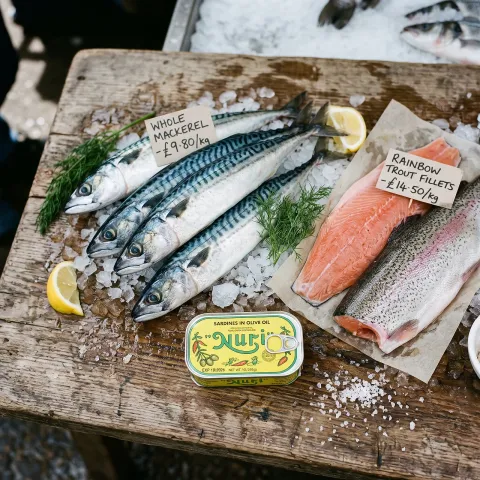
The first two days after a grocery run are for your fastest-fading food, full stop. If fresh fish came home with you, it cooks tonight or tomorrow. Fresh herbs get used as the star of a dish, not a garnish you will get to later (later is never). Leftover soup from last week? Lunch today.
For most real-food households, chicken shows up in this window a lot. A whole raw chicken or bone-in thighs need to be cooked or frozen within 1 to 2 days per FDA guidance. The smart move is to roast or poach a big batch on Day 1 so the raw meat becomes a cooked, shelf-stable (in the fridge) protein that now buys you another 3 to 4 days of meals. One chicken can give you sheet-pan dinner on Day 1, shredded meat over a big salad on Day 2, and broth from the carcass simmering on Day 3. That is not meal prep magic, that is just eating in the right sequence.
Fresh salad greens are another Day 1 to 2 priority. Once the bag is open, the clock accelerates. Use the most delicate leaves first (arugula, spring mix, butter lettuce) and save the sturdier stuff (kale, cabbage, romaine hearts) for Day 3 and beyond.
Day 3 to 5: Work Through Your Mid-Range Produce and Prepped Proteins
By Day 3, your cooked chicken from Day 1 is still good and now infinitely convenient. This is the stretch where your cruciferous and hearty vegetables shine: broccoli, cauliflower, snap peas, bell peppers, mushrooms. Roast a big pan of them. Toss them into eggs. Use them as the base of a stir-fry with whatever protein you cooked earlier in the week.
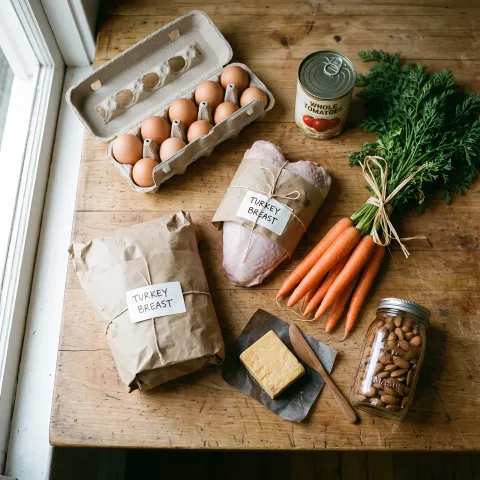
This is also when eggs do serious heavy lifting. A dozen eggs bought Sunday will easily carry you through the week. They are one of the most shelf-stable fresh proteins you can buy, and the FDA notes properly refrigerated eggs are safe for 3 to 5 weeks past purchase, so they are a genuine safety net at the back half of the week.
Whole raw beef or lamb cuts purchased fresh can also live in this Day 3 to 5 window (the FDA gives whole cuts of beef and pork 3 to 5 days refrigerated), but ground meats should have already been cooked or frozen. If you forgot to cook that ground beef by Day 2, freeze it now, do not wait and hope.
One thing worth saying out loud: leftovers are not punishment. A container of shredded roast chicken and roasted vegetables in the fridge is a faster, more nourishing lunch than anything you would order on a busy Wednesday. The sequence only works if you actually eat what you cooked.
Day 5 and Beyond: Your Slow-Burn Stars
The back half of the week belongs to your most resilient purchases, and this is actually where real-food eating gets economical. Root vegetables barely care that you have ignored them. A sweet potato sitting on your counter is completely fine for weeks. Carrots, beets, parsnips, turnips, and cabbage are the same. Whole onions and garlic are even more forgiving.
Frozen vegetables and proteins round this stretch out beautifully. Frozen produce is picked and frozen at peak ripeness, which means the nutrient content is often comparable to fresh, according to research summarized by the Harvard T.H. Chan School of Public Health. Keeping a bag of frozen broccoli, peas, or green beans in the freezer means Day 6 dinner does not have to be sad or bare.
This is also the moment to use up any remaining pantry-based meals: a big pot of bone broth, a simple soup with dried lentils and whatever root vegetables are left, or roasted root vegetable "fries" as a side. Cabbage gets a sear in some good fat and comes out sweet and incredible. It is cheap, it lasts, and it is legitimately one of the most nutritious vegetables you can buy.
The Freezer Is Not a Graveyard: Use It as a Bridge
Here is where a lot of people lose money on real food: they treat the freezer like a place food goes to die quietly instead of a bridge between this week and next. If Day 2 arrives and your chicken is not going to be cooked today, freeze it. If you made a double batch of that braised chicken, freeze half before it becomes a food safety question. If your bananas are turning and you are not ready to bake, peel and freeze them right now.
Freezer food is not failure food. It is a smarter version of the same grocery haul, waiting for the right moment. The sequence for a frozen item is simply: pull it out, thaw it in the refrigerator overnight (not on the counter), and use it within 1 to 2 days of thawing. Done. That is the full rule.
A useful habit is to label things before they go in. Masking tape and a marker take five seconds. "Chicken thighs, raw, [date]" or "broth, [date]" means you never open your freezer and stare at a mystery bag of something brown.
What Is Actually Worth Buying Fresh Versus Frozen
Part of shopping smarter is not fighting the system. Some things genuinely benefit from being fresh. Some things are just as good frozen, or better. Making those calls at the store changes what order you eat things in, because you stop buying more fresh food than you can realistically use.
Fresh is worth it when: you are cooking it in the next day or two, you can taste the difference (stone fruit, tomatoes in summer, fresh herbs used abundantly), or the texture matters for the dish (you would not roast frozen asparagus and get the same result as fresh).
Frozen is the smarter buy when: you use it in cooked applications, you tend to have leftover produce at week's end, or you want nutritional density without the time pressure. Frozen broccoli, peas, edamame, green beans, and mixed berries are all genuinely excellent in this category.
For proteins, frozen is often a better deal and no less nutritious. Wild-caught frozen fish, frozen bone-in chicken thighs, and frozen ground bison or beef all hit the same nutritional marks as their fresh counterparts. Buying frozen protein means you shop for it once and use it on your schedule, not the sell-by date's schedule.
The one honest caveat on frozen fish: texture can suffer if it is not thawed carefully and cooked well. If your household is resistant to leftover fish, frozen shrimp and scallops actually thaw and cook faster and more forgivingly than most other seafood. Keep a bag in the freezer and that is your wildcard on a night you have nothing left.
A Quick Reference: The Order for a Typical Real-Food Haul
If you want a simple cheat sheet to tape to the fridge, here it is:
Night of or Day 1: Fresh fish; raw ground meat (cook or freeze); fresh herbs; any produce already past its prime; leftovers from last week.
Day 1 to 2: Whole raw poultry (cook a big batch now and it carries you for 3 to 4 more days); delicate salad greens; fresh mushrooms; prepped leftovers from the Day 1 cook.
Day 3 to 5: Cooked poultry from your Day 1 batch; cruciferous vegetables (broccoli, cauliflower, Brussels sprouts); bell peppers; whole cuts of raw beef or pork (cook now or freeze); eggs.
Day 5 to 7 and beyond: Root vegetables (sweet potatoes, carrots, beets); cabbage; whole onions and garlic; citrus; frozen proteins and vegetables (pulled from freezer as needed).
That is the full sequence. It is not rigid. Life moves the schedule around, and that is fine. The point is that the frame exists so you default to the right food on the right day instead of defaulting to whatever is easiest to grab while the expensive stuff rots in the back of the drawer.
One Mindset Shift That Makes This Stick
Planning meals around a rigid menu that assumes every ingredient gets used on a predetermined day is how people end up overwhelmed and ordering takeout on Wednesday. The sequence approach is the opposite: you know your hierarchy, you check the fridge before you decide what is for dinner, and you let the food tell you what comes next.
This sounds small. It is actually a pretty significant shift in how you relate to food. Instead of food being something you manage or feel guilty about wasting, it becomes something you read and respond to. That is a more intuitive, less stressful way to eat real food on a real schedule.
The body was designed to eat food, not packages. Keeping real food moving through your kitchen rather than into the trash is one of the most practical ways to honor both your health and your budget. And honestly? It feels good. There is something genuinely satisfying about an empty crisper at the end of the week that does not smell like regret.
This article is for general informational purposes only and is not medical advice. Always consult a qualified healthcare professional before making changes to your diet or health routine.
Key Takeaways
- Sort your grocery haul into three freshness tiers immediately: eat within 1 to 2 days, 3 to 5 days, and 1 to 2 weeks or longer.
- Raw ground meat and fresh fish go first (Day 1 or 2), or straight to the freezer. The FDA gives them 1 to 2 days refrigerated.
- Cook a large batch of chicken on Day 1 and it carries you through Day 4 or 5 as a prepped protein.
- Root vegetables, cabbage, onions, and frozen items are your end-of-week anchors.
- Frozen produce and protein are nutritionally solid and give you flexibility without a ticking clock.
- The freezer is a bridge, not a graveyard. Label and date everything before it goes in.
- Decide what is for dinner by checking the fridge first, not a rigid menu. Let the freshness hierarchy guide you.
Frequently Asked Questions
In what order should you eat your groceries after shopping?
Start with your most perishable food: fresh fish, raw ground meat, and fresh herbs should be used or frozen within 1 to 2 days. Then move through whole poultry cuts, delicate greens, and cruciferous vegetables in days 3 to 5. Save root vegetables, cabbage, citrus, and anything frozen for the end of the week. The FDA's food safety guidelines confirm these general windows for refrigerated fresh food.
How long can raw chicken stay in the fridge before it has to be cooked or frozen?
The FDA recommends using or freezing raw whole poultry cuts within 1 to 2 days of purchase. The practical move is to cook a large batch on Day 1 so the raw meat becomes a refrigerator-safe cooked protein that lasts 3 to 4 more days.
Is frozen produce as nutritious as fresh?
In many cases, yes. Research summarized by the Harvard T.H. Chan School of Public Health notes that frozen produce is typically harvested and frozen at peak ripeness, which preserves nutrient content well. Frozen vegetables used in cooked applications are often nutritionally comparable to fresh.
What vegetables last the longest after a grocery haul?
Root vegetables (sweet potatoes, carrots, beets, turnips, parsnips), whole cabbage, onions, garlic, and hard winter squash are the longest-lasting fresh vegetables you can buy. Most of them are fine for 1 to 2 weeks or longer when stored properly, making them ideal end-of-week anchors in a real-food kitchen.
Sources
- USDA: Food Waste FAQs
- FDA: Food Safety in the Home Refrigerator
- Harvard T.H. Chan School of Public Health: Are Frozen Fruits and Vegetables as Nutritious as Fresh?
This article is for general informational purposes only and is not medical advice. Always consult a qualified healthcare professional before making changes to your diet or health routine.

Join the conversation
What do you think?
Free members can comment, reply and like. It takes ten seconds.