


Half a head of cauliflower going soft in the back of the fridge. A bunch of cilantro you bought for one recipe and forgot. A lamb chop you defrosted and then had no energy to cook. If you live alone and eat real food, you know the particular guilt of watching good, expensive ingredients go to waste. It doesn't have to be that way. Cooking for one is a skill, and once you crack it, your grocery bill drops, your stress drops, and you stop dreading Sunday meal prep.
Why Solo Cooking Waste Is Such a Big Deal
The USDA estimates that between 30 and 40 percent of the U.S. food supply is wasted, and single-person households shoulder a disproportionate share of that. Almost everything at the grocery store is sized for a family of four. Recipes assume you have someone to share a rack of ribs with. Even a standard bunch of kale is more than most people eat in a week before it starts to yellow.
Beyond the environmental cost, that wasted food is wasted money. If you're buying high-quality, real food (which costs more up front for a reason), every wilted vegetable and forgotten protein is a real hit to your wallet. Getting serious about waste isn't about being perfect. It's about being strategic.
Start at the Store: Shop for What You'll Actually Cook
The waste problem usually starts before you open the fridge. Most of us shop aspirationally. We buy seven different vegetables because we're going to eat so many vegetables this week. Then Thursday happens and we're staring at a drawer of sadness.
1. Build a 3-day rotation, not a 7-day one. For solo cooks, planning three days of real food at a time is more realistic than a full week. Shop twice a week if you can, or plan two overlapping rotations. This reduces the window in which produce can turn.
2. Buy smaller quantities of expensive produce, more of the sturdy stuff. Delicate greens like spinach and arugula wilt fast. Hardier vegetables (sweet potatoes, beets, cabbage, carrots, winter squash) last a week or more in the fridge or on the counter. Build your base around the stuff that keeps, and treat delicate greens as a secondary addition.
3. Frozen is not a compromise. The Academy of Nutrition and Dietetics notes that frozen produce is typically flash-frozen at peak ripeness, which can preserve nutrient content well. For solo cooks, frozen broccoli, frozen peas, frozen berries, and frozen cauliflower rice are lifelines. You scoop out what you need and the rest stays put for weeks.
4. At the meat counter, ask for single-portion cuts. Most butchers (and even good grocery store counters) will sell you exactly what you need. Two lamb loin chops instead of a full rack. A single lamb shoulder steak. You don't have to buy the family pack and freeze most of it, though freezing is a perfectly valid move.
Protein Strategy for One: The Lamb Example
Protein is usually where solo cooking gets expensive and wasteful. A whole package of ground meat, a full roast, a large cut, and suddenly you're eating the same thing for five days or throwing half of it out.
Lamb is a great study in this. It has a reputation for being fancy or intimidating, but it's actually one of the more flexible solo proteins once you understand the cuts.
5. Think in components, not full meals. Cook one lamb shoulder steak (or two small loin chops) in a single pan. That's your protein base. Build different meals around it across two days: over roasted sweet potato one night, shredded cold over a salad the next. Same protein, completely different plate.
6. Ground lamb is your most flexible buy. A half-pound of ground lamb is easy to find, cooks in ten minutes, and goes with almost anything. Spiced differently, it becomes Greek-inspired one night and Middle Eastern the next. It also freezes flat in a zip bag and thaws fast.
7. Freeze in single-portion packets. When you do buy a larger amount of meat, portion it into individual servings before it ever hits the fridge. Wrap each portion in parchment, then into a labeled bag. The USDA's FoodKeeper guidance suggests lamb chops keep 3 to 5 days refrigerated and 6 to 9 months in the freezer, so freezing is not a last resort. It's a plan.
8. The quick-thaw method matters. A sealed bag of frozen ground lamb thaws in about 20 minutes in cold running water. That means it's genuinely usable on a weeknight without planning the morning before. Knowing this removes a lot of the friction around cooking real protein solo.
Produce: What to Buy, What to Freeze, What to Use First
Produce waste is emotional. You bought that bunch of rainbow chard because you meant it. Here's how to stop the cycle.
9. Use the "eat first, freeze second, root last" system. When groceries arrive, sort produce by how fast it turns. Soft herbs, berries, and leafy greens get used in days one and two. Broccoli, zucchini, and bell peppers go to days three and four. Root vegetables and cabbage anchor the end of the week. This isn't complicated. It just requires that you actually think it through for two minutes when you unpack bags.
10. Wilting greens? Freeze them before they go bad. Spinach, kale, and chard can be frozen raw (no blanching needed for use in cooked dishes). Stuff them into a zip bag in portions. They'll go limp but are perfectly fine in a soup, a sauté, or a scramble. This single habit can cut your greens waste significantly.
11. Herbs are where most solo cooks lose. A whole bunch of fresh parsley for one tablespoon. The fix: blend soft herbs with olive oil and freeze in an ice cube tray. Pop cubes into a bag. Each cube is essentially a flavor bomb ready for a pan sauce or a marinade. Harder herbs like rosemary and thyme can be air-dried on the counter.
12. Buy one onion, not a bag. Unless you're planning to actually cook every day, loose onions from the bin are smarter than the three-pound net bag. Same with garlic. Single heads. Same with apples, potatoes, and anything else sold in multiples you won't use.
Fridge Management: The Four Zones That Change Everything
A disorganized fridge is a food graveyard. You put things in, you forget them, you discover them two weeks later. This is fixable.
13. Keep a "use this first" section. It doesn't need to be fancy. A specific shelf or the front of the top shelf is your priority zone. Anything that needs to be eaten in the next one to two days goes there. Every time you open the fridge, that's what your eyes land on first. This one habit probably does more to cut waste than anything else.
14. Store raw meat on the bottom shelf, always. This is food safety basics, and the FDA confirms it keeps meat juices from dripping onto other food. For solo cooks it also creates a visual "this is what I'm cooking tonight" anchor.
15. Glass containers beat plastic for leftovers. You can see what's in them without opening them. That visibility alone means you're less likely to forget a container of roasted vegetables or leftover lamb. It's a small thing. It matters.
16. Do a "fridge audit" midweek. Wednesday or Thursday, take two minutes to look at what's left. What needs to be eaten today or tomorrow? Build your next meal around that, not around what sounds good. This is where you turn half an onion, some leftover lamb, and the tail end of a sweet potato into something that actually tastes good because you're working with what's there.
Batch Cooking for One: What Works, What Doesn't
Batch cooking gets a lot of praise, and most of it is deserved. But the standard batch-cook advice is calibrated for families, and doing that for one person means eating the same thing every single day, which gets old fast.
17. Batch components, not full meals. Cook a large batch of one grain-free base (roasted sweet potato cubes, cauliflower rice, or a big pot of butternut squash soup). Cook one protein in bulk (a pound of ground lamb seasoned simply). Keep them separate. Mix and match across the week. This gives you variety without cooking from scratch every night.
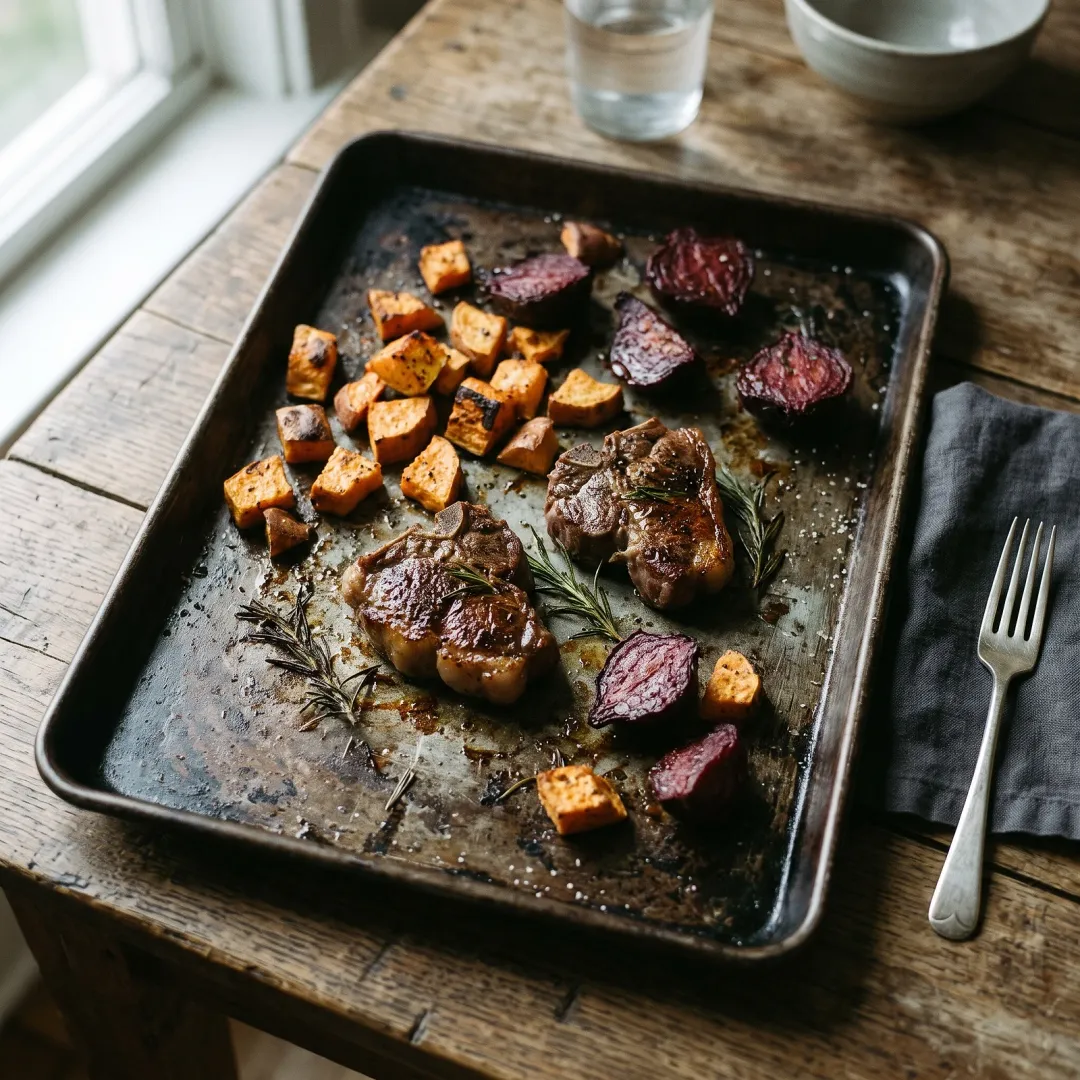
18. One-pan meals are your best friend. A lamb chop with roasted root vegetables on a single sheet pan takes five minutes of prep and thirty minutes in the oven. One pan to wash. Scaling this down to one portion is just as easy as scaling it up for a family. Sheet pan cooking was practically designed for solo real-food eating.
19. Soup and stew scale beautifully. A single batch of lamb and vegetable stew feeds you for three to four meals, and unlike salads, it actually gets better on day two or three. Freeze half in a mason jar (leave headspace) and you've got a future meal that requires zero effort on a hard day.
20. Keep a "scraps broth" bag in the freezer. Every carrot peel, onion end, herb stem, and vegetable scrap goes into a zip bag in the freezer. When the bag is full, simmer it in water for an hour and strain. That's free broth. For solo cooks on a real-food budget, it's one of the most underused hacks there is. The Environmental Protection Agency's food recovery hierarchy puts this kind of food repurposing near the top of waste-reduction strategies, and for good reason.
The Money Part
Real food costs more. That's not an opinion, it's math. Grass-fed lamb, organic produce, good fats, they all carry a higher price tag than their conventional counterparts. That makes waste not just an inconvenience but a genuine budget issue for people eating this way alone.
Research published in the American Journal of Agricultural Economics found that households with higher grocery expenditures tend to waste more in dollar terms, which makes sense. If your per-unit cost is higher, every wasted item costs more.
The tools above compound each other. A solo cook who shops in 3-day cycles, freezes protein in single portions, keeps a priority shelf, and uses a scraps bag can realistically cut food waste by a large margin without eating worse or spending more time cooking. It just takes a little upfront intention.
This is stewardship, plain and simple. The food was grown, raised, and transported to get to you. Using it well is not a small thing.
This article is for general informational purposes only and is not medical advice. Always consult a qualified healthcare professional before making changes to your diet or health routine.
Key Takeaways
- Plan a 3-day grocery rotation instead of a full week to keep solo produce from turning before you get to it.
- Buy protein in single portions or freeze family-pack cuts immediately in individually wrapped servings.
- Use ground lamb or lamb steak as a flexible, quick-cooking solo protein that stretches across multiple meals.
- Sort produce by perishability when you unpack, and freeze greens and soft herbs before they go bad.
- Keep a designated "use this first" section in your fridge and do a midweek audit to build meals from what remains.
- Batch cook components (a protein, a base), not full meals, to get variety without daily cooking.
- Start a freezer scrap bag for vegetable trimmings and turn it into free broth.
Frequently Asked Questions
How do I meal prep for one person without eating the same thing every day?
Batch cook components separately rather than full meals. Cook one protein (like ground lamb or a couple of lamb chops) and one base (roasted sweet potato, cauliflower rice, or a simple soup) and keep them in separate containers. Season and combine them differently each day and they feel like completely different meals even though the prep was mostly the same.
What produce lasts the longest for solo shoppers?
Root vegetables (carrots, beets, sweet potatoes, turnips), cabbage, winter squash, and onions are your longest-lasting buys and can easily hold a week or more. Use softer produce like leafy greens, broccoli, and zucchini in the first half of your rotation, and lean on frozen vegetables for the second half.
Is it worth buying fresh meat for one person or should I just use frozen?
Both work. The smarter move is to buy fresh when you plan to cook it within two days, and freeze the rest immediately in single-portion packets rather than leaving a full package in the fridge. Per USDA guidance, lamb chops keep 6 to 9 months in the freezer, so portioning and freezing on purchase day is a completely sound strategy.
How do I stop fresh herbs from going bad before I use them all?
Blend soft herbs (parsley, basil, cilantro) with a little olive oil and freeze the mixture in an ice cube tray. Once frozen, transfer the cubes to a labeled bag. Each cube is a ready-to-use flavor boost for sauces, marinades, or a hot pan. Harder herbs like rosemary and thyme can simply be left on the counter to air-dry.
Sources
- USDA: Food Waste FAQs
- Academy of Nutrition and Dietetics: Frozen, Fresh, or Canned?
- FoodSafety.gov (USDA): Cold Food Storage Charts
- FDA: Are You Storing Food Safely?
- EPA: Food Recovery Hierarchy
- American Journal of Agricultural Economics: Household Food Waste and Expenditure (Qi and Roe, 2015)
This article is for general informational purposes only and is not medical advice. Always consult a qualified healthcare professional before making changes to your diet or health routine.

Join the conversation
What do you think?
Free members can comment, reply and like. It takes ten seconds.